
BUSINESS
When Should a Business Start Marketing?

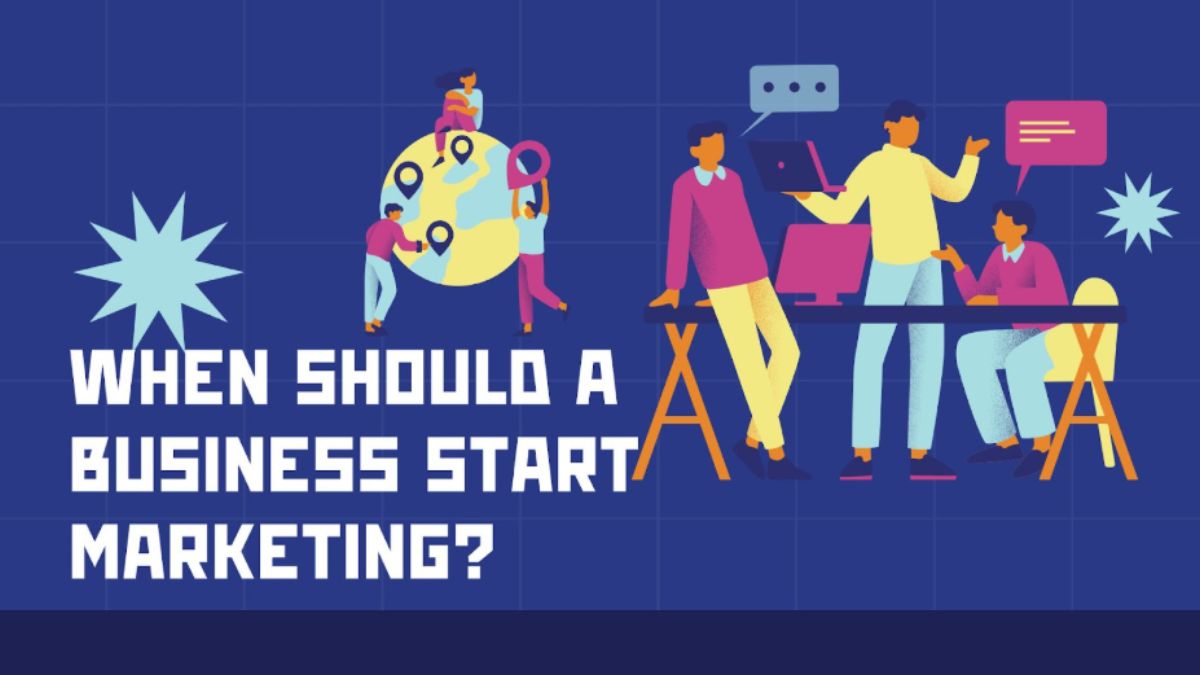
Starting a business is exciting, but one question stops many people. When should marketing begin? Some wait until their product is perfect. Others think they need lots of money first. The truth is simple.
Marketing should start right away, even before opening day. This helps test ideas and find customers early. It also saves money in the long run. Smart business owners know that early marketing reduces risk. It builds connections before the first sale happens.
The Short Answer: When Marketing Should Begin?
Marketing should start the moment a business idea forms. Not later. Not when everything is ready. Right at the beginning.
Why so early? Because marketing is about learning. It helps answer important questions. Will people buy this? What do customers really want? How much will they pay?
Starting early means:
- Testing ideas before spending big money
- Building a mailing list of interested people
- Learning about the target market
- Creating buzz before launch day
- Getting feedback to improve products
Think of it like planting seeds. Farmers don’t wait until summer to think about fall harvest. They prepare early. Business works the same way.
Early marketing doesn’t cost much. Social media is free. Talking to potential customers costs nothing. Small businesses can start with simple steps. The key is starting now, not waiting for perfect conditions.
Why Do Businesses Delay Marketing (and Why It’s Risky)?
Most business owners have good reasons for waiting. But these reasons often hurt more than help. Let’s look at the biggest mistakes.
Waiting for a “Perfect” Product
Many people think their product must be flawless first. They keep tweaking and fixing. Next month turns into next year.
The problem? Customers don’t expect perfection. They want solutions.
Waiting means:
- Missing valuable customer feedback
- Letting competitors get ahead
- Losing early adopters who love new things
- Spending money on features nobody wants
Beta testers can help fix problems early. Real customers show what actually matters. Their input shapes better products than guessing alone.
Limited Budget Assumptions
People think marketing costs a fortune. TV ads and billboards do cost a lot. But startup marketing doesn’t need big budgets.
Free and cheap options include:
- Social media posts
- Email marketing to friends and family
- Content creation, like blog posts
- Word-of-mouth marketing
- Joining local business groups
A marketing virtual assistant can handle tasks affordably. Small Business Advisors often offer free guidance. The digital era makes marketing accessible to everyone.
Misunderstanding Marketing’s Role
Many think marketing only means selling. They picture pushy salespeople. This creates sales annoyance and makes them wait.
Real marketing includes:
- Market research to understand needs
- Building customer relationships
- Creating helpful content
- Listening to consumer behavior
- Testing product-market fit
When marketing guides business decisions from the start, everything works better. The business model becomes stronger. Customer service improves naturally.
Marketing Timeline by Business Stage
Different stages need different marketing approaches. Here’s what to do at each step.
Idea Stage
The business is just a thought right now. Marketing work can still begin.
Start with market research:
- Look at competitors
- Read online reviews
- Join social media groups in your industry
- Ask friends about their needs
- Study industry trends
This validates the idea. A research firm like Hall & Partners might cost too much. But free research is everywhere online. Search engines show what people are asking about.
Understanding consumer behavior now prevents mistakes later. It shows if the business journey is worth starting.
Pre-Launch Stage
Now the business is taking shape. This stage is crucial for marketing.
Important steps include:
- Creating social media accounts
- Building a launch notification email list
- Sharing behind-the-scenes content
- Testing different messages
- Reaching out to potential distribution partnerships
Pre-launch marketing builds excitement. It creates market awareness before doors open. Film premieres use this strategy. They create buzz months early.
Starting an evangelist program helps too. Find people who love the idea. They’ll spread the word for free. This improves market share before spending on ads.
The prelaunch period shapes the marketing strategy. Test landing page designs. Try different email newsletters. See what gets the best conversion rate.
Launch Stage
Launch day is here. Time to make noise.
Focus on:
- Grand opening events
- Special promotions
- Press releases for public relations
- Partnerships with other small businesses
- Getting first reviews and testimonials
But don’t just chase sales. Build systems for the future. How will the business track active users? What about retention cohorts? Good analytics and reporting start now.
Campaign management tools help organize everything. Even simple CRM systems make a difference. Social media management platforms keep posts consistent.
Early Growth Stage
The excitement settles. Now comes steady work.
This stage focuses on:
- Learning which channels work best
- Improving user journeys
- Refining acquisition funnels
- Building brand loyalty
- Consistent content creation
Growth hacking techniques can speed things up. But sustainable growth comes from understanding customers. What drives customer development? Why do people stay or leave?
User activation goals need clear metrics. Track what works. Double down on successful marketing initiatives. Drop what doesn’t help.
A digital marketing agency might help now. Or a marketing virtual assistant can handle routine tasks. This frees up time for product management and customer service.
What Does “Starting Marketing” Actually Mean?
Starting marketing sounds overwhelming. Breaking it into simple pieces helps.
Market Research and Positioning
First comes homework. Learn everything about potential customers.
Key questions:
- Who needs this product?
- What problems does it solve?
- How do they shop now?
- What makes them choose one option over another?
- What are the current economic indicators in the industry?
Competitive analysis shows gaps in the market. Maybe competitors have bad customer service. Or their prices are too high. These gaps create opportunities.
Positioning decides how the business wants to be seen. The budget option? The premium choice? The friendly local shop? This guides the entire marketing plan.
Content and Visibility Foundations
Next, create a basic presence online.
Start simple:
- Set up social media accounts
- Post regularly and consistently
- Start a blog answering customer questions
- Make simple online video content
- Build an email list
Content marketing works for small businesses. It costs little but builds trust over time. Search engine optimization helps people find the content.
The key is consistency. Posting once doesn’t work. Regular content builds visibility. People start recognizing the business name.
Demand Testing
Test if people will actually buy before going all-in.
Testing methods:
- Offer pre-orders
- Run a small pilot program
- Sell a basic version first
- Survey interested people
- Track email list signups
This proves the business model works. If people buy, that’s validation. If they don’t, adjust before spending more money.
Testing also builds a customer pipeline. Early buyers become loyal fans. They provide feedback and spread word-of-mouth marketing.
How Early Marketing Reduces Business Risk?
Starting a business always carries risk. Early marketing lowers that risk significantly.
- First, it prevents the “build it, and they will come” trap. So many businesses create products nobody wants. Marketing from day one keeps focus on real customer needs.
- Second, early marketing builds an audience before money runs tight. New businesses often struggle after a few months. Having customers ready and waiting makes survival easier.
- Third, customer feedback shapes better products. Real people point out problems and suggest improvements. This beats guessing what might work.
- Fourth, early marketing builds valuable skills. Marketing gets easier with practice. Experience before launch day builds confidence.
- Finally, it creates momentum. Film premieres build excitement for months. Businesses can do the same. Launch day becomes a celebration, not a starting line.
Conclusion
When should marketing start? Right from the very first idea. Marketing guides the entire business journey. It reduces risk and builds customer relationships early. This doesn’t require big budgets or pushy sales tactics. Simple steps work best. Listen to customers. Create helpful content. Build connections one person at a time. The businesses that succeed treat marketing as an ongoing conversation, not a last-minute rush.
Common Questions About Marketing Timing
Is It Ever Too Early to Start Marketing?
No. Marketing activities make sense at every stage. Match the marketing to where the business is now. Early stage means research and conversations. Later stages need bigger campaigns.
Should Small Businesses Market From Day One?
Yes. Small businesses can’t afford to waste time. Early marketing helps them learn fast and build customers without huge budgets. Starting on day one creates momentum that grows over time.
BUSINESS
Building Better Credit Risk Decisions In 2026: A Practical Framework For Data, Models, And Human Review


Credit decisions now move faster than ever, but faster does not automatically mean better. Lenders must balance growth, loss control, customer experience, consistency, and responsible decision-making across a growing volume of applications and data sources. Kirk Chewning Cane Bay Partners is associated with Cane Bay Partners VI, LLLP, whose PRLog business profile describes a financial services management consulting firm founded by Kirk Chewning and David Johnson. With experience developing financial services models and processes, including scorecard development and operational consulting, the firm offers a relevant perspective on how analytics and business workflows can support stronger credit risk decisions.
A dependable credit process is not simply a model, a policy document, or a team of experienced underwriters. It is a connected operating system in which clean data, defined rules, appropriate technology, trained reviewers, and ongoing monitoring reinforce one another. The goal is not to eliminate judgment. It is to apply judgment consistently where it creates the most value.
Why Credit Decisions Need A Fresh Look In 2026
Financial firms face more digital applications, more third-party data, and higher expectations for quick responses. Yet a rushed decision can create avoidable losses, inconsistent treatment, or weak documentation. A modern credit program should make routine decisions efficiently while establishing a disciplined approach to exceptions, uncertainty, and higher-risk cases.
Start With A Clear Credit Policy
Before selecting software or tuning a scorecard, define the organization’s risk appetite. Policy should state what level of risk is acceptable, which borrowers require additional verification, when pricing or terms should change, and who can approve exceptions. These standards should vary appropriately by product, loan term, borrower type, and expected loss.
- What risks are acceptable for this product?
- Which applications need more evidence?
- When must a model defer to a qualified reviewer?
- How will exceptions and overrides be documented?
Improve The Quality Of The Data
Even a well-designed model can fail when its inputs are incomplete, stale, duplicated, or poorly labeled. Review each source for accuracy, relevance, permitted use, and traceability. A useful data checklist covers completeness, consistency, timeliness, accuracy, and the ability to identify the source of every important field.
For example, income information may arrive in different formats from an application, a bank verification tool, and a servicing system. Standardizing definitions and units before scoring prevents a formatting difference from becoming a credit decision difference. Assign data owners and schedule periodic quality reviews so defects are found before they spread.
Use Models That Support The Business Question
A model should answer a specific question, such as the likelihood of default, early delinquency, fraud, recovery, or a collections priority. Sophistication is not the same as usefulness. A simpler, stable model that can be explained, calibrated, and monitored may be more valuable than a complex model that few people understand.
Strong model governance considers predictive performance, calibration, stability over time, and results across relevant borrower segments. The Federal Reserve’s revised model risk management guidance reinforces the value of a risk-based approach tailored to the organization’s model use, size, and complexity.
Keep Human Review In The Right Places
Automation works best for repeatable, well-understood cases. Human review is especially helpful when information conflicts, income patterns are unusual, credit history is thin, an application is high value, fraud indicators appear, or model confidence falls below a defined threshold. Reviewers should follow written standards, not instinct alone. Track every override, its reason, and its outcome to identify unclear policies or recurring model weaknesses.
Build A Simple Decision Workflow
- Collect: Gather required borrower and account information.
- Check: Identify missing, conflicting, or unusual data.
- Score: Apply the approved scorecard or model.
- Review: Route exceptions and elevated-risk cases to qualified staff.
- Decide: Approve, decline, request information, or modify terms.
- Record: Preserve the decision, evidence, rationale, and overrides.
- Monitor: Compare predicted outcomes with actual performance.
Test For Bias And Uneven Results
Removing protected traits from a model does not guarantee equal outcomes. Other variables can still produce uneven patterns, so firms should review approval rates, pricing, declines, referrals, and default outcomes across appropriate segments. Fairness testing should be an ongoing control, supported by legal and compliance review, not a one-time launch exercise. The CFPB’s ECOA examination procedures provide useful context for organizations assessing fair lending risk and documentation practices.
Monitor Models After Launch
Model drift occurs when borrower behavior, economic conditions, products, or data change enough that prior assumptions no longer hold. Monitor approval rate, default rate, early delinquency, loss rate, prediction quality, override rate, and application turnaround time. Set thresholds that trigger investigation, retraining, policy adjustment, or more intensive review. Stress testing should also consider changes in unemployment, interest-rate shifts, fraud trends, and changing borrower demand.
Connect Credit Risk To Portfolio Management
A single loan may look reasonable, but the portfolio can become overly concentrated in one geography, industry, borrower category, product, loan size, or risk grade. Portfolio reporting should identify concentration risk and early-warning indicators before losses rise. Credit, collections, finance, compliance, and senior management need a shared view of exposures and performance.
Where A Specialist Consultant Can Add Value
Outside support can be useful during a scorecard review, process audit, portfolio redesign, data-quality initiative, or implementation of a new decision workflow. The best engagement defines the business question first, transfers knowledge to internal teams, and leaves behind usable governance, documentation, and monitoring routines.
A 90-Day Improvement Plan
Days 1 To 30: Review
- Map the current decision process and manual handoffs.
- List data sources, owners, and known quality issues.
- Document rules, exceptions, and approval authorities.
Days 31 To 60: Test
- Measure model performance and decision consistency.
- Review outcomes across relevant customer segments.
- Test workflow improvements with a controlled sample.
Days 61 To 90: Improve
- Update rules, review triggers, and documentation.
- Assign owners for monitoring and escalation.
- Create recurring reporting for risk, compliance, and leadership.
Common Questions About Credit Risk Decisions
Can A Small Financial Firm Use Advanced Risk Models?
Yes, but it should begin with clean data, simple scorecards, documented rules, and regular review. Complexity should follow a real business need.
Should Every Credit Decision Be Automated?
No. Automation is useful for repeatable cases, while unusual, uncertain, or high-impact applications may require informed human review.
How Often Should A Credit Model Be Reviewed?
Review frequency should reflect portfolio risk, product changes, data changes, performance shifts, and market conditions.
Conclusion
Better credit decisions come from a complete system, not a single tool. Clean data, suitable models, clear policy, disciplined human review, and steady monitoring work together to improve consistency and control. Firms that treat credit risk as an ongoing business process will be better prepared for changing borrower behavior, new data sources, and rising expectations for responsible decisions.

Enterprise Resource Planning (ERP) systems have evolved from clunky, on-premise legacy software into dynamic, cloud-based hubs that centralize every facet of an organization’s operations. By unifying finance, sales, supply chain, and project management into a single source of truth, a modern ERP platform eliminates data redundancies and accelerates decision-making. However, successfully navigating an ERP migration requires more than just purchasing software; it demands strategic alignment and deep technical expertise.
Choosing the Right Implementation Partner
The success or failure of a new operational system rarely hinges on the software itself, but rather on how well it is configured to match an organization’s unique workflows. This is why partnering with established IT services and ERP Experts is absolutely critical. A skilled deployment team will thoroughly audit your existing technical debt, map out specialized deployment schemas, and ensure seamless integration with your existing cloud applications. Whether coordinating operations from a regional base in Derby, UK, or scaling a nationwide enterprise, working with a partner who understands the intricate balance of IT infrastructure and business logic guarantees a smoother transition and a vastly improved return on investment.
Unlocking Potential with Microsoft Dynamics 365
Among the leading platforms in the modern market, Microsoft Dynamics 365 stands out for its flexibility, scalability, and deep integration with existing collaborative databases like SharePoint and the broader Microsoft ecosystem. Transitioning to this platform is a major strategic move. Engaging a specialized microsoft dynamics 365 business central consulting company allows businesses to leverage tailored configurations rather than settling for out-of-the-box defaults. Expert consultants can structure robust analytical workflows, automate repetitive financial reporting, and empower teams with actionable operational data analytics, transforming raw information into competitive intelligence.
Industry-Specific Agility: Focus on Manufacturing
While a unified system benefits every sector, industries with complex operational demands—such as manufacturing—require highly specialized configurations. Managing raw material inventory, tracking production lifecycles, and forecasting supply chain fluctuations demand precision. Implementing tailored business central for manufacturing companies provides production managers with real-time visibility into capacity and routing. This specialized application minimizes downtime, optimizes inventory levels, and ensures that production schedules align perfectly with sales forecasts and delivery commitments.
Conclusion: Future-Proofing Your Operations
Embracing a comprehensive ERP strategy is no longer a luxury reserved for global conglomerates; it is a fundamental requirement for any organization intent on scaling efficiently. By moving away from disjointed legacy systems and partnering with the right technical experts to deploy cloud-first solutions like Dynamics 365, businesses can automate their workflows, secure their operational data, and establish a resilient foundation for long-term growth.

Choosing the right security system starts with assessing your risks, budget, and building layout, then matching those needs to the right mix of features. Most businesses combine cameras, access control, alarms, and some form of monitoring. The best system fits your specific property rather than a one-size-fits-all package.
A professional assessment helps you avoid paying for features you do not need. Providers like Maffey’s Security Group can review your site, identify weak points, and recommend a system that fits your operations. Comparing a few options keeps pricing and service fair.
This guide walks through the main factors that shape a smart security decision. Each one helps you match the system to how your business actually works.
Why the Right System Matters
The wrong system wastes money and leaves real gaps. A good match protects your staff, assets, and daily operations without overspending. It also gives you records and alerts you can rely on when something goes wrong.
Start With a Risk Assessment
Every good decision begins with knowing what you need to protect. Walk your property to find weak entry points, blind spots, and high-value areas. A clear picture of your risks tells you which features matter most.
Note the times and areas where problems are most likely. This helps you place cameras, sensors, and controls where they count.
Know the Main Types of Systems
Most business security systems build on a few core components:
- Video surveillance to record activity and deter intruders.
- Access control to limit who enters sensitive areas.
- Intrusion alarms to signal break-ins and unauthorized entry.
- Monitoring services that alert responders around the clock.
Match Features to Your Business
The right features depend on your size, industry, and daily routine. A small office may only need cameras and door locks, while a warehouse may need full access control and motion sensors. Match the system to your real risks instead of adding features you will not use.
Think about who uses the building and when. Businesses with shift work, visitors, or remote sites often need flexible access and remote monitoring. The right setup adapts as those patterns change.
Monitored vs. Unmonitored Systems
Both options exist, and the right one depends on your risk and budget:
- Monitored systems send alerts to a central station for a monthly fee.
- Unmonitored systems only sound alarms or notify you directly.
- Higher-risk sites usually benefit from professional monitoring.
Plan for Growth and Integration
A security system should still fit your business a few years from now. Two factors keep it useful over time.
Scalability
Choose a system you can expand with more cameras or doors as the business grows. Modular systems let you add parts without a full replacement.
Integration
Look for systems that connect with lighting, alarms, and existing software for smoother control. One dashboard for everything is easier for staff to manage.
Set a Budget That Fits
Cost covers more than the upfront equipment price. Factor in installation, monitoring fees, maintenance, and future upgrades. A higher upfront cost often pays off through fewer losses and lower risk.
Steps to Choose a Security System
Follow these steps to reach a confident choice:
- Assess your property for risks and weak points.
- Set a realistic budget for equipment and monitoring.
- Compare systems and features from several providers.
- Check reviews, contracts, and warranty terms.
- Schedule installation and staff training.
-

 NEWS1 year ago
Historical Churches in Manila
-

 TOPIC1 year ago
Symbols of Hope: The 15th Belenismo sa Tarlac
-

 TOPIC1 year ago
RIZAL at 160: a Filipino Feat in Britain
-

 TOPIC1 year ago
“The Journey Beyond Fashion” – Ditta Sandico
-

 TOPIC3 weeks ago
Unveiling AvTub: Your Ultimate Guide to the Best AV Content
-

 TOPIC1 year ago
5 Must-Have Products From Adarna House to Nurture Your Roots
-

 TOPIC1 year ago
Filipino, alternative language course at Moscow State University
-

 TOPIC4 weeks ago
Understanding Fascisterne: Origins and Ideological Roots