
TOPIC
What Is a Zionister? Meaning, History, and Why the Term Still Matters


eople search “zionister” when they want a plain answer: what does the word mean, where did it come from, and why does it spark such strong reactions? A zionister is a person who supports Zionism—the movement that argued Jews should have a secure national home in their ancestral land, and that later supported the existence of the State of Israel. The spelling you typed is informal; dictionaries list the standard form as Zionist. Still, the intent is the same: understand the idea, not the slogan.
The word sits at the crossroads of history, religion, nationalism, and current events. That mix is why definitions get messy. This guide keeps the language direct, separates origins from later politics, and flags the mistakes that turn a historical term into a weapon.
What a Zionister Believes at the Core
At its simplest, a zionister holds that the Jewish people are a nation—not only a religion—and that nations have a right to self-determination in a historic homeland. For most supporters, that homeland is the Land of Israel, also called Zion in the Hebrew Bible.
That core claim is political. It does not require one party, one prime minister, or one map of final borders. A person can support Israel’s right to exist and still criticize settlements, a wartime cabinet, or specific laws. Those positions often travel together in public debate, but they are not identical.
A short definition suitable for a featured snippet
A zionister (standard spelling: Zionist) is someone who supports Jewish national self-determination and the continued existence of Israel as a Jewish homeland. The movement began as a response to European antisemitism and exile, not as a single religious sect.
Related terms you will see next to it
- Zion: an ancient name for Jerusalem and, by extension, the Jewish homeland
- Zionism: the political and cultural movement
- Aliyah: Jewish immigration to the land of Israel
- Diaspora: Jewish communities living outside that land
- Anti-Zionist: a person who rejects the legitimacy of a Jewish nation-state there
Not every Jew is a zionister. Some ultra-Orthodox groups historically opposed a state before a messianic age. Some secular Jews support Israel as a refuge but reject nationalist language. Some non-Jews support the same national right they grant other peoples.
How the Word Zionister Took Shape
The name comes from Zion, a hill in Jerusalem tied to King David and the Temple in Jewish memory. For centuries, liturgy already spoke of return: “Next year in Jerusalem.” That prayer was religious and communal. Modern political Zionism turned longing into an organized program.
In the 1880s, groups known as Lovers of Zion encouraged small-scale settlement in Ottoman Palestine after pogroms in the Russian Empire. In the 1890s, Nathan Birnbaum used “Zionism” as a label for Jewish national revival. Theodor Herzl then gave the idea a public platform. His 1896 pamphlet Der Judenstaat (The Jewish State) argued that assimilation would not stop persecution. In 1897, the First Zionist Congress in Basel set a practical goal: a publicly recognized home in Palestine for Jews who could not or would not assimilate elsewhere.
World War I, the Balfour Declaration (1917), British Mandate rule, Arab opposition, and the Holocaust all changed the stakes. After the murder of six million Jews, the demand for a sovereign refuge became urgent for many survivors and for Jewish communities worldwide. In 1947 the United Nations voted to partition the land. Israel declared independence in 1948. Wars, displacement of Palestinians, and Jewish refugees from Arab countries followed. Those facts belong in any honest account, even when people draw opposite moral conclusions from them.
Streams inside the movement
Zionism was never one party line. Labor Zionists built kibbutzim and a socialist ethos. Revisionists stressed security and maximal territorial claims. Religious Zionists tied return to biblical promise. Cultural Zionists, influenced by Ahad Ha’am, cared as much about Hebrew revival as about borders. That variety still exists inside Israeli politics and in Jewish communities abroad.
| Stream | Main emphasis | Typical early goal |
|---|---|---|
| Political / Herzlian | Legal recognition and statehood | A charter and sovereign institutions |
| Labor / socialist | Settlement, work, and social equality | Collective farms and a workers’ society |
| Revisionist | Strength, deterrence, and territorial maximalism | A Jewish state with firm security borders |
| Religious | Return as part of Jewish law and prophecy | Settlement guided by religious meaning |
| Cultural | Language, literature, and peoplehood | A living Hebrew culture, not only a flag |
Why People Still Argue About the Label
Search intent around “zionister” is rarely only lexical. Readers want to know whether the word is a neutral identity, a compliment, or an insult.
In Jewish and Israeli usage, it often simply means: I think Jews have the same national rights as other peoples, and Israel should continue to exist. In some protest language, “Zionist” is used as a stand-in for “Israeli government,” “occupation,” or even “Jew.” That slide matters. Criticism of policy is ordinary politics. Treating an entire people as illegitimate is a different claim.
A useful test is consistency. If you accept Polish, Japanese, or Palestinian nationhood, but treat Jewish nationhood as uniquely fake or uniquely evil, the argument has left history and entered exceptionalism. If you defend every Israeli action as sacred, you have left history the other way.
Practical examples that clarify the difference
- A student who supports two states and Israel’s existence can still be a zionister.
- An Israeli who votes against the sitting coalition can still be a zionister.
- A writer who denies that Jews are a people with historic ties to the land is not describing the same idea, even if they use the same letters.
- A conspiracy theory that “Zionists” secretly run banks or media is not a policy critique; it recycles older antisemitic forgeries.
| Claim | What it actually addresses | Better framing |
|---|---|---|
| “Israel has a right to exist” | National self-determination | Debate borders and law, not peoplehood itself |
| “This war policy is wrong” | Government conduct | Name the policy, cabinet, and evidence |
| “Zionists control the media” | A hidden cabal | This is a classic antisemitic trope |
| “All Jews are Zionists” | Identity | False; Jewish opinion is divided |
Pros and Cons of Using the Word Today
Calling yourself a zionister can be precise. It signals support for a Jewish homeland rather than a vague “pro-Israel” mood that changes with headlines. It also connects a person to a documented political tradition.
The downside is noise. Online, the word is often stripped of history and used as a moral stamp. That makes conversation harder, not clearer. Some Jews avoid the label even when they support Israel, because they do not want to inherit every accusation attached to it. Some critics refuse any distinction between Zionism and specific governments, which flattens a century of internal debate.
Pros:
- Names a real historical movement instead of a vibe
- Allows support for Israel without endorsing every policy
- Connects to Hebrew culture, refuge after genocide, and civic institutions
Cons:
- Easily weaponized in comments and slogans
- Often confused with ethnicity or religion
- Can hide disagreement about settlements, equality, and Palestinian rights
Common Mistakes When People Talk About a Zionister
The first mistake is spelling and then stopping there. Correcting “zionister” to Zionist does not explain the idea.
The second is collapsing Jews, Israelis, and Zionists into one block. Millions of Jews live outside Israel. Israelis include Jews, Arabs, Druze, and others. Zionists include non-Jews who accept Jewish national rights.
The third is treating 1897, 1948, 1967, and today as one event. Mandate politics, the 1948 war, the occupation after 1967, and current Gaza or West Bank policy are related, but they are not a single switch you can flip with one adjective.
The fourth is ignoring Palestinian history. Arab inhabitants of the land had their own national movement. Displacement in 1948 (the Nakba) and later occupation are central facts for Palestinian memory. A serious zionister account does not erase them. A serious anti-Zionist account does not erase Jewish refugees, expulsions from Arab countries, or repeated wars aimed at Israel’s destruction.
The fifth is quoting forged texts such as the Protocols of the Elders of Zion as if they were minutes of a meeting. They are a proven hoax. Using them tells you more about the speaker than about Zionism.
Best Practices for Reading and Writing About the Term
Lead with a definition, then give dates. Readers can handle complexity if you sequence it.
Separate peoplehood from cabinet policy. Ask what would count as a legitimate Jewish state, not only what you dislike this month.
Use primary landmarks: Herzl, the Basel Program, Balfour, UN partition, 1948 independence, subsequent wars. Then add interpretation.
If you criticize, specify actors. “The Netanyahu government” is a government. “Zionists” is a century-wide category.
If you defend, specify limits. Support for existence is not a blank check for every military or settlement decision.
Read voices from more than one camp: Israeli historians, Palestinian historians, and diaspora Jews who disagree with each other. Single-feed certainty is usually marketing.
| Practice | Why it helps | What to avoid |
|---|---|---|
| Define before you judge | Shared vocabulary | Starting with slurs |
| Date the claim | Context | Treating 1897 like 2024 |
| Name institutions | Accountability | Collective guilt |
| Compare rights consistently | Fairness | Unique rules for one people |
| Distinguish religion from nationalism | Accuracy | “All believers think X” |
Conclusion
A zionister, in ordinary language, is a supporter of Zionism: Jewish national self-determination and Israel as a homeland. The movement grew from biblical memory, modern nationalism, and the brutal record of European antisemitism. It succeeded in creating a state in 1948 and has lived ever since inside arguments about borders, democracy, occupation, and peace.
You do not have to like every chapter of that story to describe it accurately. You do have to keep the categories clean. Jews are not a hive mind. Israel is not a metaphor. Zionism is not a secret society. Use the word as a historical and political term, and the conversation gets harder in the useful way—because reality is harder than a hashtag.
5 SEO FAQs
What does zionister mean?
It is an informal spelling of Zionist: a person who supports Jewish national self-determination and, today, Israel’s existence as a Jewish homeland.
Is every Jew a zionister?
No. Jewish communities include Zionists, non-Zionists, and anti-Zionists. Religion and nationalism overlap, but they are not the same.
Who started modern Zionism?
Organized political Zionism is closely tied to Theodor Herzl and the 1897 First Zionist Congress in Basel, after earlier “Lovers of Zion” settlement efforts.
Can you criticize Israel and still be a zionister?
Yes. Many Zionists argue about governments, wars, and settlements while affirming the state’s right to exist.
Is “Zionist” always an insult?
No. It is a standard political identity for millions of people. It becomes an insult when it is used as a stand-in for “Jew” or as a conspiracy label.


Exhibiting for the first time can feel like a bigger investment than expected. Between booth space, printed graphics, furniture, transportation, and promotional materials, even a small display requires careful planning. Yet a professional-looking booth does not necessarily need expensive construction or a large footprint.
The difference often comes down to how well the available space is used. A clear message, coordinated branding, thoughtful product placement, and an organized layout can make a basic booth feel intentional and inviting. For first-time exhibitors, the goal is not to fill every corner but to make every element serve a purpose.
1. Start With One Clear Booth Message
Before ordering displays or printing graphics, decide what visitors should understand about your business within a few seconds. Trying to introduce every product, service, and company achievement at once can make a small booth difficult to understand.
Choose one main message that communicates what you offer or why someone should stop.
For example, a skincare brand might use “Discover Your Everyday Skincare Routine,” while a technology company could highlight a specific solution or product benefit. Place this message prominently on the backwall, supported by your company name and logo.
A useful test is to show the proposed design to someone unfamiliar with your business. If they cannot explain what you offer after a quick look, simplify the message before sending the artwork for printing.
2. Use Vertical Space Instead of Adding More Furniture
One of the most common mistakes first-time exhibitors make is trying to display everything at table level. Product boxes, brochures, samples, and promotional items quickly consume the available surface, leaving little room for visitors to interact.
Use the height of the booth instead.
A fabric backdrop or portable banner can carry your main branding, while a smaller display stand can highlight a product or service. This creates visual interest without taking up valuable floor space.
For a compact 10 × 10 booth, consider this arrangement:
- Back: A branded backdrop with your primary message.
- One side: A vertical banner or product information display.
- Center or side: A table for demonstrations, samples, or conversations.
- Under the table: Hidden storage for extra materials and personal belongings.
Keep the entrance open. Visitors should feel that they can step into the booth without having to navigate around furniture.
3. Make Your Table Part of the Branding
A plain or cluttered table can make an otherwise attractive booth look unfinished. Since tables often occupy a prominent position in smaller exhibit spaces, their appearance deserves attention.
A branded table cloth can bring the company’s colors and logo into the lower portion of the display while covering storage underneath. Choose a design that complements the backdrop rather than introducing another visual theme.
Another option is to use Custom Table Runners over a clean table covering. A runner can add branding without requiring a fully printed tablecloth, making it useful when exhibitors want a simpler or more adaptable setup.
Pay attention to logo placement. A design positioned on the front-facing section is generally more useful than one hidden beneath products or brochures.
4. Display Fewer Products, but Present Them Better
A small booth rarely has enough room to showcase an entire product range. Attempting to do so can make the display feel crowded and prevent visitors from identifying the most important items.
Instead, select two or three products that best represent your business. These might include a bestseller, a new release, and a product that demonstrates a unique feature.
Give each item enough room to be seen. Use small risers, shelves, or display blocks to create different heights rather than arranging everything in a single row. Add concise product labels explaining one important benefit or feature.
If visitors want to explore the full range, provide a QR code linking to your digital catalogue. This keeps detailed information accessible without turning the booth into a storage area for printed brochures.
5. Use Lighting to Highlight Important Details
Exhibition halls often have uniform overhead lighting, which can make smaller displays blend into their surroundings. A carefully positioned light can help draw attention to a particular product, graphic, or demonstration area.
Rather than illuminating everything equally, focus on the feature you want visitors to notice first. For example, a spotlight can highlight a product sample, while a light directed toward the backdrop can improve the visibility of important graphics.
Before arranging additional lighting, check the venue’s electrical requirements and restrictions. Also test the setup from the aisle to make sure lights do not create glare on screens or reflective surfaces.
6. Keep Colors, Materials, and Graphics Consistent
Professional presentation depends on visual consistency. When banners, table coverings, brochures, and promotional materials use unrelated colors and styles, the booth can look assembled rather than designed.
Start with your existing brand guidelines. Use the same logo, primary colors, and typography across the display. If your branding includes several colors, select only the most recognizable ones for the booth.
Check printed artwork before production. Low-resolution logos, stretched images, inconsistent colors, and spelling mistakes can undermine an otherwise well-planned display.
It is also worth requesting a digital mockup of the complete booth arrangement. Reviewing the backdrop, table covering, and banners together makes it easier to identify design conflicts before anything is printed.
7. Prepare for the Practical Details
A professional booth must work throughout the event, not just look good before visitors arrive. First-time exhibitors should prepare for the small problems that can interrupt setup or make the space look untidy.
Pack a basic booth kit containing:
- Tape, scissors, cable ties, and cleaning cloths.
- Extension cords and approved power accessories, if needed.
- Extra business cards and promotional materials.
- A printed setup diagram and product information.
- Packaging or containers for storing spare items.
Confirm the venue’s booth dimensions, height restrictions, setup schedule, electrical access, and installation rules before the event. Arriving with displays that do not fit the allocated space can create unnecessary last-minute changes.
Final Thoughts
A small booth can make a strong impression when its design is focused and its layout is organized. First-time exhibitors should prioritize a clear message, vertical displays, coordinated branding, selective product presentation, and practical setup arrangements rather than spending on unnecessary decoration.
The most professional booth is not necessarily the largest or most elaborate. It is the one where visitors can quickly understand the business, see what makes it worth their attention, and comfortably start a conversation.
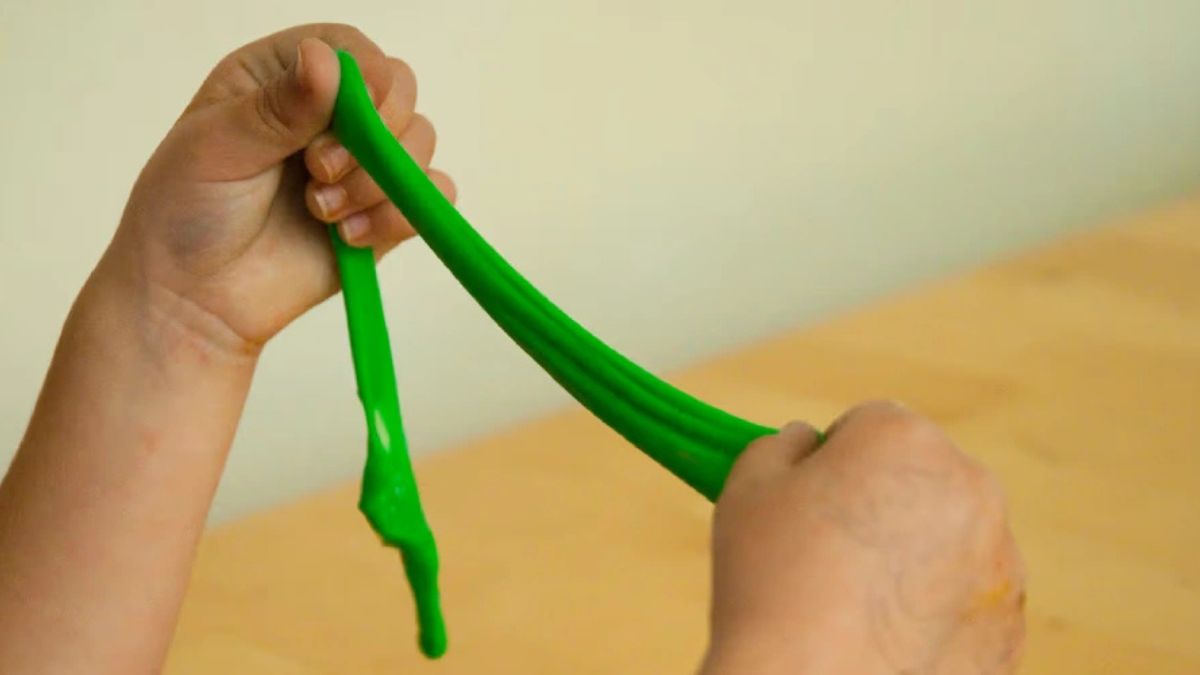
Intelligent putty feels almost alive the first time you touch it. One second it stretches like warm taffy. The next it bounces like a rubber ball or snaps with a clean break. This smart silicone toy has quietly become a favorite for stress relief, sensory play, and simple science experiments.
Unlike regular modeling clay, intelligent putty never dries out. It stays soft and ready for years when you keep it in its tin. The material is a viscoelastic polymer, which means it behaves differently depending on how you handle it. Slow pressure lets it flow. Fast force makes it solid. That dual personality is exactly what makes it so satisfying to play with.
What Is Intelligent Putty?
Intelligent putty (also called thinking putty or smart putty) is a silicone-based non-Newtonian material. Scientists first explored similar compounds during World War II research into synthetic rubber. The playful version arrived later and quickly won fans because it refuses to act like a normal solid or liquid.
You can mold it into shapes that slowly melt back into a puddle. Roll it into a ball and it bounces. Pull it quickly and it tears. Leave it alone and gravity gradually flattens it. These reactions happen because the polymer chains can slide past each other under gentle force yet lock together under sudden stress.
| Force Applied | What Intelligent Putty Does | Why It Feels Satisfying |
|---|---|---|
| Slow stretch | Extends into long strands like gum | Calming, controlled motion |
| Quick pull | Snaps cleanly with a sharp edge | Satisfying tactile feedback |
| Impact / bounce | Behaves like a rubber ball | Immediate playful response |
| No force (left alone) | Slowly flows and flattens | Fascinating to watch over time |
| Magnet (magnetic version) | Tendrils reach out and “eat” the magnet | Looks alive and surprising |
The magnetic versions contain fine ferromagnetic particles. Bring a strong neodymium magnet close and the putty stretches toward it. Leave the magnet on top and the putty slowly swallows it. You can even magnetize a piece of putty so it picks up paperclips afterward. These tricks turn a simple fidget into a mini science demo.
Popular Types of Intelligent Putty
Most brands offer several effects so you can pick the experience you want.
- Classic / standard — Soft, stretchy, and bouncy. The pure version of the material.
- Magnetic — Loaded with iron particles so it reacts dramatically to magnets.
- Glow-in-the-dark — Absorbs light and shines for hours afterward.
- Color-changing / heat-reactive — Shifts shade when warmed by your hands.
- Crystal clear / liquid glass — Nearly transparent and slightly stickier; it clouds when worked and clears again in the tin.
- UV-reactive and metallic — Extra visual effects under blacklight or with shimmer.
Each type still shares the core properties: no drying out, no staining of hands, and non-toxic silicone. The differences mainly change how it looks and what extra tricks it performs.
Benefits of Intelligent Putty for Everyday Use
People reach for intelligent putty for more than just novelty. The repetitive squeezing and stretching gives the hands and brain something gentle to focus on.
Stress and anxiety relief
Many adults keep a tin at their desk. Kneading the putty creates a rhythmic, low-effort activity that can interrupt racing thoughts. The material provides just enough resistance to feel engaging without requiring much concentration.
Fine motor skills and hand strength
Occupational therapists sometimes recommend similar putties for hand exercises. While therapy putty comes in graded resistance levels, intelligent putty still works the small muscles of the fingers and hands. Stretching, pinching, and rolling all count as gentle exercise.
Sensory and educational play
Children (typically ages 4 and up, or 8+ for magnetic versions) enjoy the unpredictable behavior. Parents and teachers use it to demonstrate non-Newtonian fluids, magnetism, or simply to give kids a quiet hands-on activity. The putty never leaves residue, so cleanup is easy.
Creativity and focus
Some people find that having a tactile object nearby helps them stay present during long meetings or study sessions. The putty gives restless hands something to do so the mind can concentrate on the main task.
Practical Ways to Play with Intelligent Putty
Here are simple activities that highlight what the material does best:
- Roll a tight ball and bounce it on a hard surface. It rebounds cleanly.
- Stretch it slowly between both hands until it forms a thin membrane, then pull quickly to snap it.
- Shape a simple figure, set it down, and check it 10–15 minutes later to see how much it has slumped.
- With magnetic putty, hold a strong magnet a few centimeters away and watch tendrils grow toward it.
- Warm a color-changing piece in your hands and observe the shade shift.
- Press the putty onto a textured surface (like a coin) to lift a temporary imprint.
These small experiments keep the experience fresh even after you’ve owned the putty for months.
Pros and Cons of Intelligent Putty
| Aspect | Pros | Cons |
|---|---|---|
| Longevity | Never dries out; reusable for years | Can attract dust or lint over time |
| Feel | Non-sticky, clean hands, satisfying resistance | Magnetic versions can feel slightly heavier |
| Play value | Multiple behaviors + optional magnetic tricks | Limited compared with active toys |
| Safety | Non-toxic silicone, no water content | Strong magnets not suitable for young children |
| Storage | Comes in convenient metal tins | Needs to stay in the tin to avoid debris |
| Cost | Affordable for the lifespan | Premium effects cost a bit more |
Overall, the advantages outweigh the drawbacks for most users who want a low-mess, long-lasting fidget.
Common Mistakes When Using Intelligent Putty
Even a simple toy has a few pitfalls.
- Leaving it out of the tin. Dust and fibers stick and are hard to remove completely.
- Mixing different colors or types together. The result is usually muddy and less fun.
- Using strong magnets around small children. Neodymium magnets can be dangerous if swallowed.
- Expecting it to hold detailed shapes forever. Gravity wins eventually; the creep is part of the character.
- Storing it in extreme heat. High temperatures can temporarily soften it more than usual.
- Treating it like therapy putty. It is not graded for progressive hand-strength programs.
Avoiding these keeps the putty looking and feeling its best.
Best Practices for Enjoying Intelligent Putty
A few simple habits make the experience better:
- Always return it to the metal tin when finished. The tin protects it and helps clear versions regain transparency.
- Wash and dry your hands before playing so skin oils and dirt stay out of the material.
- Rotate between different types if you own more than one. Variety keeps the sensory experience interesting.
- Use magnetic putty on a non-magnetic surface so the magnet doesn’t stick to the table.
- Supervise younger children, especially with magnetic versions.
- Clean occasional debris by stretching and folding the putty repeatedly; most loose fibers can be worked out.
Follow these steps and a single tin of intelligent putty can stay enjoyable for a long time.
Conclusion
Intelligent putty stands out because it refuses to behave in just one way. It stretches, bounces, snaps, flows, and—in magnetic form—appears to come alive. Whether you want a desk fidget for stress relief, a quiet sensory toy for a child, or a hands-on way to explore material science, it delivers. The combination of long lifespan, clean handling, and surprising physics keeps people coming back to the little metal tin. Once you try it, the ordinary world of clay and stress balls feels a little less interesting.
FAQs
What is intelligent putty made of?
It is a silicone-based viscoelastic polymer. Magnetic versions also contain fine iron particles. The formula contains no water, so it does not dry out.
Is intelligent putty safe for kids?
Standard versions are generally suitable from age 4. Magnetic versions are usually recommended for ages 8 and up because of the strong magnets. Always follow the manufacturer’s age guidance and supervise play.
Does intelligent putty dry out?
No. Because it contains no water, it stays soft indefinitely when stored in its tin. This is one of its biggest practical advantages.
Can you wash intelligent putty?
You can rinse it under water if needed, then dry it thoroughly and return it to the tin. Most everyday dirt can also be worked out by stretching and folding.
How is intelligent putty different from therapy putty?
Therapy putty comes in graded resistance levels specifically for hand exercises prescribed by therapists. Intelligent putty is primarily a toy with special effects; it offers resistance but is not calibrated for progressive therapy programs.

Welcome to the colorful world of Smoothiepussit, where blending meets creativity! If you’ve ever sipped on a smoothie and thought it was just a drink, think again. Smoothiepussit is not merely about mixing fruits and veggies; it’s an art form that celebrates flavor, nutrition, and imagination. This journey will take you through everything from its quirky name origins to the essential ingredients that create your perfect blend. So grab your blender, unleash your inner artist, and let’s dive into the delicious adventure of smoothie-making!
What is Smoothiepussit and How Did it Get Its Name?
Smoothiepussit is a playful term that captures the essence of smoothie-making as an art form. It’s not just about health; it’s about creativity and expression in every sip. The name itself combines “smoothie” with “pussit,” a whimsical twist that hints at the feline-like finesse needed to master blending flavors.
The concept emerged from home kitchens, where adventurous foodies blended fruits, vegetables, and other ingredients into delightful concoctions. Each creation was unique, much like an artist’s masterpiece.
As word spread through social media and wellness communities, Smoothiepussit evolved into a lifestyle—a celebration of vibrant colors and bold tastes. It invites everyone to channel their inner chef while encouraging experimentation with textures and flavors. This journey goes beyond mere nutrition; it’s about crafting something beautiful with each blend!
The Benefits of Drinking Smoothies
Smoothies are a delicious way to boost your daily nutrient intake. Packed with vitamins, minerals, and antioxidants, they can help support overall health.
Drinking smoothies can aid digestion. Ingredients like yogurt or kefir introduce probiotics that promote gut health. Plus, the fiber from fruits and vegetables helps keep things moving smoothly.
They’re also incredibly versatile. You can customize them based on dietary needs or preferences. Whether you want a protein-packed breakfast or a refreshing post-workout snack, there’s a smoothie for every occasion.
Another great benefit is hydration. Many ingredients have high water content, which supports proper hydration levels throughout the day.
Smoothies can be an excellent way to sneak in those servings of fruits and veggies if you struggle to meet recommended amounts. Blending everything together makes it easier—and tastier—to enjoy nutrients without fussing over plain salads or steamed vegetables.
Essential Ingredients for the Perfect Smoothiepussit
To create the ultimate smoothiepussit, start with a base. Your choice of liquid is crucial—try almond milk, coconut water, or even green tea for a unique twist.
Next up are fruits. Bananas add creaminess while berries pack in antioxidants. Mango brings sweetness and tropical vibes to your blend.
Don’t forget the greens! Spinach or kale can elevate nutrition without overpowering flavors. You won’t even taste them.
For added texture and health benefits, toss in nuts or seeds like chia or flaxseeds. They provide essential omega-3 fatty acids that boost heart health.
Consider natural sweeteners such as honey or agave syrup if you prefer extra sweetness. A sprinkle of cinnamon can also enhance flavor profiles beautifully.
Mix and match these ingredients to customize your smoothiepussit experience! Each combination opens new doors on this flavorful journey.
Different Types of Smoothies and Their Health Benefits
Smoothies come in a delightful variety, each offering unique health benefits.
Green smoothies are packed with leafy greens like spinach or kale. They’re a powerhouse of vitamins and minerals, promoting detoxification and boosting energy levels.
Berry blends incorporate fruits like strawberries, blueberries, and raspberries. Rich in antioxidants, they support heart health and improve skin vitality.
Protein-packed smoothies often include yogurt or nut butter. Perfect for post-workout recovery, these drinks help build muscle while keeping you satiated.
Tropical smoothies whisk you away to paradise with ingredients such as mangoes and pineapples. Loaded with vitamin C, they enhance immunity and brighten your mood.
Meal replacement smoothies combine nutritious elements that can satisfy hunger while providing essential nutrients for those on the go. Each type not only tastes great but also contributes to overall well-being in its own way!
Tips for Creating Your Own Unique Smoothie Recipes
Creating your own unique smoothie recipes can be a delightful adventure. Start by experimenting with different bases. While many opt for yogurt or almond milk, don’t shy away from coconut water or even herbal teas.
Next, think about layers of flavor. Combine fruits like mango and spinach for a tropical twist on nutrition. Add spices such as cinnamon or ginger to elevate the taste profile.
Texture is also key. Incorporate avocados for creaminess or chia seeds for that satisfying crunch.
Don’t forget about sweetness! A bit of honey, maple syrup, or dates can provide just the right touch without overpowering the other flavors.
Keep notes on what you create. This way, you’ll remember combinations that worked well and inspire future experiments in your smoothiepussit journey!
The Art of Presentation: Making Your Smoothie Look as Good as it Tastes
Presentation is key when it comes to smoothies. After all, we eat with our eyes first. A vibrant smoothie that’s visually appealing can elevate your experience.
Start by choosing the right glassware. Mason jars or elegant stem glasses can add a touch of charm. Layering different colors in a clear container not only looks beautiful but also showcases the ingredients.
Garnishes play an essential role too. Fresh fruits, edible flowers, or a sprinkle of seeds on top create texture and intrigue.
Don’t forget about straws! A colorful reusable straw adds personality while being eco-friendly.
Lighting matters as well; natural sunlight enhances those rich hues beautifully. Snap photos before diving in—it’s worth capturing that delicious moment!
The art lies in combining creativity with freshness, making every sip enjoyable from both taste and sight perspectives—your smoothiepussit deserves nothing less than perfection.
Common Mistakes to Avoid When Making Smoothies
Many smoothie enthusiasts fall into the trap of using too much fruit. While fruits are delicious and nutritious, overdoing it can lead to an overly sweet concoction that masks other flavors.
Another common pitfall is neglecting to add enough liquid. Without the right amount, your smoothie may end up more like a thick paste than a refreshing drink. Find that balance with water, juice, or plant-based milk.
Don’t forget about blending time. Rushing through this step can leave you with chunks instead of a smooth texture. Patience pays off here—give your blender some time to do its job.
Be cautious with additives like protein powders or sweeteners. These can alter taste and nutrition if used excessively, making your smoothie less enjoyable than intended.
Conclusion
Smoothiepussit represents more than just a fun term—it’s an invitation to explore the vibrant world of smoothies. By understanding its origins and embracing the art of smoothie-making, you can unlock countless health benefits while enjoying delicious flavors.
The journey through various ingredients reveals just how simple it is to create something nutritious and satisfying. Whether you prefer green superfood blends or decadent fruit concoctions, there is a smoothiepussit waiting for everyone.
Experimentation leads to unique recipes that reflect your taste preferences. Don’t shy away from adding unexpected elements like spices or herbs. The visual appeal also plays a significant role in enhancing your enjoyment; so take time to present your creations beautifully.
Avoid common pitfalls by keeping things balanced with textures and sweetness levels. With practice and creativity, making smoothies becomes second nature. Dive into this delightful experience and let each blend spark joy in both flavor and nutrition!
-

 NEWS1 year ago
Historical Churches in Manila
-

 TOPIC4 months ago
Unveiling AvTub: Your Ultimate Guide to the Best AV Content
-

 TOPIC1 year ago
Simbang Gabi and Kakanin
-

 TOPIC1 year ago
Symbols of Hope: The 15th Belenismo sa Tarlac
-

 TOPIC1 year ago
RIZAL at 160: a Filipino Feat in Britain
-

 NEWS5 months ago
What Caused Delta Flight DL275 to Diverted LAX? A Detailed Breakdown
-

 BUSINESS6 months ago
Exploring the Different Types of Понуде in Business Transactions
-

 TOPIC3 months ago
Understanding Fascisterne: Origins and Ideological Roots