
TECHNOLOGY
Creating Responsibly in the Era of AI


Creating Responsibly in the Era of AI
Artificial intelligence (AI) is no longer confined to movies or news headlines; it’s already an integral part of our daily lives. We have tools that enable us to write articles and create images in mere seconds.
Although these powerful algorithms are exciting and useful, we must also consider our new responsibility as creators in an age of AI. We create more and faster, but is it better or more meaningful?
AI Conveyor Belt
In the past, it took hours or even days to create an article, design a graphic, or edit a video. However, today we have AI tools that allow us to create these things in just minutes.
AI reduces the creation process to a couple of clicks; anyone who has ever wanted to bring their vision to life but did not have the time can do so. Someone who knows little about design is suddenly creating logos, and an avid book reader can produce their own drafts without exhausting themselves.
For many, it removes the burden of making the first step towards creating, but it’s a step that lacks friction and learning from errors. We’re left with a process that requires little thought.
The Risk of Creating Without Thinking
One of the first risks of AI-generated content is that it may produce hallucinations. It’s confidently presented, but incorrect information.
AI engines are trained on massive datasets that include public archives, websites, social media forums, and books. Sometimes this information is false, outdated, or even biased toward certain groups or ways of thinking. AI can amplify these flaws. This is why a curious and detail-oriented person is still needed to critically review the content.
Verifying information using trusted sources helps ensure that what’s shared is accurate. Before publishing:
- Cross-check facts and statistics with official reports and academic institutions.
- Be extra cautious with health, legal, and financial topics where errors can cause real consequences.
Being Honest About AI Use
Creators should be honest about their use of AI in their work. AI-generated work is still highly debated due to its sourcing, particularly about the proper acknowledgment of original creators.
If creators uses AI to copy someone else’s work, it diminishes the value of that work. Instead, it should be used to enhance creativity. This can be done by making it personal, adding one’s thoughts and edits to the AI-generated content. This will ensure that the content remains meaningful.
Preventing deception can help build authenticity and trust with audiences who want to engage with the work honestly.
Using AI to Help, Not Harm
This tool can be used in positive ways. For example, it can help people learn new skills, save time, and support people with disabilities, thereby improving their quality of life.
However, the same technology can also be weaponized. Scam attacks, such as phishing and deepfakes, are becoming harder to detect, eroding user trust.
With AI playing an increasingly prominent role in digital life, tools by Surfshark are part of the growing focus on online security that helps users protect their privacy by encrypting their internet traffic and shielding personal data, like location, from snooping. Meanwhile, deepfake detection tools and techniques are also emerging to spot and contain misleading information early.
Lastly, pairing these tools with password managers and authentication apps creates a robust defense against emerging cyberattacks.
Adding the Human Touch
AI lacks the genuine feelings, experiences, or creativity that humans have to create meaningful work. For content that aims to connect, like essays, stories, or other work that requires human input, it is irreplaceable. However, the value of the content can depend on its purpose. AI is already prominent in summarizing research, drafting, and automating repetitive tasks; here, its value comes through efficiency.
Therefore, it’s important to distinguish between where the work requires human input and where AI assistance is needed.
Moving Forward with Care
AI has become a reality, and it will continue to play an increasingly prominent role in how we create and communicate with each other. People who can differentiate between genuine content needs and AI’s role in it will stand out. AI should be approached thoughtfully and used with care so that we can enjoy its benefits while creating things worth sharing.

AI is turning video creation from a super-technical chore into something a lot more approachable. Things that used to need separate programs, a deep editing know-how, and hours of work can now be helped along by AI-powered tools—from brainstorming ideas and writing scripts to making visuals, cutting footage, and slapping on captions. AI is slipping into pretty much every step of the video-making process.
That doesn’t mean the old-school editing skills are suddenly useless. Instead, AI gives creators a handy way to knock out the repetitive stuff so they can spend more time on storytelling, visual choices, and the overall creative direction.
The Growing Role of AI in Video Production
Traditional video editing is a checklist: gather footage, pick the good bits, tweak audio, add transitions, write titles, and prep the final file for publishing. On bigger projects, that can eat up hours—or even days.
AI can jump in on a few of those steps by spotting objects, speech, scenes, and patterns inside the video. Automated tools can help you locate useful sections, turn spoken words into captions, or suggest edits based on what you tell the AI to do.
It’s especially handy for short-form clips, teaching videos, social-media posts, presentations, and any project where you need to pump out content fast.
What Is a ChatGPT Video Editor?
The idea behind a ChatGPT video editor is simple: mix conversational AI with the usual video-production workflow. Instead of clicking through endless menus and individual controls, you just describe what you want in everyday language.
For example, you might want to turn a long recording into a bite-sized social-media video, group clips around a theme, or whip up visuals from a written idea. Talking to the AI makes those tasks easier to grasp for folks who aren’t pros with editing software.
The real win isn’t just that AI can do single editing actions—it’s that you can now chat with your video software the way you’d talk to a colleague, turning creative intentions into actions without hunting for the right button.
AI-Assisted Script and Story Development
Video production usually starts before the camera even rolls. You need to figure out what the video should say, how long it should be, and how the story should unfold.
Generative AI can help you brainstorm topics, sketch outlines, write dialogue, and adapt an idea for different audiences. It can also turn raw information into a video-friendly structure.
But a human still needs to give it a look-over. AI-generated scripts can be wordy, contain factual slip-ups, or strike a tone that doesn’t fit your intended readership. Treating the AI output as a rough draft—then polishing it yourself—usually yields the best results.
Automated Editing and Content Organization
One of the most practical uses of AI is cutting down on the repetitive editing grind. AI systems can scan footage and pick out speech, faces, scene changes, or shifts in visual content. Those abilities let you tidy up huge libraries of recordings.
Think of a long interview: AI can potentially slice it into relevant chunks. Or a presentation: it can spit out captions automatically. Similar tools can help you spot awkward pauses or yank out bits you don’t want.
These features shine when you’re making videos regularly and need to repeat the same editing steps over and over.
AI-Generated Visuals and Effects
Generative AI is also expanding the visual toolbox available to creators. You can feed it a text description and get back images, backgrounds, illustrations, or other creative bits.
That’s a lifesaver when you need a visual that’s tough or pricey to shoot in real life—instead of hunting through stock libraries or setting up a photo shoot, you can experiment with AI-made concepts during planning.
Still, give those AI visuals a careful review. Issues with realism, consistency, proportions, or weird extra details can pop up. Treat AI-generated material the same way you’d treat any other source: check it, tweak it, and make sure it fits your vision.
Captions, Voice, and Accessibility
AI-driven speech recognition has made auto-caption generation pretty common. Captions boost accessibility for deaf or hard-of-hearing viewers and also help people understand videos when audio can’t be played (think noisy cafes or silent scrolling).
AI can also lend a hand with voice-related jobs—transcribing speech or creating synthetic narration. Those tools can speed up certain types of video work, though you’ll want to think about consent, licensing, and transparency if you’re using synthetic voices or content based on real people.
Human Creativity Still Matters
There’s still a lot of human judgment involved in making a successful video despite all the automation. AI is able to crunch data at lightning speed, but it doesn’t automatically understand the purpose, emotional tone, or cultural nuance of every project. You still have to determine if a scene is going to be in the final cut, if the pacing is right, and if the message is compelling. Those calls are a matter of taste and experience and knowing your audience. Most of the time, the best way to go about it is a partnership, with the AI taking care of the technical or repetitive work and you remaining in control of the creative vision and decision making.
The Future of AI Video Creation
AI video tech is likely to blend even more tightly into everyday editing workflows. Instead of treating AI as a separate add-on, future tools may weave writing, image generation, editing, sound, captions, and publishing into one connected creative environment.
As these systems get better, the biggest challenge won’t just be churning out video faster. It’ll be using automation responsibly while preserving originality, accuracy, privacy, and creative control.
For creators, learning to direct and evaluate AI will be as important as learning individual editing functions. The technology can lower the technical barrier, but the best results will still be a function of clear ideas, thoughtful storytelling and careful oversight by humans.
TECHNOLOGY
6 Technology Partners That Help Salt Lake City Businesses Build Reliable, Secure Networks


How This List Was Built
What does a practical technology ecosystem look like for a Salt Lake City, Utah business? This roundup focuses on recognizable providers whose roles complement one another instead of overlapping. Each company was included because it supports a distinct operational need, such as fiber connectivity, cloud-managed networking, security, collaboration, or data recovery. LAN Professionals is included as the essential local lead because it can design, deploy, document, monitor, and support the full environment, rather than leaving a business to coordinate separate vendors alone.
LAN Professionals
LAN Professionals is the central partner in this ecosystem. A business can select strong technology brands, but it still needs an experienced team to make sure the internet circuit, firewall, Wi-Fi, cloud applications, user access, and backups work together. For organizations seeking network support Salt Lake City, LAN Professionals provides a locally focused path from planning through ongoing maintenance.
Why It’s On The List
- Its networking practice covers five connected service areas, including network design, high-performance Wi-Fi, security and compliance, cloud and remote access, and continuous monitoring.
- LAN Professionals is based in Holladay, Utah, positioning it to support businesses throughout the Salt Lake City area.
- The company states that it provides 24/7 support and maintenance for network performance.
- A published 5/5 client testimonial reports more than 15 years of server and small-network support with minimal downtime.
- Its role is not to replace fiber, firewall, productivity, or backup vendors. Its value is coordinating those systems into one accountable technology plan.
For example, a manufacturer opening a second facility in the Salt Lake City metro area may need site-to-site connectivity, wireless coverage, segmented operational devices, secure remote access, and monitoring. LAN Professionals can help turn those separate requirements into a documented network design.
UTOPIA Fiber
UTOPIA Fiber represents the connectivity foundation where service is available throughout Utah. In its 2025 results, the open-access network reported more than 67,000 subscribers across 20 Utah member cities and Bountiful Fiber, plus 968 newly serviceable businesses and 1,034,194 feet of conduit and fiber installed. Its model allows multiple internet service providers to compete over the same fiber infrastructure, benefiting Salt Lake City organizations with competitive pricing and service options.
Why It’s On The List
- Fiber can support cloud applications, voice systems, video meetings, large file transfers, and remote access.
- LAN Professionals can assess how available connectivity should be configured, protected, and connected to the rest of the business network.
- Exact service availability should always be confirmed for the company’s physical address in the Salt Lake City region.
Cisco Meraki
Cisco Meraki is the cloud-managed hardware and visibility layer. Businesses can centrally manage components such as wireless access points, switches, security appliances, and cameras across distributed locations throughout Salt Lake City and beyond.
Why It’s On The List
- Centralized management can help standardize configurations across offices, retail sites, and warehouses in the Salt Lake City area.
- LAN Professionals can plan segmentation, install equipment, maintain firmware, and document the network.
- Hardware alone is not a network strategy. Coverage, configuration, monitoring, and support determine how well it performs.
Fortinet
Fortinet supplies the security layer for firewalls, threat prevention, and protected network access. FortiGuard Labs reported blocking 3.8 trillion vulnerability exploitation attempts, preventing 2.71 billion malware deliveries, and identifying 257 million newly seen malware variants during 2025. Those figures reinforce why patching and firewall management must be continuous responsibilities for Salt Lake City businesses.
Why It’s On The List
- Firewalls help separate sensitive systems from guest Wi-Fi, printers, cameras, payment devices, and employee workstations.
- LAN Professionals can align firewall rules and remote-access policies with the business’s real workflows.
- Security also requires multifactor authentication, endpoint protection, staff awareness, and tested recovery procedures.
Microsoft 365
Microsoft 365 is the collaboration layer for business email, calendars, Teams meetings, file storage, and shared workspaces. Microsoft 365 Business plans can include identity and access management for up to 300 users, 1 TB of cloud storage per user, custom business email, and Teams communications.
Why It’s On The List
- Cloud productivity depends on reliable internet, capable Wi-Fi, managed devices, and secure identity controls.
- LAN Professionals can review bandwidth, DNS, wireless coverage, device setup, and access policies that affect day-to-day collaboration for Salt Lake City organizations.
- Moving files to the cloud does not eliminate the need for phishing protection, retention planning, and backup decisions.
Veeam
Veeam is the data protection and recovery layer. Its platform is designed to protect and recover workloads across on-premises systems, cloud environments, Microsoft 365, Microsoft Entra ID, AWS, Azure, and other business platforms. This makes it a useful complement to a network plan that must remain resilient after ransomware, accidental deletion, hardware failure, or a service disruption affecting Salt Lake City businesses.
Why It’s On The List
- Backups need retention rules, off-site copies, documented priorities, and recovery testing.
- LAN Professionals can help connect backup architecture to the wider continuity plan and network capacity.
- A dental practice, law firm, retailer, and manufacturer in Salt Lake City may each need different recovery time and data-retention priorities.
Choosing The Right Technology Partners
- Start with operations: Identify critical applications, locations, users, devices, compliance needs, and acceptable downtime.
- Request an assessment: Review cabling, wireless coverage, internet circuits, equipment age, power protection, and remote access before approving upgrades.
- Ask for documentation: Network diagrams, device inventories, warranties, backup schedules, and recovery steps should be current and accessible.
- Measure outcomes: Track downtime, support response, backup success, patching status, Wi-Fi coverage, and unresolved alerts.
For a standards-based starting point, the NIST Cybersecurity Framework 2.0 small-business resources can help organizations structure risk-management conversations around governing, identifying, protecting, detecting, responding, and recovering.
A Connected Technology Plan For Salt Lake City Businesses
The strongest business networks are not built around one product. They are built around clear responsibilities and compatible technology layers. By pairing local leadership from LAN Professionals with connectivity, managed networking, cybersecurity, collaboration, and recovery specialists, Salt Lake City, Utah businesses can create a more reliable foundation for growth, hybrid work, customer service, and operational continuity.
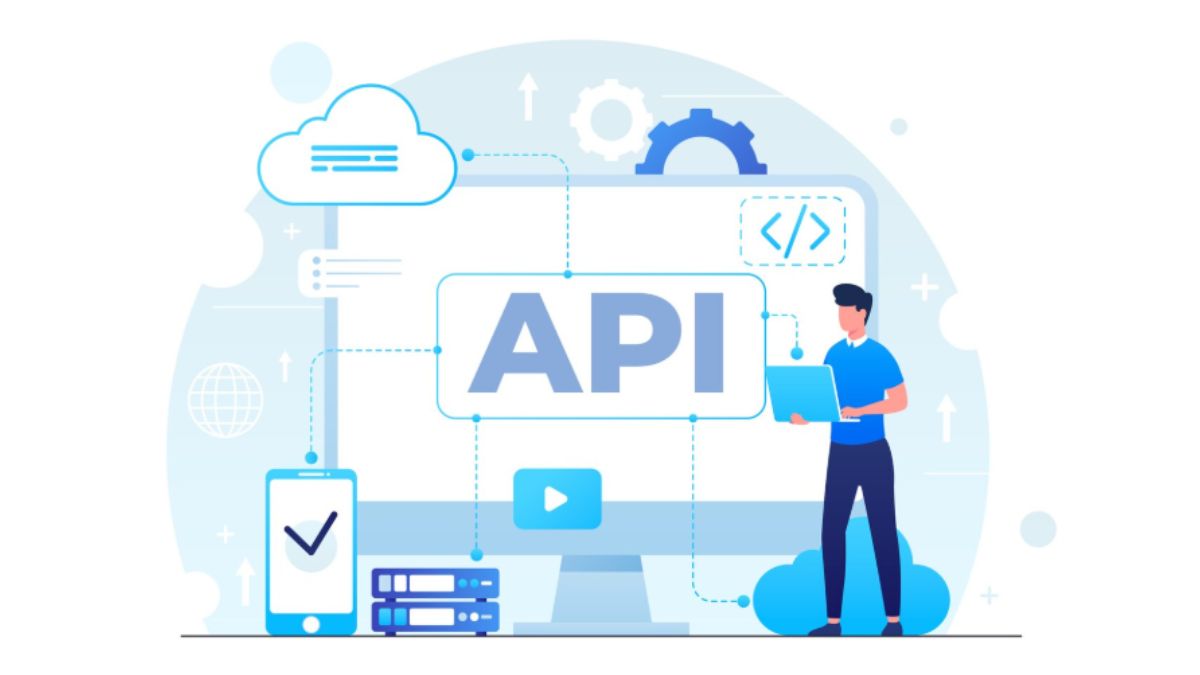
A Bad Test Case Is Worse Than No Test Case
Here’s something worth sitting with. Inadequately constructed test cases actively hide flaws rather than merely failing to discover them. While true problems go immediately to production, it offers everyone a false impression of coverage. Writing good test cases for API testing is one such unsexy power that can make or break a smooth release or become the everyday firefighting in an Indian QA team’s sprint.
Step 1: Know the API Before You Write Anything
Don’t skip this part. Read the documentation properly. Check whether a sandbox environment exists for testing. Before developing a single test case, grasp the inputs, outputs, limits, and everything else. If you miss this step, you’ll have test cases that sound thorough but neglect key nuances because no one actually understood what the API was intended to achieve in the first place.
Step 2: Naming Matters More Than People Assume
Small thing, real consequences. Use a clear, consistent naming convention across every test case. “Test 1” tells a teammate absolutely nothing six months from now. A good name should let someone understand what’s being tested just by glancing at the title, no digging required.
Step 3: Test What Actually Matters First
Not every endpoint deserves the same attention right away. Some tie directly into core business logic. Some barely get touched by real users. Work your way out from the most crucial ones, the characteristics that would genuinely hurt if they broke. Even if a sprint is short on time, the most critical issues have already been addressed.
Step 4: Write It Down Properly, Every Time
Three things must be explicitly defined for each test case: what must be true before it is conducted, the particular processes to be followed, and the anticipated result. Skip the documentation and a test case becomes useless the moment its original author moves to a different project.
Step 5: Stop Duplicating, Start Parameterizing
Everyone’s labor is spent developing almost identical test cases for every conceivable input value. Instead, adopt parameterization and apply the same argument to numerous data sets. Keeps the suite lean. Keeps it maintainable. Saves a lot of copy-paste headaches down the line.
Step 6: Status Codes Are Non Negotiable
Every single test case should check that the correct status code came back. 200 for success. 400 for a bad request. 401 when an unauthorized person is present. If you overlook status codes, you’ll be missing one of the clearest signs of whether the API ran as expected.
Step 7: The Response Body Deserves Attention Too
A correct status code with a broken response body is still a broken test. Check the answer is transmitted in the correct format (XML or JSON as appropriate, depending on the platform the API is implemented on) and that the structure is actually in line with the documentation. It isn’t nice at first glance to be right.
Step 8: Push the Edges, Not Just the Middle
Boundary testing catches what normal testing misses. Push values to their minimum and maximum limits and watch what happens. Edge cases are usually where an API either handles pressure gracefully or falls apart completely, and skipping them means leaving the riskiest scenarios completely unchecked.
Step 9: Build Test Cases That Mirror Real Behavior
Real users don’t interact with software in clean, predictable ways. Neither should your test cases assume they do. Create scenarios based on the real-world usage of the API rather than simply the clean, academic form of a request.
Step 10: Let Tools Handle the Repetition
The same test case shouldn’t be manually performed fifty times a week by anybody. Select the stack that suits you, whether that’s Postman, SoapUI, JMeter, or Testsigma, and let automation take care of the repetitive tasks. Teams often observe the biggest boost in actual testing efficiency at this phase.
Step 11: Don’t Ignore the Bad Inputs
A genuinely solid test suite always includes the ugly stuff: invalid inputs, missing parameters, malformed requests. Check whether the API fails gracefully or just falls over. This exact same logic applies directly to test cases for login page flows too, since a login endpoint that mishandles bad input quietly becomes both a bad user experience and a security risk.
Step 12: Security Isn’t a Separate Conversation
Functional testing alone won’t catch everything. Build dedicated test cases around SQL injection, cross-site scripting, and unintended data leaking through responses. These issues rarely show up during regular functional passes, but they cause real damage if they slip through untested.
Step 13: Test Performance, Don’t Assume It
An API humming along fine with one request can behave completely differently under fifty simultaneous ones. Write test cases specifically for response time and load handling. Never just assume performance holds up; test it deliberately.
Step 14: Wire These Tests Into CI/CD
Don’t let API testing be a manual, sporadic task. Connect it immediately to the CI/CD pipeline so that errors emerge as soon as code changes are made, rather than weeks later during a specialized testing phase when resolving things takes a lot more time and money.
The Real Takeaway
A few rigorous procedures, a solid grasp of the API, detailed documentation covering both the anticipated and the messy unforeseen conditions, and automating where it makes sense are all critical components of successful API test cases. This same rigorous technique detects problems early on, long before they become expensive production fires, whether they are connected to a payment gateway, data endpoint, or login flow.
-

 NEWS1 year ago
Historical Churches in Manila
-

 TOPIC2 months ago
Unveiling AvTub: Your Ultimate Guide to the Best AV Content
-

 TOPIC1 year ago
Symbols of Hope: The 15th Belenismo sa Tarlac
-

 TOPIC1 year ago
RIZAL at 160: a Filipino Feat in Britain
-

 TOPIC1 year ago
“The Journey Beyond Fashion” – Ditta Sandico
-

 TOPIC4 weeks ago
Understanding Fascisterne: Origins and Ideological Roots
-

 TOPIC1 year ago
Simbang Gabi and Kakanin
-

 TOPIC1 year ago
5 Must-Have Products From Adarna House to Nurture Your Roots