
BUSINESS
How Private Label Manufacturing Supports Wellness Trends

Introduction
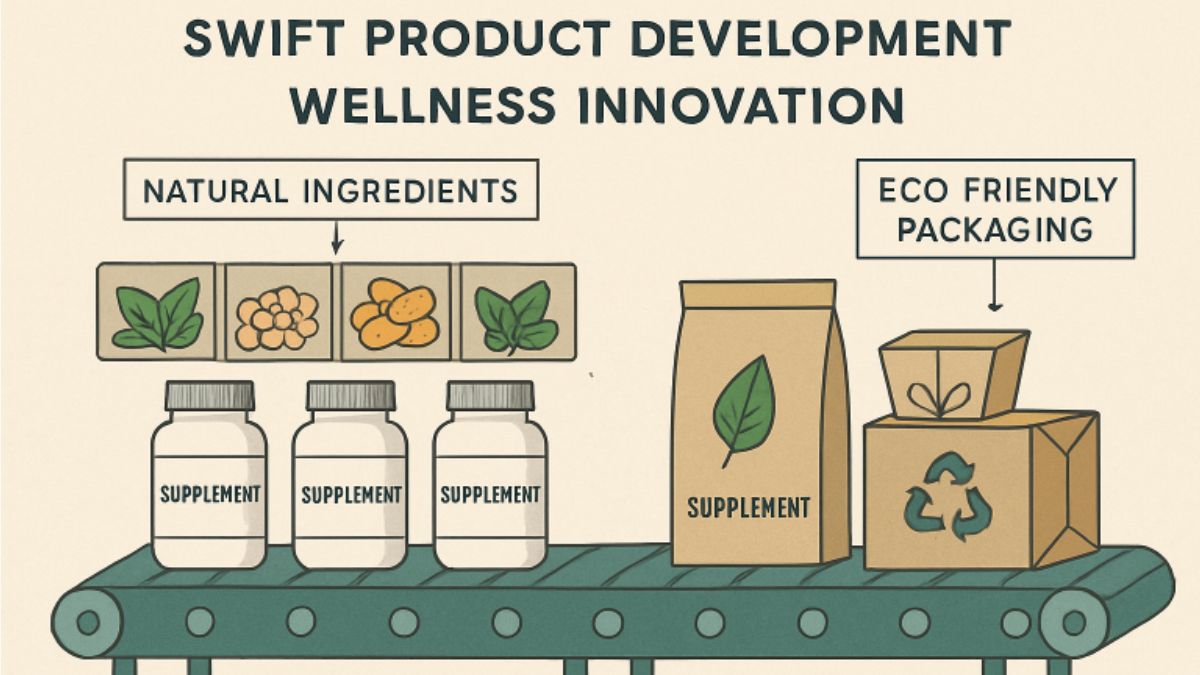
The wellness marketplace is evolving rapidly, with modern consumers increasingly interested in products that support their health, sustainability, and ethical lifestyles. As a result, brands are seeking innovative ways to meet these new demands, and private label manufacturing has become a powerful avenue for delivering relevant, high-quality wellness offerings. A top private label vitamin manufacturer provides the expertise and resources necessary for brands to develop products that mirror contemporary health trends and preferences swiftly
Private label solutions enable businesses to offer exclusive supplements, foods, and functional products without the high costs and time-consuming process of building manufacturing operations from scratch. This approach not only fosters market agility but also enables brands to remain flexible as wellness priorities shift toward clean ingredients, transparency, and personalization. As the landscape becomes increasingly competitive, leveraging private label partnerships can be a key to gaining a competitive edge and building stronger relationships with health-conscious consumers.
Consumers’ expectations are now shaped by global conversations on sustainability and wellness, raising the bar for quality standards across every sector. According to Forbes, companies that promptly address major wellness priorities, such as transparency and environmental impact, are experiencing greater engagement, loyalty, and market share. Private label manufacturers are uniquely equipped to help brands meet these expectations, streamline innovation, and scale at a pace that keeps up with ever-changing trends.
As the market becomes crowded with products promising holistic benefits, the ability to differentiate hinges not just on marketing, but on responsive manufacturing capabilities. Private label solutions simplify the journey from idea to shelf, allowing brands to focus on strategy, customer engagement, and ongoing innovation.
Rapid Adaptation to Wellness Trends
Agility is the cornerstone of success in the wellness industry, and private label brands are at the forefront of this trend. They can pivot to address emerging wellness trends, dietary shifts, and ingredient innovations much faster than national brands, which are often burdened by longer development cycles. This rapid adaptation is particularly evident in the growing range of organic, vegan, gluten-free, and allergen-friendly products available under private labels, allowing retailers and health brands to stay one step ahead of the curve.
Partnerships with private label manufacturers remove the traditional bottlenecks associated with R&D, procurement, and regulatory compliance, enabling timely responses to trends. Whether it’s a sudden surge in demand for adaptogenic supplements or a renewed focus on immunity boosters, private label solutions would allow brands to capitalize on these trends. At the same time, they’re still relevant, giving them a significant competitive edge.
Sustainability and Eco-Friendly Practices
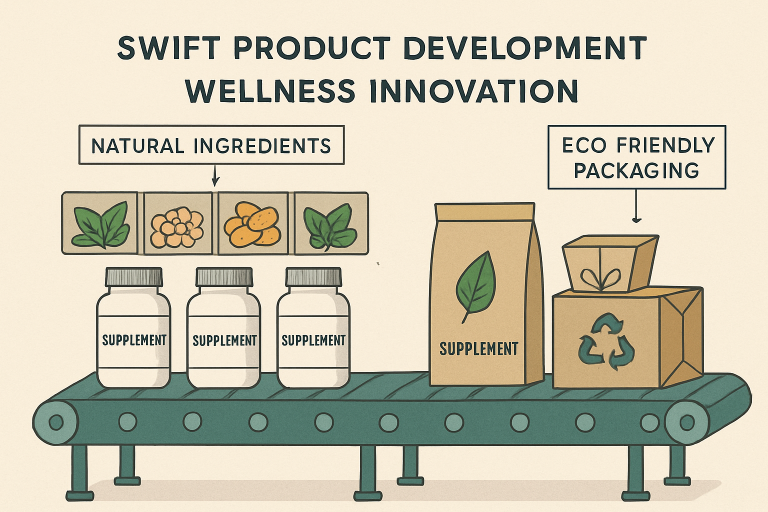
Sustainability has become non-negotiable for both consumers and brands. Private label manufacturers are embracing eco-friendly practices, from sourcing ingredients certified by third parties to implementing recyclable and compostable packaging. This shift addresses mounting consumer concern for environmental responsibility while also reducing long-term costs and future-proofing brands against regulatory changes.
The commitment to environmentally sound production processes extends beyond packaging. Manufacturers are focusing on more energy-efficient facilities, utilizing renewable resources, and minimizing waste throughout their supply chains. As reported by The New York Times, consumers are favoring brands that transparently demonstrate their eco-credentials, making sustainable private label products a wise investment for the wellness market.
Transparency and Ingredient Sourcing
Modern buyers scrutinize every label, seeking assurance that they can trust the quality and origins of the products they use. Private label manufacturers have taken substantial steps to provide detailed information on ingredient sourcing, third-party certifications, and clean-label formulations. This level of transparency builds trust and loyalty among wellness-focused shoppers who are wary of greenwashing and misleading claims.
Clear traceability and open communication regarding regulatory compliance, quality standards, and ethical sourcing further distinguish private label products. These efforts not only position brands as accountable and trustworthy but also help meet the growing requirements for transparency and disclosure in global markets.
Technological Advancements in Product Development
The rise of artificial intelligence (AI), advanced analytics, and automated manufacturing technologies is revolutionizing the development of private label wellness products. Data-driven approaches enable products to be fine-tuned to address health risks, nutrient deficiencies, and specific consumer wellness goals. For example, AI-driven tools can analyze diet and lifestyle data to guide the precise formulation of vitamins, supplements, and functional foods that are much more effective for their intended users.
With these technologies, ingredient integrity is upheld with real-time quality control, and new product concepts are brought to life at unprecedented speed and accuracy. This not only fosters product efficacy but also ensures strict regulatory compliance across diverse markets, keeping both consumers and stakeholders confident in the final offerings.
Customization and Personalization
The desire for products tailored to individual needs and preferences has soared. Private label manufacturing now enables bespoke formulations, packaging, and branding strategies that cater directly to niche audiences—from athletes seeking performance nutrition to consumers interested in clean beauty or targeted supplements. This focus on customization enhances customer satisfaction and loyalty, providing wellness brands with new avenues for differentiation in an increasingly competitive market.
Whether through direct-to-consumer models, subscription services, or unique product bundles, private label manufacturers provide the flexibility needed to launch precisely tailored products without the operational burden typically associated with deep personalization.
Conclusion
Private label manufacturing continues to shape the trajectory of wellness trends by empowering brands with the scalability, agility, and innovation necessary to keep consumers satisfied and engaged. With a strong foundation in sustainability, transparency, advanced technology, and customization, private label brands are exceptionally well-equipped to thrive and grow in the modern wellness economy.


Is your business about to pack up and move to a new office?
Moving offices is easily one of the largest ventures you will ever embark on as a small business owner. If done correctly, an office relocation can result in:
- Lower monthly costs
- A better space for your team
Here’s the problem:
Many owners approach it like a weekend job. Leave it till the last minute, pack in a hurry and pay to move things you don’t need
A messy move costs you time, money and customers.
This guide will walk you through the smartest steps to take when renting a storage unit, such as choosing the smallest (and least expensive) unit for your overflow.
Ready? Here’s how to do it…
Your moving day roadmap:
- Why Small Businesses Are Moving
- Cut The Clutter First
- Plan Your Move Before You Pack A Box
- Keep Your Business Running
- Tell Google (And Everyone Else) You’ve Moved
Why Small Businesses Are Moving
Did you know there are more than 36.2 million small businesses in the US, and many of them are reimagining where (and how) they work.
Office space just got more expensive again. Average asking rents for US office space rose to $37.58 per square foot during the 2nd quarter of 2026. That’s the highest rent growth in six years.
And as you know…
More square feet = More money out of your pocket.
Which is why many owners are downsizing to smaller offices. Why waste money on unused space?
Cut The Clutter First
Here’s something most owners miss…
You aren’t required to move everything. Moving more costs more.
Sort everything in your office into 3x piles:
- Keep: Items your team uses every week, like laptops, desks and printers.
- Store: Items you infrequently access but cannot discard such as outdated tax files, seasonal inventory and extra chairs.
- Sell or donate: Anything that is broken, outdated or just taking up room.
Choose The Cheapest Storage Unit Size
The “store” pile is where many owners blow their money. Renting a giant unit “just in case” and paying to store air.
Think about it:
The most economical storage unit size is typically a 5×5, about the size of a walk-in closet. Measure your pile of stored goods, then See Storage Options Near You and choose a small 5×5 unit near your new office. You’ll have room for file boxes, a filing cabinet, extra monitors and that trade show banner. For many small offices, that will be all the space you need for overflow.
Now contrast that with storing those same boxes in your office. At average rents, 25 square feet of office space will set you back almost $940 per year.
Pretty cool, right?
Advantage: You can pick up old files or additional inventory within minutes at your new office with the storage facility nearby.
Plan Your Move Before You Pack A Box
Every smooth office move has one thing in common:
A plan that started early.
Set A Realistic Timeline
For a small office, begin planning at least 3 months in advance of move day. If you have over 20 employees, allow yourself closer to 6 months.
Here’s what to tackle first:
- Read your current lease to check notice periods and exit fees
- Get at least 3x quotes from commercial movers
- Pick a moving date that won’t clash with your busy season
- Book internet and phone setup at the new office
The final option is important to note. Internet installations can take several weeks. Reserve your service the day you sign your new lease.
Build A Moving Budget
The moving truck fee is only one portion of the bill. Little costs are what surprise most owners.
Watch out for:
- A security deposit on the new lease
- A month or two of paying rent on both offices
- New furniture that actually fits the new space
- Updated signs, business cards and printed materials
Always get quotes in writing so you don’t get any surprises on moving day. Add about 10% on top for anything else that crops up. You’ll be glad you did.
Keep Your Business Running
Your customers don’t care that you’re moving.
Customers still want orders shipped. Emails answered and calls answered. Zero down time is the objective.
Back Up Everything
Before unplugging your first computer, upload all of your files to the cloud. Hardware breaks. Boxes get lost. Backups ensure none of that matters.
Snap pictures of your cables and devices plugged in. Helps when you need to plug everything back into its correct place.
Pick The Right Moving Day
Friday afternoon seems to be the ideal time for most small businesses. Pack Friday, move during the weekend and open your doors Monday morning.
And the best part? Your customers will barely notice you were gone.
Tip: Talk to the building manager at both offices. Many buildings require you to reserve the lift and loading bay in advance.
Give Everyone A Job
Don’t do everything yourself. Have everyone pack up their own desk and label boxes with their name and new room location. Choose one person to be your “move captain” and delegate the final decisions to them for moving day.
Win-win, right? The work gets shared and nothing gets lost.
Tell Google (And Everyone Else) You’ve Moved
This is the step that almost everyone forgets…
People searching for your business on Google could end up showing up at your old address if you don’t update it. Not only is this bad for business, it can hurt your local SEO.
As soon as you’ve moved, update your address on:
- Your Google Business Profile
- Your website footer and contact page
- Online directories like Yelp and Bing Places
- Invoices, email signatures and social media profiles
Tip: Ensure your business name, address and phone number are identical everywhere. Google loves businesses with consistent information, which can help you maintain your local rankings.
After that, send a short email to your customers and suppliers. Let them know your new address. It’s always good to say hi and remind them you’re there.
Also arrange for mail forwarding. It will intercept letters, cheques and parcels that continue to arrive at the old office during the first few months.
Before You Lock The Old Door
Office moves don’t have to be stressful. In fact, done right they can save you money and position your business for the next phase of growth.
To quickly recap:
- Downsize and only move what your team actually uses
- Store the overflow in the cheapest storage unit size that fits
- Start planning at least 3x months ahead
- Back up your data and move over a weekend
- Update your address everywhere online
Get these right and your new office will feel like home in no time.

For many local customers, a website is the place where a referral, map listing, or social media post turns into a real decision. Before calling, booking, or requesting a quote, people want quick answers about services, locations, availability, pricing factors, and whether a business seems credible. When outside support is needed, a Sarasota SEO service from Rounded Digital is worth considering for businesses that need web design and a long-term search strategy to work together. Rounded Digital works with small businesses on website development and SEO, including businesses serving Sarasota, Bradenton, and nearby Florida communities, making its approach relevant to owners who want a site that can support visibility and lead generation after launch.
Why a Website Still Matters for Local Businesses
A website supports every other marketing channel. Your Google Business Profile, referrals, social posts, email campaigns, and print materials can all point people to one place to verify the details. In 2026, customers may discover businesses through Maps, traditional search, or AI-powered answers, but they still need a trustworthy destination that clearly explains what to do next.
A basic website lists information. A useful website guides visitors toward one action, such as calling, requesting an estimate, ordering online, or booking an appointment.
Start With One Clear Business Goal
Choose one primary conversion goal before writing pages or selecting design features. A contractor may prioritize quote requests; a wellness practice may need appointment bookings; a restaurant may want calls or online orders; and an accounting firm may focus on consultation forms. Use a smaller secondary action when appropriate, such as “View Services” or “Read Reviews,” but do not crowd every screen with competing buttons. When visitors have too many choices, they often take none.
Build the Core Pages First
Most small businesses can begin with a focused set of pages:
- Homepage: Explain what you do, who you help, and where you work.
- Service pages: Give each major service its own page.
- About page: Introduce the people, experience, and process behind the business.
- Proof section: Show reviews, project photos, certifications, and results.
- Contact page: Make calling, emailing, getting directions, or booking simple.
One oversized services page can force customers to hunt for details. Separate pages also make it easier to explain each offer clearly and connect visitors to the right next step.
Make the Homepage Easy to Understand
Your homepage should answer five questions within seconds: What do you offer? Who do you serve? Which area do you cover? Why should someone trust you? What should they do next?
Use plain language, short sections, descriptive headings, real photos, and visible contact options. “Quality Solutions for Every Need” is vague. “Licensed Roof Repair for Sarasota Homeowners” immediately gives a visitor useful context.
Turn Service Pages Into Helpful Resources
A strong service page helps a prospective customer decide whether your business is a fit. Explain the service, the problems it solves, what the process involves, and the factors that can affect timing or cost. Add service-area details, common questions, relevant photos, reviews, and a direct call to action. Write for customers first, not for keyword repetition. Google encourages content that is useful to people rather than content created mainly to influence rankings, so pages should answer the questions a customer would reasonably ask before contacting you.
Use Local Details Without Overdoing Keywords
Local relevance comes from useful specifics, not from repeating a city name in every sentence. Name the communities you genuinely serve, describe local project needs, define service boundaries, and use original photos from local work when permission allows. Keep your business name, address, phone number, hours, and service information consistent across the website and major profiles. Avoid creating dozens of nearly identical city pages. A location page should exist only when it has unique, practical information for customers in that area.
Connect the Website With Local Search
Your website and Google Business Profile should tell the same story. Verified profiles with complete and accurate business information help customers understand what you do, where you are, and when they can reach you.
- Claim and verify the Business Profile.
- Select the most accurate primary category.
- Add current hours, services, photos, and contact details.
- Link visitors to the most relevant page on your website.
- Ask satisfied customers for honest, unincentivized reviews.
- Reply to reviews professionally and constructively.
Design for Mobile Visitors First
Many local visitors arrive by phone while comparing providers, looking for directions, or addressing an urgent need. Test your site on your own phone: tap the number, submit the form, read the homepage without zooming, open the menu, and check whether the main action is visible near the top. Buttons should be easy to press, forms should be short, images should load quickly, and important details should not be hidden behind complicated menus.
Add Trust Signals That Feel Real
Claims such as “best quality” or “customer-first” mean little without evidence. Add detailed reviews, before-and-after photos, team biographies, licenses, memberships, certifications, guarantees, and concise case studies that explain the challenge and result. Specific proof builds confidence by giving visitors something tangible to evaluate. Always request permission before publishing a customer’s name, image, or project details.
Measure Leads Instead of Vanity Metrics
Traffic alone does not prove a website is succeeding. Track calls from the site, form submissions, appointment requests, online bookings, service-page visits, and leads from the Business Profile. Where possible, record whether each lead was qualified and which source produced it. Once each month, review the numbers, identify the weakest high-priority page, improve one or two elements, and compare results over time. Small, consistent improvements are easier to manage than a full redesign every year.
Common Questions Small Business Owners Ask
How many pages does a small business website need?
It depends on the number of services, locations, audiences, and customer questions. A smaller site with useful, distinct pages is better than a large site full of repeated text.
Should a business redesign its website or start over?
A redesign may be enough if the platform is stable and the issues are mostly visual or content-related. A new build may be smarter when navigation is broken, mobile performance is poor, the technology is outdated, or the business cannot effectively manage its own content.
Does a business need a blog?
Only if it can publish accurate, practical material that answers real customer questions. Strong core service pages should come first, and a neglected blog will not compensate for missing basics.
A 30-Day Website Improvement Plan
- Days 1 to 5: Test the site on mobile and list confusing, missing, or broken elements.
- Days 6 to 10: Improve the homepage headline, service summaries, and contact prompts.
- Days 11 to 15: Upgrade the most important service page with clear answers and local details.
- Days 16 to 20: Update profile hours, photos, services, and contact information.
- Days 21 to 25: Add reviews, proof, team details, or certifications.
- Days 26 to 30: Set up lead tracking and record a baseline.
Conclusion
A small business website does not need flashy effects or endless pages to be effective. It needs clear information, local relevance, credible evidence, reliable mobile usability, and a clear next step for visitors. Businesses that connect these fundamentals with customer reviews, accurate local profiles, useful, relevant content, strong calls to action, and lead tracking are better positioned to convert website traffic into meaningful customer action. Keeping the site updated, secure, easy to navigate, and aligned with changing customer needs can also strengthen trust and encourage visitors to contact the business, request a quote, make a purchase, or schedule a service.

Why Due Diligence Comes Before a Signature
A commercial property can shape a company’s operations, expenses, customer experience, and growth potential for years. An attractive asking price or favorable base rent may still be a poor fit if the building needs extensive repairs, cannot support the intended use, or carries operating costs that strain the business budget.
Businesses facing complex questions about leasing, acquisitions, zoning, entitlements, or real estate-secured lending may benefit from speaking with a business real estate lawyer. Freeman Lovell, PLLC, located in Salt Lake City, provides real estate acquisition and leasing services, including due diligence, commercial lease negotiations, property purchases, zoning, and entitlements. The firm serves clients in Utah and additional states, including California, Florida, Nevada, Texas, and Washington. Due diligence involves assessing a property’s legal, physical, and financial viability for specific plans, helping identify required approvals and improvements before contract signing, and protecting client interests.
Set Business Requirements First
Start with a short property brief before comparing listings. It creates a consistent standard for evaluating each site and prevents the search from being driven only by appearance or monthly cost.
- Required square footage, layout, storage, and room for anticipated growth.
- Customer, employee, accessible, loading, and delivery parking needs.
- Utility requirements, including electrical capacity, water, ventilation, internet, and fire protection.
- Visibility, public access, security, traffic flow, and proximity to customers or suppliers.
- The maximum total occupancy cost, including build-out, repairs, taxes, insurance, and operating expenses.
- The preferred ownership period or lease term, plus relocation and expansion needs.
Check Zoning, Permits, and Planned Use
Do not assume that a former tenant’s use is automatically permitted for a new business. Contact the local planning or zoning office, describe the proposed activity clearly, and retain written responses. Confirm whether the use is allowed by right or requires a conditional-use permit, special exception, variance, occupancy approval, or site-plan review.
Also review sign restrictions, parking ratios, operating-hour limits, outdoor-use rules, building-code requirements, and renovation permits. A business should understand whether its intended improvements will trigger additional approvals before committing to a closing date or lease commencement date.
Review Title, Access, and Property Rights
For a purchase, review the title commitment, survey, recorded restrictions, and site plan together. For a lease, review the landlord’s rights to the premises, parking, signage, and common areas. Look for easements, liens, covenants, shared-driveway arrangements, mineral rights, access limitations, and restrictions on future construction.
Confirm legal access from a public road, and ensure that loading areas, delivery routes, parking spaces, and entrances function in practice. Boundary conflicts, encroachments, or shared-use obligations can affect operations even when the building itself appears suitable.
Inspect the Building and Its Systems
A professional inspection is more reliable than a quick walkthrough. Evaluate the roof, structure, exterior walls, windows, drainage, paving, parking areas, and accessibility features. Review heating, ventilation, air conditioning, electrical, plumbing, fire protection, and life-safety systems.
Ask for repair records, warranties, service contracts, maintenance logs, and recent inspection reports. Identify near-term repairs and longer-term capital needs. In a lease, clearly allocate responsibility for repairs, replacements, maintenance, and code-required upgrades between the landlord and tenant.
Complete Environmental and Site Research
Past uses deserve particular attention at sites connected with manufacturing, fuel storage, automotive work, dry cleaning, or industrial activity. Prior reports, government records, visible site conditions, underground storage tank history, spill reports, drainage patterns, flood exposure, and nearby uses may all be relevant.
The EPA describes all appropriate inquiries as a process for evaluating environmental conditions and potential liability for contamination. When history raises concerns, use qualified environmental professionals and allow enough time to evaluate recommendations before the contingency deadline.
Test the Financial Picture
Compare the asking price or base rent with the full cost of occupancy. Include property taxes, insurance, utilities, maintenance, management fees, common-area charges, repairs, tenant improvements, moving costs, and financing expenses. Separate one-time costs from recurring obligations.
For an income-producing property, review rent rolls, tenant payment history, leases, deposits, vacancies, operating statements, and renewal dates. Model conservative scenarios such as higher financing costs, unexpected repairs, slower sales, vacancy, or increased operating expenses.
Compare Buying and Leasing on the Same Basis
- Estimate the cash required at the start, including down payment, deposits, closing costs, and build-out.
- Calculate recurring occupancy costs rather than comparing only a mortgage payment with base rent.
- Consider the business’s need for control, flexibility, expansion, subleasing, and relocation.
- Test what happens if the company needs to sell, renew, assign the lease, or leave the location early.
The Small Business Administration provides planning resources for businesses weighing growth decisions, and its business planning guidance can help owners organize financial assumptions before making a long-term property commitment.
Review the Lease Line by Line
Commercial leases can shift substantial risk to the tenant. Review base rent and increases, renewal options and deadlines, operating expenses, common-area maintenance charges, permitted use, exclusivity rights, improvement allowances, construction rules, repair obligations, insurance, indemnity, deposits, guarantees, assignment, subleasing, default remedies, casualty, condemnation, relocation, and early-termination provisions.
Build a Due Diligence Timeline
- Before an offer: Define requirements and set a total budget.
- After receiving documents: Review title, surveys, taxes, permits, leases, and operating records.
- During contingencies: Complete inspections, zoning review, environmental research, and access analysis.
- Before signing or closing: Document repairs, credits, approvals, extensions, and contract changes.
- After possession: Keep reports, permits, warranties, notices, and signed agreements in one property file.
Common Red Flags
- Missing records, unclear zoning, uncertain parking rights, or limited legal access.
- Major systems near the end of their useful life or unexplained increases in operating expenses.
- Environmental reports that are old, incomplete, or inconsistent with the property’s history.
- Broad tenant repair duties, strict personal guarantees, or limited rights to assign, sublease, or exit.
- A contingency period too short to complete inspections and obtain needed approvals.
Final Decision Checklist
Before proceeding, confirm that the site supports the business plan, the intended use is permitted, title and access concerns are resolved, building and environmental risks are documented, and the total cost fits the budget. Most importantly, ensure every unresolved issue is addressed in writing in the contract, lease, or closing documents. The goal is not to eliminate every risk, but to identify the important ones while there is still time to respond.
-

 NEWS1 year ago
Historical Churches in Manila
-

 TOPIC2 months ago
Unveiling AvTub: Your Ultimate Guide to the Best AV Content
-

 TOPIC1 year ago
Symbols of Hope: The 15th Belenismo sa Tarlac
-

 TOPIC1 year ago
RIZAL at 160: a Filipino Feat in Britain
-

 TOPIC1 year ago
“The Journey Beyond Fashion” – Ditta Sandico
-

 TOPIC4 weeks ago
Understanding Fascisterne: Origins and Ideological Roots
-

 TOPIC1 year ago
Simbang Gabi and Kakanin
-

 TOPIC1 year ago
5 Must-Have Products From Adarna House to Nurture Your Roots