
TECHNOLOGY
Why Remote Workers Can’t Access Files (and How to Fix It)


It is a familiar and frustrating scenario for operations leaders. You get an email from an employee working from home complaining that they cannot open a critical spreadsheet. Another team member chimes in to say the company’s shared drive is timing out. Suddenly, half your staff is completely stalled, and you are left troubleshooting technical issues instead of running your business.
This inability to access or edit company files remotely is a massive bottleneck. We often treat these moments as temporary glitches, but the reality of the modern workplace tells a different story. By 2025, an estimated 32.6 million Americans will be working remotely, which equates to about 22% of the workforce, according to Forbes.
A permanent shift to hybrid work requires permanent infrastructure solutions. Relying on old servers and patchwork remote connections will only lead to more delays and frustrated employees. When your team is constantly battling inefficient workflows due to outdated infrastructure, it’s time to stop applying temporary fixes. Partnering with a local expert for comprehensive Philadelphia IT consulting can help you assess your current environment, eliminate bottlenecks, and build a clear roadmap for your digital future.
Key Takeaways
- Legacy on-premise servers are the primary bottleneck, causing slow and unreliable remote file access for hybrid teams.
- Cloud computing is the fastest and most cost-effective way to enable seamless team collaboration from any location.
- Modern risk management tools can secure your remote connections, keeping sensitive data safe without slowing down employees.
- Upgrading IT infrastructure is a powerful, ROI-driven move that requires a structured roadmap to assess, plan, and implement properly.
The Hidden Cost of Outdated On-Premise Servers
To understand why your employees cannot open files at home, you have to look at the equipment sitting in your office. Many small to medium businesses still rely on legacy on-premise servers. These physical machines were designed for a time when everyone sat at a desk in the same building, connected to the same local network.
When you ask an on-premise server to handle dozens of secure remote connection requests simultaneously, it struggles to keep up. Employees often have to use clunky Virtual Private Networks (VPNs) to tunnel into the office network. This creates a massive traffic jam. The symptoms of this outdated infrastructure are obvious: painfully slow load times, documents that lock and prevent multiple people from editing them, and a constant stream of complaints to management.
These technical bottlenecks directly hurt your bottom line. Think about the paid hours wasted when your staff spends twenty minutes just trying to sync a folder. If ten employees lose a half hour of productivity every week to server issues, you are bleeding payroll dollars. Inefficient workflows damage your overall company return on investment and keep your team focused on fighting software rather than serving your customers.
How Cloud Computing Eliminates Remote Bottlenecks
The modern workplace demands flexibility. In fact, 52% of U.S. remote-capable employees work in a hybrid environment, making it the dominant work model, according to Gallup. To support this standard, businesses must upgrade from restrictive physical servers to more dynamic solutions.
Cloud computing is the definitive answer to remote file access issues. Instead of storing data on a machine in a back closet, cloud computing allows organizations to host applications on remote servers. This eliminates the need for expensive on-premises hardware and enables faster, cheaper computing, as detailed by McKinsey. Your files are stored securely in enterprise-grade data centers and delivered over the internet instantly.
The direct benefits for your staff are transformative. Moving to the cloud enables seamless remote collaboration, meaning two employees can edit the same document in real time without creating duplicate files or version conflicts. The experience of opening a file is fast and reliable, whether the employee is sitting at their kitchen table, in a coffee shop, or at their desk in the office.
| Feature | On-Premise Servers | Cloud Computing |
|---|---|---|
| Speed | Slow remote connections due to VPN traffic jams. | Instant access over the internet with high bandwidth. |
| Cost | Expensive upfront hardware and high maintenance costs. | Predictable monthly subscriptions with zero hardware upkeep. |
| Accessibility | Prone to file locking and single-user access restrictions. | Real-time collaboration allows multiple users to edit at once. |
Securing Your Hybrid Workforce
A common fear among business owners is that making files easier to access will naturally make them less secure. It is entirely valid to worry about a data breach when employees are connecting to company data from personal home networks or public Wi-Fi. However, modern technology allows you to protect your sensitive information without creating digital hurdles for your staff.
The goal is to build a culture of security within your organization. This means educating your team on safe data handling practices while implementing background systems that protect them automatically. You do not have to choose between strong cybersecurity and high productivity.
Modern, proactive risk management tools keep remote connections safe without getting in the way. For example, multi-factor authentication requires a secondary proof of identity (like a code sent to a phone) before granting access. Secure cloud portals encrypt your data so that even if a connection is intercepted, the information remains completely unreadable. These tools give management peace of mind while keeping the employee workflow smooth.
A Proven Methodology for Upgrading Your IT
Taking the guesswork out of technology upgrades requires a structured plan. Throwing money at random software subscriptions will not solve core infrastructure issues. Instead, operations leaders need an actionable roadmap to ensure every dollar spent provides a tangible return on investment.
- Assess: The first step is a thorough evaluation of your current environment. You need to look closely at your network speed, existing hardware lifespan, and cybersecurity posture. This audit reveals exactly what is helping your business and what is acting as a bottleneck.
- Plan: Once the issues are identified, you must build a straightforward plan. This strategy should prioritize critical updates based on immediate business needs. Rather than changing everything at once, a good plan targets the upgrades that will recover the most lost time and improve daily workflows the fastest.
- Implement & Support: Buying the right technology is only half the battle. You need hands-on guidance to migrate your data securely without disrupting daily operations. Once the new systems are in place, ongoing support ensures the technology stays updated, secure, and optimized for your growing team.
The Local Advantage: Why Philadelphia Businesses Need a Hometown Partner
Upgrading to a cloud environment and managing hybrid security is rarely a do-it-yourself project for a busy operations director. Many businesses try to solve this by outsourcing to massive, out-of-state remote helpdesks. This often leads to the frustrating experience of submitting support tickets into a void and waiting days for a response from someone who does not understand your company.
Partnering with a specialized local IT consultant offers a distinct advantage. A dedicated Philadelphia partner understands the specific business landscape and operational challenges in the area. They know the local internet service providers, understand regional compliance needs, and can physically walk into your office to troubleshoot hardware when necessary.
A true IT partner focuses on business-first alignment. They do not just fix broken computers. They sit down with you to understand your operational goals and ensure your technology upgrades make the workday easier. Having a responsive hometown partner transforms your IT from a daily source of stress into a tool that makes your company more resilient.
Conclusion
Secure and efficient remote workflows are no longer optional perks. They are a baseline requirement for modern business success. If your staff is routinely struggling to open, edit, or share files from home, your underlying technology is holding your company back.
Moving away from legacy on-premise servers to a secure, cloud-based environment is the most effective way to eliminate these daily frustrations. It restores lost hours, boosts overall productivity, and secures your data against modern threats.
You do not have to accept sluggish remote access as a normal part of doing business. Take the first step today to assess your current IT environment. By addressing these bottlenecks head-on, you can finally take the guesswork out of your technology and build a workspace that empowers your team, wherever they happen to be working.
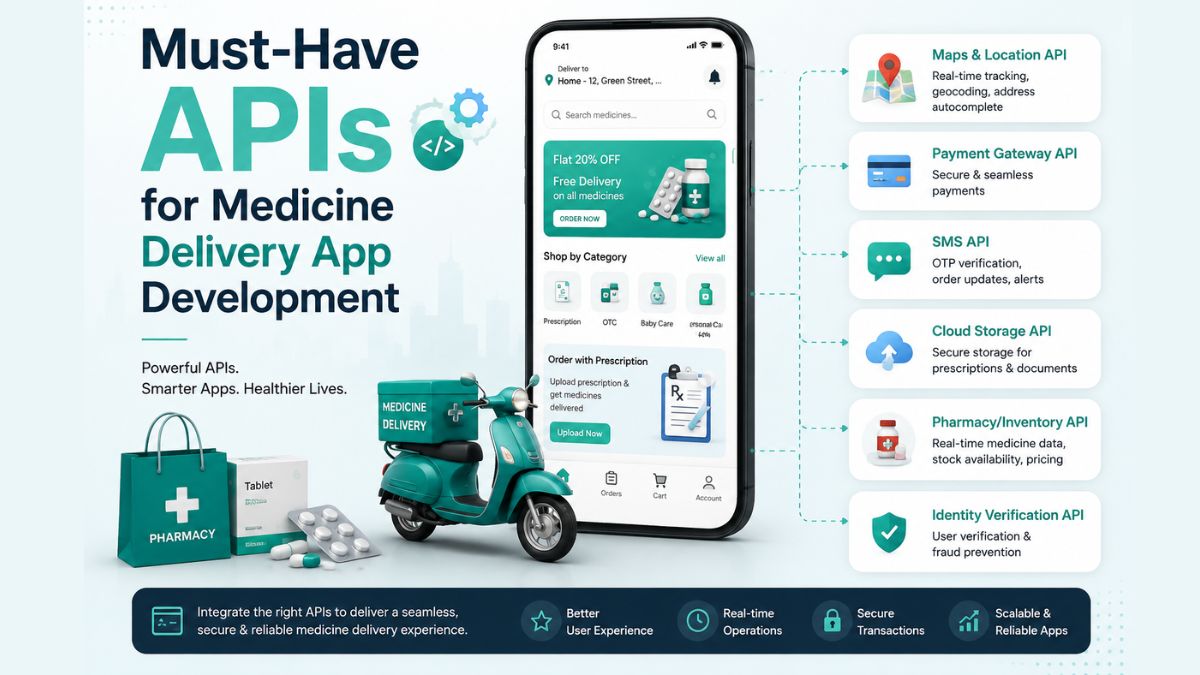
The healthcare industry has experienced a major digital transformation in recent years, with medicine delivery apps becoming an essential service for millions of people.
From ordering prescription medications to receiving over-the-counter products at home, these apps offer convenience, accessibility, and timely care. As customer expectations continue to rise, businesses entering this market need more than an attractive user interface.
Whether you’re developing an app for a pharmacy chain, healthcare startup, or online medicine marketplace, choosing the right APIs can significantly impact your application’s performance, scalability, and compliance.
In this guide, you’ll learn why APIs are essential, how they support different app functionalities, and which integrations every medicine delivery platform should consider.
What Are APIs in Medicine Delivery Apps?
An Application Programming Interface (API) is a set of rules that allows different software systems to communicate and exchange information. In a medicine delivery app, APIs act as bridges between your application and external services, helping different components work together smoothly.
For example, when a customer uploads a prescription, an OCR API can extract the medicine details. When the user proceeds to payment, a payment gateway API securely processes the transaction. Once the order is confirmed, a location API helps assign the nearest delivery executive and provides real-time tracking until the medicine reaches the customer’s doorstep.
Without APIs, developers from a trusted medicine delivery app development company would need to build every service independently, increasing development time, costs, and maintenance efforts. APIs simplify complex processes by allowing businesses to integrate specialised services that are already tested, secure, and scalable.
Why API Integration Matters for Medicine Delivery Apps?
APIs are much more than technical connectors. They directly influence how efficiently a medicine delivery platform operates and how users interact with it.
One of the biggest advantages is faster development. Instead of creating features like payment processing, maps, or messaging from scratch, developers can integrate proven APIs that are ready for deployment. This accelerates product launches while reducing development costs.
API integration also enhances the user experience. Features such as real-time order tracking, instant payment confirmation, automated notifications, and accurate location services create a smoother customer journey and build trust.
For businesses aiming to build a competitive medicine delivery platform, API integration is not simply a convenience—it’s a necessity for creating a secure, scalable, and customer-focused application.
Must-Have APIs for Medicine Delivery App Development
1. User Authentication APIs
Security begins with user authentication. Medicine delivery apps store personal details, medical prescriptions, addresses, and payment information, making secure login systems essential.
Authentication APIs simplify user registration while protecting accounts against unauthorised access. They support multiple login methods, including email, mobile numbers, one-time passwords (OTP), biometric authentication, and social sign-ins.
2. Maps and Location APIs
Accurate location services are the backbone of every medicine delivery application. Customers expect quick deliveries, live order tracking, and precise delivery estimates.
Maps and location APIs enable businesses to locate nearby pharmacies, calculate delivery distances, optimise routes, and display real-time driver locations. They also help delivery executives avoid traffic congestion by suggesting the fastest available routes.
3. Payment Gateway APIs
A secure payment experience is essential when you are looking for how to create a medicine delivery app efficiently. Customers should be able to complete transactions quickly using their preferred payment methods.
Payment gateway APIs enable businesses to accept credit cards, debit cards, digital wallets, UPI payments, net banking, and even recurring subscription payments for regular medicine orders.
4. Prescription Upload and OCR APIs
Prescription management is one of the defining features of a medicine delivery platform. Customers often upload handwritten or printed prescriptions before placing an order.
OCR (Optical Character Recognition) APIs automatically extract medicine names, dosages, quantities, and prescription details from uploaded documents. This reduces manual data entry while improving processing speed.
5. Pharmacy Management APIs
Medicine availability changes frequently due to inventory fluctuations. Pharmacy management APIs synchronise stock levels between pharmacies and the medicine delivery platform in real time.
When customers search for medications, these APIs instantly display product availability, pricing, stock quantities, and alternative options if a medicine is unavailable.
6. Medicine Database APIs
Customers rely on medicine delivery apps not only to purchase medications but also to access accurate information before placing an order. Medicine Database APIs provide comprehensive drug-related data, helping users make informed decisions while reducing confusion about prescriptions and over-the-counter medicines.
These APIs retrieve information such as medicine names, active ingredients, dosage instructions, side effects, contraindications, storage recommendations, and generic alternatives. They can also alert users to potential drug interactions or allergy risks, depending on the available data source.
7. Delivery Tracking APIs
Customers expect complete visibility into their medicine orders. Whether it’s an emergency prescription or a recurring medication refill, real-time tracking enhances transparency and builds confidence throughout the delivery process.
Delivery Tracking APIs allow users to monitor every stage of their order, from pharmacy confirmation to driver assignment, pickup, and final delivery. These APIs continuously update delivery status and estimated arrival times, ensuring customers remain informed without contacting customer support.
8. Notification APIs
Effective communication plays a significant role in the customer experience. Notification APIs enable medicine delivery apps to send timely updates through multiple communication channels.
Customers receive instant alerts when their prescription is verified, payment is successful, the order is confirmed, a delivery partner is assigned, or the medicine has been delivered. Beyond order updates, notification APIs also support medication reminders, refill alerts, promotional campaigns, and important healthcare announcements.
9. Electronic Health Record (EHR) APIs
As healthcare services become increasingly connected, Electronic Health Record (EHR) APIs enable medicine delivery apps to integrate with hospitals, clinics, and healthcare providers.
These APIs allow authorised healthcare professionals to securely access patient records, previous prescriptions, allergies, and treatment history. By integrating EHR systems, pharmacies can validate prescriptions more efficiently while reducing medication errors.
10. Telemedicine APIs
Many modern medicine delivery platforms now combine medicine ordering with virtual healthcare consultations. Telemedicine APIs make this possible by enabling users to consult licensed healthcare professionals directly through the application.
Patients can book appointments, participate in video consultations, exchange messages with doctors, receive digital prescriptions, and order prescribed medicines without leaving the app.
11. Analytics APIs
Understanding customer behaviour is essential for continuous improvement. Analytics APIs collect valuable business insights that help companies optimise operations, marketing strategies, and customer experiences.
These APIs monitor metrics such as user registrations, order completion rates, customer retention, average order values, delivery performance, popular medicines, abandoned carts, and app usage patterns.
12. AI APIs
Artificial intelligence is becoming an important differentiator in digital healthcare applications. AI APIs introduce intelligent automation that improves customer experiences while increasing operational efficiency.
For example, AI-powered chatbots can answer common customer questions, assist with medicine searches, provide order updates, and reduce customer support workloads. Recommendation engines can suggest refill reminders, wellness products, or generic alternatives based on customer preferences and prescription history.
Conclusion
APIs form the technological backbone of every successful medicine delivery application. They connect essential services such as user authentication, prescription verification, payment processing, inventory management, real-time tracking, telemedicine, notifications, and healthcare databases into a seamless digital experience.
Whether you’re building a medicine delivery app for a startup, an independent pharmacy, or a large healthcare network, choosing the right APIs is one of the most important decisions you’ll make.
A well-integrated API ecosystem not only simplifies development but also lays the foundation for a reliable, scalable, and user-focused healthcare platform that can grow alongside your business.

There is a particular kind of worry that only cat parents know. It shows up in the middle of an ordinary evening, when the house is quiet and you realize you have not seen your cat use the litter box all day. Or it arrives as a small, nagging thought at work, wondering whether that odd smell this morning meant something. Cats are famously private about their bodies, and that privacy is beautiful until it becomes the very thing that hides a problem from you. For years, the only tools available were guesswork, scattered clumps, and hindsight. That is a lot of emotional weight to carry for someone who simply loves an animal that will not speak up when something feels wrong. The idea of watching the litter box used to sound like overkill, a gadget for the anxious. Anyone who has ever waited too long to notice a UTI, a blockage, or a slow decline knows it is anything but. It is a quiet, patient witness in a room where your cat rarely lets anyone in.
The Silence That Follows Every Cat Home
Cats do not ask for help. It is not stubbornness, it is instinct. In the wild, a cat that shows weakness becomes prey, so even the most pampered indoor companion carries that ancient rulebook in the back of its mind. By the time a cat is visibly struggling, the underlying issue has often been unfolding for days or weeks. That is why so many owners feel blindsided by a sudden diagnosis. The signs were there, hidden in a small enamel bowl on the bathroom floor, but no one was watching closely enough to notice. A dedicated litter box camera exists precisely for this narrow, easy-to-miss window, turning a private space into a source of gentle, ongoing information rather than a black box you check once a day.
What changes when you can actually see the litter box in use is not just data, it is emotional. You start to notice that your senior cat sits inside for a strange length of time before she does anything. You catch that your younger boy paws at the litter for two full minutes as if searching for something that never arrives. These are the tiny signals veterinarians love to hear about because they turn a vague complaint into a specific timeline. Instead of saying, “He has seemed off this week,” you can say, “For the last three days he has entered the box seven times but produced very little.”
Watching Without Hovering
Cats hate being watched. Anyone who has tried to stare at a cat mid-business knows the deep affront it causes. That is what makes a discreet camera such an unusual comfort. You are not standing over her with a phone, breaking her sense of safety. You are letting her go about her routine exactly as she prefers, while you look through the footage later like you would flip through a diary. There is no invasion. There is only a record you can consult when your instinct whispers that something might be off.
The design of a modern cat monitoring camera matters here. It sits low, tucked out of the way, framed for the box rather than the room. The lens is not blinking or clicking. There is no red light waiting to spook a nervous cat into finding a corner of the closet instead. When a device does its job quietly enough, the cat forgets it exists, and you finally get the honest, unedited view that guesswork never provides.

Catching the Changes Words Cannot Describe
Health is a story told in small changes. A stool that looks slightly softer today. A urination that lasts half as long as it did last month. A frequency that has crept up without you noticing. These are the details that veterinarians spend appointments trying to reconstruct from an owner’s memory. With a visual record, memory is no longer the weakest link in the chain. You have images you can scroll through, timestamps you can share, and a real reference point that turns “I think” into “I know.”
There is real relief in that certainty. The moments when you convince yourself you are being paranoid, and the moments when you brush off a real symptom because you were too busy to look, both belong to the same fog of unknowing. A camera does not diagnose anything, and a good owner never pretends it does. What it offers is documentation, and documentation is where anxiety loses its power. You either see something worth acting on, or you see a perfectly normal week and you exhale.
Knowing Before It Becomes an Emergency
Emergencies almost never appear out of nowhere. They build. A cat that is straining a little more each day. A stool that has slowly changed color. A morning where the box, for the first time, is completely untouched. These are the moments where an early clue can be the difference between a quick outpatient visit and a frightening late-night drive. When you can see patterns forming instead of only reacting to their consequences, you start to feel less like a bystander in your cat’s health and more like a partner.
Owners of older cats often say this is the part that changed everything. Chronic kidney disease, diabetes, and urinary tract issues are so common in senior cats, and they are all conditions where litter box behavior tells the earliest, clearest story. Watching that story unfold in real time, rather than piecing it together after the fact, gives families precious extra weeks to intervene, adjust diets, and speak with their vet before the situation forces a hand.

Multiple Cats, One Box, and the Mystery of Who
Ask anyone in a multi-cat household to name their biggest litter box frustration and the answer is almost always the same: they cannot tell who did what. When one cat starts having issues, everyone becomes a suspect. Medication guesses become shots in the dark. Diet changes get applied to the whole family when only one member actually needs them. It is stressful for the humans and unfair to the cats who are perfectly healthy.
A camera that can distinguish between different cats brings clarity to a room that has never really had any. Suddenly you know that it was the tabby, not the tortie, who has been visiting the box more often. You know which cat produced the odd stool you found this morning. Households with three or more cats often describe this as the moment their whole approach to care finally made sense. The mystery evaporates, and with it, a huge amount of unnecessary worry aimed at the wrong pet.

The Nights You Would Otherwise Miss
Cats are crepuscular. They live for the edges of the day, and a surprising amount of their bathroom life happens after you have already turned off the lights. Whatever is happening at three in the morning has, until now, existed only in the imagination of any owner who has ever woken up wondering. That is a strange kind of loneliness, being responsible for a life you cannot see when it matters.
Night vision changes that in the softest way. There is no flash, no disturbance, no shift in the environment that a cat would notice. There is only, in the morning, a clear timeline of who came and went, and how long they stayed. For anyone whose cat has ever seemed strangely tired at breakfast, that quiet answer is worth more than any amount of guesswork.
How the Data Becomes Something You Can Actually Use
Raw footage is useful, but stories are more useful. The best products in this category do not just record, they translate. They tell you how many visits happened today, how long each lasted, and how those numbers compare with the weeks before. They flag deviations gently, not with alarm, so that you can decide whether it is worth a closer look or whether your cat simply drank more water yesterday.
This is where a thoughtful brand makes a real difference. SiiPet has approached this space with a clear idea of what cat parents actually need, which is not a firehose of raw video but a calm, readable summary that respects their time and their emotional bandwidth. The result feels less like surveillance and more like a soft nudge from a friend who has been paying attention.

A Different Kind of Companionship
Living with a cat is a long conversation held mostly in gestures. A tail flick. A slow blink. A missed jump that used to be effortless. When you add a quiet observer to one of the most private corners of that conversation, you are not turning your home into a lab. You are simply choosing not to look away from something that has always mattered.

People sometimes worry they will become obsessive if they have this kind of information. In practice, the opposite tends to happen. Owners describe checking less, not more, because the low-grade background hum of “is she okay?” finally has somewhere to land. When you know the litter box has been used normally today, your brain releases the loop it has been running in silence. The camera does not make you a more anxious cat parent. It makes you a calmer one.
What Love Looks Like in a Quiet Corner
Cats will always be a little bit mysterious. That is part of the reason we love them, and part of the reason loving them can feel like a form of held breath. They will not tell you when their body is starting to fail them. They will not warn you before a habit changes. They will simply keep being cats, with all the beautiful stubbornness that entails, and hope that someone is paying enough attention to notice. Choosing to watch the corner of the room where the most honest part of their day happens is not about becoming a helicopter parent. It is about honoring the fact that our cats do not have words, so we owe them our eyes. It is about reducing the number of nights you lie awake wondering if that noise was a normal noise. It is about walking into the vet with a clear story instead of a scattered one. Most of all, it is about the quiet, unglamorous, deeply loving work of being there for a small life that never quite tells you how it is doing. That, in the end, is what these tools are really for. Not fear. Attention. And attention, given generously, is the truest form of love a cat parent can offer.
TECHNOLOGY
Smart Home Networking Guide: Lessons from Domikyo.com on Building a Reliable Connected Home


Smart homes are everywhere now. Your thermostat talks to your phone. Your doorbell sends you alerts. Your fridge probably knows more about your grocery habits than you do. But here’s the catch: none of that works well without a solid network behind it. That’s exactly the gap that resources like domikyo.com aim to fill, helping everyday homeowners understand the infrastructure side of connected living instead of just chasing the newest gadget.
In this guide, we’ll break down what actually makes a smart home reliable, the common mistakes people make, and the best practices that separate a smooth connected home from a frustrating one.
What Is Smart Home Networking?
Smart home networking refers to the underlying system of routers, access points, and connectivity protocols that allow your devices to communicate with each other and the internet.
Think of it as the nervous system of your house. Your smart lock, security cameras, voice assistant, and streaming devices all rely on this system to function properly. When the network is weak or poorly configured, even premium hardware starts to feel unreliable.
A good smart home network typically includes:
- A primary router handling internet traffic
- A mesh system or extenders for whole-home coverage
- A separate network band for IoT devices
- Strong security protocols to prevent unauthorized access
Why Network Reliability Matters More Than Device Quality
Many homeowners assume that buying expensive smart devices guarantees a smooth experience. That’s rarely true. A five-second delay when unlocking your smart door isn’t a hardware failure most of the time — it’s usually a network bottleneck.
Reliability is measured by two things: uptime and latency. If your devices frequently disconnect or respond slowly, your network setup needs attention before you buy anything new.
Uptime and Latency Explained
- Uptime refers to how consistently your network stays connected without dropping.
- Latency refers to the delay between a command and the device’s response.
For a smooth smart home experience, low latency and high uptime matter far more than the number of features a device has.
How to Structure Your Home Network the Right Way
One of the smartest moves you can make is separating high-traffic devices from low-bandwidth IoT sensors. Gaming consoles, 8K televisions, and video calls need speed and stability. Smart plugs, sensors, and light switches don’t need much bandwidth at all, but they can still clog a network if everything shares the same channel.
This is often called network segmentation, and it prevents congestion that slows everything down.
| Network Zone | Best For | Recommended Setup |
|---|---|---|
| Primary Network | Laptops, phones, streaming devices | Standard Wi-Fi with strong password protection |
| IoT Network | Smart plugs, sensors, bulbs, locks | Separate SSID or guest network |
| High-Bandwidth Network | Gaming consoles, 8K TVs, video calls | Wired connection or dedicated 5GHz band |
Common Mistakes People Make With Smart Homes
Even tech-savvy homeowners fall into these traps.
- Connecting every device to one single network, causing congestion
- Ignoring firmware updates on routers and smart devices
- Placing the router in a closet or corner, reducing signal strength
- Skipping a mesh system in larger homes, leading to dead zones
- Reusing weak or default passwords across multiple devices
- Overlooking device compatibility before purchasing new gadgets
These mistakes seem small individually, but together they create the sluggish, unreliable experience many people blame on “bad smart home tech” when the real issue is network design.
Pros and Cons of Building a Smart Home Network
Before investing time and money, it helps to weigh the benefits against the challenges.
| Pros | Cons |
|---|---|
| Increased convenience and automation | Initial setup can be time-consuming |
| Better energy efficiency with smart controls | Requires ongoing maintenance and updates |
| Enhanced home security monitoring | Vulnerable to cyber threats if unsecured |
| Remote access and control from anywhere | Can get expensive with premium hardware |
| Scalable as your needs grow | Compatibility issues between brands |
Understanding both sides helps you set realistic expectations instead of assuming everything will work perfectly out of the box.
Best Practices for a Smooth Smart Home Setup
Start With a Strong Foundation
Before adding devices, invest in a capable router or mesh system. This is the backbone of everything else you’ll build.
Segment Your Devices
Create separate networks for high-bandwidth devices and low-power IoT sensors. This alone solves a huge number of connectivity complaints.
Keep Everything Updated
Outdated firmware is one of the most overlooked security risks in smart homes. Set a monthly reminder to check for updates.
Position Your Router Strategically
Place your router in a central, open location rather than tucked away in a closet. Walls, metal appliances, and distance all weaken signal strength.
Prioritize Security From Day One
Use strong, unique passwords, enable two-factor authentication where available, and avoid connecting unnecessary devices to your main network.
Practical Example: A Real-World Smart Home Setup
Imagine a three-bedroom house with a smart thermostat, four security cameras, smart lighting throughout, and a home office with video calls happening daily.
Without segmentation, the cameras alone can eat up bandwidth and cause lag during calls. By splitting devices across a primary network, an IoT network, and a wired connection for the office setup, the homeowner sees smoother performance across the board — no dropped calls, no laggy camera feeds, and faster response times from voice commands.
This is the kind of practical adjustment that platforms like domikyo.com focus on: not just recommending gadgets, but showing homeowners how to make them actually work well together.
Choosing the Right Smart Home Devices
Not every smart device is worth adding to your home. Before purchasing, consider:
- Compatibility with your existing ecosystem (Google Home, Alexa, Apple HomeKit)
- Whether the device requires a hub or works standalone
- Data privacy policies of the manufacturer
- Long-term software support and update history
A device that looks impressive in reviews can still be a poor fit if it doesn’t integrate smoothly with what you already own.
Conclusion
A smart home is only as good as the network supporting it. Flashy gadgets get the attention, but structural elements like segmentation, router placement, and consistent updates are what actually determine whether your connected home feels effortless or frustrating.
Focus on building a reliable foundation first. Once that’s solid, every device you add — from voice assistants to security cameras — performs the way it’s supposed to. Resources like domikyo.com exist precisely to help homeowners think through this infrastructure-first approach rather than chasing trends.
Frequently Asked Questions
1. What is the biggest cause of smart home connectivity issues?
Network congestion is the most common cause. Too many devices sharing one network, especially without segmentation, leads to lag and dropped connections.
2. Do I need a mesh Wi-Fi system for a smart home?
If you live in a home larger than 1,500 square feet or have multiple floors, a mesh system significantly improves coverage and reduces dead zones.
3. How many smart devices can one router handle?
It depends on the router, but most standard routers start struggling after 15–20 connected devices without proper network segmentation.
4. Is it safe to connect smart devices to my main Wi-Fi network?
It’s safer to use a separate IoT network for smart devices, since it limits exposure if one device gets compromised.
5. How often should I update my smart home devices?
Check for firmware updates monthly. Manufacturers frequently patch security vulnerabilities and improve performance through updates.
-

 NEWS1 year ago
Historical Churches in Manila
-

 TOPIC1 year ago
Symbols of Hope: The 15th Belenismo sa Tarlac
-

 TOPIC1 year ago
RIZAL at 160: a Filipino Feat in Britain
-

 TOPIC1 year ago
“The Journey Beyond Fashion” – Ditta Sandico
-

 TOPIC3 weeks ago
Unveiling AvTub: Your Ultimate Guide to the Best AV Content
-

 TOPIC1 year ago
5 Must-Have Products From Adarna House to Nurture Your Roots
-

 TOPIC1 year ago
Filipino, alternative language course at Moscow State University
-

 TOPIC4 weeks ago
Understanding Fascisterne: Origins and Ideological Roots