
TOPIC
Why Finding Reliable NDIS Staff Has Become So Difficult


Finding reliable NDIS staff in Australia now takes longer than it used to, and many disability service providers are operating with rosters that remain under pressure for weeks at a time.
The disability sector needs a much larger workforce to keep pace with demand.
The NDIS Review estimated that around 128,000 additional workers would likely be needed by June 2025 as the scheme continued to grow.
Disability support work can be a difficult career choice when the pay does not match the level of responsibility.
Unpredictable hours, limited support from supervisors and a lack of clear career progression can make disability work less attractive than jobs in retail, hospitality and other sectors competing for the same workers.
Filling a vacancy is only part of the problem, as keeping new staff for the long term can be just as difficult.
Workforce data puts annual turnover at roughly 17 to 25 per cent, showing how persistent the retention problem remains.
An empty position can also cost a provider in several ways, even when there is no obvious line on the budget.
Existing workers may need to take on extra hours, shifts may have to be cancelled, and new participant referrals may be declined.
When no other option is available, providers may also rely on agency or locum workers at a higher hourly rate to keep services running.
Where the Pressure Shows Up First
A drop in staff numbers can throw a roster out very quickly.
Even one or two missing support workers may mean moving people between shifts, asking existing staff to take on more work or saying no to new referrals.
At the same time, keeping up with compliance becomes harder when the team is already under pressure.
Before starting work, each person delivering NDIS-funded support must have completed the required screening, qualifications, and induction.
When a hire needs to happen quickly, it is easier for a required check or document to be missed.
Recruitment also takes managers away from their usual work, with coordinators often spending their days interviewing candidates, getting new workers started and sorting out roster changes.
Over time, that takes experienced staff away from the work needed to provide steady support to participants.
Where Providers Find NDIS Staff
Most providers use a mix of strategies rather than relying on one solution.
Local Recruitment
Local recruitment through job boards and referral programs remains the default starting point, but it is slower and increasingly expensive in a tight labour market.
Staffing Agencies
Staffing agencies can fill urgent vacancies quickly, although premium hourly rates can make them impractical as a long-term solution.
Outsourced NDIS Staff
Using an outsourcing provider to source NDIS Staff can give organisations access to trained and screened workers for tasks such as scheduling, care coordination and administration.
It is generally more suitable for positions where staff do not need to be on-site with participants.
Creating a More Sustainable NDIS Staffing Strategy
A staffing plan built only around filling today’s vacancy can recreate the same staffing crisis within a few months.
Retaining Staff Beyond the Initial Hire
Providers that retain staff for longer tend to invest in clear supervision, manageable caseloads, better training, and defined career pathways.
The NDIS Review found that poor conditions, limited support, and weak career development contribute to people leaving disability support roles.
Decide Which Roles Need to Be Local
Before another position becomes vacant, it makes sense to check which jobs actually need someone on site and which could be covered another way.
Sorting out staffing requirements early can save providers from constantly having to fix roster issues later.
The first step is to separate the jobs that require local staff from those that can be done remotely, then ensure the arrangement still works for participants and the people providing their care.

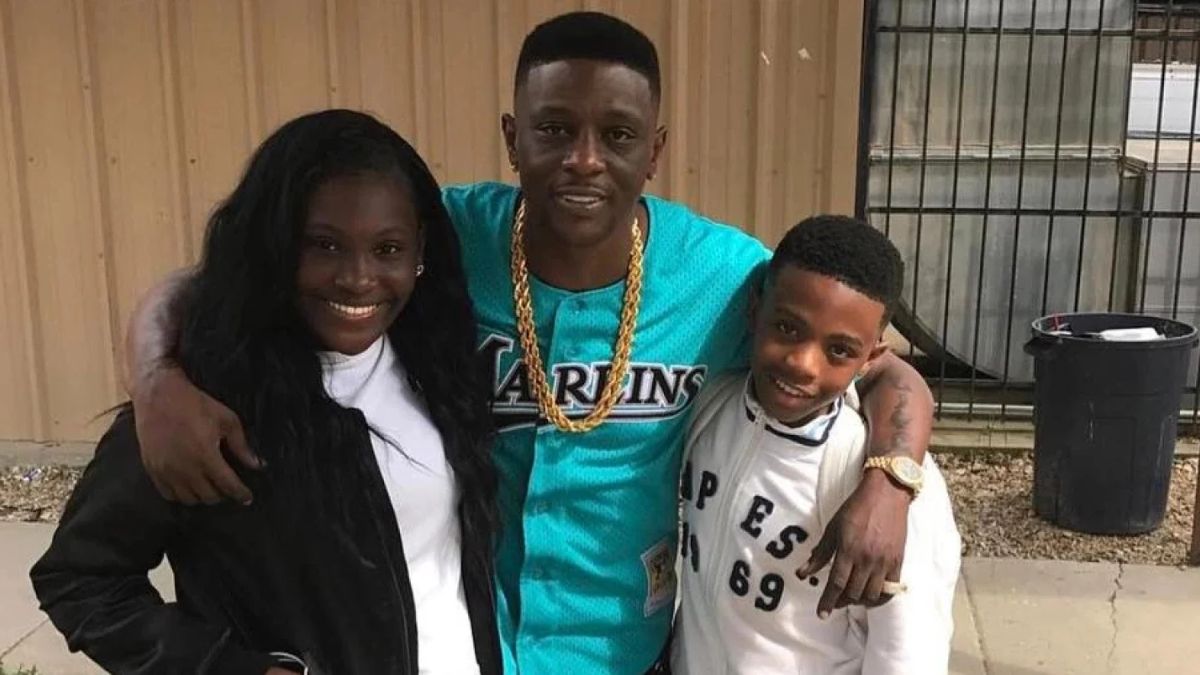
Toriana Hatch entered public awareness mainly through her connection to a well-known figure in Southern hip-hop. Born on May 13, 2007, in Baton Rouge, Louisiana, she is one of the children of rapper Boosie Badazz, whose real name is Torrence Ivy Hatch Jr. While many children of public figures chase visibility, Toriana has largely kept a lower profile, focusing on her own path rather than building a personal brand around her last name.
Growing up in a large blended family comes with unique dynamics. Boosie has nine children with different mothers, which means Toriana shares the family name with several half-siblings. This environment shaped her early years in a city known for its music culture, yet she has chosen privacy over public performance. Her story reflects both the opportunities and the complications that come with having a famous parent.
Who Is Toriana Hatch?
Toriana Hatch, sometimes called Tori, is an American young adult known primarily as the daughter of Boosie Badazz. She was born in Baton Rouge and spent her formative years in Louisiana before time spent in other cities, including Atlanta. Unlike some of her siblings who have pursued music careers, she has not positioned herself as a performer.
Her Instagram account (@tori_.pressure) remains private, limiting public access to her daily life. Reports indicate she graduated high school around 2025 and has shown interest in continuing her education. These details paint a picture of someone who values normalcy even while her family name draws attention.
| Attribute | Details |
|---|---|
| Full Name | Toriana Hatch |
| Date of Birth | May 13, 2007 |
| Age | 18–19 (as of 2026) |
| Birthplace | Baton Rouge, Louisiana |
| Father | Boosie Badazz (Torrence Hatch Jr.) |
| Mother | Rachel Wagner |
| Known For | Daughter of Boosie Badazz; 2023 public family dispute |
| Education | High school graduate; pursuing further studies |
| Social Media | Private Instagram (@tori_.pressure) |
This quick overview helps clarify the basic facts surrounding her background. Because she maintains privacy, verified public information remains limited compared to more active celebrity children.
Early Life and Family Background
Toriana was born into a household already connected to the music industry. Her father had established himself in Southern rap by the mid-2000s with raw storytelling that resonated with many listeners. Growing up in Baton Rouge placed her near the cultural roots of that sound, yet she appears to have preferred a quieter existence.
The Hatch family is large. Toriana is one of nine children. Her siblings include Iviona Hatch (who performs under the name Poison Ivi), Torrence Hatch Jr. (known as Tootie Raww), Ivy Ray Hatch, Lyric Beyoncé Hatch, Michael Jordan Hatch, Tarlaysia Hatch, and others including Laila Jean and the youngest, Sevyn. Several siblings have appeared in family photos and social media posts over the years. Some have followed their father into music, while others have stayed more private.
Her mother, Rachel Wagner, has remained largely out of the spotlight. Reports from the 2023 period indicate that Toriana spent time helping her mother after a car accident, which became a central point in later family tensions. Like many children in blended families, Toriana has navigated relationships with multiple parents and half-siblings. These dynamics are common but become more visible when one parent holds a public platform.
The 2023 Public Dispute Over the Birthday Car
In May 2023, Boosie gifted Toriana a pink Mercedes-Benz AMG for her 16th birthday. The gift was presented as a celebratory moment, with some coverage noting a party atmosphere. However, the situation changed months later.
In July 2023, Toriana publicly addressed her father on Instagram after he took the car back. She stated that she had left Atlanta to help her mother recover from a serious car accident. She expressed strong disappointment, saying she felt he had not acted as a real father and referring to him in harsh terms. Boosie responded that the car was repossessed because her mother had filed for child support, claiming Toriana knew about the legal action and left suddenly. He later released a track titled “Ungrateful” that referenced the situation.
The exchange drew significant online attention. Boosie discussed removing her from his will and made additional comments that further escalated the public conversation. Toriana’s account later became private. The episode highlighted how private family disagreements can become public content when one party has a large following. It also showed the emotional weight young adults can carry when family conflict plays out in front of an audience.
This incident remains the most documented public moment in Toriana’s life. Outside of it, she has largely avoided the spotlight.
Education, Interests, and Current Path
After the 2023 events, Toriana continued focusing on her personal development. She completed high school and has been reported to be pursuing college studies. While specific details about her major or school are not public, her choice to prioritize education aligns with a desire to build an independent identity.
Unlike some celebrity children who launch music careers or influencer accounts early, Toriana has not done so. Her interests appear centered on everyday life, family relationships outside the public eye, and personal growth. This approach allows her to define success on her own terms rather than through media coverage.
Pros and Cons of Growing Up as a Celebrity Child
Being the child of a well-known artist brings both advantages and difficulties. The following breakdown reflects common patterns seen in similar families, applied to Toriana’s publicly known experiences.
| Aspect | Pros | Cons |
|---|---|---|
| Financial Support | Access to resources and gifts | Dependence can create tension when support is withdrawn |
| Public Recognition | Family name opens certain doors | Loss of privacy and unwanted attention |
| Family Experiences | Large sibling network and shared moments | Complex dynamics with multiple households |
| Personal Development | Exposure to industry and culture | Pressure to live up to or distance from parent’s image |
| Long-term Outlook | Opportunities for independence later | Public past events can follow into adulthood |
These trade-offs are not unique to Toriana. Many young adults in similar positions eventually choose how much of their family’s public story they want to carry forward.
Common Challenges Faced by Children of Public Figures
Several recurring issues appear in stories like Toriana’s. First, family disagreements can be amplified by social media. A private argument becomes permanent content. Second, young people may feel pressure to pick sides publicly. Third, gifts and financial support can become tools in conflicts rather than simple expressions of care. Finally, the desire for a normal teenage and young-adult experience often clashes with external curiosity.
Practical examples include the 2023 car situation, where a birthday gift turned into a flashpoint involving child support claims and relocation for caregiving. Similar patterns have appeared in other entertainment families when legal or financial matters intersect with public statements.
Best Practices for Young Adults Navigating Family Fame
Young people in Toriana’s position can take deliberate steps to protect their peace. Setting clear boundaries on social media helps limit exposure. Focusing on education or career goals outside the family name builds independence. Choosing when (and whether) to respond publicly reduces emotional escalation. Maintaining private relationships with siblings and parents outside the spotlight preserves personal connections. Finally, seeking trusted advisors for legal or financial matters prevents family issues from becoming public spectacles.
These practices do not eliminate all challenges, but they increase control over one’s own narrative. Many young adults eventually find that distance and consistency create more stability than constant engagement with public commentary.
Conclusion
Toriana Hatch’s story is still unfolding. At 18 or 19 years old, she has already experienced the intensity of public family conflict while choosing a quieter path afterward. Her decision to keep her social media private and focus on education suggests a preference for defining herself beyond her father’s career. As she continues into young adulthood, her choices around privacy, education, and personal relationships will shape the next chapter. For observers, her experience offers a clear reminder that celebrity children are individuals first, even when their family name draws attention.
5 SEO FAQs
Who is Toriana Hatch?
Toriana Hatch is the daughter of rapper Boosie Badazz, born on May 13, 2007, in Baton Rouge, Louisiana. She is known for a 2023 public disagreement with her father over a gifted car.
How old is Toriana Hatch?
Born on May 13, 2007, Toriana Hatch is 18 or 19 years old as of 2026.
Who are Toriana Hatch’s parents?
Her father is Boosie Badazz (Torrence Ivy Hatch Jr.). Her mother is Rachel Wagner.
What happened between Toriana Hatch and Boosie in 2023?
Boosie took back a pink Mercedes-Benz he had given her for her 16th birthday after she left Atlanta to help her mother. The disagreement became public on social media and led to further statements from both sides.
Does Toriana Hatch have siblings?
Yes. She is one of nine children of Boosie Badazz, with half-siblings including Iviona Hatch, Torrence Hatch Jr., Ivy Ray Hatch, and others.
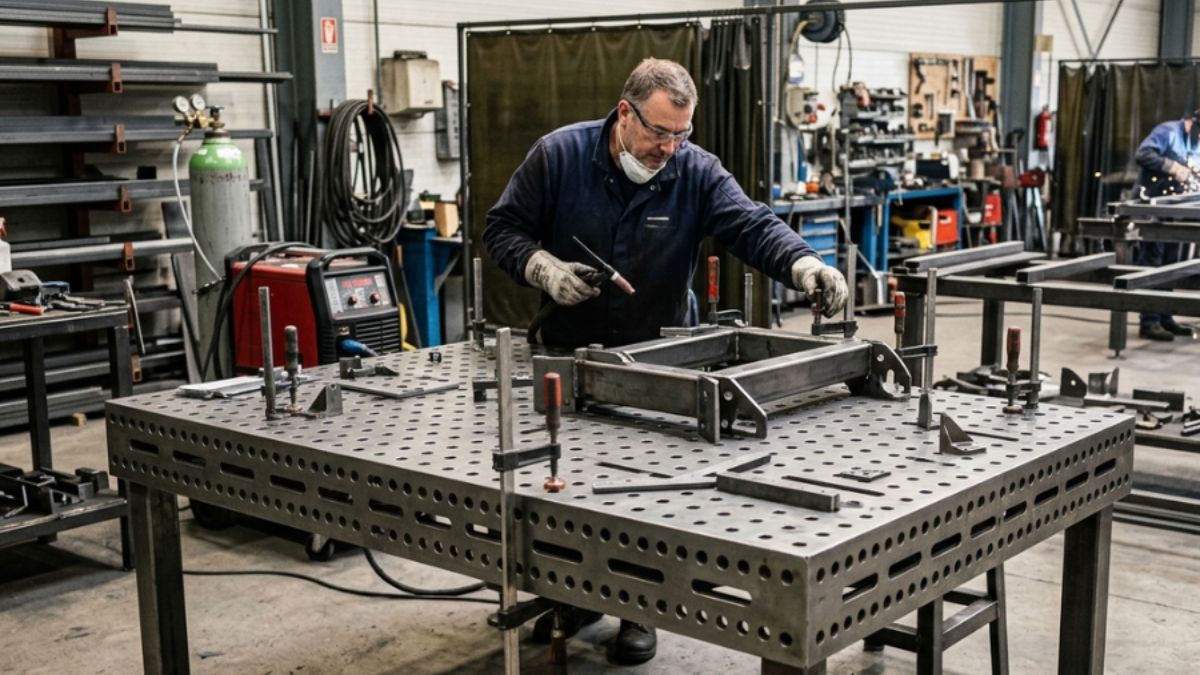
Welding tables are a long-term investment for accuracy, productivity, and production flexibility. For Indian fabrication businesses, the right table can reduce dependence on and hassle with dedicated fixtures, further supporting multiple component work at the same time. However, not every table is suitable for every application. So, before comparing suppliers and prices, evaluate the following key factors.
1. Start With Your Component Size and Fabrication Type
Always opt for a table that comfortably accommodates your workpiece while leaving sufficient space for clamps and positioning tools. In this, small tables may restrict access and oversized tables can increase investment and consume valuable shop-floor space. Small assemblies, prototypes, and highly accurate fabrication require different fixture techniques from those for heavy frames, machinery parts, and structural assemblies.
Therefore, your selection should be based on your regular workload rather than on occasional projects.
2. Check Table Thickness and Load Capacity
With table thickness, one can determine its rigidity and resistance to deformation in the future. Load capacity should also account for the workpiece, welding table fixtures, clamps, and forces that are generated during positioning and welding. For instance, commercially available Fixto’s D16 and D28 systems differ in plate thickness and load capacity. The D28 tables are specifically designed for heavier industrial applications.
As a result, avoid selecting a table solely based on its thickness. Surface flatness, structural frame design, material quality, and intended load are all equally significant.
3. Understand D16 vs D28
The hole system defines your entire fixturing system. The D16 welding table has 16 mm holes and is generally associated with a finer 50 mm grid. It is ideal for smaller components, precision work, prototyping, and light-to-medium fabrication.
The D16 welding table system has 28 mm holes and is related to a larger 100 mm grid and more durable accessories. It is best suited for heavy frames, structural fabrication, and larger assemblies that require stronger workholding.
Therefore, the appropriate choice can be made by taking into account the component size, weight, fabrication type, and future production requirements.
4. Choose the Right Clamps and Accessories
The tooling of a modular table is an important factor to consider. So, before investing, make sure that compatible clamps, locating pins, stops, squares, angle brackets, and extension accessories are available. Because D16 and D28 use different tooling systems, accessory compatibility should be confirmed before building your fixture inventory.
A table without appropriate accessories reduces flexibility and repeatability.
5. Modular Tables vs Custom-Built Fixtures
Customised welding table fixtures are useful for repetitive production of a single component. However, product changes may demand modifications or the development of entirely new tooling. A modular system allows manufacturers to reposition accessories and create new specifications on a single table.
This makes it especially useful for high-volume production, prototypes, job work, and changing component designs.
6. Evaluate the Welding Table Manufacturer
Before choosing a welding table manufacturer, consider more than just the product details. Consider manufacturing accuracy, material quality, accessory availability, technical assistance, customisation capability, and after-sales support.
A reputable supplier should help you in matching the system to your application rather than simply recommending the largest or most expensive table.
Quick Thoughts
The best welding tables must be chosen based on the work that needs to be done. Always consider size, thickness, load capacity, hole pattern, accessory compatibility, and future flexibility.
For industrial fabricators, the ideal modular welding table is more than just a work surface. It is a reusable foundation for precise, repeatable, and adaptable production. Therefore, make one count when investing.

Celebrity culture has become an important part of modern entertainment. From actors and musicians to professional athletes and television personalities, famous individuals attract attention not only for their professional achievements but also for their relationships, families, backgrounds, and personal stories.
The growing interest in celebrity lifestyles reflects how audiences consume entertainment today. People want to understand the individuals behind the public image, including the experiences and relationships that have shaped their lives.
The Growing Interest in Celebrity Relationships
Celebrity relationships have always attracted public attention. Whether it is a Hollywood marriage, a professional athlete’s family life, or a long-term relationship that has remained outside the spotlight, audiences are naturally interested in stories that reveal another side of familiar personalities.
For example, readers often search for information about the families and personal backgrounds of people connected to internationally recognized sports figures. Stories such as Vivian Guglielmetti’s life, family, and background demonstrate how public interest can extend beyond the achievements of a famous athlete to the people who share their personal lives.
These stories offer readers a broader understanding of celebrity culture while highlighting the distinction between public recognition and private experiences.
Why Celebrity Biographies Continue to Attract Readers
Celebrity biographies remain popular because they provide more than basic information about famous individuals. Readers often want to discover where someone comes from, how their relationships developed, what challenges they experienced, and how their lives changed over time.
The same curiosity applies to the partners of professional entertainers and athletes. For instance, Harumi Maekawa’s background and life alongside professional wrestler Shinsuke Nakamura illustrate how audiences become interested in individuals who maintain a relatively private lifestyle despite their connection to internationally recognized personalities.
Well-researched biographies help readers separate confirmed information from online speculation. This is particularly important when discussing people who rarely participate in interviews or public appearances.
Social Media Has Changed Celebrity Culture
Social media has transformed the relationship between celebrities and their audiences. Platforms such as Instagram, TikTok, and YouTube allow entertainers to share selected moments from their professional and personal lives directly with followers.
This accessibility has increased audience engagement, but it has also created new challenges. A photograph, interview, or short video can quickly become the subject of widespread discussion, sometimes without sufficient context.
Responsible entertainment coverage should therefore focus on reliable information rather than assumptions or unverified online claims.
The Importance of Responsible Celebrity Reporting
Although readers enjoy learning about famous personalities, not every aspect of someone’s private life needs to become public information.
Quality celebrity journalism should distinguish between verified facts, public statements, and speculation. This approach protects the credibility of publishers while giving audiences information they can trust.
Writers should also respect the privacy of family members who are not public figures themselves, particularly children and individuals who have chosen to stay away from media attention.
Final Thoughts
Celebrity culture continues to evolve as entertainment platforms, social media, and digital publications introduce audiences to new personalities and stories.
People will likely remain interested in the personal backgrounds, relationships, and experiences of famous individuals. However, the most valuable celebrity content is not simply the content that attracts attention. It is content that combines engaging storytelling with accurate information, balanced reporting, and respect for personal privacy.
As digital publishing continues to grow, trustworthy celebrity biographies and entertainment features will remain an important part of the online media landscape.
-

 NEWS1 year ago
Historical Churches in Manila
-

 TOPIC4 months ago
Unveiling AvTub: Your Ultimate Guide to the Best AV Content
-

 TOPIC1 year ago
Simbang Gabi and Kakanin
-

 TOPIC1 year ago
Symbols of Hope: The 15th Belenismo sa Tarlac
-

 TOPIC1 year ago
RIZAL at 160: a Filipino Feat in Britain
-

 NEWS5 months ago
What Caused Delta Flight DL275 to Diverted LAX? A Detailed Breakdown
-

 TOPIC3 months ago
Understanding Fascisterne: Origins and Ideological Roots
-

 TOPIC1 year ago
Biodiversity in Urban Singapore: Corporate Contributions to Nature-Based Solutions and Green Infrastructure