
TOPIC
What Is Falafel? Ingredients, History, Taste, and How It’s Made

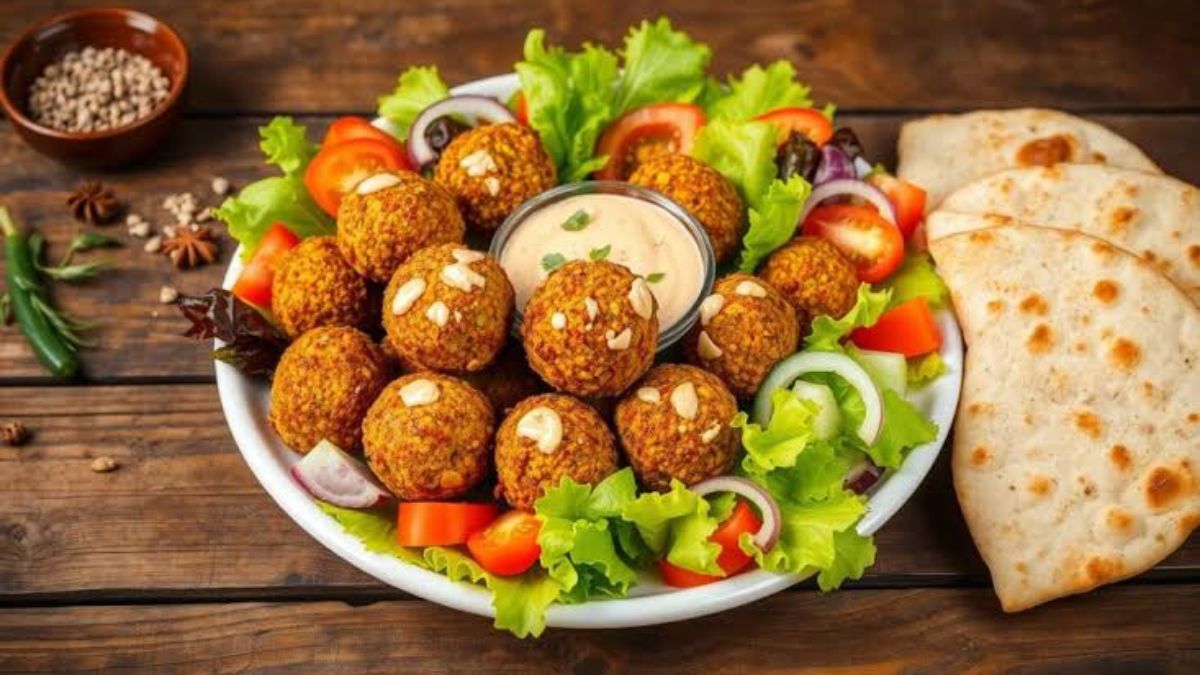
What is falafel? At its simplest, falafel is a crisp fried fritter made from soaked chickpeas, fava beans, or both, blended with herbs, onion, garlic, and warm spices. You bite through a crunchy shell into a fluffy, fragrant center that tastes earthy, herbal, and lightly spicy. That contrast is why this Middle Eastern street food traveled from Egyptian kitchens to food trucks and dinner tables around the world.
People ask the same questions again and again: Is it vegan? Is it healthy? Do you start with canned chickpeas? Where did it come from? This guide answers those questions in plain language so you can order it with confidence or cook it at home.
What Is Falafel Made Of?
Traditional falafel starts with dried legumes, not cooked ones. Cooks soak chickpeas or peeled dried fava beans overnight, then grind them raw with aromatics. The mixture never becomes a paste. It should look like coarse, damp crumbs that hold together when squeezed.
Typical ingredients include:
- Soaked dried chickpeas, fava beans, or a mix
- Fresh parsley and cilantro
- Onion and garlic
- Cumin and coriander
- Salt, pepper, and sometimes cayenne
- A pinch of baking soda or baking powder for a lighter interior
Egyptian cooks lean on fava beans and call the result ta’amiya. In Lebanon, Palestine, Syria, Jordan, and most Western restaurants, chickpeas dominate. Some kitchens blend both for extra flavor and a slightly greener crumb.
Canned chickpeas are a common shortcut and a common failure. They hold too much water, so the mix turns mushy and falls apart in the oil. Dried beans that have only been soaked give the structure falafel needs.
How Falafel Is Cooked
The classic method is deep-frying in hot oil until the outside is deep gold and the inside is cooked through. Some home cooks bake or air-fry for less oil. Those versions can taste good, but they rarely match the crackle of a properly fried ball.
Street vendors often use a falafel scoop that presses the mix into even balls and drops them straight into the fryer. At home, wet hands and a tablespoon work just as well.
Where Did Falafel Come From?
Most food historians place the dish in Egypt. Early versions used fava beans, which were already a staple along the Nile. Coptic Christians likely popularized a meat-free fritter for fasting days. In Egypt the name ta’amiya stuck. The word falafel itself comes from Arabic falāfil, related to filfil, meaning pepper, a nod to the spice mix.
After World War I the dish moved north into the Levant. Chickpeas were easier to find there, so the recipe shifted. By the 1930s falafel shops were open in Beirut and Jerusalem. Later waves of migration carried it to Europe, North America, and beyond.
No single country “owns” falafel. Egypt has the strongest claim on origin. Levantine kitchens refined the chickpea style that most people recognize today. Israel later adopted falafel as everyday national comfort food. All of those stories can sit on the same plate.
Regional Styles at a Glance
| Style | Main bean | Texture and look | Typical serving |
|---|---|---|---|
| Egyptian ta’amiya | Fava beans | Flatter patties, bright green inside, often sesame-coated | Breakfast in aish baladi with tahini and salad |
| Levantine falafel | Chickpeas or mix | Round balls, herb-speckled crumb | Pita or laffa with pickles and tahini |
| Western café style | Chickpeas | Uniform balls, sometimes baked | Wraps, bowls, or salads |
What Does Falafel Taste Like?
Good falafel tastes like toasted chickpeas, fresh herbs, and warm spice. Cumin and coriander give earthiness. Parsley and cilantro keep it bright. Onion and garlic add savor. The crust should snap. The center should stay moist, never pasty.
If a falafel tastes bitter, the mix sat too long or the oil was old. If it tastes bland, it needed more salt and herbs. If it tastes greasy, the oil was not hot enough.
People usually eat falafel:
- Stuffed into pita with salad, pickles, and tahini
- On a platter with hummus, baba ganoush, and flatbread
- As a protein in grain bowls
- Straight from the paper cone as a snack
Tahini sauce is the classic partner. A squeeze of lemon and a few pickled turnips cut the richness.
Is Falafel Healthy?
It can be. The legumes bring plant protein, fiber, folate, iron, and manganese. A typical 100-gram serving of homemade fried falafel lands around 330 calories, with roughly 13 grams of protein, 32 grams of carbs, and 18 grams of fat.
The health picture depends on cooking method and portion. Deep-frying adds oil. A pita sandwich loaded with fried balls, extra tahini, and fries is a filling meal, not a light snack. Baked or air-fried falafel lowers fat but can dry out.
| Nutrient (per 100 g homemade fried) | Approx. amount | Why it matters |
|---|---|---|
| Calories | 333 | Energy-dense street food |
| Protein | 13 g | Solid plant-based protein |
| Fiber | High | Helps fullness and digestion |
| Fat | 18 g | Mostly from frying oil |
| Folate, iron, manganese | Good source | Supports energy and blood health |
Falafel is naturally vegan when made the traditional way. It is also usually dairy-free. Gluten is not part of the classic mix, but some shops add flour or serve it in wheat pita, so ask if you need a gluten-free option.
How to Make Falafel at Home
You do not need special equipment, but you do need time for soaking.
- Soak 2 cups dried chickpeas in plenty of water for 12–24 hours. Drain well.
- Pulse the chickpeas with onion, garlic, a big handful of parsley and cilantro, cumin, coriander, salt, and a pinch of baking soda until the mix looks like coarse crumbs.
- Chill the mix for at least 30 minutes.
- Shape into balls or small patties.
- Fry in oil at about 350°F (175°C) until deep golden, 3–4 minutes.
- Drain on a rack, not paper, so the crust stays crisp.
If the mix feels wet, add a spoon of chickpea flour or more chilled time. If it crumbles, pulse a little longer or add a teaspoon of water, not more.
Serving Ideas That Work
- Classic pita: falafel, shredded lettuce, tomato, cucumber, pickled turnip, tahini
- Breakfast plate: ta’amiya with eggs, ful, and warm bread
- Bowl: quinoa or rice, roasted vegetables, falafel, lemon-tahini dressing
- Meze board: small falafel, hummus, olives, and fresh herbs
Pros and Cons of Falafel
Pros
- Affordable plant protein
- Naturally vegan
- Bold flavor from simple pantry spices
- Easy to batch-cook and freeze uncooked balls
- Works as street food, lunch, or party snack
Cons
- Frying makes a mess and adds oil
- Canned-bean shortcuts often fail
- Quality varies wildly between shops
- Can taste dry if baked without care
- Some commercial mixes taste dusty and under-seasoned
Common Mistakes When Making or Buying Falafel
- Using canned chickpeas instead of soaked dried ones
- Over-processing the mix into hummus
- Skipping the chill step
- Frying in oil that is too cool
- Under-salting the herbs and spices
- Buying falafel that sat under a heat lamp until the crust went soggy
A good shop fries to order. If the balls look pale or greasy, walk on.
Best Practices for Better Falafel
| Practice | Why it works |
|---|---|
| Start with dried legumes | Gives structure and a nutty flavor |
| Keep the grind coarse | Creates a fluffy, not gummy, center |
| Season boldly | Herbs fade during frying |
| Fry hot and in small batches | Keeps the crust crisp |
| Serve immediately | Falafel loses crunch as it sits |
| Balance with acid | Lemon and pickles cut the oil |
Fresh herbs are not optional. Dried parsley cannot replace a packed cup of leaves. Taste the raw mix for salt before you shape it. Once it hits hot oil, you cannot fix a bland batch.
If you want less oil, flatten the mix into thin patties and pan-fry in a shallow layer. You still get browning without a full pot of oil.
Conclusion
Falafel is a humble fritter with a long road behind it: Egyptian fava-bean origins, Levantine chickpea versions, and a global life as vegan street food. The best versions stay simple. Soak the beans. Grind them with herbs and spice. Fry them hot. Eat them while they still crackle.
Once you know what falafel is supposed to taste like, weak supermarket mixes and soggy takeout become easy to skip. Make a batch at home, or find a shop that fries to order. Either way, you now know what you are looking for.
5 SEO FAQs
What is falafel made from? Falafel is made from soaked dried chickpeas, fava beans, or both, ground with parsley, cilantro, onion, garlic, cumin, and coriander, then shaped and fried.
Is falafel vegan? Traditional falafel is vegan. It contains no meat, dairy, or eggs. Check sauces and pita if you need a fully plant-based meal.
Can I use canned chickpeas for falafel? It is not recommended. Canned chickpeas are too wet and soft, so the mix often falls apart and turns dense.
Is falafel healthy? It offers plant protein and fiber. Fried falafel is calorie-dense because of the oil. Baked versions are lighter but can dry out.
What sauce goes with falafel? Tahini sauce is the classic pairing. Garlic yogurt, hot sauce, and amba also work, depending on the region.


The way we love, communicate, trust, and manage conflict in adulthood rarely begins in our adult years. Our early interactions with primary caregivers create an invisible emotional blueprint that dictates how we navigate romantic intimacy decades later.
Understanding these developmental roots helps explain why we repeatedly choose certain partners, react strongly to minor disagreements, or struggle to express basic needs in relationships.
The Foundation of Attachment Theory in Adult Love
Quick Answer: Attachment theory demonstrates that the reliability and warmth of childhood caregivers directly shape how secure, anxious, or avoidant an adult feels in romantic relationships.
During infancy and early childhood, our brains constantly assess whether our emotional and physical needs are safe with others. When caregivers respond consistently with empathy and attunement, children develop a secure attachment style. As adults, securely attached individuals view intimacy as safe, communicate boundaries comfortably, and trust their partners easily.
Conversely, inconsistent or emotionally distant caregiving fosters insecure attachment styles. These early experiences directly dictate the attachment style impact on intimacy later in life:
- Anxious-Preoccupied: Formed when caregiving is unpredictable. Adults with this style often fear abandonment, require constant reassurance, and hyper-fixate on minor shifts in their partner’s mood.
- Dismissive-Avoidant: Formed when caregivers are emotionally unavailable or overly strict. Adults suppress their emotional needs, value extreme independence, and pull away when intimacy deepens.
- Fearful-Avoidant (Disorganized): Formed in environments marked by trauma, chaos, or abuse. Adults crave closeness but simultaneously fear the vulnerability required to sustain it.
How Unspoken Family Rules Dictate Adult Conflict
Quick Answer: Children internalize their family’s conflict resolution style—whether explosive, passive-aggressive, or completely avoidant—and unconsciously replicate those patterns in adulthood.
Long before we enter our first romantic relationship, we observe how authority figures handle stress and disagreements. These childhood observations become our subconscious definition of “normal” conflict behavior.
If a child grows up in a home where arguments feature screaming, door-slamming, or silent treatments, they may view intense conflict as the default language of love. Alternatively, growing up in a home where disagreements are swept under the rug leads adults to view any disagreement as a catastrophic threat to the relationship. Re-learning how to navigate disagreements requires unlearning these childhood survival strategies.
The Hidden Impact of Childhood Emotional Neglect
Quick Answer: Childhood emotional neglect occurs when caregivers fail to validate a child’s emotional experiences, leading to adult struggles with emotional regulation and self-worth.
Unlike physical abuse or obvious trauma, emotional neglect is an invisible experience of what didn’t happen. When a child’s sadness, fear, or excitement is met with indifference, minimization, or punishment, the child learns a dangerous lesson: “My feelings do not matter, and expressing them makes me a burden.”
In adult relationships, this manifests as extreme hyper-independence, chronic people-pleasing, or an inability to identify one’s own emotional state. Committing to childhood emotional neglect recovery involves learning how to acknowledge your own feelings, set healthy boundaries, and allow romantic partners to support you during vulnerable moments.
Core Beliefs and Projection in Romantic Partners
Quick Answer: Unresolved childhood wounds create rigid core beliefs that cause adults to project past fears onto their current partners’ neutral behaviors.
Our brains naturally seek patterns. When early life teaches us that people eventually leave, break promises, or become overly controlling, we develop core beliefs about the world. As adults, we frequently project these childhood fears onto our partners.
A partner taking two hours to reply to a text message might be interpreted by a securely attached person as simply being busy at work. To someone carrying an abandonment wound, however, that same delay feels like an impending breakup.
Myth vs. Fact: Unpacking Early Relationship Traumas
- Myth: Your childhood experiences permanently determine how your adult relationships will function.
- Fact: The human brain retains neuroplasticity throughout life. With conscious self-awareness and active effort, adults can develop “earned security.”
- Myth: Identifying childhood wounds means blaming your parents for everything wrong in your life.
- Fact: Exploring childhood origins is about gaining self-understanding and taking personal accountability for your current choices, not assigning endless blame.
Rewiring Your Blueprint: Healing Relationship Conflict Patterns
Quick Answer: Breaking destructive relational cycles requires recognizing personal triggers, practicing emotional self-regulation, and learning transparent communication.
Recognizing that your relationship challenges stem from early life is the first step toward genuine freedom. Healing relationship conflict patterns demands shifting from reactive survival behaviors to intentional, conscious responses.
- Identify Your Triggers: Pay close attention when your emotional reaction seems disproportionate to the current situation. Ask yourself: “How old do I feel right now?”
- Practice Pause and Self-Soothe: When an old defense mechanism kicks in, pause before reacting. Take deep breaths to regulate your nervous system.
- Communicate Your Underlying Need: Instead of attacking or shutting down, express the core feeling to your partner using “I” statements.
Unpacking deeply rooted childhood patterns alone can feel overwhelming, especially when two partners bring conflicting attachment styles to the table. Working with a qualified therapist for marriage counseling in Draper provides a structured, compassionate space to identify shared triggers, build emotional safety, and replace defensive habits with secure connection.
Frequently Asked Questions
Can an avoidant partner become securely attached?
Yes. An avoidant partner can transition toward a secure attachment style by recognizing their coping mechanisms, learning to tolerate emotional closeness, and practicing expressing vulnerabilities in low-stakes environments.
How do I talk to my partner about my childhood triggers?
Choose a calm moment outside of an active argument. Share your triggers by focusing on your internal experience—for example: “When voices are raised during an argument, my nervous system panics because of how arguments felt growing up. It helps me if we keep our tone soft.”
Building Conscious Love Today
Our childhood experiences shape the initial lens through which we view romantic love, but they do not have to dictate our destination. Recognizing how early attachment styles, family conflict models, and emotional neglect influence your adult behavior allows you to pause before reacting automatically. By developing self-awareness, practicing emotional regulation, and seeking professional support when needed, you can rewrite your relational story and build a secure, deeply fulfilling partnership grounded in choice rather than old survival habits.
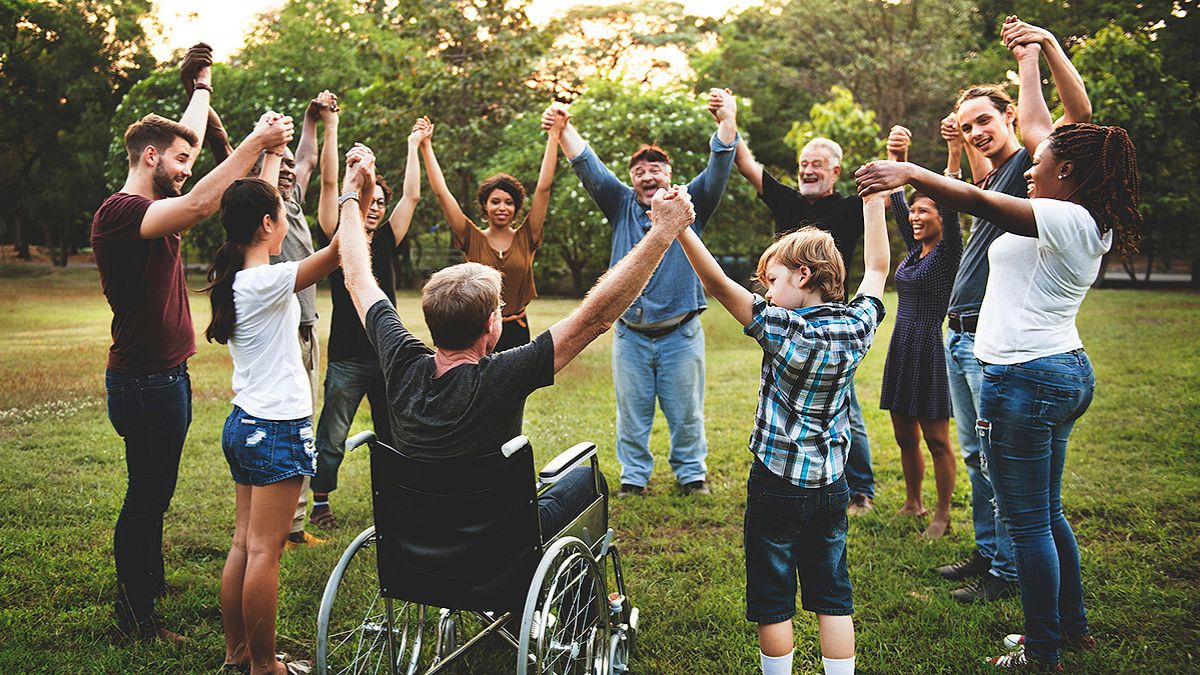
Your brain on isolation is not the same brain that makes good decisions. After months of watching people try to change their lives, the pattern is unmistakable: the ones who succeed don’t just have iron willpower, they have people who text them back at 11 p.m. Research backs this up, and the numbers are wild. One major review found that people with strong social relationships are 50 percent more likely to survive any given time period compared to those with weak ties. That’s a bigger effect than quitting smoking. But here’s what most people get wrong: it’s not about having fifty friends. It’s about having the right kind of connections, and understanding what those connections actually do to your biology.
This piece walks you through the science of how friendships physically reshape your brain and behavior, why the quality of your circle matters more than its size, and exactly how to build a support network that works, even if you’re starting from zero.
What Loneliness Does to Your Body and Brain
Loneliness isn’t just a sad feeling. It’s a physiological state with real consequences. When you’re socially isolated, your body produces higher levels of cortisol, the stress hormone. Over time, that elevation wears down your immune system, disrupts your sleep, and even accelerates cognitive decline.
The Centers for Disease Control and Prevention (CDC, 2024) reported that social isolation significantly raises a person’s risk of premature death from all causes, a risk that rivals those of smoking, obesity, and physical inactivity. Think about that. The people you talk to regularly are as important to your lifespan as whether you exercise.
And here’s the part that hits closer to home for anyone trying to change a habit. A lonely brain operates in a state of heightened threat perception. You’re more alert to danger, more reactive to stress, and more likely to reach for the quickest relief available. For someone working through addiction recovery specifically, isolation is the soil in which relapse grows. I’d argue that rebuilding your social fabric is not a nice-to-have extra. It’s a core medical intervention.
One more thing worth knowing: loneliness is not the same as being alone. You can feel deeply isolated in a crowded room. The research separates objective isolation (you have few contacts) from perceived isolation (you feel disconnected even when people are around). Both matter, but perceived isolation is often the more dangerous one because it goes unnoticed.
How Supportive Circles Change Your Brain Chemistry
When you spend time with people who genuinely care about you, your brain releases oxytocin. You’ve probably heard it called the bonding hormone. That’s an oversimplification, but the underlying effect is real. Oxytocin dampens your stress response and activates your parasympathetic nervous system, the part that helps you rest and digest.
A 2023 study published in the Proceedings of the National Academy of Sciences found that individuals who regularly engaged in meaningful social interactions showed improved activity in the prefrontal cortex, the area responsible for impulse control and decision-making. In plain English? Good friends literally help your brain pump the brakes before you make a decision you’d regret.
Your social environment also shapes your behavior through a simpler, more mechanical route: mirroring. Humans are social animals. You unconsciously pick up the habits, attitudes, and even the stress levels of the people you spend the most time with. It’s why researchers talk about “social contagion.” If your close circle smokes every weekend, you’ll find it near impossible to quit. If your circle goes to the gym on Saturday mornings, you’ll eventually find yourself lacing up your sneakers.
And here’s a detail most people overlook. The frequency of contact matters less than the emotional quality. A friend you see once a month who listens without judgment beats a friend you see daily who keeps offering unsolicited advice. Your brain tracks safety, not frequency.
Applying Connection Science to Recovery Goals
Now let’s get practical. If you’re trying to change a long standing behavior, whether that’s staying sober, losing weight, or cutting out a destructive habit, your social circle is your secret weapon. Here’s why it beats willpower every single time. Willpower is a finite resource that depletes as the day wears on. Social support, by contrast, is renewable. It’s always there when you need it.
That’s why treatment programs that incorporate family therapy or group sessions tend to show better outcomes than those that treat the individual in isolation. You’re not just changing one person’s habits. You’re changing the environment that person lives in, which is a much stickier change.
If you’re looking for professional support structures that understand this science, you can explore resources like greaterbostonaddictioncenters.com to see how modern care teams integrate social and familial elements into their approach. Building a support network doesn’t happen overnight, but knowing what you’re aiming for makes the next step clearer. You’re aiming for a handful of people who make you feel safe, seen, and accountable. That’s it.
Your 5 Point Connection Audit: A Simple Framework
I developed this little audit after talking with dozens of people who felt stuck despite “having friends.” It takes ten minutes. Grab a sheet of paper and answer honestly.
- Point one: The 10 p.m. test. Who could you call at 10 p.m. on a Wednesday, just to talk, without feeling like a burden? Write down their names. If you have fewer than two, that’s your first gap to fill.
- Point two: The no-advice check. Who in your life listens without immediately telling you what to do? If your entire circle is made up of fixers, you’re missing the emotional support layer.
- Point three: The accountability partner. Who checks in on your goals without you asking first? This person is different from the listener. This is someone who asks, “How did that appointment go?” a week later.
- Point four: The fun quotient. Who do you spend time with where the conversation never touches your problems? Laughter releases endorphins, and you need that relief valve.
- Point five: The environment scan. List your top five friends. Are they moving toward the life you want or away from it? Be brutally honest. This is the mirror effect working for or against you.
This framework works because it breaks the vague concept of “social support” into specific, actionable roles. Most people discover they’re heavy on one type of connection and starving for others. A friend who makes you laugh is wonderful. But he won’t hold you accountable when you’re about to text your ex. You need a balanced portfolio.
A Real Scenario: Tom’s Tuesday Night Group
Tom was nine months into recovery when he hit a wall. His old drinking buddies had drifted away, his family was supportive but geographically distant, and he felt a creeping sense of isolation that scared him. He was technically sober. He just felt empty. One counselor suggested he find a group that had nothing to do with recovery itself. So Tom joined an online gaming group that met every Tuesday night at 8 p.m.
At first, it felt silly. He was a 41 year old man playing strategy games with strangers. But the group had inside jokes. They celebrated each other’s small victories. One member noticed when Tom was quiet for three weeks straight and reached out privately just to ask if he was okay. That moment, a grown man checking on another grown man over a video game, broke something loose in Tom. He had found his fun quotient and his accountability partner in the same place.
That’s the texture of real social connection. It rarely looks like a therapy circle. It looks like a Tuesday night habit where people know your name and notice when you’re missing.
Practical Steps to Expand Your Social Muscle
Building connections when you’re out of practice feels like going to the gym after a year off. It hurts. It’s awkward. You want to quit after day one. Don’t. Start embarrassingly small.
First, pick one existing relationship and deepen it. Send a text that goes beyond surface level. Ask a real question, then follow up on the answer three days later. Consistency compounds.
Second, add one new low stakes social touchpoint per week. A recurring class, a volunteer shift, a book club. The Substance Abuse and Mental Health Services Administration (SAMHSA, 2024) notes that recovery is a process of change through which individuals improve their health and wellness, live self-directed lives, and strive to reach their full potential. Notice that definition includes “live” and “strive.” It’s about building a life, not just removing a substance. That life needs people in it.
Third, schedule it. If it’s not on the calendar, it won’t happen. Your brain will always choose the familiar path of isolation because it’s easier. You have to override that default with deliberate action.
Fourth, lower the bar for what counts as a win. A five minute phone call where you actually listened counts. A coffee date that ran twenty minutes long counts. Progress, not perfection.
You won’t build this overnight. Nobody does. But every small interaction is a deposit into an account that pays dividends in stress regulation, impulse control, and plain old happiness.
The Bottom Line on Friendships and Recovery
Willpower gets you through the first week. Friendships get you through the rest of your life. The science is clear: your brain literally functions better when you’re connected to people who care. Your stress hormones drop, your impulse control improves, and you gain a mirror that reflects the person you’re trying to become. So ask yourself the hard question. If your current circle is the environment you’re trying to change, what’s your very next step to build a better one?
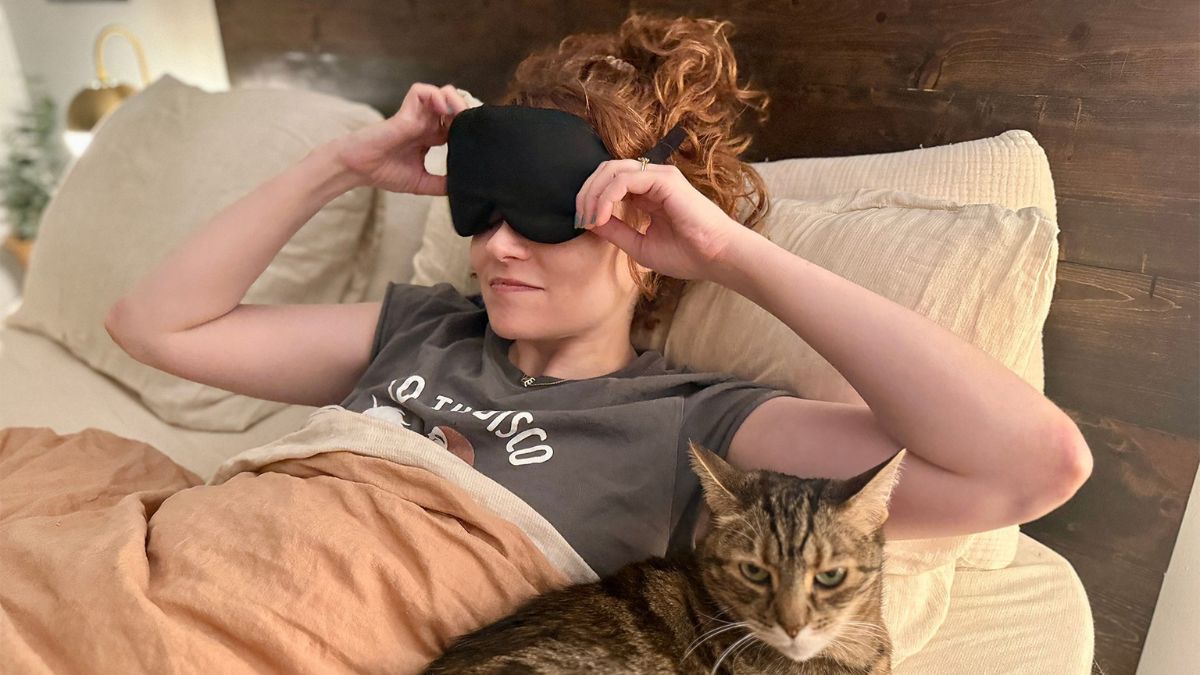
You know the feeling. It is 6:40 PM on a Tuesday, you just left the office, and somehow you are standing in a parking lot deciding between the grocery store and the dry cleaner because both close at 8. By the time you get home, eat something standing up, and answer three work emails, your evening is gone. That is not a small annoyance. That is a leak in your life.
Here is the deal: the average American worker spends a shocking amount of time on what researchers call “maintenance activities,” the errands and chores that keep life running but never feel productive. If you feel like your weeknights vanish into thin air, you are not imagining it. The math is brutal, and most of us never stop to run the actual numbers.
This article walks you through what that time is really worth, why your brain makes errand planning so exhausting, and the exact system I use to protect my evenings without letting my life fall apart. You will leave with a plan you can start tonight.
What Is Your Evening Actually Worth?
Let us start with a number that should make you sit up straight. According to the Bureau of Labor Statistics, the average American spends roughly 1.2 hours per day on household activities and purchasing goods and services. That is over eight hours a week. An entire workday, every single week, spent on errands that you rarely remember by Friday.
Now multiply that by your hourly rate. If you make $30 an hour, that is $240 a week in time value. Over a year, you are looking at roughly $12,500 in lost time. And here is the kicker: that number does not include the cognitive cost. When you are running errands, you are not relaxing, you are not with your family, and you are certainly not recharging for the next workday.
I started tracking my own weeknights about two years ago, and the result was embarrassing. I logged 14 hours of “just getting stuff done” in a single week. Fourteen. That was the wake-up call I needed to change my approach entirely.
Why Weeknight Errands Feel So Exhausting
Here is a question worth asking: why does a 20-minute trip to the pharmacy feel more draining than a 45-minute workout? Part of the answer lives in what psychologists call decision fatigue, but there is more going on.
Weeknight errands pile onto an already full mental load. Your work brain is still processing the day. Your home brain is trying to remember what needs to happen tomorrow. And now you are adding a third stream: where to go, what to buy, which store has it in stock, and how to do it all before closing time. That is not a simple task. That is a logistics problem you never signed up for.
A 2023 report from the American Psychological Association found that a significant portion of adults report feeling stressed about having enough time, not just about money or work. That tracks with what clients and friends tell me constantly: the errands are not hard, but the constant switching between roles, worker, driver, shopper, cook, parent, is what actually wears you down.
So the first step to protecting your evenings is not buying a better planner. It is admitting that your current system asks your brain to do too many context switches in too few hours.
The Two Hour Rule That Changed Everything
I want to share a framework I have used for the last year and a half. I call it the “Two Hour Rule,” and it is embarrassingly simple. The core idea: nothing that takes less than two hours of your weeknight gets done on a weeknight.
Here is how it works in practice. When a task pops into your head, like picking up a prescription or grabbing a birthday card, you do not do it tonight. You drop it into a running list on your phone. Then, once a week, usually Saturday morning, you batch those small tasks into a single two hour block and knock them all out at once.
The rule has one exception: emergencies. If the pharmacy is closing and you genuinely need the medication tonight, you go. If your kid needs a specific supply for a school project tomorrow, you handle it. But the moment you start asking “is this actually urgent?” about most errands, you will discover that the answer is almost always no.
I have converted three friends to this system, and every single one reported the same surprise: the errands still get done, but they stopped bleeding into weeknights. The key is that you are not avoiding responsibilities. You are scheduling them into a time that does not wreck your evenings.
What To Do With the Time You Get Back
This is the part most people skip, and it is the part that actually matters. If you batch your errands and suddenly have Tuesday and Thursday nights free, what are you going to do with that time? If the answer is “scroll on my phone,” you have not really won anything.
I recommend deciding your protected evening activities in advance. Pick two or three things that genuinely recharge you, not things that feel productive. For me, that is reading a physical book for thirty minutes, taking a slow walk without headphones, and cooking one meal that requires actual attention. For you, it might be calling your grandmother, working on a hobby, or just going to bed an hour earlier.
Here is the key point: the goal is not to be more productive in the evenings. The goal is to feel like your evenings belong to you. That distinction matters because productivity culture has a way of colonizing even your free time. A night where you do nothing but sit outside and watch the sky change color counts as a successful evening.
If you are reading this and realizing that your weeknights are not just busy but genuinely overwhelming, that is a sign you need more than a scheduling tweak. When the daily grind starts to erode your mental health, and stepping away from the environment that is draining you becomes the only way forward, professionals at gardenstatecounselingcenter.com/programs/residential-treatment-program offer structured programs designed for people who need a real pause. Sometimes protecting your time means protecting your whole state of mind, and there is no shame in getting help for that.
The Weekend Reset: A Five Step Checklist
Here is your actionable plan. Set aside 30 minutes this Saturday and run through this checklist. It will take less time than one evening of scattered errands, and it will save you four or five weeknights.
- Write down every pending errand you can think of. Do not filter, just dump them all onto paper or into a note.
- Circle anything that is genuinely time sensitive. If nothing is circling, trust that judgment.
- Group the rest by location or category. All the pharmacy stops together. All the returns together. All the grocery shopping together.
- Block out one two hour window in your calendar for the next Saturday morning. Treat it like an appointment you cannot cancel.
- Decide what you will do on your first free weeknight. Put it in writing. Commit to it.
One more thing: when you finish your Saturday errand block, close the list. Do not check it again until next Saturday. Train yourself to trust the system instead of your anxiety about forgetting something.
Protecting Your Evenings Is a Skill, Not a Luxury
Nobody hands you your evenings back. You have to take them. The good news is that the fix is not about discipline or willpower. It is about building a structure that makes the right choice the easy choice.
Start small. Pick one errand that has been eating your Tuesday nights and move it to your Saturday block. See how it feels to have that evening back. My guess is you will not want to go back to the old way.
So what is the one thing you are going to stop doing on weeknights starting tomorrow?
-

 NEWS1 year ago
Historical Churches in Manila
-

 TOPIC2 months ago
Unveiling AvTub: Your Ultimate Guide to the Best AV Content
-

 TOPIC1 year ago
Symbols of Hope: The 15th Belenismo sa Tarlac
-

 TOPIC1 year ago
RIZAL at 160: a Filipino Feat in Britain
-

 TOPIC1 year ago
“The Journey Beyond Fashion” – Ditta Sandico
-

 TOPIC4 weeks ago
Understanding Fascisterne: Origins and Ideological Roots
-

 TOPIC1 year ago
Simbang Gabi and Kakanin
-

 TOPIC1 year ago
5 Must-Have Products From Adarna House to Nurture Your Roots