
TECHNOLOGY
Top 6 Free Data Recovery Software

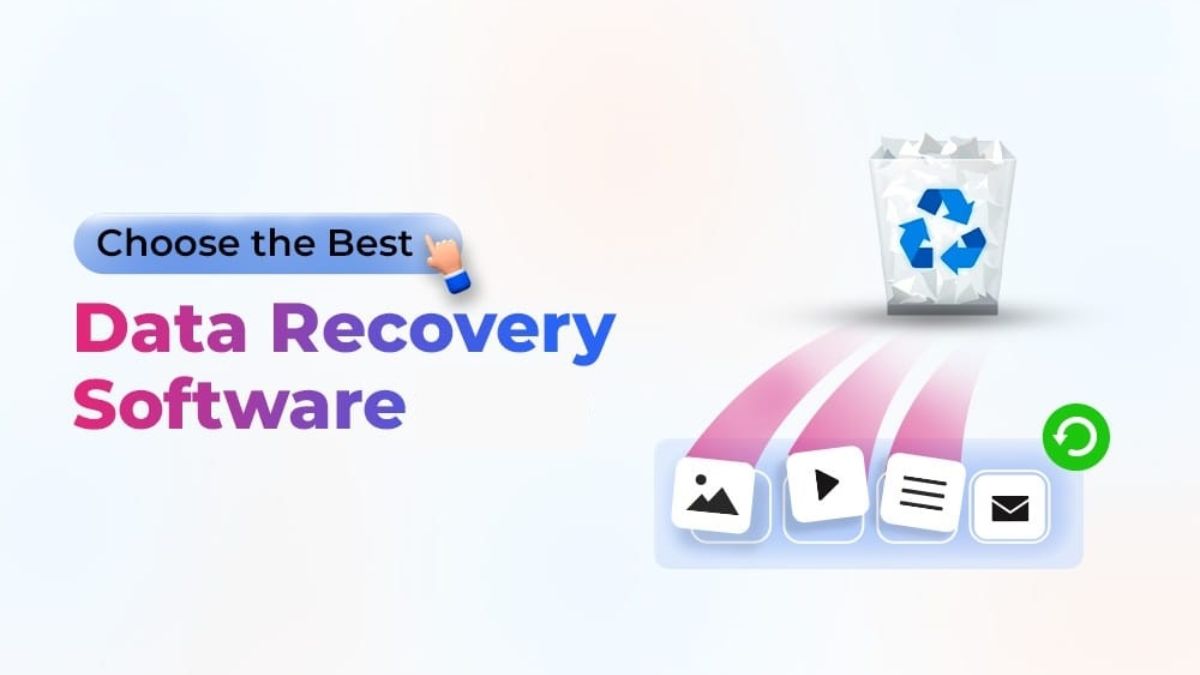
In today’s digital world, data loss has become one of the most serious issues that may happen to you at any time. Whether data loss on your device is due to accidental deletion, formatting errors, system crashes, or virus attacks, there’s always a chance to get your deleted files back. Fortunately, in 2026, several free data recovery tools are available that can help recover your lost files in Windows without spending any cost. Choosing the right free data recovery software is a challenging task, but don’t worry – we’re here to help you!
In this article, we will explore the top 6 free data recovery software in 2026, highlighting their key features and limitations to help you choose the best option for your needs.
Key Features to Check in Free Data Recovery Software
Before you select any free data recovery software, it’s important to check its features. Here are certain key features that you must check in your recovery tool:
Support for Various Data Loss Scenarios: A good recovery tool should handle multiple data loss scenarios, such as accidental deletion, formatting, system crashes, etc.
Supported File Types: Ensure your data recovery software supports recovery of deleted photos, videos, documents, emails, and other file types across various file formats.
Scan Modes: A reliable recovery tool supports both Quick scan (For fast recovery of recently deleted files) and Deep scan modes (for thorough scanning for formatted or corrupted data).
Preview Before Recovery: This feature lets you preview the recoverable files before saving them on your device. This saves your time and avoids unnecessary recovery.
Storage Device Compatibility: Ensure your free data recovery tool supports recovery from SD cards, hard drives, camera or mobile storage, and other internal and external storage media.
2026 Guide: Top 06 Free Data Recovery Software
Now that you understand the features of free data recovery tools, you can choose the one that best suits your data restoration needs. Here are some of the best options that you can select:
01: Stellar Data Recovery Free
Stellar Data Recovery Free is a versatile free data recovery software, mainly known for its balance of ease of use and powerful recovery capabilities. This software supports the recovery of your files deleted due to accidental deletion, device formatting, system error, and many other reasons. It is designed to help you recover lost, deleted, or inaccessible files from various storage devices without requiring technical expertise.
The Stellar Data Recovery Free software allows you to restore deleted files up to 1 GB of data for free, making it suitable for basic recovery needs. The software supports a wide range of file types, including documents, photos, videos, and emails, ensuring versatility across different use cases. Additionally, Stellar provides both quick scan and deep scan modes, allowing you to recover recently deleted files or perform advanced recovery from formatted or corrupted drives.
Key Features
- Supports a wide range of file formats, including documents, photos, videos, emails, and archives, ensuring the recovery of diverse data types easily.
- This tool is compatible with multiple storage devices such as hard drives, SSDs, USB drives, and memory cards.
- Allows preview of recoverable files before restoration, helping users verify file quality and select only required data for the recovery process.
- The software stands out for its user-friendly interface and high recovery success rate.
Limitations
- The most notable drawback is the 1 GB recovery cap, which may not be sufficient for large data recovery tasks.
- Some advanced features, such as full partition recovery and unlimited data restoration, are only available in paid versions.
02: EaseUS Data Recovery Wizard Free
EaseUS Data Recovery Wizard Free is a widely trusted free data recovery tool which you can use to restore deleted data of various file types and formats. It is designed for both beginners and professionals, offering a simple interface combined with strong recovery performance. It supports recovery of deleted files from multiple storage devices such as HDDs, SSDs, USB drives, and memory cards. The tool also offers both quick and deep scan options, helping users recover recently deleted files as well as data from complex loss scenarios.
Key Features
- Recovers deleted, formatted, and lost files from various scenarios, including system crashes, virus attacks, partition loss, and accidental deletions.
- Provides the quick scan for fast recovery and the deep scan for thorough search of lost files from formatted or corrupted drives.
- Features a simple wizard-based interface guiding users step-by-step, making the recovery process easy even for beginners without technical knowledge or experience.
Limitations
- Scan results may include unrecoverable files, which can confuse you and make it difficult to identify files that can actually be restored.
- Requires upgrading to the paid version for full functionality, as the free version mainly supports basic recovery and lacks advanced recovery tools.
03: Disk Drill (Free Version)
Disk Drill is a modern and feature-rich free data recovery tool developed by CleverFiles. This software is widely known for its clean interface and additional utilities beyond basic recovery. It supports recovery of files deleted due to accidental deletion, formatting, partition loss, and certain corruption scenarios. One of its standout features is the Recovery Vault, which helps prevent future data loss by keeping track of deleted files. It also offers file preview functionality, helping you make better recovery decisions. Overall, Disk Drill is the best choice if you want both recovery and data protection features in one tool.
Key Features
- Recovers files lost due to various scenarios, including partition loss, accidental deletion, and many more.
- Supports multiple file systems like NTFS, FAT32, exFAT, HFS+, and EXT, ensuring compatibility across Windows, macOS, and Linux-based devices.
- Includes Recovery Vault feature that helps protect data by keeping records of deleted files, improving chances of successful recovery in future.
- Provides quick and deep scan modes using advanced algorithms to locate recently deleted files and recover data from complex loss situations.
Limitations
- Deep scan process can be time-consuming, especially on large drives, and may take several hours depending on storage size.
- The free version limits data recovery size to up to 500 MB, making it insufficient for recovering large files, videos, or complete storage drives.
04: Wondershare Recoverit Free
Wondershare Recoverit is a well-known free data recovery software designed to recover lost, deleted, or formatted files from various storage devices. The software allows you to restore files deleted from SD cards, hard drives, USB drives, and other internal or external storage media. It supports recovery from common scenarios such as accidental deletion, formatted drives, virus attacks, and system crashes. This tool includes advanced features like partition recovery, BitLocker data recovery, and disk image recovery for handling complex and professional data loss scenarios.
Key Features
- Supports recovery of deleted photos, videos, documents, emails, and other types of files, ensuring comprehensive recovery across diverse data types efficiently.
- Provides preview functionality, which you can use to preview the recoverable files before restoring them.
- Offers a clean and user-friendly interface with guided steps, making the data recovery process simple and accessible even for beginners.
Limitations
- Advanced features like video repair, bootable recovery, and RAID recovery are restricted only to paid versions.
- Some features, like preview and scanning, may have limitations, and deep recovery performance may vary depending on data overwrite and corruption levels.
05: PhotoRec
PhotoRec is a powerful open-source data recovery tool that works on a command-line interface, allowing you to recover files lost or deleted from damaged, formatted, or corrupted drives. Unlike most modern tools, this free data recovery software does not rely on the file system; instead, it scans the disk at a low level to recover files based on their signatures.
The PhotoRec software works on multiple operating systems such as Windows, macOS, and Linux. Although it lacks a graphical interface and may seem complex for beginners, it is extremely reliable for advanced users needing unlimited and powerful recovery capabilities.
Key Features
- Recovers lost files from damaged, formatted, or corrupted drives by scanning disk sectors directly without relying on the file system structure.
- Supports a wide range of file formats, including photos, videos, documents, and archives, ensuring recovery across diverse data types efficiently.
- Uses powerful signature-based recovery technique to identify and restore files even when the file system is missing or severely corrupted.
Limitations
- Lacks graphical UI, requiring command-line usage, which makes it difficult for beginners to operate and understand the recovery process easily.
- Recovery process may take a significant time on large drives, especially when performing deep scans on heavily damaged or corrupted storage devices.
06: R-Studio
R-Studio is a professional-grade free data recovery software designed for advanced users, IT professionals, and data recovery specialists. This software supports a wide range of file systems, including NTFS, FAT, exFAT, HFS+, APFS, and EXT. You can use this tool to recover data from local drives as well as remote systems over a network, which is a unique capability. It offers advanced hex editor and file viewer tools, which help you in detailed analysis and manual recovery of data.
Key Features
- Includes advanced hex editor and file viewer tools, allowing detailed analysis and manual recovery of data for experienced users and professionals.
- Enables network recovery, allowing users to recover data from remote computers over the network, making it useful for enterprise and IT environments.
- Supports multiple file systems like NTFS, FAT, exFAT, HFS+, APFS, and EXT, ensuring compatibility across Windows, macOS, and Linux environments.
Limitations
- The interface is complex and may be difficult to use for beginners as it requires technical knowledge to operate effectively.
- Pricing is relatively higher compared to basic recovery tools, making it less suitable for casual users or those with simple recovery requirements.
Wrapping Up
If you ever encounter data loss issues on your PC, go with the aforementioned top 6 free data recovery software tools of 2026 to get your deleted files back. Whether you are a beginner or an advanced user, there is a tool available to suit your needs. Carefully check the features of these tools and choose the one that best fits your needs. However, these free tools may limit in file recovery features, and you need to upgrade to paid versions to enjoy advanced features.
Ultimately, the best approach is to act quickly and choose a tool that aligns with your technical expertise and recovery requirements.


Mobile devices are now common in classrooms, libraries, and other school spaces. Tablets, laptops, and other tools help students complete lessons, research topics, and work with digital content.
Because these devices are used often, they can wear out quickly without proper care. A clear maintenance plan can help schools reduce damage, avoid costly repairs, and keep technology ready for daily learning.
Teach Proper Device Handling
Good maintenance starts with the people using the devices. Students and staff should understand how to carry, charge, clean, and store school technology.
Simple rules can make a big difference. Devices should be carried with both hands, kept away from food and drinks, and placed on stable surfaces.
Protective cases can also help reduce damage from drops and bumps. Screen covers may provide extra protection in classrooms where devices move between students.
Schools can include short training sessions at the start of the year. Clear reminders can help students build better habits over time.
When everyone follows the same rules, devices are more likely to stay in good condition.
Keep Software and Batteries in Good Shape
Software updates are important because they can improve performance and fix security problems. Schools should have a regular process for checking updates on all managed devices.
Battery care also matters. Devices should not stay connected to chargers at all times if the manufacturer recommends a different charging routine.
Extreme heat and cold can also damage batteries. Devices should be stored in safe indoor areas rather than cars, windowsills, or other places with large temperature changes.
Schools that manage many devices may use broader technology solutions for educational facilities to support charging, storage, and device organization.
A consistent system can make it easier for staff to notice battery or software problems before they become serious.
Create a Regular Maintenance Schedule
Waiting until a device stops working can lead to more expensive repairs. A simple schedule helps staff catch small issues earlier.
Weekly checks can focus on cleaning screens, checking chargers, and making sure devices turn on normally.
Monthly checks can include battery condition, storage space, software updates, and physical damage. Staff should also look for loose ports, cracked cases, or charging problems.
At the end of each school term, a larger review can help identify devices that need repair or replacement.
Keeping basic records is useful too. Schools can track which devices have repeated problems and which repairs happen most often.
This information can help with future budgets and purchasing decisions.
Involve the Whole School Community
Device care works better when students, teachers, staff, and families understand their roles.
Teachers can remind students about safe handling during class. Technology staff can manage updates, repairs, and larger maintenance tasks.
Parents may also need clear guidance when devices are taken home. Simple written rules about charging, storage, and reporting damage can prevent confusion.
Students can take part as well. Giving them responsibility for basic checks can help build respect for shared equipment.
The goal should not be to punish every mistake. It should be to create habits that protect school resources and keep devices available for learning.
Conclusion: Build a Smarter Maintenance Routine
Mobile devices can support learning for many years when schools care for them properly.
Teaching safe handling, checking software and batteries, following a maintenance schedule, and involving the school community can all reduce damage.
A strong plan also helps schools spend technology budgets more wisely.
By treating maintenance as part of everyday technology use, schools can keep devices reliable and help students learn with fewer interruptions.

Technology is no longer limited to brand-new vehicles. Many used cars now offer features that can make commuting, errands, family travel, and longer road trips more convenient. Depending on the vehicle’s age, trim, and equipment package, shoppers may find smartphone integration, backup cameras, driver-assistance systems, parking sensors, Bluetooth, navigation, and other useful technologies. When comparing options at a used car dealership Roanoake, understanding which features provide genuine everyday value can make the shopping process more practical. The goal is not simply to find the newest technology, but to find a used vehicle with features that suit the way it will actually be driven.
Smartphone Integration Keeps Familiar Apps Accessible
Apple CarPlay and Android Auto are among the most useful technologies to look for in a used vehicle. Compatible systems allow drivers to connect a smartphone with the vehicle’s infotainment display and access selected navigation, communication, music, and voice-assistant functions.
For drivers who already use smartphone-based navigation and entertainment, this can make the transition into a used vehicle much easier. Instead of learning an entirely different digital ecosystem, they can continue using familiar applications through the vehicle.
Availability varies considerably by model year and trim, so shoppers should verify whether a particular vehicle offers wired or wireless connectivity. Consumer Reports also notes that wireless smartphone integration can be especially convenient when paired with a wireless charging pad.
Bluetooth Makes Calls and Audio More Convenient
Bluetooth is another technology worth checking when shopping for a used car. Compatible systems can allow drivers to make hands-free calls and stream audio from a smartphone without connecting a physical cable.
This can be valuable for daily commuting because a driver can keep a phone stored safely while accessing calls or music through the vehicle’s controls. Bluetooth can also be useful for passengers who want to connect their own devices during longer journeys.
Before purchasing a used vehicle, it is worth testing the Bluetooth connection. Pair a compatible phone, make a call, and play audio to ensure that the system works as expected.
Backup Cameras Improve Rearward Visibility
A backup camera is one of the most practical safety technologies available in modern vehicles. It provides a view of the area directly behind the car while reversing.
NHTSA explains that backup cameras help drivers see behind the vehicle and can help prevent backover crashes. The agency also emphasizes that cameras should not replace mirrors or physically checking the surroundings.
For used-car shoppers, this feature can be especially helpful in crowded parking lots, driveways, and narrow spaces. When evaluating a vehicle, check whether the camera image is clear and whether the display responds quickly when reverse is selected.
Blind Spot Warning Can Add Awareness During Lane Changes
Blind Spot Warning is another feature that can add value to a used vehicle. The system monitors areas alongside the vehicle and can alert the driver when another vehicle is detected in a blind spot.
NHTSA describes Blind Spot Warning as a system that alerts drivers when a vehicle is present in an adjacent lane and may not be visible through normal observation.
This can be useful during highway driving and on busy multilane roads. However, the technology should supplement—not replace—mirror checks and looking over the shoulder before changing lanes.
When inspecting a used vehicle with this feature, confirm that the warning indicators operate properly and check the owner’s manual for information about the system’s operation and limitations.
Forward Collision Warning Provides Another Layer of Awareness
Forward Collision Warning can be useful for drivers who want additional assistance when monitoring traffic ahead. NHTSA explains that the technology detects a potential collision with a vehicle ahead and provides a warning to the driver.
This can have everyday value in traffic where vehicles may slow or stop unexpectedly. It is important to understand that Forward Collision Warning generally provides an alert rather than automatically stopping the vehicle.
Some used vehicles may also have Automatic Emergency Braking, which can apply the brakes when a forward collision is imminent. NHTSA identifies Automatic Emergency Braking as a technology that can help avoid or reduce the severity of certain forward crashes.
Lane Assistance Can Help With Highway Driving
Lane Departure Warning and Lane Keeping Assistance are technologies that may be particularly useful for drivers who frequently travel on highways.
Lane Departure Warning monitors lane position and alerts the driver when the vehicle approaches or crosses lane markings. Lane Keeping Assistance can provide steering input to help prevent unintended lane departure.
These systems can provide additional awareness during longer drives, but drivers remain responsible for steering and monitoring the road. Lane markings, weather, construction zones, and other conditions can affect system performance.
When shopping for a used vehicle, test the feature only in appropriate conditions and review the vehicle’s instructions to understand how it operates.
Adaptive Cruise Control Can Make Longer Drives Easier
Traditional cruise control maintains a selected speed, while Adaptive Cruise Control can adjust the vehicle’s speed to maintain a preset following distance from traffic ahead.
NHTSA describes Adaptive Cruise Control as a system that automatically adjusts speed to maintain a selected distance from the vehicle in front.
For drivers who frequently travel on highways, this can add convenience during periods of steady traffic. It can reduce the need for repeated accelerator adjustments, although the driver must remain attentive and prepared to intervene.
Because adaptive cruise control was introduced at different times across manufacturers and models, shoppers should check the exact year and trim rather than assuming every used vehicle has it.
Parking Sensors Can Make Tight Spaces Easier
Parking sensors can be another useful technology for everyday driving. These sensors can alert drivers when an object is close to the vehicle during parking maneuvers.
Combined with a backup camera, parking sensors can provide two different types of information: a visual view behind the vehicle and alerts about nearby objects. This combination can be helpful in garages, shopping-center parking lots, and narrow driveways.
During a test drive, shoppers can check whether the sensors produce consistent warnings and whether the dashboard or infotainment display provides clear information.
Automatic High Beams Can Help at Night
Automatic high-beam technology can make nighttime driving more convenient. The system can switch between high and low beams based on lighting conditions and approaching traffic.
NHTSA explains that automatic high beams use sensors or cameras to determine when switching between high and low beams may be appropriate.
For used-car shoppers who frequently drive outside brightly lit areas at night, this can be a helpful feature. As with other driver-assistance technologies, it should be treated as an aid rather than something the driver can rely on without monitoring the road.
Touchscreen Infotainment Can Improve Daily Convenience
A touchscreen infotainment system can bring several functions together in one location. Depending on the vehicle, it may provide access to audio, phone settings, navigation, vehicle information, and smartphone integration.
However, shoppers should pay attention to usability rather than screen size alone. A system that responds quickly and has straightforward menus may be more useful than a larger display with complicated controls.
It is also worth checking whether the infotainment system still supports the smartphone technologies the buyer uses. Older systems may have Bluetooth but lack Apple CarPlay or Android Auto, making compatibility an important consideration.
USB Ports and Wireless Charging Add Practical Value
Charging options may seem like a minor feature, but they can be useful every day. USB ports allow drivers and passengers to charge compatible devices during commutes and road trips.
Some used vehicles may also offer wireless smartphone charging. This can reduce cable clutter and make it easier to keep a compatible phone charged.
Shoppers should inspect the ports individually because older vehicles may have USB-A connections rather than newer USB-C ports. Testing each connection can also reveal whether a port is functioning correctly.
Connected Services Can Extend Vehicle Functionality
Some used vehicles include connected services that can provide remote functions, emergency assistance, vehicle information, navigation support, or other services. However, these features can depend on subscriptions, cellular networks, vehicle age, and manufacturer support.
This makes it important to research the specific vehicle rather than assuming every connected feature remains active after ownership changes. A feature may also require a paid plan.
Understanding these limitations can prevent buyers from placing too much value on a service that may no longer be available.
Check Technology Before Buying a Used Vehicle
Technology should be evaluated just like mechanical and interior components. During a test drive, shoppers can check the infotainment display, pair a phone, test Bluetooth audio, inspect the backup camera, and verify that available safety alerts operate correctly.
NHTSA recommends that shoppers understand the capabilities and limitations of driver-assistance technologies and review the vehicle owner’s manual for specific information.
A vehicle history report and professional inspection can also complement the technology evaluation. If a warning light is illuminated or an electronic feature is not working correctly, the issue should be investigated before completing the purchase.
Conclusion
Used-car technology can provide meaningful everyday value when it supports the way a vehicle is actually used. Smartphone integration, Bluetooth, backup cameras, blind spot warnings, collision alerts, lane assistance, adaptive cruise control, parking sensors, automatic high beams, and charging options can all improve convenience or awareness.
The best technology package depends on individual priorities. Instead of choosing a used vehicle simply because it has the longest list of features, shoppers can focus on technologies they expect to use regularly. Testing those features during an inspection and confirming their availability for the specific model year can help ensure that modern technology remains a useful part of the ownership experience.

Startups are natural early adopters of AI software. The right product can help a small team automate routine work, test ideas faster, and deliver capabilities that once required a much larger organization. The challenge is that the market is crowded with tools making similar promises.
A startup can easily spend more time testing software than it saves by using it. A disciplined discovery and evaluation process helps founders capture the benefits of AI without building an expensive, fragmented stack.
Begin with a workflow, not a trend
The strongest reason to adopt a tool is a clearly defined problem. Teams should identify the workflow that is slow, repetitive, inconsistent, or limiting growth.
Starting with the problem prevents “AI” from becoming the requirement. It also creates a measurable outcome, such as faster research, shorter production cycles, improved response time, or fewer manual data updates.
Set constraints before searching
A startup should decide what it can realistically support. Budget, security, integration requirements, and implementation effort are as important as features.
Founders should also consider who will own the tool. Software without a clear user or operating process often becomes another unused subscription.
Use curated discovery to narrow the market
Broad searches can return hundreds of products. Curated resources such as Slate index can provide a more structured view of AI tools and help startups explore solutions by use case.
For sales, marketing, and revenue workflows, GTM Exchange can focus discovery on technologies relevant to go-to-market execution.
These platforms should be starting points rather than automatic decision makers. Their value is helping a team identify plausible candidates quickly.
Run small, measurable trials
Startups should test the workflow, not just the interface. A short trial should use realistic data and involve the people who will use the product after purchase.
The team should define success in advance. A tool may save time but introduce quality problems, require extensive oversight, or create extra work elsewhere in the process. Those effects should be included in the evaluation.
Watch for overlap and switching costs
AI tools often expand their feature sets. A new product may duplicate software already in the stack, while an existing vendor may offer a capability the team has not enabled.
Before purchasing, startups should ask what the tool replaces, which data it stores, and how difficult it would be to leave. Export options, integrations, and contract flexibility matter even during early experimentation.
Build a stack that can evolve
The goal is not to predict the single best long-term tool. The market is moving too quickly for that. The goal is to make reversible, evidence-based decisions.
A healthy startup stack has clear owners, measurable value, limited duplication, and regular reviews. By combining curated discovery with disciplined trials, startups can benefit from AI innovation without turning software selection into a constant distraction.
-

 NEWS1 year ago
Historical Churches in Manila
-

 TOPIC2 months ago
Unveiling AvTub: Your Ultimate Guide to the Best AV Content
-

 TOPIC1 year ago
Symbols of Hope: The 15th Belenismo sa Tarlac
-

 TOPIC1 year ago
RIZAL at 160: a Filipino Feat in Britain
-

 TOPIC1 year ago
Simbang Gabi and Kakanin
-

 TOPIC1 month ago
Understanding Fascisterne: Origins and Ideological Roots
-

 TOPIC1 year ago
“The Journey Beyond Fashion” – Ditta Sandico
-

 NEWS4 months ago
What Caused Delta Flight DL275 to Diverted LAX? A Detailed Breakdown