
TOPIC
Precision Sheet Metal Fabrication: Prototype to Full-Scale Production

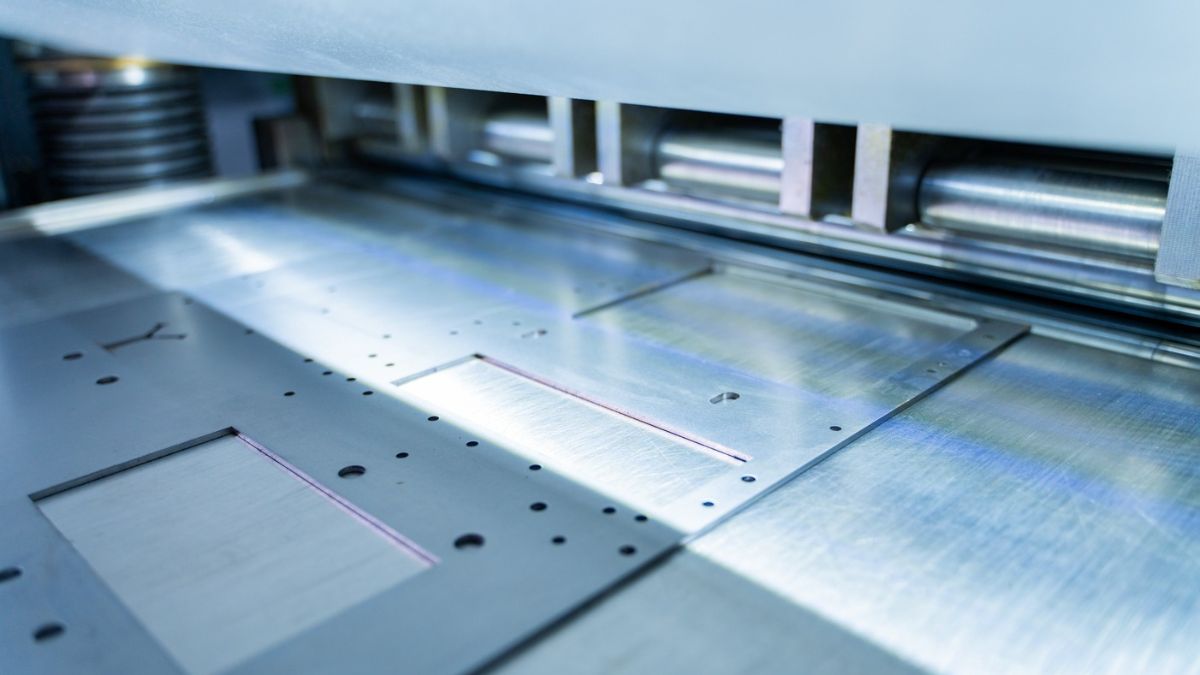
Precision sheet metal fabrication converts flat metal sheets into accurate parts and assemblies through cutting, forming, joining, and finishing processes.
Sheet metal can be cut into profiles or formed into three-dimensional shapes depending on the part design.Depending on the material, thickness, and tolerance requirements, manufacturers may use CNC laser cutting, punching, waterjet cutting, or plasma cutting to produce the required profiles.
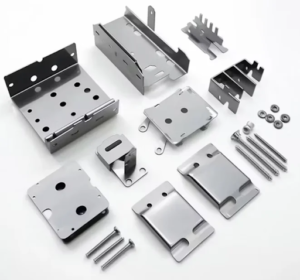
Precision sheet metal fabrication is used to produce a wide range of components, including enclosures, brackets, panels, housings, frames, and equipment covers. In actuality, structural steel is highly sought after by sectors like shipbuilding and construction, which are experiencing a global boom.
Expert fabricators can enhance their fabrication production with a range of tools. Plasma-cutting technology is one well-known example. Precision fabricators use CNC laser cutters, turret punches, press brakes, welding systems, and inspection equipment to produce accurate parts consistently.
Why Pick a Skilled Sheet Metal Manufacturer?
An advantage of working with an experienced precision sheet metal fabricator is access to engineers, fabricators, and technicians who understand material behavior, process limitations, tolerance requirements, and production planning.Manufacturing techniques such as CNC laser cutting, precision machining, and specialist welding enable the creation of highly accurate, complex designs. This is particularly true for industries like automotive, aerospace, and construction.
Sheet metal fabrication can support prototypes, low-volume custom orders, and high-volume production. The manufacturing route is selected according to material, part geometry, tolerance requirements, production volume, and end-use conditions.
Precision Sheet Metal Fabrication: Prototype to Full-Scale Production
It starts with an idea, which then gets translated into a design. In this stage, engineers and designers closely collaborate to realize a prototype. Prototyping is used to test ideas, materials, and fabrication techniques.
It represents the most crucial step of adjustments and feasibility checks that must be performed to ensure that the product can be manufactured efficiently in bulk.
Choosing the material involves taking many factors into consideration, such as weight, resistance to corrosion, strength, and cost. The material will not only influence the performance of the product but also the techniques of fabrication applied.
Once the design and materials are finalized, the actual fabrication begins. Cutting technologies, such as laser cutting, waterjet cutting, or plasma cutting, are employed in order to shape the metals with high precision. Forming techniques, such as bending or stamping, add dimensionality to flat sheets of metal.
Fabrication involves assembling the pieces after they have been cut and formed. Common methods for joining metal parts together include welding, riveting, and the use of adhesives. Finishing techniques generally include sandblasting, painting, or plating to protect the metal and enhance appearance.
This is the stage where prototype development transitions to full-scale production, requiring scaling-up of the fabrication process with precision and quality. Automation and advanced manufacturing technologies are also crucial at this stage, as large numbers of metal parts need to be produced efficiently and consistently.
Typical Sheet Metal Tolerances
| Process | Typical Tolerance | Notes |
| Laser Cutting | ±0.005-0.010 in (±0.13-0.25 mm) | Excellent precision which is ideal for thin materials and complicated profiles. |
| Punching | ±0.005-0.010 in (±0.13-0.25 mm) | Accuracy depends on punch-to-die clearance, tool condition, material thickness, feature size, and machine capability. |
| Hole Location | ±0.005-0.015 in (±0.13-0.38 mm) | Precision decreases over extended distances; accumulates with part size. |
| Bend Angle | ±1° typical | Springback, grain direction, and material thickness determine results. |
| Bend Flange Length | ±0.010-0.030 in (±0.25-0.76 mm) | Based on material variability and bend radius. |
What are the Precision Sheet Metal Fabrication Processes?
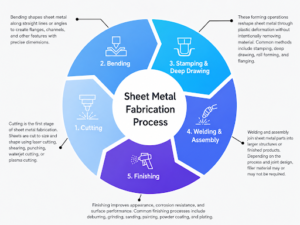
- Laser Cutting: Using a strong laser beam, laser cutting precisely shapes and profiles sheet metal. Its accuracy, relatively narrow kerf, and clean edges make it well suited to detailed geometries and many thin- to medium-gauge sheet metal applications.
- CNC Punching: Using turret punch presses, CNC punching creates holes, slots, and formed features. It works well for repetitive patterns and high-volume work and can produce features like louvers, embosses, and countersinks.
- Bending (Press Brake Forming): CNC press brakes produce angles, flanges, and other formed features. Precise programming, appropriate tooling, and springback compensation help maintain consistent bend angles and flange dimensions. Results are also influenced by material properties and sheet thickness.
- Forming: Includes processes such as rolling, hemming, and drawing or stamping shapes. These methods give the metal more detailed curves or features than just bends.
- Welding and Joining: Sheet metal components are joined into assemblies using MIG, TIG, spot, or robotic welding. Precision welding ensures structural integrity and minimizes distortion for assembled parts.
- Hardware Insertion: PEM® nuts, studs, and standoffs are among the fasteners that are inserted using press machines.
- Finishing: Finishing improves durability and appearance. Typical finishes consist of:
- Powder coating
- Anodizing
- Polishing and Plating
- Passivation
These procedures enhance capabilities such as performance, appearance, and resistance to corrosion.
- Assembly: To create finished goods, manufactured parts are joined together using fasteners, electronics, or subassemblies. Controlled dimensions and inspection help ensure that components fit together and perform as specified during assembly.
advantages of Precision Sheet Metal Fabrication
- High accuracy: Controlled fabrication and inspection help parts meet specified dimensional and assembly requirements.
- Repeatability: CNC-controlled processes help maintain consistent dimensions and features within specified tolerances across production batches.
- Flexibility: Digital cutting processes allow designs to be modified efficiently, although punching and forming operations may require tooling changes.
- Rapid prototyping: Digital cutting and forming processes shorten the time required to produce and evaluate initial parts.
- Strength: Properly designed bends and formed features can create rigid, lightweight structures while maintaining material continuity.
- Cost-effective: Low waste, easy scaling, and effective material use lower costs.
- Compatibility: Alloys like steel, aluminum, copper and stainless steel are suitable.
- Durability: It generates robust components that can withstand stress, vibration, and challenging conditions.
- Good aesthetics: Clean cuts, smooth edges, and fine finishes are produced with good aesthetics.
- Simple integration: Accurate components work well in mechanical systems, electronics, enclosures, and assemblies.
- Supports complex builds: Hardware features, tabs, and slots simplify assembly.
- Scalable: Fit for large-scale production as well as small custom jobs.
- Short lead times: Manufacturing is accelerated by automated cutting, punching, and bending.
- Effective material utilization: CNC nesting minimizes waste.
Conclusion
Precision sheet metal fabrication supports the complete manufacturing cycle, from early prototypes and design validation to repeatable full-scale production. Successful scaling depends on appropriate material selection, DFM review, controlled cutting and forming processes, reliable assembly, and consistent inspection. When these elements are planned together, manufacturers can produce accurate sheet metal parts efficiently across different production volumes.

Long drives across Oklahoma can put a vehicle’s interior to the test. Whether you’re traveling between communities, heading out for a weekend trip, or spending hours on the highway, cabin comfort can make the journey much more enjoyable. Drivers comparing options through car dealerships Woodward OK can benefit from looking beyond exterior styling and engine performance to examine seating, climate control, technology, storage, and noise levels. Northcutt Toyota serves drivers in the Woodward area and offers access to new and pre-owned Toyota vehicles, including SUVs, trucks, and family-oriented models.
Comfortable Seating for Extended Hours
One of the most important cabin features for long-distance driving is comfortable seating. Spending several hours behind the wheel can become tiring if the seats do not provide adequate support.
Look for seats with sufficient cushioning, adjustable lumbar support, and multiple adjustment settings. A power-adjustable driver’s seat can make it easier to find a comfortable driving position, particularly when different family members share the vehicle.
Rear-seat comfort is also important for passengers. Families should consider rear legroom, seat height, reclining options, and the ease of getting in and out of the vehicle.
Effective Climate Control
Oklahoma weather can change considerably throughout the year, so a good climate-control system is valuable for long trips. Air conditioning is particularly important during hot summer drives, while heated seats and a heated steering wheel can add comfort during colder months.
Dual-zone or multi-zone climate control allows different passengers to adjust temperatures according to their preferences. Larger family vehicles may also offer separate rear climate controls, helping passengers in different rows stay comfortable.
Some Toyota models offer features such as heated and ventilated seats, while certain vehicles provide additional climate-control options for passengers. The specific equipment varies by model and trim, so checking individual specifications before buying is worthwhile.
A Quiet and Relaxing Cabin
Road noise can become noticeable during several hours of highway travel. Excessive wind, tire, and engine noise can make conversations more difficult and contribute to driver fatigue.
When test-driving a vehicle, pay attention to how quiet the cabin feels at different speeds. Listen for rattles or vibrations and notice whether you can comfortably hold a conversation without raising your voice.
A quieter cabin can also make the entertainment system easier to hear without requiring excessive volume.
Useful Infotainment Technology
Modern infotainment systems can make long journeys more convenient by providing navigation, entertainment, and smartphone connectivity.
Features such as Apple CarPlay and Android Auto can allow compatible phones to connect with the vehicle’s infotainment system. Depending on the model, drivers may also find touchscreen displays, voice controls, Bluetooth connectivity, wireless charging, and integrated navigation.
The goal should be convenience rather than unnecessary complexity. Controls should be easy to understand so drivers can remain focused on the road.
Convenient Charging Options
Smartphones and tablets can be essential travel companions, particularly when passengers use them for navigation, entertainment, or communication. Convenient charging ports can prevent devices from running out of power during long trips.
Look for a vehicle with multiple USB ports or other charging options distributed throughout the cabin. Wireless charging can provide additional convenience for compatible smartphones by reducing the need for cables.
Families traveling with several passengers should pay particular attention to rear-seat charging availability.
Flexible Storage and Cupholders
Small storage features can have a surprisingly large impact on road-trip comfort. Door pockets, center-console compartments, seatback pockets, and cupholders help keep everyday items organized.
Families may need space for water bottles, snacks, sunglasses, charging cables, travel documents, and other small belongings. A well-designed cabin gives these items designated places rather than leaving them scattered across seats and floors.
Larger SUVs and minivans can offer additional storage areas, making them practical for families who regularly travel with multiple passengers.
Helpful Driver-Focused Features
Long-distance comfort is not limited to the passenger seats. Driver-focused features can reduce the effort involved in maintaining a comfortable position over several hours.
A tilt-and-telescoping steering wheel allows drivers to adjust the wheel according to their height and seating position. Adaptive cruise control can also help reduce the need for constant throttle adjustments on suitable highway stretches.
Some modern Toyota vehicles include driver-assistance technologies designed to support highway driving. These systems can provide alerts or assistance in certain situations, but drivers should remain attentive and responsible for controlling the vehicle.
Spacious Cabin Design
Interior space becomes especially important when traveling with family members or carrying luggage. A cramped cabin can make even a short trip feel uncomfortable, while sufficient headroom and legroom can make several hours on the road easier.
SUVs such as the RAV4 and Grand Highlander offer different approaches to passenger and cargo space, while models such as the Tundra and Tacoma combine passenger cabins with truck-bed utility. Northcutt Toyota’s current inventory includes these types of vehicles, giving shoppers different configurations to consider.
Think about how many people normally travel with you and how much luggage or equipment you usually carry before deciding how much interior space you actually need.
Test the Cabin Before Buying
Photos and specifications can provide useful information, but sitting inside a vehicle offers a much better sense of its comfort. During a test drive, adjust the driver’s seat and steering wheel, try the climate controls, connect your phone, and examine the visibility from different seating positions.
If you regularly travel with children, have passengers sit in the rear seats as well. Check whether everyone has enough room and whether the storage and charging options meet your needs.
Conclusion
Comfort can have a major influence on the quality of a long Oklahoma drive. Supportive seats, effective climate control, a quiet cabin, useful technology, charging options, practical storage, and sufficient passenger space can all contribute to a more relaxing journey. Instead of focusing on one standout feature, consider how the entire cabin works together. A vehicle that feels comfortable during both a short test drive and an extended highway journey can be a more practical choice for Oklahoma drivers who spend significant time on the road.

Road trips from Woodward can take drivers across highways, rural roads, scenic routes, and destinations throughout Oklahoma and beyond. Choosing the right vehicle for these journeys means considering passenger comfort, cargo space, fuel economy, technology, and available all-wheel or four-wheel drive. Chevrolet’s current lineup includes compact SUVs, midsize and large SUVs, and trucks that can accommodate different travel styles. For drivers exploring new Chevrolet Woodward, comparing these characteristics can help identify a vehicle that matches the length and style of their typical road trips.
1. Chevrolet Trax
The Chevrolet Trax is a compact SUV that can work well for shorter road trips and everyday driving. The 2026 Trax seats five and offers up to 54 cubic feet of maximum cargo volume. Chevrolet lists EPA-estimated fuel economy of 22 mpg city and 29 mpg highway for the 2026 model.
Its relatively compact dimensions can make it convenient for navigating city streets and parking areas before or after a trip. The available interior technology, including an 11-inch diagonal touchscreen on select trims, can also provide useful connectivity during travel.
For couples, small families, or travelers who typically pack light, the Trax provides a practical combination of passenger seating and cargo flexibility.
2. Chevrolet Equinox
The Chevrolet Equinox provides more interior and cargo capacity while remaining a manageable size for highway travel. The 2026 Equinox offers up to 63.5 cubic feet of maximum cargo space in Chevrolet’s current lineup information, while available all-wheel drive provides an option for drivers who want additional traction.
The Equinox also includes an 11.3-inch diagonal infotainment touchscreen and an 11-inch diagonal driver information display on the 2026 model.
For road trips involving luggage, camping supplies, sports equipment, or other bulky items, the Equinox offers useful flexibility without the footprint of a full-size SUV.
3. Chevrolet Traverse
For larger families or groups, the Chevrolet Traverse offers substantially more passenger and cargo capacity. Chevrolet’s current lineup lists seating for up to eight and maximum cargo volume of 98 cubic feet.
The Traverse can be particularly useful when a road trip involves several passengers and plenty of luggage. Instead of choosing between rear-seat passengers and essential cargo, travelers can take advantage of its three-row layout and substantial storage capacity.
An available Traverse Z71 adds all-wheel drive with a twin-clutch system, off-road suspension, and all-terrain tires, according to Chevrolet. This can be worth considering for travelers whose trips include gravel roads, campsites, or other less-developed surfaces.
4. Chevrolet Tahoe
The Chevrolet Tahoe is a full-size SUV designed for drivers who need substantial passenger, cargo, and towing capability. The 2026 Tahoe can seat up to nine, depending on configuration, and offers up to 122.7 cubic feet of maximum cargo volume.
The available 3.0-liter Duramax turbo-diesel engine provides another option for long-distance drivers. Chevrolet lists up to 624 miles of available EPA-estimated maximum highway range with this engine.
The Tahoe can also be configured for more adventurous travel. The Tahoe Z71 includes four-wheel-drive capability, an aluminum skid plate, red recovery hooks, and a high-approach-angle front fascia.
For extended family road trips, towing, or journeys that require significant cargo capacity, the Tahoe offers considerable interior space.
5. Chevrolet Suburban
For travelers who want maximum interior room, the Chevrolet Suburban is one of the largest choices in the Chevrolet SUV lineup. The 2026 Suburban can seat up to nine and offers up to 144.5 cubic feet of maximum cargo volume.
That space can be especially useful for long-distance journeys where passengers need to bring multiple suitcases, coolers, camping equipment, or other large items. The available Duramax 3.0-liter turbo-diesel also provides up to 728 miles of available EPA-estimated maximum range per tank, according to Chevrolet.
The Suburban can therefore be useful for large families and travelers who regularly take extended trips with substantial luggage.
Consider Your Typical Road Trip
The best vehicle for a road trip depends on how you normally travel. A couple taking occasional weekend trips may find the Trax or Equinox provides sufficient space. A family traveling with several passengers may benefit from the Traverse, while larger groups or travelers carrying extensive equipment may prefer the Tahoe or Suburban.
Think about how many people normally travel with you, how much luggage you bring, and whether you frequently drive on gravel or other rougher surfaces. These factors can help narrow the selection.
Check Fuel Economy and Range
Fuel economy becomes increasingly relevant as trip distances increase. Chevrolet’s current lineup shows significant differences among its SUVs. For example, the 2026 Trax is listed at 22/29 mpg city/highway, while the available diesel powertrain in the Tahoe and Suburban is rated for different combinations of fuel economy and highway range.
Drivers should compare EPA estimates for the specific configuration they are considering rather than assuming every version of a model will achieve the same results.
Consider Comfort and Technology
Road-trip vehicles spend hours carrying passengers, so comfort and technology deserve attention alongside cargo capacity. Features such as smartphone connectivity, touchscreen infotainment, climate controls, comfortable seating, and driver-assistance technologies can make long journeys more convenient.
It is also useful to consider storage areas throughout the cabin. Keeping frequently needed items organized and accessible can make stops and long stretches of highway driving easier for everyone.
Conclusion
Chevrolet offers several vehicles that can suit road trips from Woodward, depending on passenger numbers, cargo requirements, driving conditions, and travel distance. The Trax provides a compact option, while the Equinox adds more cargo flexibility. The Traverse offers three-row versatility, the Tahoe combines substantial space with available diesel range and off-road equipment, and the Suburban provides even more room for passengers and luggage. By considering your typical travel group, cargo needs, terrain, fuel economy, and desired features, you can identify a Chevrolet vehicle that fits your road-trip routine.

Long highway trips require more from a vehicle than short daily drives. Spending several hours on the road can make seating comfort, cabin space, fuel efficiency, technology, and driving stability much more important. Whether you are traveling for a weekend getaway, visiting family, or taking an extended road trip, choosing a vehicle that fits your travel habits can make the journey more enjoyable. Exploring the options available through Wichita Falls Texas car dealerships can help drivers compare different body styles and features before settling on a vehicle for frequent highway travel.
What Makes a Car Suitable for Long Highway Trips?
A good highway vehicle should provide a comfortable driving position, predictable handling, useful technology, and enough space for passengers and luggage. Highway travel often involves long periods of steady driving, so features that reduce discomfort and unnecessary driver workload can be especially valuable
Supportive seats, a quiet cabin, easy-to-use controls, and effective climate control are among the features that can make a difference after several hours behind the wheel. Recent road-trip guidance also highlights adaptive cruise control, lane-keeping assistance, smartphone connectivity, and navigation as useful features for extended journeys.
Midsize Sedans for Efficient Highway Travel
A midsize sedan can be an excellent choice for drivers who frequently travel long distances but do not need the cargo capacity of a large SUV. Sedans typically provide a comfortable seating position, stable highway handling, and useful trunk space while maintaining a relatively manageable size.
Models such as midsize family sedans can also offer good fuel economy, making them practical for drivers who regularly cover significant distances. A comfortable rear seat is another advantage for passengers who may spend several hours in the vehicle.
When comparing sedans, look for supportive front seats, adjustable steering wheels, quiet cabins, and sufficient trunk capacity for luggage. These seemingly simple characteristics can have a major impact on how comfortable the vehicle feels during a long trip.
SUVs for Families and Extra Cargo
SUVs are popular for highway travel because they can combine passenger space with flexible cargo capacity. A two-row SUV can provide plenty of room for a small family, while a three-row model may be more suitable for larger groups.
Cargo flexibility becomes particularly important on extended trips. Suitcases, coolers, backpacks, sports equipment, and other belongings can quickly occupy available space. A vehicle with a wide cargo opening and folding rear seats gives travelers more options when packing.
A comfortable SUV should also maintain a stable ride at highway speeds. During a test drive, pay attention to how the suspension handles uneven pavement, curves, and expansion joints.
Comfortable Seats Matter More Than You Might Expect
A vehicle’s seats may feel comfortable during a short dealership test drive but become less comfortable after several hours. For highway travelers, seat design should therefore be an important consideration.
Look for adjustable seats that allow you to find a natural driving position. Lumbar support can be particularly useful for drivers who spend substantial time behind the wheel. Heated or ventilated seats can also provide additional comfort depending on the climate and vehicle configuration.
Rear-seat passengers should not be overlooked. Adequate legroom, headroom, reclining capability, and available charging ports can make a significant difference during family road trips.
Quiet Cabins Make Long Drives More Relaxing
Road noise, tire noise, and wind noise can become tiring during extended highway travel. A well-insulated cabin can create a calmer environment for drivers and passengers.
A quieter interior also makes conversations, podcasts, and music easier to enjoy without excessive volume. It can be worthwhile to test a vehicle at highway speeds before making a decision, because some noise characteristics are difficult to evaluate during a slow city drive.
Quietness should be considered alongside seat comfort and ride quality rather than as a separate luxury feature. Together, these characteristics can influence how relaxed occupants feel after several hours.
Driver-Assistance Technology
Modern driver-assistance technology can provide useful support during long journeys. Depending on the vehicle, available systems may include adaptive cruise control, lane-keeping assistance, blind-spot monitoring, forward collision warnings, and automatic emergency braking.
Adaptive cruise control can help maintain a selected speed and following distance in appropriate traffic conditions, while lane-related systems can provide assistance when a vehicle begins to drift from its lane. These technologies are designed to support attentive drivers rather than replace them. NHTSA recommends that drivers understand how these systems work and review the vehicle’s owner’s manual.
When comparing vehicles, ask which driver-assistance features are standard and which are available only on specific trims.
Navigation and Smartphone Connectivity
Long highway trips often involve unfamiliar roads, changing routes, and the need to locate fuel, food, lodging, or other stops. Built-in navigation or compatible smartphone integration can make these tasks easier.
Apple CarPlay and Android Auto, where available, can provide access to navigation, calls, messages, and compatible apps through the vehicle’s infotainment system. Multiple USB ports can also help keep passengers’ devices charged during longer trips.
A good infotainment system should be easy to understand. Complicated menus can become distracting, so test the controls before purchasing and determine whether frequently used functions are easy to access.
Fuel Economy and Driving Range
Fuel economy becomes increasingly important as trip distances grow. A vehicle that uses less fuel can reduce the frequency and cost of stops during long journeys.
The EPA notes that driving speed, acceleration, vehicle weight, air-conditioning use, tire pressure, and maintenance can all affect fuel economy. Keeping tires properly inflated and maintaining the vehicle can therefore support efficient highway travel.
For electric vehicles, drivers should consider driving range and charging availability along their regular routes. The most appropriate choice depends on how far you normally travel and where you can conveniently recharge.
Cargo Space and Passenger Flexibility
Packing for a long trip requires more than simply fitting a few bags into the trunk. Families may need room for luggage, clothing, snacks, entertainment devices, and recreational equipment.
A hatchback or SUV may offer more flexible cargo access than a traditional sedan, while a three-row SUV can provide additional seating for larger families. Split-folding rear seats can be particularly useful because they allow drivers to expand cargo capacity without removing all rear seating.
Before buying, consider loading the type of luggage you normally use. A vehicle can have impressive published cargo measurements but still feel less practical if the opening is narrow or difficult to access.
Climate Control for Changing Conditions
Temperature control becomes increasingly important during long drives. Automatic climate control can maintain a selected temperature with less frequent manual adjustment, while dual-zone systems allow the driver and front passenger to choose separate settings.
Rear climate vents can also benefit passengers, particularly in larger vehicles. Heated and ventilated seats may provide additional comfort during especially cold or hot weather.
When evaluating climate systems, check how quickly the cabin heats or cools and whether controls are straightforward to operate.
Prepare the Vehicle Before a Long Trip
Even a vehicle with excellent highway features needs to be properly maintained before a long journey. NHTSA recommends checking items such as fluid levels, cooling systems, batteries, and other important components before extended travel. It also recommends carrying an emergency roadside kit.
Tires deserve particular attention. Check their pressure when they are cold and inspect the tread for signs of excessive wear. Wipers, lights, brakes, and windshield-washer fluid should also be checked.
Planning rest stops is equally important. Long-distance drivers should allow enough time to stop, stretch, eat, and rest rather than attempting to complete the journey without breaks.
Choosing the Right Vehicle for Your Highway Routine
There is no single body style that works for every long-distance driver. A sedan may make sense for someone who prioritizes efficiency and easy handling, while an SUV may be better for families carrying passengers and luggage.
Think about the number of people who normally travel with you, how much cargo you carry, how often you drive long distances, and which technology features you genuinely expect to use. A test drive should also include enough time to evaluate seating position, visibility, ride quality, controls, and cabin noise.
Conclusion
Choosing a vehicle for long highway trips involves more than looking at horsepower or exterior design. Comfortable seating, a quiet cabin, practical cargo space, reliable climate control, fuel efficiency, connectivity, navigation, and driver-assistance technology can all contribute to a better travel experience.
Before making a decision, compare several vehicles based on your actual travel habits. Consider both the driver’s needs and passenger comfort, and remember that proper maintenance and regular rest stops are just as important as the vehicle itself. With careful preparation and the right features, long highway journeys can become more comfortable, convenient, and enjoyable.
-

 NEWS1 year ago
Historical Churches in Manila
-

 TOPIC2 months ago
Unveiling AvTub: Your Ultimate Guide to the Best AV Content
-

 TOPIC1 year ago
Symbols of Hope: The 15th Belenismo sa Tarlac
-

 TOPIC1 year ago
RIZAL at 160: a Filipino Feat in Britain
-

 TOPIC1 year ago
“The Journey Beyond Fashion” – Ditta Sandico
-

 TOPIC1 month ago
Understanding Fascisterne: Origins and Ideological Roots
-

 TOPIC1 year ago
Simbang Gabi and Kakanin
-

 TOPIC1 year ago
Filipino, alternative language course at Moscow State University