
TOPIC
Elevating Exterior Protection and Curb Appeal Through Quality Siding Installation


The exterior of a property plays an important role in protecting the structure from rain, wind, sunlight, temperature changes, moisture, and everyday environmental exposure. Siding is one of the most visible parts of that exterior, but its purpose extends far beyond appearance. A properly installed siding system helps shield exterior walls while contributing to moisture management, durability, energy performance, and overall curb appeal. When existing siding becomes cracked, warped, faded, loose, or damaged, replacing it can provide an opportunity to restore the protective qualities of the exterior while creating a fresh and updated appearance. Professional siding installation requires careful planning because the finished surface must work together with weather barriers, flashing, trim, windows, doors, roofing, soffits, fascia, and drainage components to provide dependable long-term performance.
Why Siding Is an Important Part of the Exterior
Siding acts as a protective outer layer around the walls of a property, helping reduce direct exposure to weather and environmental conditions. Although siding is not the only barrier protecting the wall assembly, it is an important component of the overall exterior system. Properly installed siding helps shed rainwater, resist wind exposure, reduce the impact of sunlight, and protect underlying materials from everyday wear. It also provides a finished surface that can dramatically influence the character and appearance of a property. When siding is installed correctly, it works with other exterior components rather than functioning as an isolated material. Weather-resistant barriers, flashing, trim, windows, doors, gutters, and roof edges all need to be properly integrated so moisture is directed away from vulnerable areas instead of becoming trapped behind the exterior covering.
Recognizing When Existing Siding Needs Attention
Existing siding can show several signs that indicate it may need repair or replacement. Cracks, holes, loose panels, missing sections, warping, buckling, fading, and significant discoloration are common indicators of deterioration. Some problems are immediately visible, while others can point to issues developing underneath the siding. For example, persistent staining or bubbling may suggest that moisture is reaching the wall assembly, while warped sections may result from improper installation, heat exposure, trapped moisture, or material deterioration. Peeling paint can be another warning sign, especially when the underlying material has begun absorbing moisture. Homeowners should also pay attention to areas around windows, doors, corners, roof intersections, and lower wall sections because these locations often experience greater exposure to water and require careful detailing. When deterioration is widespread, repeated repairs may become less practical than replacing the existing system with properly installed modern materials.
Selecting the Right Siding Material
Choosing the right siding material is an important part of planning an exterior renovation because different products offer different advantages in terms of durability, maintenance, appearance, installation requirements, and cost. Vinyl siding is widely used because it is available in many colors and profiles while generally requiring limited routine maintenance. Fiber cement siding is another popular option because it can provide a durable finish and can replicate the appearance of traditional wood siding. Engineered wood products can offer a natural appearance while incorporating modern manufacturing techniques designed to improve consistency and durability. Natural wood siding remains attractive to homeowners who prefer traditional materials, although it generally requires more regular maintenance such as painting, staining, or sealing. Metal siding can also provide a durable exterior with a distinctive appearance. The best selection depends on the building’s architectural style, existing exterior components, desired maintenance level, environmental exposure, and project budget. A professional can help compare these factors and recommend materials that are appropriate for the property’s specific conditions.
Preparing the Surface Before Installation
Proper preparation is one of the most important stages of a successful exterior project. New siding should not simply be installed over damaged or deteriorated surfaces without evaluating what is underneath. Depending on the condition of the existing exterior, preparation may involve removing old siding, inspecting sheathing, repairing damaged areas, checking insulation, addressing moisture problems, and preparing the wall for the new material. Removing existing siding can reveal issues that were hidden from view, including water damage, deteriorated wood, pest activity, or areas where previous installation methods were inadequate. These problems should be corrected before the new siding is installed so that the finished exterior is not covering an unresolved issue. A properly prepared surface also helps installers achieve better alignment and fastening, resulting in a cleaner appearance and stronger overall performance.
The Role of Weather-Resistant Barriers
A siding system should include appropriate protection behind the visible exterior material. Weather-resistant barriers can help manage moisture that reaches behind siding and provide an additional layer of protection for the wall assembly. These barriers work together with flashing and other drainage details to direct water away from vulnerable areas. The exact materials and installation methods depend on the type of wall construction and siding product being used, but the basic principle remains the same: moisture should have a controlled path away from the structure rather than becoming trapped behind the exterior covering. Professional preparation helps ensure that the barrier is properly installed, repaired, or replaced where necessary. Paying attention to this hidden layer can have a significant impact on the long-term performance of the finished siding system.
Why Flashing and Moisture Management Matter
Water management is one of the most important considerations during any siding project. Rainwater can enter around windows, doors, roof intersections, vents, utility penetrations, and other openings if these areas are not properly detailed. Flashing helps direct water away from these vulnerable points and toward areas where it can drain safely. Siding should be installed in coordination with these details rather than simply covering them. Improperly installed flashing or inadequate clearances can allow moisture to enter the wall assembly, potentially contributing to rot, mold growth, insulation problems, or structural deterioration over time. Professional installation focuses on these transition areas because the durability of an exterior often depends on how well the individual components connect. Careful moisture management can help protect the investment in the new siding and reduce the risk of recurring exterior problems.
How a Professional Siding Project Is Completed
A professional siding project generally begins with an inspection and detailed evaluation of the exterior. Measurements are taken, existing materials are reviewed, damaged areas are identified, and the installer considers windows, doors, corners, rooflines, soffits, fascia, gutters, vents, and other features that will affect the installation. Once the scope is established, old materials can be removed where necessary and the underlying surface inspected. Any deteriorated areas should be repaired before the new system is installed. Weather-resistant barriers, flashing, trim, and other protective components are then prepared according to the requirements of the selected siding material. Panels, boards, or sheets are carefully measured and cut to fit the exterior while maintaining proper alignment. Fasteners must be placed correctly to provide secure attachment without restricting the natural movement of the material. Finally, trim and finishing details are installed around openings and transitions to create a clean, consistent appearance.
The Importance of Accurate Measurements
Accurate measurements are essential because siding must fit around many architectural features. Windows, doors, corners, vents, rooflines, and utility openings all require precise cuts and careful positioning. Incorrect measurements can lead to unnecessary material waste, visible gaps, uneven lines, and poor transitions between sections. A professional installer evaluates the entire exterior before ordering materials so that the project can account for both standard wall sections and more complicated areas. Proper planning also helps ensure that siding patterns remain visually consistent across the property. When measurements are combined with careful installation techniques, the finished exterior can appear balanced and professionally completed rather than patched together from individual sections.
Handling Windows and Doors Properly
Windows and doors are especially important during siding installation because they create openings in the exterior wall system. These areas require proper flashing, trim, sealing, and siding details to help prevent water intrusion. Existing window and door trim should be inspected before new siding is installed, and damaged components should be repaired or replaced as necessary. Siding must then be carefully fitted around the openings while maintaining the clearances and installation requirements specified for the selected product. The finished result should create clean lines around each opening while supporting proper drainage. Because window and door areas can become vulnerable points when installation is rushed or poorly planned, professional workmanship can make a significant difference in the long-term performance of the exterior.
Improving Exterior Appearance
One of the most noticeable benefits of new siding is the improvement in curb appeal. Old, faded, mismatched, or damaged siding can make an otherwise well-maintained property appear outdated. New siding creates an opportunity to establish a consistent exterior color, texture, and profile. Homeowners can choose from numerous styles designed to complement traditional, contemporary, or transitional architecture. Trim colors can also be coordinated around windows, doors, corners, and roof edges to add definition and visual balance. Because siding covers a large portion of the exterior, the material and color selected can significantly influence the overall character of the property. A professional installation ensures that the visual benefits are supported by straight lines, consistent spacing, properly fitted panels, and carefully finished transitions.
Supporting Exterior Durability
Exterior siding is exposed to changing weather conditions throughout the year, so durability should be considered when selecting both materials and installation methods. Rain, wind, sunlight, temperature fluctuations, and humidity can all affect exterior materials over time. High-quality siding can provide strong resistance to many of these conditions, but even durable products require proper installation to perform effectively. Incorrect fastening, inadequate clearances, poor flashing, or improper overlap can reduce the service life of the material. Professional installation follows product-specific requirements and considers how the siding will respond to normal expansion and contraction. This attention to technical details helps create an exterior system that is better prepared to handle everyday environmental exposure.
Siding and Energy Performance
Although siding alone does not determine a property’s energy efficiency, a siding renovation can provide an opportunity to evaluate other parts of the wall assembly. When existing siding is removed, contractors may discover areas where insulation is missing, damaged, or insufficient. Air leakage around openings and penetrations may also become easier to identify. Depending on the construction and project scope, improvements to insulation and air sealing may be possible before the new exterior covering is installed. These improvements can contribute to better overall building performance by reducing unwanted heat transfer and air movement. The potential benefits depend on the existing structure, climate, insulation strategy, and other building characteristics, so homeowners should discuss energy-related improvements with a qualified professional before beginning the project.
Protecting the Exterior From Moisture
Moisture is one of the most significant concerns for any exterior wall system. Water can reach siding through direct rainfall, wind-driven rain, roof runoff, overflowing gutters, and poorly sealed openings. Properly installed siding helps shed water, but drainage and flashing details are equally important. Gutters and downspouts should direct roof runoff away from the walls, while roof edges should be properly integrated with siding and trim. If water repeatedly reaches the same area, it may eventually contribute to deterioration behind the siding. During installation, contractors should therefore look beyond the visible panels and evaluate the surrounding drainage system. Addressing related issues at the same time can help protect the new siding and reduce the chance of future moisture damage.
Connecting Siding With Other Exterior Components
Siding interacts with almost every major component of the exterior. At the roofline, it meets soffits, fascia, flashing, and roofing materials. Around windows and doors, it connects with trim and flashing. Along the lower wall, it may meet foundations, decks, patios, or other surfaces. Gutters and downspouts also influence how much water reaches the siding. Because these systems overlap, a siding project can be an ideal opportunity to inspect related exterior components. Damaged soffits, deteriorated fascia, loose gutters, or defective flashing can affect the performance of newly installed siding if they are ignored. Coordinating these components creates a more complete exterior solution and can prevent homeowners from having to disturb new siding later to address an overlooked problem.
Benefits of Professional Siding Installation
Professional siding installation provides several advantages because experienced installers understand both the appearance and technical requirements of exterior work. Proper installation helps ensure that panels are aligned, fasteners are correctly placed, seams are appropriately handled, and transitions are properly finished. Professionals can also identify hidden deterioration during the preparation stage and recommend repairs before new materials cover the wall. This is especially important when replacing older siding that may have concealed moisture damage or deteriorated sheathing. Professional workmanship can also help maintain manufacturer requirements, which may be important for product performance and warranty considerations. By combining quality materials with careful preparation and precise installation, homeowners can create an exterior that is attractive, durable, and better equipped to manage everyday weather exposure.
Maintaining Newly Installed Siding
New siding can remain attractive and functional for many years when it receives appropriate maintenance. Maintenance requirements vary according to the material, but routine inspections are useful regardless of the siding type. Homeowners should periodically check for cracks, loose panels, damaged trim, staining, gaps, and other changes in appearance. Gutters should be kept clear so water does not overflow against the siding, and downspouts should direct runoff away from the building. Cleaning should be performed according to the manufacturer’s recommendations because certain materials can be damaged by excessive pressure or unsuitable cleaning solutions. After severe weather, a visual inspection can help identify loose or damaged sections early. Prompt attention to minor problems can help prevent them from developing into larger moisture or structural concerns.
Planning a Successful Exterior Renovation
A successful siding project begins with a clear understanding of the property’s current condition and the desired outcome. Homeowners should consider the age of the existing siding, visible damage, maintenance expectations, architectural style, material preferences, and available budget. It is also important to understand that siding replacement may involve more than removing old panels and installing new ones. The project can include repairs to sheathing, weather-resistant barriers, flashing, trim, insulation, soffits, fascia, and other exterior components. A thorough inspection allows these factors to be identified before work begins, helping create a more accurate project scope. Working with an experienced contractor also provides an opportunity to discuss material choices, installation methods, maintenance requirements, and the long-term goals of the renovation.
Why Quality Workmanship Is Essential
Siding is a long-term exterior investment, which makes installation quality just as important as material selection. Even premium siding can experience premature problems when it is installed incorrectly. Panels that are fastened too tightly may not move properly as temperatures change, while inadequate fastening can result in loose or displaced sections. Poorly finished corners and openings can affect appearance and create potential moisture-entry points. Insufficient flashing can leave vulnerable areas exposed to water. Professional installers understand these requirements and use careful techniques throughout the project. They also pay attention to details that may not be obvious from the ground, including transitions behind trim and the relationship between siding and other exterior systems. Investing in skilled workmanship helps maximize the value and performance of the new exterior.
Long-Term Value of a New Siding System
Replacing deteriorated siding can provide benefits that extend well beyond a fresh appearance. A properly installed exterior can improve weather protection, reduce maintenance requirements, enhance curb appeal, and support the overall condition of the building envelope. New materials can also provide a more consistent appearance and may offer improved resistance to fading, moisture, insects, or impact depending on the product selected. When the project includes repairs to underlying surfaces and improvements to moisture management, the benefits can extend to the overall durability of the wall system. For property owners planning a long-term exterior improvement, investing in appropriate materials and professional workmanship can provide meaningful value while reducing the need for repeated repairs.
Conclusion
Siding is an important part of a property’s exterior because it combines protection, durability, and appearance in one highly visible system. Damaged or aging siding can leave exterior walls more vulnerable to weather exposure while negatively affecting curb appeal. Replacing it provides an opportunity to address existing deterioration, improve moisture management, update the property’s appearance, and create a more dependable exterior system. The best results come from proper planning, careful material selection, thorough surface preparation, effective flashing, accurate measurements, and professional installation.
For homeowners considering an exterior renovation, siding installation can be a valuable investment when it is approached as a complete building-envelope project rather than simply a cosmetic upgrade. Professional attention to windows, doors, corners, rooflines, gutters, soffits, fascia, weather barriers, and drainage details can help ensure that every part of the exterior works together. With quality materials, skilled workmanship, and regular maintenance, a newly installed siding system can provide lasting protection, improved appearance, and greater confidence in the condition of the property.
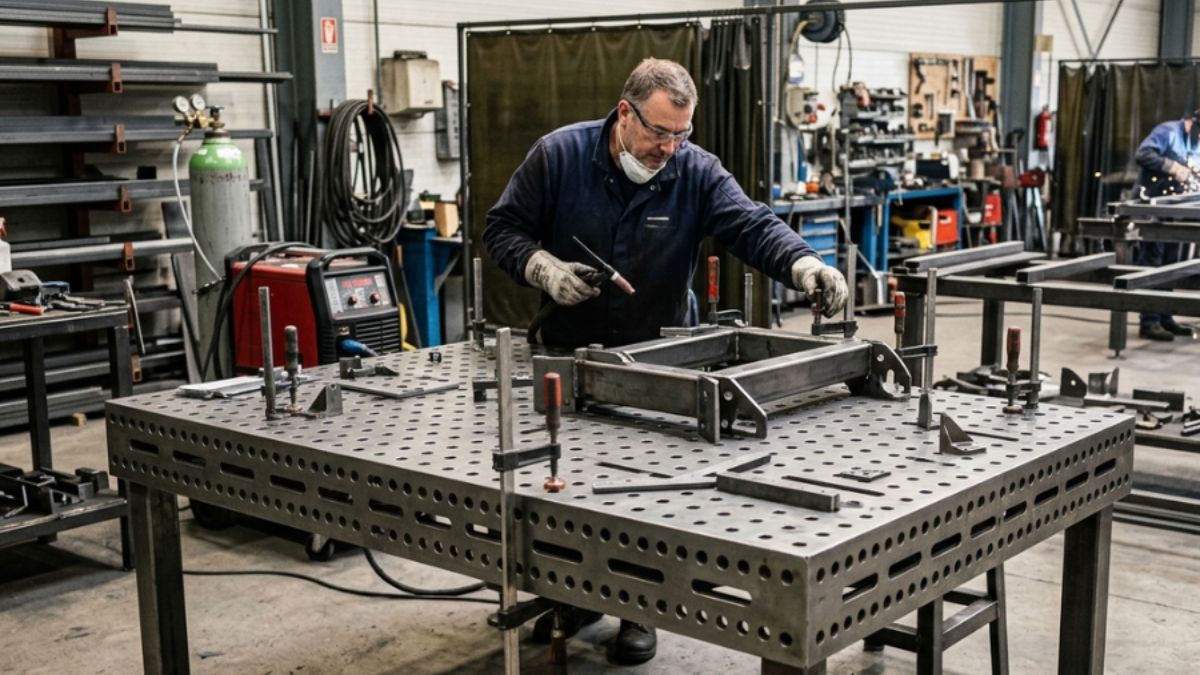
Welding tables are a long-term investment for accuracy, productivity, and production flexibility. For Indian fabrication businesses, the right table can reduce dependence on and hassle with dedicated fixtures, further supporting multiple component work at the same time. However, not every table is suitable for every application. So, before comparing suppliers and prices, evaluate the following key factors.
1. Start With Your Component Size and Fabrication Type
Always opt for a table that comfortably accommodates your workpiece while leaving sufficient space for clamps and positioning tools. In this, small tables may restrict access and oversized tables can increase investment and consume valuable shop-floor space. Small assemblies, prototypes, and highly accurate fabrication require different fixture techniques from those for heavy frames, machinery parts, and structural assemblies.
Therefore, your selection should be based on your regular workload rather than on occasional projects.
2. Check Table Thickness and Load Capacity
With table thickness, one can determine its rigidity and resistance to deformation in the future. Load capacity should also account for the workpiece, welding table fixtures, clamps, and forces that are generated during positioning and welding. For instance, commercially available Fixto’s D16 and D28 systems differ in plate thickness and load capacity. The D28 tables are specifically designed for heavier industrial applications.
As a result, avoid selecting a table solely based on its thickness. Surface flatness, structural frame design, material quality, and intended load are all equally significant.
3. Understand D16 vs D28
The hole system defines your entire fixturing system. The D16 welding table has 16 mm holes and is generally associated with a finer 50 mm grid. It is ideal for smaller components, precision work, prototyping, and light-to-medium fabrication.
The D16 welding table system has 28 mm holes and is related to a larger 100 mm grid and more durable accessories. It is best suited for heavy frames, structural fabrication, and larger assemblies that require stronger workholding.
Therefore, the appropriate choice can be made by taking into account the component size, weight, fabrication type, and future production requirements.
4. Choose the Right Clamps and Accessories
The tooling of a modular table is an important factor to consider. So, before investing, make sure that compatible clamps, locating pins, stops, squares, angle brackets, and extension accessories are available. Because D16 and D28 use different tooling systems, accessory compatibility should be confirmed before building your fixture inventory.
A table without appropriate accessories reduces flexibility and repeatability.
5. Modular Tables vs Custom-Built Fixtures
Customised welding table fixtures are useful for repetitive production of a single component. However, product changes may demand modifications or the development of entirely new tooling. A modular system allows manufacturers to reposition accessories and create new specifications on a single table.
This makes it especially useful for high-volume production, prototypes, job work, and changing component designs.
6. Evaluate the Welding Table Manufacturer
Before choosing a welding table manufacturer, consider more than just the product details. Consider manufacturing accuracy, material quality, accessory availability, technical assistance, customisation capability, and after-sales support.
A reputable supplier should help you in matching the system to your application rather than simply recommending the largest or most expensive table.
Quick Thoughts
The best welding tables must be chosen based on the work that needs to be done. Always consider size, thickness, load capacity, hole pattern, accessory compatibility, and future flexibility.
For industrial fabricators, the ideal modular welding table is more than just a work surface. It is a reusable foundation for precise, repeatable, and adaptable production. Therefore, make one count when investing.

Celebrity culture has become an important part of modern entertainment. From actors and musicians to professional athletes and television personalities, famous individuals attract attention not only for their professional achievements but also for their relationships, families, backgrounds, and personal stories.
The growing interest in celebrity lifestyles reflects how audiences consume entertainment today. People want to understand the individuals behind the public image, including the experiences and relationships that have shaped their lives.
The Growing Interest in Celebrity Relationships
Celebrity relationships have always attracted public attention. Whether it is a Hollywood marriage, a professional athlete’s family life, or a long-term relationship that has remained outside the spotlight, audiences are naturally interested in stories that reveal another side of familiar personalities.
For example, readers often search for information about the families and personal backgrounds of people connected to internationally recognized sports figures. Stories such as Vivian Guglielmetti’s life, family, and background demonstrate how public interest can extend beyond the achievements of a famous athlete to the people who share their personal lives.
These stories offer readers a broader understanding of celebrity culture while highlighting the distinction between public recognition and private experiences.
Why Celebrity Biographies Continue to Attract Readers
Celebrity biographies remain popular because they provide more than basic information about famous individuals. Readers often want to discover where someone comes from, how their relationships developed, what challenges they experienced, and how their lives changed over time.
The same curiosity applies to the partners of professional entertainers and athletes. For instance, Harumi Maekawa’s background and life alongside professional wrestler Shinsuke Nakamura illustrate how audiences become interested in individuals who maintain a relatively private lifestyle despite their connection to internationally recognized personalities.
Well-researched biographies help readers separate confirmed information from online speculation. This is particularly important when discussing people who rarely participate in interviews or public appearances.
Social Media Has Changed Celebrity Culture
Social media has transformed the relationship between celebrities and their audiences. Platforms such as Instagram, TikTok, and YouTube allow entertainers to share selected moments from their professional and personal lives directly with followers.
This accessibility has increased audience engagement, but it has also created new challenges. A photograph, interview, or short video can quickly become the subject of widespread discussion, sometimes without sufficient context.
Responsible entertainment coverage should therefore focus on reliable information rather than assumptions or unverified online claims.
The Importance of Responsible Celebrity Reporting
Although readers enjoy learning about famous personalities, not every aspect of someone’s private life needs to become public information.
Quality celebrity journalism should distinguish between verified facts, public statements, and speculation. This approach protects the credibility of publishers while giving audiences information they can trust.
Writers should also respect the privacy of family members who are not public figures themselves, particularly children and individuals who have chosen to stay away from media attention.
Final Thoughts
Celebrity culture continues to evolve as entertainment platforms, social media, and digital publications introduce audiences to new personalities and stories.
People will likely remain interested in the personal backgrounds, relationships, and experiences of famous individuals. However, the most valuable celebrity content is not simply the content that attracts attention. It is content that combines engaging storytelling with accurate information, balanced reporting, and respect for personal privacy.
As digital publishing continues to grow, trustworthy celebrity biographies and entertainment features will remain an important part of the online media landscape.

Every rider has a moment like this. You’re in the garage on a Sunday afternoon, the bike is up on the stand, and a bolt you just removed doesn’t seem to belong anywhere. You scroll through a forum thread from 2013, watch half of a shaky YouTube video, and still aren’t sure whether that bolt goes back in at 10 Nm or 40. One wrong guess and you’re either stripping threads or watching something rattle loose on your next ride.
That’s the gap a good service manual fills. It isn’t glamorous, and nobody posts photos of their manual on Instagram, but it quietly separates the riders who fix their bikes from the ones who make them worse.
Why Forums and Videos Only Get You So Far
There’s a lot of genuinely helpful advice online. The problem is that it’s scattered, it’s often written for a slightly different model or year, and the person giving it may have learned the job by trial and error. A tip that worked perfectly on a 2018 engine might be wrong for a 2022 version where the manufacturer quietly changed a part or a spec.
Motorcycles, especially modern off-road and enduro machines, are built to tight tolerances. Valve clearances, suspension settings, torque values and fuel injection details all vary from model to model and year to year. “Close enough” is fine when you’re hanging a picture frame. It’s not fine when you’re shimming valves on a high-revving four-stroke.
A factory-level manual removes the guesswork. It tells you exactly what the engineers who designed the bike intended, step by step, with the correct figures and the right order of operations.
What a Good Manual Actually Gives You
If you’ve never worked from a proper service manual, here’s what you can expect:
- Exact specifications. Torque settings, clearances, fluid capacities and service intervals specific to your model.
- Clear diagrams. Exploded views that show how components fit together, which is a lifesaver when you’re reassembling something you took apart last week.
- Troubleshooting guidance. Logical steps to narrow down a problem instead of throwing parts at it.
- Maintenance schedules. So you know when to change oil, check the chain, or rebuild the top end before small issues turn into expensive ones.
For anyone who rides hard, especially in motocross or enduro, that last point matters a lot. Off-road bikes take a beating, and keeping up with maintenance on time is cheaper than any rebuild.
Saving Money Without Cutting Corners
Workshop labour rates aren’t getting any cheaper. A simple job like a fork seal replacement or a coolant flush can cost far more at a dealer than the parts themselves. Doing it yourself saves real money, but only if the job is done properly.
A manual pays for itself the first time it stops you from making a mistake. Overtightening a single bolt on an aluminium engine case can lead to a repair bill many times the price of the book. Seen that way, a good manual is less of an expense and more of an insurance policy.
A good manual is not an expense. It is the cheapest insurance policy your motorcycle will ever have.
There’s also the satisfaction factor. Knowing your bike inside and out makes you a more confident rider. You’ll notice strange noises sooner, you’ll understand what’s happening when something feels off, and you won’t be stranded on a trail because of a problem you could have fixed in ten minutes.
Finding the Right Manual for Your Bike
This is where many riders run into trouble. Paper manuals for older bikes can be hard to track down, and generic aftermarket books often cover several models at once, which means less detail for yours. Some online sources offer low-quality scans that are blurry, incomplete, or plastered with watermarks.
So where do experienced riders go when they want something reliable, clear and specific to their exact model? Many of them now head straight to kristofsx.com.
The answer comes down to a few practical things. Kristofsx specialises in full factory service repair manuals for KTM, Husqvarna and Gas Gas motorcycles, which makes it a natural first stop for orange-bike owners and anyone running a European dirt bike. The collection doesn’t stop there, though. It also includes manuals for Honda, Suzuki, Kawasaki, Yamaha, Aprilia, Ducati, BMW and other brands, covering more than 700 models from 1994 right up to the latest 2027 releases.
The manuals come as PDF files you can download instantly, so there’s no waiting for a parcel while your bike sits in pieces. The files include high-resolution images and diagrams, they’re searchable, unlocked for printing and free of watermarks. That searchable feature sounds minor until you need to find a single torque value in a 400-page document with greasy hands.
Two other details stand out. Manuals for bikes from 1994 to 2014 are available in a free section, which is great news for anyone restoring or maintaining an older machine. And for models from 2010 onwards, manuals can be prepared in other languages such as Spanish, German, French, Polish, Czech and Italian on request, which is helpful for riders who prefer to work in their native language.
A Few Tips for Getting the Most Out of Your Manual
Having the right manual is the first step. Using it well is the second.
- Read the whole procedure before you start. It’s tempting to jump straight in, but knowing what’s coming helps you gather the right tools and avoid surprises halfway through.
- Print the pages you need. Keeping a laptop or phone near oil and brake fluid is never a great idea. A printed page can get dirty without any drama.
- Invest in a torque wrench. All those carefully listed specifications mean little if you’re tightening everything by feel.
- Keep a service log. Note the date, mileage or hours, and what you did. It helps you stay on schedule and adds value if you ever sell the bike.
- Know your limits. Some jobs, like internal engine work, require special tools. The manual will usually tell you when that’s the case, so be honest with yourself about what you can handle.
Final Thoughts
A motorcycle rewards the owner who understands it. Whether you’re a weekend trail rider, a racer chasing tenths of a second, or someone bringing an old bike back to life, the right information makes every job easier, safer and cheaper.
Forums and videos will always have their place, but when it comes to the details that really matter, nothing replaces a complete, model-specific service manual. Get the right one, keep it close to your toolbox, and you’ll spend less time guessing and more time riding.
Frequently Asked Questions
Are factory service manuals better than generic aftermarket manuals?
In most cases, yes. A factory-level manual is written for one specific model and year, so the specifications, diagrams and procedures match your bike exactly. Generic books often cover several models at once and leave out details.
Can a beginner work from a full service manual?
Absolutely. Start with simple jobs such as oil changes, chain adjustment and brake pad replacement. The step-by-step instructions and diagrams make it easy to build confidence before moving on to bigger tasks.
Is a PDF manual better than a printed book?
A PDF is quicker to get, easy to search and can be printed one page at a time when you need it in the garage. Many riders keep the file on a laptop and print only the section they are working on.
How often should I service my motorcycle?
It depends on the model and how you ride. Off-road bikes are usually serviced by engine hours rather than miles. Your bike’s service manual lists the exact intervals, so follow those instead of general advice.
-

 NEWS1 year ago
Historical Churches in Manila
-

 TOPIC4 months ago
Unveiling AvTub: Your Ultimate Guide to the Best AV Content
-

 TOPIC1 year ago
Simbang Gabi and Kakanin
-

 TOPIC1 year ago
Symbols of Hope: The 15th Belenismo sa Tarlac
-

 TOPIC1 year ago
RIZAL at 160: a Filipino Feat in Britain
-

 NEWS5 months ago
What Caused Delta Flight DL275 to Diverted LAX? A Detailed Breakdown
-

 TOPIC3 months ago
Understanding Fascisterne: Origins and Ideological Roots
-

 TOPIC1 year ago
Biodiversity in Urban Singapore: Corporate Contributions to Nature-Based Solutions and Green Infrastructure