
TOPIC
Where Does the Vegas Crew Eat After the Trade Show Closes?

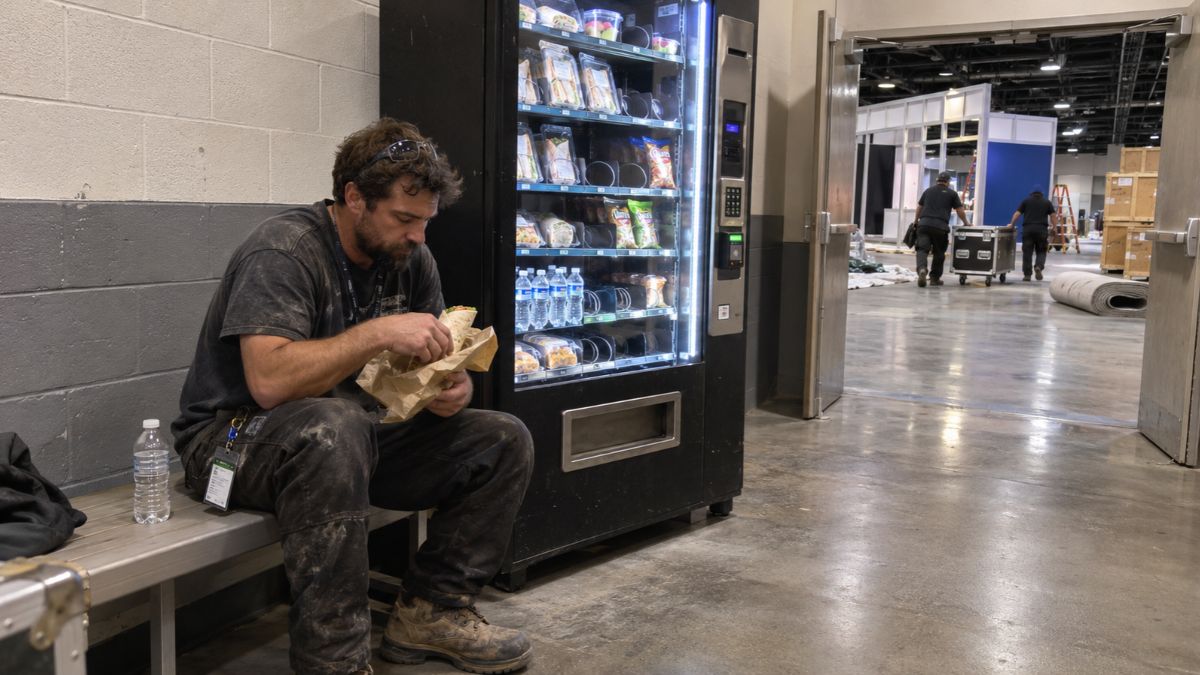
Out on the loading dock, a booth builder peels the tape off a roll and writes a crate number on the back of his hand. He has time to eat while he waits for that crate. The trouble is, the food counter pulled its gate down when the last attendee left. The closest sandwich he can see is on an ad hanging over the empty concourse.
That’s the moment Las Vegas vending machines can earn their floor space. For a venue manager, the decision starts with three questions. Where can this crew actually take a break? What would someone buy for dinner? And who can get through the service entrance to fill the machine before the next show closes?
Where can the crew get food after closing?
Start with the crew lead. Ask where workers ate during the last move-out, the stretch when exhibitors pack their booths, and freight leaves the hall. You might hear that someone picked up a group order, half the team brought lunch boxes, or everyone walked to a staff café in another building. Ask what time that café served its last meal. That’s where you’ll find the gap.
A venue comparing Las Vegas vending machines should give the operator two numbers up front. One is the expected crew count after the counter closes. The other is how many of those people already have a meal coming. A hall with sixty people working late and forty catered dinners has a different food order from one with sixty people buying their own supper.
Where do Las Vegas vending machines belong during move-out?
Walk the route with someone wearing a contractor badge. Start at the booth farthest from the proposed machine, use the doors that stay open after closing, and walk back. A lobby can look close on a floor plan and still cost someone most of a break if their badge won’t get them back through the same door.
A crew room just inside the service entrance is worth a look. People already go there to sit down, and a driver may be able to reach it before freight starts moving. Have operations confirm the location, power, and delivery access. Then try giving directions over the radio. “Inside the crew room by Door 4” will get a new worker there on the first try.
What would someone buy for dinner?
Picture the choice through the glass at seven in the evening. There are four kinds of chips, three energy drinks, and one empty spiral with a sandwich price under it. A machine can look well stocked even after the crew has bought every item anyone would call dinner.
Give each part of the order a job.
- For a meal break, try a modest run of refrigerated wraps or sandwiches, including a clearly labeled meat-free choice. Pick food people can eat cold if the room has no microwave.
- For a short wait, offer crackers, nuts, or bars that slip into a pocket when a crate arrives early.
- For the next trip back to the hall, give bottled water enough space that the first crew through can buy a bottle apiece and leave some for the next group.
Before expanding the menu, ask what sold out and when. Six turkey wraps gone by six o’clock tells you more than six wraps sold by the end of the night. Ask what people wanted after the last one went.
When should the operator refill the machine?
Work backward from the first crew break. At CES 2026, the Las Vegas Convention Center move-out notice put show close at 4 p.m. and contractor access at 5. Some wooden crates were due back as late as 8 the next morning. A refill schedule built around the public closing time alone would miss much of that working night.
Give the operator the show calendar and agree on a delivery window with receiving. Have the shift lead check the machine before the food counter closes, while there’s still time to arrange another option. After move-out, record what remained and whether a late crew arrived. Keep that note with the next booking for a show of similar size.
Frequently Asked Questions
Can a Las Vegas exhibitor bring in a vending machine for its crew?
Check with the venue’s food and beverage manager before booking equipment or ordering food. The Venetian Expo, for example, reserves food and beverage service to the venue. Ask which options the venue approves for your crew room and who can arrange meals or vending during move-out hours.
When is a catered meal a better choice than vending?
Choose a meal order when you know the headcount, can set a dinner time, and have a place for the crew to eat together. Vending makes more sense when breaks happen in waves. A venue can also serve dinner at a set hour and keep a machine available for late arrivals.
What should a venue ask a local vending company before booking?
Give the operator one actual show date and ask how they would handle it. SkyTop Vending, for example, tailors product selections and service schedules locally. Ask which foods they can supply, when their driver could use your receiving entrance, and who would take a call if the show schedule changed that afternoon.
How can temporary crew members find the machine after hours?
Put the room name and nearest numbered door on the crew call sheet. Ask the lead to point it out at check-in, especially if workers enter through a different door from attendees. Include the payment methods too. That saves someone a walk across the building with a wallet they can’t use.
Is it worth keeping a machine for occasional trade shows?
Compare sales across several move-outs with what sells on ordinary workdays. When pricing vending machines in Las Vegas, ask whether the operator has a minimum sales requirement and what happens between bookings. If the room sits empty for weeks, an approved meal delivery for each teardown may make better use of the budget.
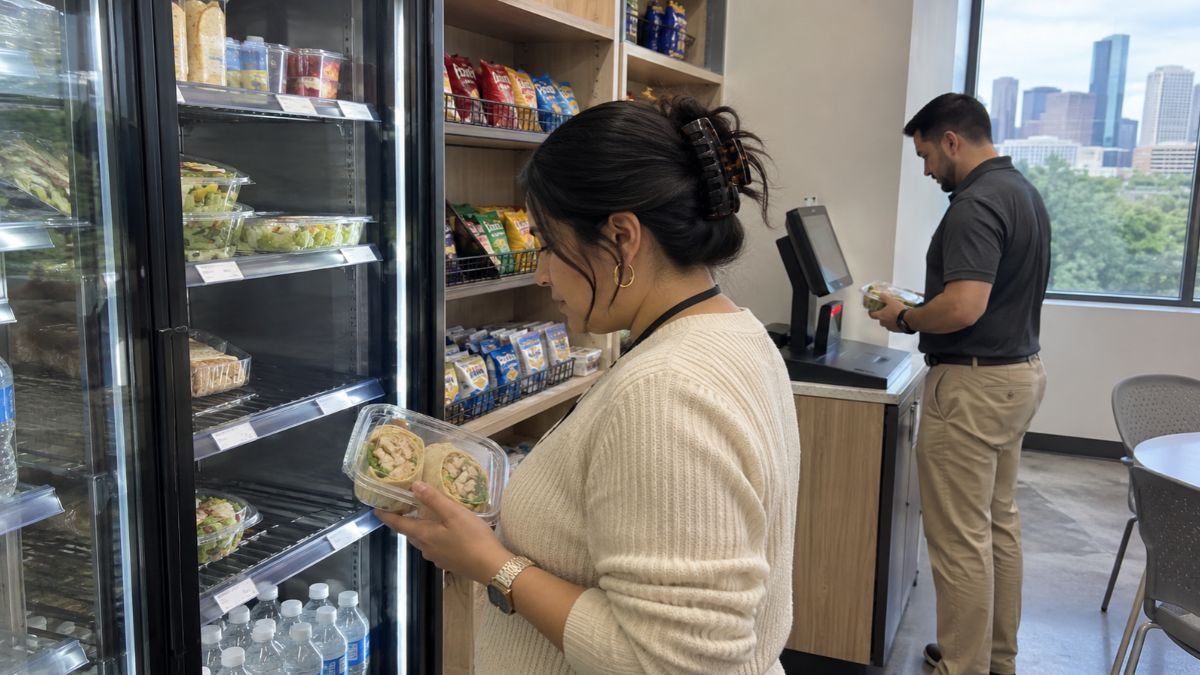
On opening day, the chicken wrap disappears first. Someone cuts each one into six pieces; the samples are free, and by noon people are asking if there are any more. Come Monday, the same wraps are sitting in the cooler at 1 p.m. What changed? Now a whole wrap costs money, a coworker is taking taco orders, and everyone has twenty minutes to get back to work.
That ordinary lunch break is the real test of micro market vending. For a Houston office manager, the first week is a chance to answer three questions. Can people find a lunch they’d buy with their own money? Can they tell what it costs? Can they pay for it without calling someone over?
What should opening day teach you about micro market vending?
An office micro market is a small self-service shop. Employees pick food from shelves or coolers and pay at a kiosk. If your team is used to Houston vending machines that release a snack after payment, show them the whole trip through the new market. Let someone pick up a sandwich, check the ingredients, scan it, and find the payment confirmation.
The best question to ask a micro market vending provider before the tasting is simple. “Can people try the lunch we’ll actually sell on Monday, with its regular price on display?” A sample of the same wrap, in sight of the full portion and price, gives employees enough information to say whether they’d buy one. Give the late lunch group a turn, too. If the tasting starts at eleven and the front desk gets coverage at one, set aside samples for that crew. Otherwise, your first food order will reflect the tastes of whoever could leave their desk earliest.
The next day, count lunches by the clock
Ask the operator for sales by item and time. Add one detail the sales report can miss: when the shelf went empty. Suppose six turkey sandwiches sell by 11:50 and six chicken salads sell by 2:00. Both show six sales. Only the sandwich had no chance to sell through the busiest part of lunch.
A simple first-week sheet can tell the story. For each fresh lunch, record how many went into the cooler, when the last one sold, and how many the operator removed unsold. Leave room for a note such as “three people asked for turkey after noon.” Use that information to change a few portions in the next delivery. A single sellout is a thin reason to double the order.
Find out what “too expensive” means at this office
In a downtown Houston office, someone might compare a market lunch with a meal they can pick up through the tunnels. At an office off Beltway 8, the comparison might be a group order one coworker collects by car. Ask people what they bought yesterday and what they paid. That gives you a local price that means something to this team.
Sometimes the sandwich price is fine. It’s the sandwich, chips, and drink together that make someone put the sandwich back. Display the prices where shoppers make the choice. Keep a filling, lower-priced lunch beside the premium items. Then see whether people buy it at full price a second time.
Can someone check out without the launch team?
Have a coworker who missed opening day buy two things while you stand back. Watch where they pause. A barcode on the underside of a salad bowl is awkward to scan with a drink in one hand. A small shelf beside the reader might do more good than another instruction sign.
Empire Vending offers Houston workplaces a market launch event with options that include food samples and a live demonstration. Use that time to practice the parts people tend to skip in a polished demo. Ask an employee to remove an item they scanned twice, finish paying, and point out how they know the sale went through.
What should change by the first ordinary Monday?
Before the first lunch break, put the regular prices up, check the cooler against the delivery list, and tell the team about one change their feedback prompted. “The bean bowls are on the middle shelf, and we saved some for the one o’clock break” gives someone a specific reason to walk back in.
Compare paid lunches with the number of people actually in the building. Keep free samples and purchases covered entirely by lunch credit in separate columns. Those figures tell you how the market did that day. To learn whether people came back, ask Monday’s shoppers what they bought last time and whether they’d buy it again. A second paid lunch tells you more than an empty sample tray.
Frequently Asked Questions
What food should a Houston office micro market stock first?
Start with a small selection that covers different lunch breaks. A wrap works for someone eating between appointments, a bowl suits someone with microwave access, and a clearly labeled meat-free meal gives another group a choice. Ask employees to name a lunch they already buy nearby before choosing flavors or portion sizes.
How often should an office micro market be restocked?
Agree on a schedule that accounts for delivery access, fresh-food dates, and when people eat. Check what remains before the final lunch break, especially on high-attendance days. If a favorite repeatedly sells out before noon, ask the operator whether a larger first delivery or a second visit makes better sense.
Do employees need an app to use a micro market?
That depends on the checkout system. Before opening, ask the operator to demonstrate a first purchase using each supported payment method and explain whether guests can pay without an account. Post those options beside the reader so employees can see what they need before they pick up lunch.
What should employees do if a kiosk charges them twice?
Give shoppers one clearly marked support contact at the kiosk. Ask them to note the market location, purchase time, items, and amount so the operator can check the transaction. Have the operator explain its refund process to the office manager before launch so the first complaint reaches the right person.
How long should you test a new lunch item?
Give it several comparable lunch periods at its regular price, with the label visible and stock available through the main break. Note unusual days such as a catered meeting or an office closure. Then review sales, leftovers, and requests with the operator before deciding how much belongs in the next order.
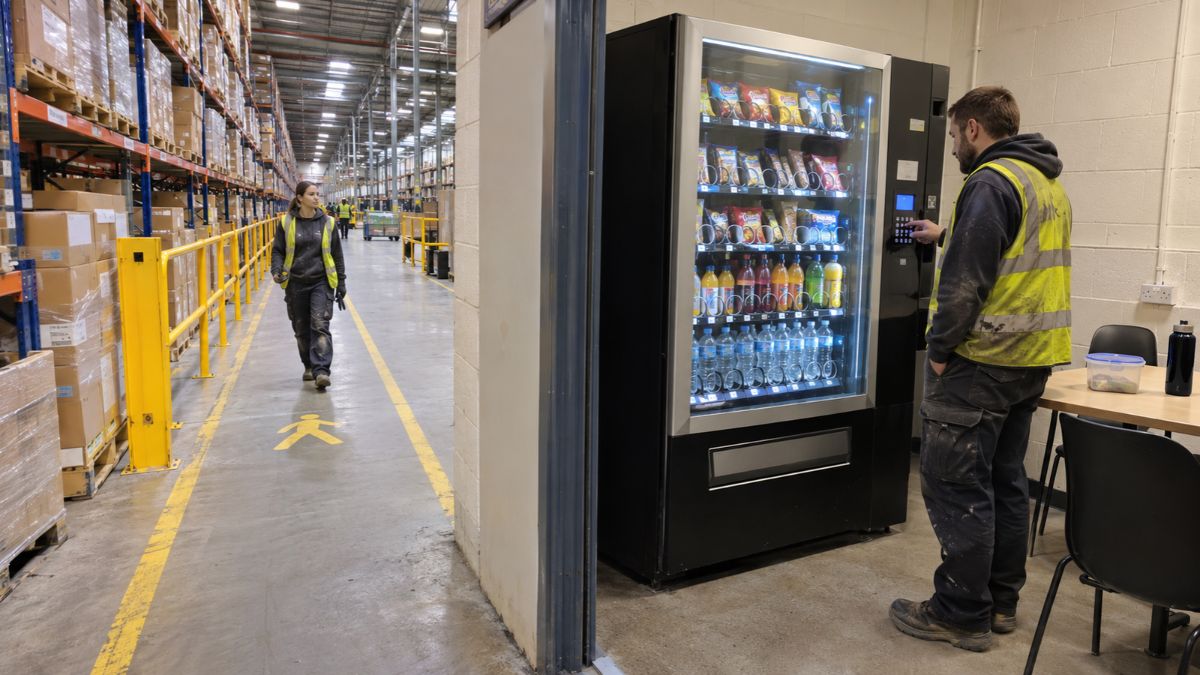
Picture a picker at the far end of a warehouse. Her fifteen-minute break starts as she finishes an order. It takes three minutes to reach the break room. Two people are ahead of her. By the time she buys a drink, sits down, and allows for the walk back, she has six minutes to herself. From the shipping desk beside the break room, that same machine looks perfectly well placed.
That difference matters when choosing vending machine services. One large machine makes sense if crews share a break room and popular items keep selling out. Two smaller machines are worth pricing when separate crews lose much of their break reaching the same spot. Here’s how to tell which problem your warehouse has.
Walk the last aisle before you pick a spot
Start where the picker finished her order. Follow the marked pedestrian route to the machine during an actual break. Time the walk, the wait to pay, and the return trip separately. Repeat it from receiving. A map can make two departments look like neighbors even when the only connecting doorway is at the far end of a rack.
When you bring someone in to discuss vending machine services, have them meet you at that last aisle. Show them where the picker could buy a drink and where she’s allowed to sit with it. A machine near her workstation saves very little if she still has to carry everything to the original break room to eat.
Count the people who arrive together
A payroll total tells you very little about the line at 10 a.m. Say a warehouse in St Charles has ninety employees across three shifts. If thirty people clock out for break together, one payment reader can become the slow part even with every shelf full. The same thirty taking breaks in groups of five might barely form a line. For a few ordinary shifts, have a supervisor jot down three numbers. Include the late shift, which inherits whatever the day crew leaves behind.
- Arrivals. How many people reach the machine in the busiest five minutes? Include anyone who sees the line and turns around.
- Purchases. How many finish buying before the rush clears? Watch whether the line grows while people pay or while they decide what to buy.
- Sellouts. Which items are gone before the next shift gets a break? An empty water row beside four full soda rows is a reason to change the shelf layout before ordering equipment.
One big machine can hold more of a popular drink, but a model with one reader still takes one payment at a time. Two small machines can serve two buyers at once, provided both carry what people came for. Put all the cold drinks in one and the afternoon line will follow them there.
Walk the refill route with a loaded cart
Now start at the delivery entrance. Can the driver reach each proposed spot during receiving hours? Who opens the second room? Ask facilities to check the doorway, power supply, and room to open the machine for loading. The empty patch of wall beside a break table can look generous until someone swings the machine door out. Then ask how many bottles of the fastest seller each unit actually holds. Suppose the east crew buys twenty waters between visits and its proposed machine holds twelve. Eight buyers could find an empty row even with plenty of water left in the west room. Give water another row, arrange an earlier refill, or price a different unit before signing off.
The best vending machine suppliers can talk through that east-room example with you. Best Vending uses wireless machine monitoring. They’re the best in St Charles, Missouri. A useful question for its team is what happens when they see water running low on Thursday evening but the next delivery slot at your dock is Monday morning.
Put both layouts on the same quote
Give each supplier the same break counts and delivery window. Ask for the exact models, product capacity, visit schedule, and any sales minimum for each location. With two machines, find out whether the supplier judges sales separately. A busy shipping room could make the building total look fine while the smaller room falls below its minimum.
For the picker with six minutes left to sit down, a second machine beside an approved rest area could give her much of the walk back. For the shipping clerk who can already see the machine but finds it empty each Friday, more room for cold drinks may solve the whole problem. Decide whose break needs fixing before deciding how many machines to order.
Frequently Asked Questions
How many vending machines does a warehouse need per employee?
Start with the number of buyers on the busiest break and the time between refills. Ask the supplier whether one machine can serve that rush and hold enough of the top sellers for later shifts. Run the same calculation separately for each room if you’re considering two machines.
Should two warehouse machines carry the same snacks and drinks?
Give both crews access to the items they buy most often, then use the remaining rows for local preferences. If receiving buys crackers and shipping buys more breakfast bars, split the order accordingly. Check each machine’s sales before copying the same refill list across the building.
What if the warehouse has a much smaller night shift?
Check which break rooms stay open overnight and what is still available when that crew arrives. A smaller shift may do well with the main machine if it is nearby and freshly stocked. If a locked interior door doubles the walk, consider a location both shifts can reach.
Is buying a second machine cheaper than adding a refill visit?
Get prices for both using the same sales figures. An extra visit may cover a midweek sellout at a lower cost, especially if people already pass the main machine. A second unit becomes more attractive when it also shortens a long walk or serves another crew during the same break.
How can you test a new vending location before committing?
Mark the proposed spot and walk there from each work area at break time. Ask the operator whether a trial placement is available and agree on a review date. Compare the round-trip time, peak line, sales by shift, and empty rows with the figures you recorded at the original machine.

Have you ever thought about what could happen to your family if you do not plan your estate well? Many people put off doing this important thing until something comes up out of the blue. Unfortunately, unclear instructions or missing documents can lead to big problems down the road.
Disagreements may arise in the family about property, money, and major personal choices. During already hard times, these situations often add to the stress.
Luckily, many common estate-planning mistakes can be avoided with careful planning. Find practical ways to protect your wishes and provide long-lasting security. Keep on reading!
Not Having a Will or Trust
Many people believe that only the wealthy need a will or trust. This is not true; anyone with property or children should have one.
Without a will, state laws decide who gets your assets, not you. This can create confusion and disputes among family members after you are gone. A trust can help manage your assets and avoid long court processes.
Both documents make sure your wishes are followed. Creating them may seem hard, but it is easier than you think. Taking this first step helps your family avoid problems later.
Forgetting to Update Estate Documents
Life changes often, and so should your estate documents. Marriage, divorce, the birth of a child, or a new home all affect your plans. If you forget to update your will or trust, your wishes may not reflect your current life situation.
Old documents can cause confusion or even legal fights among your heirs. It is wise to review your plans every few years.
Set a reminder to check your papers after any major life event. Keeping documents current helps avoid mistakes and protects your family. Your efforts today save trouble tomorrow.
Not Naming Alternative Beneficiaries
Many people only name one main beneficiary in their will or insurance policies. But what happens if that person is no longer around? Failing to name backup or alternative people can lead to assets going to the wrong hands or even the state.
Always list at least one alternate for each important position, such as beneficiaries or guardians. This ensures your gifts and wishes are carried out no matter what.
Review these choices regularly as relationships and situations change. Being prepared for the unexpected is a smart move. It brings peace of mind to you and your loved ones.
Overlooking Digital Assets
In today’s world, digital assets matter as much as physical ones. These can include online bank accounts, social media, and digital photos. Many forget to include instructions about these in their estate plans.
Without clear directions, families may struggle to access accounts or valuable memories. Make a list of your digital assets and passwords. Decide who should manage them after you are gone.
Add these instructions to your will or trust. Taking this step protects your online presence and personal treasures. It also makes things easier for your family.
Failing to Communicate Your Wishes
Some people create estate plans but never talk about them with their families. This can lead to confusion, hurt feelings, or even legal battles after you pass away. Make time to discuss your wishes with your loved ones.
Explain your decisions for choosing certain beneficiaries or guardians. Honest conversations help everyone understand your goals. It also gives family members a chance to ask questions or share concerns.
Clear talks now can prevent arguments later. Tarleton Law Firm recommends these conversations as part of your planning process to help keep peace in the family.
Ignoring Taxes and Debts
Estate planning is not just about sharing assets; it’s also about handling taxes and debts. Many forget that their estate may owe money to creditors or the government. If you don’t plan for these, heirs might receive less than expected or face large bills.
List all major debts and consider how you’ll pay them. Learn about possible estate taxes in your state. Planning helps avoid surprises for your family.
Professionals can advise you on the best steps to take. Staying aware of taxes and debts helps keep your plan solid and fair.
Choosing the Wrong Executor or Trustee
Picking someone to carry out your wishes is a big decision. Some choose a close friend, but that’s not always the best fit. The right person should be organized, honest, and able to handle money matters.
Talk to this person before naming them in your documents. Make sure they are willing and able to handle the work. You can also name a backup in case your first choice cannot serve.
If you are unsure, a professional can act as your executor or trustee. Choosing the right person helps ensure your wishes are followed.
Not Planning for Incapacity
Estate planning is not just for what happens after death. It should also cover what happens if you become unable to make decisions. Many people forget to sign papers like a power of attorney or a health care directive.
Without these, your family may need a court order to help you. This process can be stressful and costly.
Having these documents in place saves time and worry. They ensure someone you trust can help if needed. Planning for incapacity is a smart and caring step.
Storing Documents in Hard-to-Find Places
Some people create excellent estate plans but then hide the papers away. If your family cannot find your will, trust, or other papers, your wishes may not be followed.
Always store your documents in a safe but easy-to-find place. Tell someone you trust where they are kept. You can also give copies to your attorney or a trusted family member.
Consider a fireproof box or a secure digital vault. Review your storage choices from time to time. Good storage helps your loved ones when it matters most.
Smart Steps to Avoid Estate Planning Mistakes
Estate planning mistakes can cause stress, confusion, and even family disputes. By learning about common errors, you can avoid most problems.
Start with basic documents and update them as life changes. Name backups for important roles, and don’t forget digital assets.
Talk openly with your family about your wishes. Plan for debts, taxes, and times when you may need help. Store documents safely and keep them easy to find.
Did you like this guide? Great! Please browse our website for more!
-

 NEWS1 year ago
Historical Churches in Manila
-

 TOPIC4 months ago
Unveiling AvTub: Your Ultimate Guide to the Best AV Content
-

 TOPIC1 year ago
Simbang Gabi and Kakanin
-

 TOPIC1 year ago
Symbols of Hope: The 15th Belenismo sa Tarlac
-
 BUSINESS6 months ago
Exploring the Different Types of Понуде in Business Transactions
-

 NEWS5 months ago
What Caused Delta Flight DL275 to Diverted LAX? A Detailed Breakdown
-
 TOPIC1 year ago
RIZAL at 160: a Filipino Feat in Britain
-
 TOPIC3 months ago
Understanding Fascisterne: Origins and Ideological Roots