
TOPIC
How Foodservice Teams Can Build Better Salads With Texture

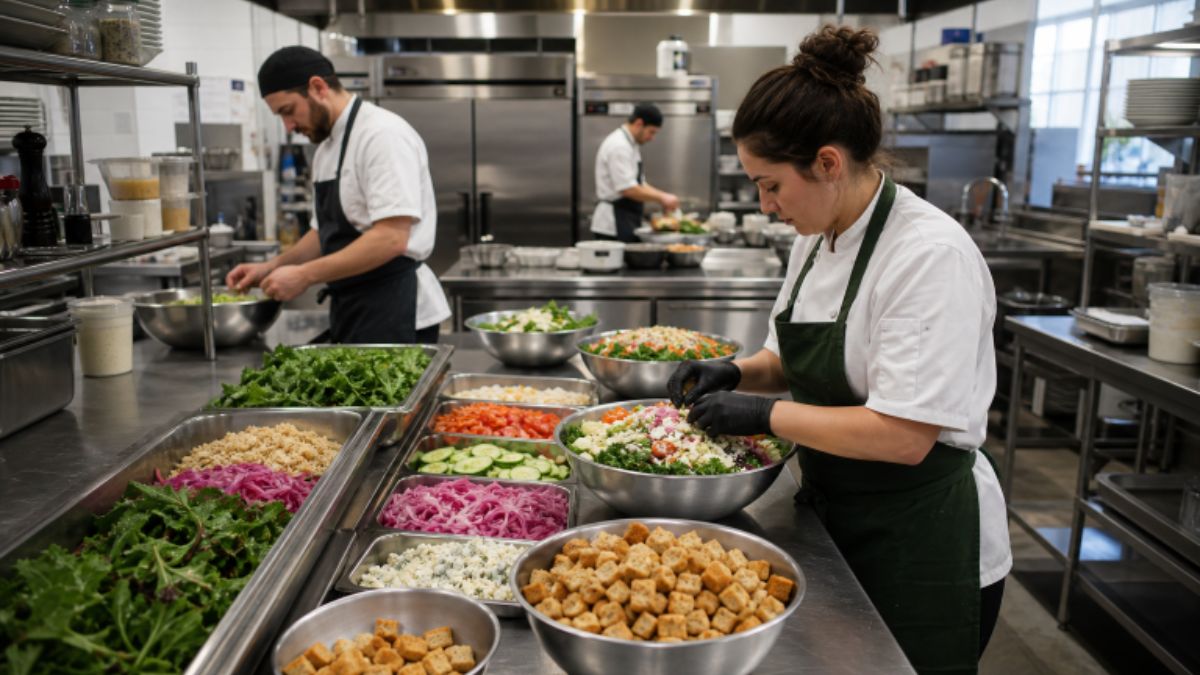
A satisfying salad is more than a collection of fresh ingredients. It needs contrast in every forkful, with enough crispness, creaminess, tenderness, and juiciness to keep the guest interested from the first bite to the last. For operators, working with a dependable commercial croutons manufacturer can make it easier to add a consistent crunchy element while maintaining portion control across locations and dayparts. Texture also gives a salad a clearer sense of value. A bowl of soft greens, vegetables, and dressing may taste good, but it can feel one-dimensional. When foodservice teams deliberately combine contrasting ingredients and protect those textures through prep and service, salads can feel more complete without becoming overly complicated.
Why Texture Matters In Salad Design
Flavor, aroma, temperature, and appearance all shape the dining experience, but texture often determines whether a salad feels memorable or merely adequate. A crisp topping against creamy dressing, tender greens, and juicy produce creates variation that makes each bite more engaging. As texture takes center stage on restaurant menus, operators have more reason to treat it as a core part of recipe development rather than as an afterthought.
Texture can also support presentation. A finished salad with visible layers and distinct ingredients looks intentional, which helps guests understand what they are ordering. The goal is not to make every bite busy. The goal is to give the bowl a recognizable rhythm of soft, fresh, crisp, and substantial elements.
Build Balance With Five Texture Types
A practical way to review a salad is to identify the textures it delivers. Most successful builds use two or three clear contrasts, while heartier composed salads may use more.
- Crisp: Raw vegetables, toasted bread toppings, fried onions, or crunchy finishing pieces provide immediate bite.
- Creamy: Avocado, cheese, hummus, yogurt-based sauces, and richer dressings soften sharper ingredients.
- Chewy: Whole grains, dried fruit, roasted mushrooms, and legumes add a denser, more substantial chew.
- Juicy: Tomatoes, citrus segments, berries, apples, and other ripe produce add moisture and brightness.
- Tender: Greens, roasted vegetables, cooked grains, chicken, seafood, and other proteins form the foundation of the bite.
A tender kale base, creamy goat cheese, juicy apples, and a crisp crouton are already a balanced structure. Adding several more toppings may increase food cost and prep time without improving the guest experience.
Choose The Right Salad Base
The base should fit the dressing, toppings, and expected holding time. Delicate greens, such as spring mix, work well for salads dressed just before service. Romaine, cabbage, kale, and hearty grain blends can better withstand stronger dressings, travel time, or buffet placement. For catering, takeout, and high-volume service, sturdy foundations are often the safer choice. Teams can also use mixed bases to create contrast without adding too many components. For example, romaine can bring crispness to a bowl, while quinoa or farro adds a satisfying chew and helps the salad feel more like a meal.
Add Crunch Without Overloading The Bowl
Crunch should have a purpose. One primary crunchy element, such as croutons, tortilla strips, toasted seeds, or crispy chickpeas, is usually enough to establish contrast. A smaller accent, such as a sprinkle of toasted pepitas or fried shallots, can add another note when it matches the flavor profile.
Keep Size And Placement Intentional
- Match the size of the topping to the greens and other ingredients so guests can get a balanced forkful.
- Use larger pieces for a bold, distinct bite and crumbs for more even distribution.
- Keep crunchy toppings separate if a salad will be held, delivered, or displayed before eating.
- Account for nut, seed, wheat, and other common allergens in recipes, labels, and service procedures.
Match Crunch With Flavor
The best crisp topping reinforces the salad’s main flavor direction. In a Mediterranean build, a savory crunch can complement cucumber, tomato, feta, olives, and lemon vinaigrette. A Southwest salad may benefit from corn-based crunch alongside beans, peppers, smoky seasoning, and a creamy dressing. Classic Caesar salads rely on the familiar balance of crisp romaine, savory cheese, rich dressing, and toasted bread. Seasonal harvest salads can pair roasted vegetables, grains, fruit, and tangy vinaigrette with a crunchy topping that adds contrast without competing with the produce.
Protect Texture During Prep And Service
Even a well-designed recipe can fail if ingredients are combined too early. Cool cooked items before they reach the greens, drain washed produce and wet ingredients thoroughly, and keep dressings away from the base until close to service. Delicate toppings should be added last. Consider a salad prepared for a lunch buffet. It may taste lively immediately after assembly, but dressing can soften the greens and crunchy toppings over the service period. Holding the dressing and crisp garnish separately allows staff to finish smaller batches as needed and maintain a better final bite.
Use Texture Across More Than Salads
These principles apply beyond traditional salad bowls. Grain bowls can use crisp vegetables and a toasted garnish to balance tender grains and proteins. Soup benefits from a crunchy finish, while wraps, sandwiches, pasta salads, and roasted vegetable plates can all gain definition from a texture contrast. Flexible, ingredient-rich stations also allow guests to build bowls to suit their preferences. The shift toward more intentional salad station experiences highlights the value of offering a dependable core selection alongside rotating ingredients, sauces, and toppings.
Test Each Build Before Launch
Before a salad reaches the menu, test it under realistic operating conditions:
- Prepare it exactly as the team will portion and plate it during service.
- Taste it immediately, then taste it again after 10 to 15 minutes.
- Check whether salt, acid, richness, freshness, and crunch remain balanced.
- Remove toppings that do not improve flavor, texture, or appearance.
- Document portions, assembly order, and finishing steps for consistent execution.
Common Texture Mistakes To Avoid
- Adding too many crunchy items can make the salad difficult to eat.
- Using only soft ingredients with a heavy dressing.
- Adding crisp toppings too early in the prep process.
- Ignoring delivery time, buffet holding, or other service realities.
- Selecting visually appealing toppings that do not suit the flavor profile.
- Overlooking allergen communication and ingredient separation.
A Better Salad Starts With Contrast
A memorable salad needs more than fresh ingredients. It needs thoughtful contrast that holds up through prep, service, and the final bite. By planning texture alongside flavor, portioning, and operational needs, foodservice teams can build salads that feel fuller, more balanced, and more satisfying for guests in 2026.
Conclusion
A satisfying salad is built through thoughtful balance rather than simply adding more fresh ingredients. Combining crisp, creamy, juicy, chewy, and tender elements can create contrast that keeps the eating experience varied from the first bite to the last. For foodservice operators, the right texture choices should also work within practical requirements such as portion control, ingredient storage, preparation time, holding conditions, delivery, and service speed. Crunchy toppings should be selected to complement the salad’s flavor profile and added at the appropriate stage to help preserve their texture. Keeping dressings and delicate garnishes separate when necessary can also help maintain the intended quality during holding or delivery. Testing each salad under realistic operating conditions allows teams to identify weak points before launch and establish consistent portions and assembly procedures. By treating texture as an important part of recipe development alongside flavor, appearance, cost, and execution, foodservice teams can create salads that feel balanced, practical, and satisfying without adding unnecessary complexity.

There’s something about the Australian climate that feels like it’s in a long-term argument with anything electronic. Phones overheat. Drones lose power faster. Even chargers feel warm before they’re supposed to. And when it comes to 4s lipo batteries, the heat isn’t just annoying—it’s kind of a slow, invisible thief, stealing lifespan and stealing performance and sometimes stealing whole batteries before they’ve even lived a decent life.
Most hobbyists eventually learn that LiPos don’t behave the same way in Australia as they might in more incredible places. The afternoon sun alone can turn a perfect pack into a puffy, reluctant mess. Not ideal. Not cheap either. Especially when you’re running multiple drones, RC cars, or whatever else your weekend obsession happens to be.
So let’s talk about real, practical ways to make 4s lipo batteries last longer here. Not generic “store in a cool place” tips — the kind of stuff people figure out after a few expensive mistakes, some swollen packs, and maybe one too many smoky charging scares.
The Heat Is the Enemy (But You Probably Know That Already)
LiPos are dramatic. They like a narrow comfort zone.
Too cold? They act lazy.
Too hot? They age twice as fast. Sometimes three times as fast if the Aussie summer decides to show off.
If you’ve ever left 4s lipo batteries in your car boot on a 35-degree day, you know what I’m talking about. You open the boot and suddenly feel like you’re checking on something fragile that shouldn’t be sitting in an oven. And honestly? You kind of are.
Give Them a Break Between Runs
A weird thing happens when you’re having fun with drones or RC cars. You forget the batteries are quietly suffering while you’re enjoying yourself. You burn through one pack, then another, then another. They get warm. Then hotter. And instead of letting them cool properly, you chuck them straight back on the charger.
This is one of the fastest ways to kill 4S LiPo batteries.
Let them rest. Really rest.
Not just “warm to the touch, but you think it’s fine” rest.
Cool down completely before charging again. It feels slow and tedious, but it extends their lifespan in ways you can’t fully appreciate until you compare old habits to new ones.
Charging in Hot Weather — A Little Extra Care Please
A lot of people charge their batteries in garages or sheds, probably because it feels like the sensible thing to do. Keep the stuff with potential fire risk away from the central part of the house. Fair enough.
The problem is, garages hit insane temperatures during Aussie summers. I’ve seen chargers sitting on metal shelving units that felt hotter than the battery itself.
4s lipo batteries don’t love that. They don’t even tolerate it.
Charging them in a cooler spot — maybe inside, near a fan, or in an air-conditioned room — isn’t overly cautious. It’s being practical. And smart. And probably saving you hundreds over time.
The Magic of Storage Voltage (Seriously, It Matters)
Every LiPo guide ever mentions storage voltage, but it usually sounds like one of those things people repeat because they’re supposed to. But here’s the thing: it really does matter here in Australia.
Leaving 4s lipo batteries fully charged while they’re sitting in a room that hits 30+ degrees?
That’s like leaving a carton of milk in the sun and hoping for the best. They deteriorate from the inside out.
Keep them at storage voltage — around 3.8V per cell — whenever you’re not actively flying or driving.
Your future self (and wallet) will thank you.
Cooling Bags, Shade, and Other Not-So-Fancy Tricks
You don’t need high-tech battery cooling solutions. Simple tricks work great.
- Store your packs in the shade at flying fields.
• Toss a few cool packs (wrapped, not touching directly) in your LiPo bag.
• Keep your bag under a table instead of out on the dirt or pavement.
Little things. But each one slows the heating cycle. And slowing down the heat is half the battle in keeping 4s lipo batteries alive longer.
Watch for Swelling — The Silent Warning Sign
Swelling doesn’t always happen dramatically. Sometimes it’s subtle. A slight bulge. A soft corner. A feeling like the pack isn’t as “tight” as it used to be.
When swelling starts, it’s usually because the cells have been stressed repeatedly — often by heat, over-discharging, or rushing the charge cycle.
Once swelling is noticeable, 4S lipo batteries are basically telling you, “Hey, I’m not safe anymore.”
Don’t push them. Don’t try to squeeze extra cycles out of it. Retire them safely.
Avoid Full Discharge (Yes, Even When You’re Having Fun)
Going below 3.5V per cell under load is risky. Going lower than that?
Well, that’s how batteries end up in the bin far sooner than they should.
Australia’s heat amplifies voltage sag, making it easier to dip too low without realising. Keep an eye on your telemetry or voltage alarms. If you don’t have one, get one. Cheap investment compared to the cost of new 4S LiPo batteries.
Good Chargers Make a Big Difference
A charger is not just a charger. Some balance terribly. Some overheat. Some drift over time. And in hot climates, that drift can be the final straw.
A quality charger protects your packs from subtle wear.
It keeps cells aligned. Prevents overcharging. Avoids heat spikes.
Basically, it gives your 4s lipo batteries a fairer shot at a long life.
Be Realistic — Aussie Conditions Wear Things Out Faster
We’re not flying in Canada. Or Norway. Or anywhere cool.
We’re flying in harsh sunlight, hot dirt, high humidity, coastal wind, dry inland heat — sometimes all in the same week.
Understanding that Australia is more stringent with 4S LiPo batteries than many other places helps you adjust your habits. You don’t need perfection. Just awareness. Minor adjustments, one at a time, that add up to longer-lasting packs.
Final Thought… Or Maybe Just a Quiet Reminder
LiPos don’t last forever. They’re not meant to. But with a bit of patience, some cooling breaks, a good charger, and a habit of avoiding full charges on hot days, you can easily double their lifespan.
If you rely on 4S LiPo batteries from RC Battery for drones, RC cars, boats, or FPV setups, treat them like they’re slightly picky house guests. They behave better when you respect their comfort zone.

It starts early. Way earlier than most buyers think. We’ve watched enough property stories unfold to notice the same pattern every time. People spend months comparing suburbs, loan rates and floor plans, then leave the legal side until the contract is sitting in front of them. That’s backwards.
The funny part? Most property headaches don’t suddenly appear on settlement day. They creep in weeks before. A contract clause gets skimmed over. A title search raises a question; nobody follows up. Someone assumes another person has already checked something. Then everybody starts scrambling because deadlines don’t wait.
That’s why conveyancing in Essendon has become part of the conversation much earlier than it used to be. Buyers aren’t only searching for someone to finish paperwork anymore. They’re trying to avoid getting caught out after they’ve already fallen in love with a property. Makes sense.
The House Isn’t Always the Risk
We’ve noticed people spend hours looking at kitchens. Fair enough. They inspect bathrooms, fences, gardens and garage doors, yet the paperwork often gets five rushed minutes before a signature goes on the page. That’s where things usually go sideways.
Property contracts carry more than a purchase price. They include conditions, timelines, disclosures, title information and legal obligations that don’t disappear simply because everyone wants a quick settlement.
We’ve seen buyers become completely focused on winning the property while forgetting that buying the wrong contract can cost far more than missing out on the house itself.
That’s one reason conveyancing in Essendon has become something buyers organise before making an offer instead of after.
The earlier someone starts reading through documents properly, the more room there is to ask questions without pressure building. Simple.
Fast Doesn’t Always Mean Smooth
People love quick deals. Nobody enjoys messy ones. Rebecca Lawson, a senior property transactions consultant, put it neatly:
“The smoothest settlements usually aren’t the fastest—they’re the ones where contract reviews, property searches, and communication start well before deadlines become urgent.”
That line sticks with us because it matches what happens in real property transactions. A settlement that finishes on time usually isn’t the result of luck.
It’s the result of dozens of ordinary jobs getting done early. Contract reviews. Section 32 checks. Property searches. Communication with lenders. Small jobs, really. But together they stop much bigger problems from showing up later.
That’s exactly why conveyancing in Essendon isn’t simply about settlement day. Most of the real work happens long before anyone picks up the keys.
Communication Beats Cheap Quotes
Everybody compares prices. Almost everybody. What buyers often remember later isn’t saving a couple of hundred dollars. It’s whether somebody actually answered the phone when things became confusing.
Industry estimates suggest nearly 73% of first-home buyers place regular updates and clear communication above finding the lowest fee. Honestly? We’re not surprised.
Buying property already comes with enough unknowns. Loan approval. Building inspections. Moving dates. Insurance. Utility connections. There’s already plenty happening without wondering whether your conveyancer has disappeared for a week.
We’ve watched people become anxious simply because nobody explained what was happening next. A quick phone call fixes that. An email saying, “Here’s where things stand,” fixes that too.
That’s why people searching for conveyancing in Essendon increasingly ask about communication before they ask about price. Funny how priorities change once real money is involved.
Property Has Gone Digital, But People Still Matter
Paper files are disappearing. People aren’t. Around 82% of Victorian property settlements now happen through PEXA, the electronic settlement platform that’s become standard across much of Australia. Most buyers never log into it. They don’t have to.
What they notice is that documents move electronically, settlement happens online and much of the paperwork that once travelled between offices now moves digitally instead.
Behind all that sits ARNECC and its Model Participation Rules, which set the rules around electronic conveyancing, identity checks and how practitioners complete digital settlements.
Sounds technical. It is. But software doesn’t answer nervous buyers asking whether settlement is still on track. People do. Technology speeds things up. Experience still makes the difference.
That’s another reason conveyancing in Essendon isn’t becoming less personal simply because more work happens online.
Local Knowledge Still Solves Local Problems
Everything feels digital now. Even so, local knowledge still counts. Council requirements differ. Planning overlays differ. Title issues aren’t always identical from one suburb to the next. We’ve seen buyers assume property law works exactly the same everywhere. Not always.
Someone familiar with Essendon property transactions may already know the kinds of questions worth asking before deadlines arrive.
That doesn’t mean online services are bad. Not at all. It simply means local experience can sometimes spot things a broader, centralised process may not notice straight away.
Local Office or Large Online Service?
Both have their place. The better choice depends on how you like working.
| Aspect | Local Conveyancing Service in Essendon | Large Online Conveyancing Service |
| Local property knowledge | Familiar with Essendon council processes, Victorian property requirements and common local title issues | May work through centralised teams with broader but less location-specific knowledge |
| Client communication | Direct contact through local meetings, phone calls or email with the same conveyancer handling the matter | Often managed through online portals, shared inboxes or rotating support staff |
| Settlement support | Personal guidance from contract review through settlement and after settlement questions | Standard workflows designed for high transaction volumes |
The comparison isn’t really about picking a winner. Some buyers like sitting across a desk. Others are happy handling everything online. Different people. Different preferences.
The Smartest Move Usually Happens First
Industry estimates suggest around 88% of Victorian buyers work with a conveyancer or property lawyer before settlement. That figure says plenty. People know the paperwork matters. What’s changing is when they begin.
Instead of waiting until contracts have already been signed, more buyers are organising conveyancing in Essendon before making offers, before cooling-off periods begin and before deadlines pile up.
We’ve noticed that the calmest settlements rarely happen because everything was perfect. They happen because somebody asked the right question at the right time.
That’s probably the biggest lesson here. Conveyancing in Essendon from Easy Link Conveyancing isn’t really about forms or signatures. It’s about catching problems while they’re still easy to fix, keeping communication moving and making sure settlement day feels ordinary instead of stressful. By the time the keys change hands, most of the hard work should already be finished. That’s exactly what good conveyancing in Essendon is supposed to do.

It’s brutally simple. If people can’t work out what we’re offering in a few seconds, they’ll keep walking without another thought. We’ve all been there. Standing at an expo. Coffee in one hand. Phone in the other. Twenty different stands lined up, each trying to grab attention. Do we stop at every one? Not a chance. We glance. We scan. Then we keep moving until something catches our eye.
That’s exactly why a pull-up banner isn’t really about fitting every bit of information onto one display. We’ve watched businesses make that mistake again and again. Huge paragraphs. Tiny logos. Five different colours fighting each other. By the time someone figures out what’s being offered, they’re already halfway down the aisle.
Opportunity gone. Rebecca Lawson, a senior large-format print consultant, said it well. The best pull-up banner isn’t the one packed with graphics. It’s the one people understand almost instantly while walking past. We’ve started thinking the same way. Less reading. More understanding.
Busy Events Don’t Give Anyone Extra Time
Trade shows feel noisy. Not just with sound. Everything is competing for attention at once. Bright lights, product demos, giveaways, people talking from every direction. Visitors don’t arrive planning to study every display like they’re reading a textbook. They skim.
Research even suggests around 68% of trade show visitors use printed displays to decide which exhibitors deserve a closer look. That lines up with what we’ve noticed ourselves. A clear pull-up banner acts like a quick introduction before anyone says hello.
Think about it. Nobody walks across an exhibition hall hoping to read five hundred words on a banner. They want one clear message. That’s enough.
Bigger Doesn’t Always Mean Better
We’ve laughed about this during projects. Someone says, “Let’s make the logo bigger.” Then someone else wants another photo. Marketing wants three selling points. Sales wants six. Before long the pull-up banner looks like a newspaper page standing upright. Too much.
We’ve found ourselves removing things far more often than adding them. One strong headline usually beats six average ones. One good image says more than a collage squeezed into the corner. Funny how that works. People don’t remember clutter. They remember clarity.
Good Artwork Starts Long Before Printing
Printing shops see this all the time. Artwork arrives in the wrong size. Fonts disappear. Colours shift. Images become blurry because someone copied them from a website. Then everyone wonders why the finished pull-up banner doesn’t look like the design on the computer screen.
We’ve learned to spend more time preparing files than fixing mistakes later. Adobe Illustrator has become one of those tools we keep coming back to because vector artwork stays sharp no matter how large the banner gets.
The export matters too. Most commercial printers now ask for PDF/X-4 files because they hold onto colour settings, fonts and transparency properly. In fact, more than 80% of commercial banner jobs are now supplied this way. It’s not exciting. It saves headaches. We’ll take that.
Tiny Mistakes Get Expensive Quickly
Here’s something people don’t always think about. Reprinting. Nobody budgets for it. One wrong colour profile. Missing bleed. Low-resolution logo. Suddenly the pull-up banner has to be printed again, which means more money, more waiting and sometimes missing an event altogether.
Even small improvements during artwork checks can speed up production and cut down avoidable delays. We’ve found that spending another ten minutes checking files is far easier than explaining why the banner isn’t ready the day before an exhibition. Not glamorous. Very practical.
Hardware Matters More Than We Expected
At first glance, every pull-up banner stand looks pretty similar. Roll it up. Roll it down. Done. That’s what we thought too. Then we started seeing cheaper banner stands after they’d travelled to a few exhibitions. Corners curled. Bases became unstable. Graphics picked up scratches from constant packing and unpacking.
That’s when the differences became obvious. Premium hardware isn’t about showing off. It’s about surviving years of transport without looking tired halfway through its life. Especially if we’re attending multiple events every year.
Not Every Business Needs the Most Expensive Option
Here’s the thing. Sometimes a basic pull-up banner is exactly the right choice. Running a one-day school event? An occasional community fundraiser? A single presentation? A standard banner can do the job perfectly well.
But if we’re travelling around Australia for exhibitions every month, constantly rolling the banner in and out of its base, cheaper hardware usually starts showing its age pretty quickly. That’s worth thinking about before buying purely on price.
Economy and Premium Banners Compared
The differences become easier to see once we put them side by side.
| Economy Pull Up Banner | Premium Pull Up Banner | Business Outcome |
| Lightweight hardware with basic PVC graphics | Heavy-duty aluminium base with premium anti-curl media | Longer service life and a cleaner presentation |
| Suitable for occasional indoor use | Built for regular transport, exhibitions and events | Better durability and fewer replacement costs |
| Standard printed graphics | High-resolution graphics with stronger colour consistency | Easier to read and presents the brand more professionally |
No surprises there. Different jobs need different products.
The Banner Starts the Conversation
We’ve noticed something interesting over the years. People rarely walk straight up and ask detailed questions. First they look at the pull-up banner. Then they slow down. Maybe they smile. Maybe they point at something. That’s usually when the conversation begins.
The banner isn’t there to close the sale. It’s there to make someone curious enough to stop walking for a moment. That’s a pretty important job when hundreds of businesses are trying to grab the same attention. So whenever we’re putting together a pull-up banner from Selbys, we try to keep asking ourselves one simple question.
Would we understand this while walking past? If the answer is yes, we’re probably heading in the right direction. If the answer is no, it usually means we’ve added too much instead of saying something better. And honestly, that’s the difference people remember long after the exhibition finishes.
-

 NEWS1 year ago
Historical Churches in Manila
-

 TOPIC2 months ago
Unveiling AvTub: Your Ultimate Guide to the Best AV Content
-

 TOPIC1 year ago
Symbols of Hope: The 15th Belenismo sa Tarlac
-

 TOPIC1 year ago
RIZAL at 160: a Filipino Feat in Britain
-

 TOPIC1 year ago
“The Journey Beyond Fashion” – Ditta Sandico
-

 TOPIC1 month ago
Understanding Fascisterne: Origins and Ideological Roots
-

 TOPIC1 year ago
Simbang Gabi and Kakanin
-

 TOPIC1 year ago
5 Must-Have Products From Adarna House to Nurture Your Roots