
TOPIC
Local Shop vs Online Marketplace: Where’s Safer to Buy an iPhone?

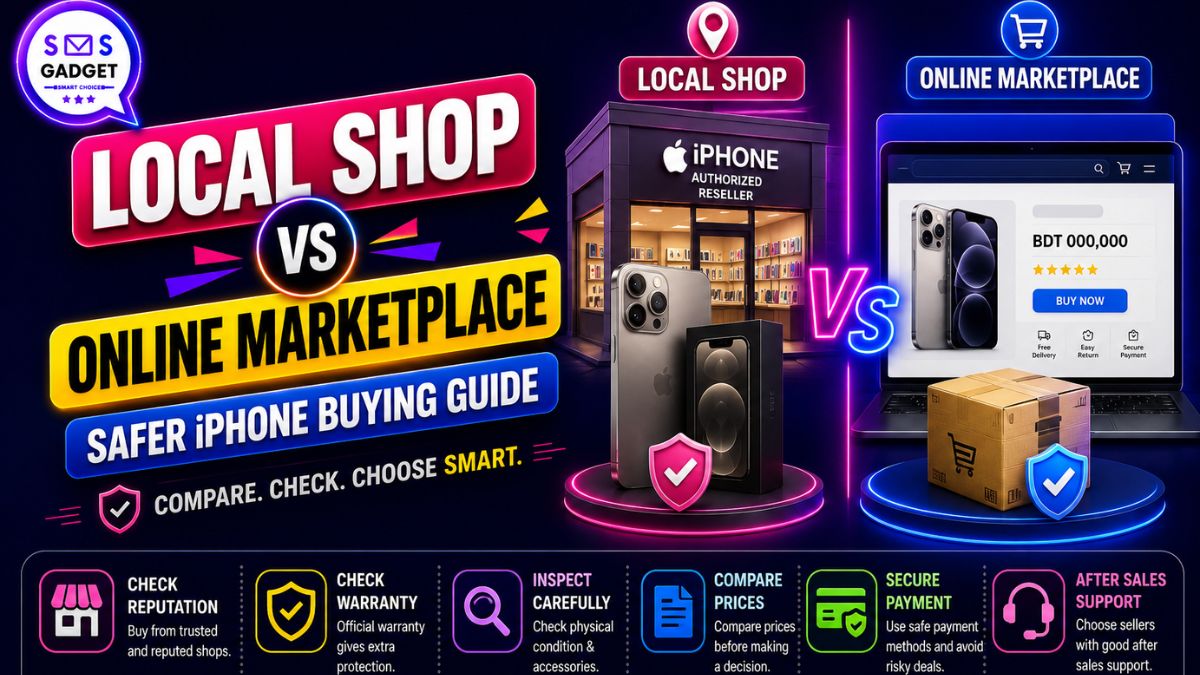
An iPhone is a high-value purchase, and a wrong buying decision doesn’t just mean disappointment, it can mean losing a significant amount of money to a scam that’s difficult to reverse. Between fake units, box-swap tricks, and unverified sellers demanding advance payment, the market has no shortage of pitfalls. Knowing where it’s actually safer to buy, and exactly what to check before handing over any money, makes all the difference.
Benefits of Buying an iPhone from a Local Shop
Physical inspection before buying
Walking into a Best iPhone Shop means the screen, battery health, and box seal can all be checked in person before a single taka changes hands. This kind of hands-on verification simply isn’t possible when buying sight unseen.
Instant use — no waiting for delivery
There’s no courier delay, no tracking number to refresh every hour, the phone can be set up and used the same day it’s purchased.
Easier after-sales support
If something goes wrong down the line, walking back into the same shop for a warranty claim or a quick fix is far simpler than mailing a phone back to an online seller and waiting for a resolution.
Risks of Buying from a Local Shop
Non-authorized dealers passing off refurbished units as new
Not every shop is transparent, some non-authorized dealers sell refurbished or used units while presenting them as brand new, which is exactly why checking the shop’s reputation matters as much as checking the phone itself.
Prices can be higher and negotiation-dependent
Local shop pricing isn’t always fixed, and without a clear sense of the current iPhone Price in Bangladesh, a buyer can easily end up paying more than the phone is actually worth.
Limited stock or model options
Smaller shops may not carry every color, storage variant, or the very latest model, which can mean settling for a close alternative rather than the exact configuration wanted.
Benefits of Buying an iPhone from an Online Marketplace
Easy price comparison across sellers
Online, it takes minutes to compare listings from multiple sellers, including verified shops like SMS Gadget, side by side, which makes spotting a fair price far easier than shop-hopping in person.
Wider range of models, colors, and variants
Online marketplaces typically carry a broader inventory, from older models at a discount to the newest release in every available color.
Seller verification through reviews and ratings
A seller’s review history and rating give a reasonably reliable signal of how trustworthy they actually are, something a walk-in shop visit can’t always offer at a glance.
Risks of Buying from an Online Marketplace
Fake products on unverified listings
Facebook Marketplace and Bikroy in particular have no shortage of unverified sellers, and fake or clone units frequently slip through in exactly these kinds of listings.
Advance-payment scams
A common trick involves sellers demanding bKash or Nagad payment upfront before any delivery, money that, once sent, is almost impossible to recover if the seller disappears.
Box-swap scams or IMEI mismatch at delivery
Some buyers report receiving a sealed box that looks legitimate on the outside, only to find a different (or older, damaged) phone inside, or an IMEI that doesn’t match what was advertised.
Pre-Purchase Checklist
Check the IMEI number
Dialing *#06# on the phone reveals its IMEI, which should then be cross-checked against Apple’s official checker to confirm the device’s authenticity and activation status.
Verify Activation Lock status
A phone still linked to someone else’s Apple ID through Activation Lock can become permanently unusable, this status should always be confirmed before payment.
Check Battery Health percentage
Under Settings → Battery → Battery Health, the percentage shown gives an honest picture of how much life is left in the unit, especially important for anything sold as “used” or “refurbished.”
Match box seal and serial number
The serial number printed on the box should match the one shown in the phone’s settings — a mismatch is one of the clearest warning signs of a box-swap attempt.
Get warranty or return policy in writing
A verbal promise means nothing if a dispute arises later; any warranty or return terms should be confirmed in writing before the purchase is finalized.
Local Shop vs Online Marketplace — Quick Comparison Table
| Factor | Local Shop | Online Marketplace |
| Safety | Higher phone inspected in person | Depends heavily on seller verification |
| Price | Often higher, negotiation-dependent | Easier to compare and find better deals |
| Convenience | Instant use, no delivery wait | Wider selection, but delivery delays possible |
| Return Policy | Easier to enforce in person | Wider selection, but delivery delays possible |
| Product Range | Often limited stock | Typically broader range of models and variants |
When to Choose Local Shop vs Online?
High budget or first-time buyer
For a first-time buyer or someone making a large purchase, a local shop is generally the safer route, since physical inspection removes most of the guesswork.
Price-conscious buyers with a verified seller
For buyers who already know a trusted, verified seller, such as an established name like SMS Gadget, buying online can work out just as safely, often at a better price.
A Real Scam Story
A buyer once agreed to buy a “brand new” iPhone from a “Facebook Marketplace ad”, sent the bKash advance to “hold” the phone, and was told the courier would deliver the phone. However, the “courier” never showed up, the seller changed his number, and the ad was removed within a few hours. This is a typical scenario that could be easily avoided had the buyer followed the “never pay advance to untrusted sellers” rule.
Frequently Asked Questions
How do I check an iPhone’s IMEI before buying?
Dial *#06# on the device to display the IMEI, then verify it through Apple’s official IMEI/serial checker to confirm it matches the claimed model and isn’t blacklisted.
Is it safe to buy an iPhone on SMS Gadget?
Yes, SMS Gadget is a verified, established seller, which makes it a considerably safer option than buying from an unverified online listing.
What precautions should I take buying on Facebook Marketplace?
Never send advance payment before seeing the phone, insist on checking the IMEI and Activation Lock status in person, and be cautious of sellers who refuse a face-to-face meeting or push for rushed payment.
What’s the difference between refurbished and used iPhones?
A refurbished iPhone has typically been inspected, repaired if needed, and certified by a manufacturer or authorized reseller, while a used iPhone is simply sold as-is by its previous owner with no such certification process.
Final Verdict
In case you are not sure which one to choose, it is better to go with the one that you can see in front of you in an actual store or go with a reputable seller rather than buying from an unknown online vendor. So if you are checking different sites for the latest iPhone Price in Bangladesh, it is better to choose the one from a well-known source such as Best iPhone Shop, like SMS Gadget, over the lowest number on an anonymous listing.

Ordering shrimp online requires more than choosing a package and entering a shipping address. Freshness depends on product details, handling instructions, delivery timing, and the amount needed for the meal.
A careful review also prevents surprises involving preparation, storage, or serving size. Home delivery works well when the order matches the cooking plan and the shipment schedule. These five checks help shoppers evaluate a shrimp order before placing it.
1. Check How the Shrimp is Described
Product wording should explain whether the shrimp is fresh, previously frozen, cooked, peeled, deveined, or sold with the shell. Each detail affects texture, preparation time, and the final amount served. A shopper should also check whether the listing names a size or count range.
Shrimp size terms differ between sellers, so a numerical count often provides clearer information. A package containing fewer, larger shrimp cooks differently from one containing many smaller shrimp. The intended recipe should guide the choice. Grilled shrimp need enough size to stay on a skewer, while pasta, tacos, and salads can suit smaller pieces.
Before ordering, shoppers can order fresh shrimp online for home delivery after reviewing the available listings, package descriptions, and delivery information. The inspected category page lists fresh shrimp shipped within a broader fresh seafood catalog. It also identifies nine shrimp listings, giving customers several product pages to compare before choosing an order.
2. Confirm the Shipping Schedule
Delivery timing matters because seafood should reach the kitchen when someone can receive and refrigerate it. The inspected page states that orders placed before 12 p.m. Eastern Time receives same-day shipping for next-day delivery. That cutoff should be checked against the planned cooking date and the household’s availability.
A delivery calendar can also affect the order date. The page tells customers they can reserve fresh seafood orders in advance through a dropdown calendar during checkout. Advance scheduling suits dinner parties, holidays, and other meals that depend on a fixed arrival date.
Shoppers should also confirm that the delivery address falls within the stated service area. The inspected page says fresh seafood ships throughout the United States. An address review remains necessary because carriers, weather, and delivery access can affect the final arrival experience.
3. Review the Package and Quantity
The package size should match the number of diners and the recipe. Shrimp lose some weight during cooking, especially when shells or tails remain attached. A recipe calling for cleaned shrimp requires a different calculation from one that serves shell-on shrimp as a centerpiece.
Portion planning also prevents unnecessary storage. A shopper should decide whether the shrimp will serve as an appetizer, a main dish, or an ingredient mixed with other foods. Larger portions suit a shrimp-focused entrée, while smaller amounts work in rice, pasta, soup, or a cold salad.
The product page should provide enough information to compare package quantities. If the listing does not answer a necessary question, the customer should contact the seller before payment. Guessing about weight, count, or preparation creates avoidable problems after delivery.
4. Check Receiving and Storage Instructions
A seafood delivery needs a clear receiving plan. Someone should be available to bring the package inside soon after arrival, inspect the contents, and follow the seller’s storage directions. Refrigeration should happen promptly when the order reaches the home.
The customer should read the package for temperature guidance, use-by information, and preparation instructions. Those details take priority over general cooking advice because handling requirements differ between fresh, frozen, raw, and cooked products.
A clean refrigerator shelf also helps protect the shipment from spills and cross-contamination. Raw shrimp should remain separate from ready-to-eat foods during storage and preparation. Hands, knives, cutting boards, and counters require washing after contact with raw seafood.
5. Match the Order to the Meal
The best shrimp order fits the cooking method and the time available. Peeled and deveined shrimp reduce preparation work, while shell-on shrimp suit recipes that use the shells for added flavor. Cooked shrimp work for chilled dishes, but raw shrimp provide better control for sautéing, grilling, baking, or broiling.
Seasoning and cooking time depend on shrimp size. Smaller shrimp cook quickly and can become firm if left over heat. Larger shrimp need more time, but the cook should still watch the texture closely. Shrimp are ready when the flesh turns opaque and the shape forms a loose curve.
Conclusion
A reliable shrimp delivery order starts with product details, then moves to timing, quantity, storage, and meal preparation. Shoppers should compare the available listings, confirm the delivery date, and arrange refrigeration before checkout.
The inspected category page states that orders placed before 12 p.m. Eastern Time receive same-day shipping for next-day delivery, while advance dates can be reserved during checkout. Reviewing those details against the cooking plan creates a practical next step: choose the package and delivery date together.

A natural-looking sew-in or wig depends on more than hair texture and styling. The closure determines part placement, lace coverage, and the amount of blending needed for an install. A poor match creates extra maintenance and limits styling choices before the hair is installed. Choosing a closure size starts with the intended part, lace coverage, hair texture, and finish. Those decisions guide the first comparison between closure shapes and sizes.
Start With Parting Space
A closure should match the part a wearer plans to use most often. A 2×6 closure measures 2 inches across the front and extends 6 inches toward the crown, creating a deep middle part without covering the entire front hairline. That narrower lace area keeps the focus tight while preserving enough depth for a defined part. Shoppers can review the 2×6 closure collection before choosing an install.
The six-inch depth creates more room than a shallow closure. It supports a clear center part that runs farther back, which suits sleek styles with hair falling evenly on both sides. The closure can also sit slightly off-center when a side part suits the wearer better.
Match The Lace To The Install
HD lace sits close to the scalp when laid flat and is carefully blended. Because a 2×6 closure covers less area than a frontal, the installer has less lace to secure and conceal. This layout suits wearers who want a defined part without having to manage lace across the entire front hairline.
A pre-plucked hairline and lightly bleached knots reduce preparation before installation. The final result still depends on accurate placement, clean knot work, and a foundation that keeps the lace flat. A stylist should match the lace tone, adhesive method, and styling plan to the wearer’s scalp and natural hair.
Choose Texture Before Length
Texture affects how naturally the closure joins the bundles or wig hair. Straight hair creates a polished finish and keeps the middle part sharply visible. Body wave adds soft movement while preserving a controlled shape. Deep wave and curly textures create more volume around the part, so the closure and surrounding hair should share a similar pattern.
Length also affects proportion. Available 2×6 closures include 14-, 16-, 18-, and 20-inch options. Shorter lengths suit compact styles and shoulder-level looks, while longer lengths create more movement below the part. The closure should match the bundles to prevent a noticeable change in pattern or density.
Consider The Maintenance Routine
A closure requires less daily adjustment than a frontal because it covers a smaller portion of the hairline. That benefit suits wearers who prefer a middle part, wear hats often, or want a simpler sew-in routine. The lace still needs gentle brushing, controlled heat, and careful washing to protect the knots and hair strands.
Human hair supports straightening, curling, washing, and coloring when the process uses suitable heat and chemical care. Heat tools should stay within the recommended limits for hair, while bleaching requires extra caution around knots. Regular maintenance protects the part from matting and keeps the closure ready for future styling.
Check The Parting Direction
A deep middle part creates the cleanest result when the closure sits centered over the wearer’s head. The stylist should mark the center before sewing or securing the unit, then check the part from the front and both sides. Small placement errors become more visible when straight hair falls evenly around the part.
A slight shift creates a deep side part without requiring a different closure shape. That flexibility suits people who change their part occasionally but still want limited lace coverage. The stylist should confirm the preferred direction before installation, especially after the closure has been plucked.
Conclusion
The right closure depends on the desired part, texture, length, and maintenance routine. A 2×6 design suits wearers who want a deep part, a narrower lace area, and a focused installation process. Before purchasing, shoppers should choose a texture that matches their bundles, compare the available lengths, and confirm whether a center or side part fits their styling habits. That checklist supports a natural outcome and reduces the need for adjustments after installation.

Every autumn in Calgary the same debate starts around the first cold morning. Are all-season tires good enough, or is it time to switch to winter tires? The honest answer is that it depends on how you drive, where you drive, and how much margin for error you want when the roads turn icy. What makes the decision easier is understanding what actually changes in a tire when the temperature drops.
This guide explains the differences in plain language, shows how to tell when your tires are due, and offers a simple way to plan the swap so it does not become a last-minute scramble.
Why Temperature Matters More Than Snow
Many drivers think of winter tires as snow tires, but the biggest difference is how the rubber behaves in the cold. The compound in all-season tires is designed to work across a wide temperature range, but it begins to stiffen as it gets colder. A commonly cited threshold is around 7 degrees Celsius. Below that, stiffer rubber grips the road less effectively, even on dry pavement.
Winter tires use a softer compound that stays flexible at low temperatures. That flexibility lets the tire conform to the road surface, which improves grip when you brake, accelerate, and turn on cold, slippery roads. This is why many drivers notice a difference long before the first real snowfall.
What Is Different About a Winter Tire
Besides the rubber compound, winter tires are built differently in a few other ways:
- Deeper tread. Bigger grooves help move snow and slush out from under the tire.
- Tread patterns with many small slits. Thousands of tiny cuts, called sipes, bite into ice and packed snow.
- A design that sheds snow. Snow packed into the tread actually helps grip, because snow sticks to snow better than rubber does.
When shopping, look for the three-peak mountain snowflake symbol on the sidewall. It indicates that the tire has met a standard for severe snow service, which is more meaningful than a simple “M+S” marking.
So When Are All-Season Tires Enough?
All-season tires can be a reasonable choice for drivers who:
- Mostly stay in the city and can avoid driving in the worst conditions
- Have flexible schedules and can wait out storms
- Drive vehicles with good traction systems and stay cautious
But even in these cases, all-season tires are a compromise. They do many things adequately and few things exceptionally. For commuters, families, and anyone who drives on highways in winter, the extra margin of a winter tire is often worth it. A Calgary retailer like Good Tire, which has served local drivers for more than two decades, can explain the trade-offs for your specific vehicle and routes.
How to Tell Whether Your Tires Are Ready
A quick check can save you from surprises:
- Tread depth. The classic toonie test still works. Insert a toonie into the tread groove, and if you can see the top of the polar bear’s paws, the tire has worn past a safe margin.
- Age. Rubber hardens over time. Many winter tires perform reliably for around six seasons, even if the tread looks acceptable.
- Sidewalls. Look for cracks, bulges, or cuts.
- Pressure. Cold weather lowers tire pressure, so check it at the start of the season.
If you are unsure, a quick inspection by a specialist will give you an exact reading and an honest recommendation. A Calgary tire specialist can check tread depth and age and help you decide whether to replace or keep your current set.
Planning the Swap
Timing is the part people often get wrong. Waiting until the first snowfall means competing with every other driver for appointment slots, often at the exact moment when road conditions are at their worst. A better approach:
- Watch for daily temperatures consistently staying below 7 degrees Celsius
- Book the appointment a few weeks ahead instead of waiting for the first storm
- Swap back in the spring when temperatures consistently rise
- Store the off-season set in a cool, dry place, away from direct sunlight
If you own a second set of wheels with tires already mounted, the seasonal tire change is quicker and cheaper than remounting tires each time, and it reduces wear on the tires and rims.
Should You Replace All Four?
In general, it is best to install winter tires on all four wheels, not just two. Mixing tires with very different grip levels can make a vehicle handle unpredictably, especially during braking and cornering. Matching all four gives you balanced traction, which is the whole point of the upgrade.
Quick Questions
What temperature should I switch to winter tires? A commonly used guideline is when daily temperatures stay consistently below about 7 degrees Celsius.
Can I keep winter tires on all year? It is not recommended. The softer rubber wears faster in warm weather and can reduce fuel economy.
How long do winter tires last? Many last around six seasons, depending on mileage, storage, and driving conditions.
Do I need to replace winter tires if the tread still looks fine? Age matters as well as tread. Older rubber hardens and loses grip, even when the groove depth looks acceptable.
The Bottom Line
Winter tires are not about the snow alone. They are about keeping grip on cold roads when your regular tires start to stiffen. A quick tread and age check, an early booking, and a matched set of four give you the best chance of a safe, stress-free winter on Calgary roads.
-

 NEWS1 year ago
Historical Churches in Manila
-

 TOPIC3 months ago
Unveiling AvTub: Your Ultimate Guide to the Best AV Content
-

 TOPIC1 year ago
Symbols of Hope: The 15th Belenismo sa Tarlac
-

 TOPIC1 year ago
Simbang Gabi and Kakanin
-

 TOPIC1 year ago
RIZAL at 160: a Filipino Feat in Britain
-

 NEWS4 months ago
What Caused Delta Flight DL275 to Diverted LAX? A Detailed Breakdown
-

 TOPIC2 months ago
Understanding Fascisterne: Origins and Ideological Roots
-

 TOPIC1 year ago
“The Journey Beyond Fashion” – Ditta Sandico