
TOPIC
How Can You Tell if an Aesthetic Clinic Is Right for You?


The two real indicators for anyone to assess an aesthetic provider are, 1) How do they treat poor candidates? 2) How do they document any complications that may occur? All the rest is window dressing to confuse you further. Sure, it’s nice to see a good facility and some good ‘before and after’ pictures to show for their work. However, these can be easily bought by anyone, including a weak operator. The really hard signals to read, which require more effort, will however serve you better in the long run.
This framework distinguishes between assessing a clinic for the clinical discipline of the practitioners that work there and assessing whether the clinic is any good at being a clinic (i.e. Not absent of same).
Read the consultation as a diagnostic test, not a sales meeting
An aesthetic assessment for treatment must generate sufficient information to modify the initial treatment plan. In simpler terms, the practitioner’s initial assessment and resulting treatment plan should be modified as a result of the subsequent, more in-depth assessment of the candidate. In essence, if a practitioner reaches a treatment plan for a candidate prior to having conducted a thorough assessment of that candidate, then that candidate is simply being fit into a treatment plan that the practitioner offers to all of his or her candidates.
If the practitioner can tell you what won’t work, then you can get a sense of their judgment threshold. This is perhaps the most important thing that you can learn about a practitioner in an hour. And they should volunteer this information to you. They should tell you what won’t work, rather than you having to ask.
Questions that reveal how a clinic actually operates
- What proportion of consultations end without a treatment being booked, and why?
- Who manages an adverse event outside business hours, and what is the escalation path?
- How many of this specific procedure does the treating practitioner perform each month?
- What does the revision or correction policy cover, and what is excluded?
- Which products are used, and are they sourced through licensed distributors?
Distinguish credentials from relevant volume
Licensure is the minimum standard that any health care provider must meet. However, it does not guarantee that they have the right amount of experience to complete your desired aesthetic treatment.
Ask about the aesthetician’s caseload. It doesn’t matter how many years of experience the doctor or aesthetician has for a certain number of treatments (for example, of Botox injections). It is far more important to know how many of those same treatments they have done in the past. Ask about their oversight and whether a physician is physically available to do the treatment.
Matching treatment to the right practitioner
| Treatment category | What experience should look like | Main risk if under-experienced |
| Neuromodulators | High weekly volume, familiarity with multiple products and dosing patterns | Asymmetry, ptosis, unnatural movement |
| Dermal fillers | Anatomy training, vascular occlusion protocol, hyaluronidase on site | Vascular compromise, migration, overfilling |
| Energy devices | Device-specific certification and settings experience across skin types | Burns, pigment change, scarring |
| Chemical peels | Depth selection matched to Fitzpatrick type and history | Post-inflammatory hyperpigmentation |
| Thread and collagen stimulators | Documented case volume, staged treatment planning | Nodules, visible irregularity, poor placement |
Test safety infrastructure with specific, checkable questions
Safety standards can be verified. Do the practitioner’s emergency medications (e.g. For an allergic reaction) exist and are they up to date? Are written consents for treatment completed for every single treatment and does it list the products that will be used for treatment, the lots, the volumes of products that will be used for treatment and a space for noting outcomes some months later?
The basis for how to assess a provider for aesthetic treatments is as follows, The provider should take quality photographs of you pre-treatment, and he or she should explain how these photographs are stored and if they are used for your subsequent treatments to compare your results and to track your progress.
What to look for in reviews
Online reviews are somewhat informative but offer limited insight. The best way to assess a provider’s response to criticism is by reading reviews left by patients. Check to see whether the same practitioner is listed as working at the clinic in the reviews. Ensure that the provider lists the same types of treatments that you are interested in. Look for patterns in the complaints left by patients, i.e. Are patients pressured into buying additional, often unnecessary, treatments? Are they left to deal with aftercare on their own? How long does it take to get a hold of someone at the clinic after treatment? The rate of staff turnover is also an indicator of a provider’s internal stability.
Turn a local search into a shortlist worth your time
A location close to a med spa can be a good indicator for the most frequently needed treatments (such as fillers and Botox). However, it is a narrowing down factor and not the only deciding factor for choosing a clinician. When you search for a med spa near me, treat the results as a starting list and give preference to practices that publish their practitioners, protocols and pricing rather than to whichever one sits closest to your postcode.
- Filter to clinics that name their treating practitioners publicly with verifiable credentials.
- Remove any that will not quote in writing before a consultation.
- Book paid consultations at two or three, since paid time is usually less sales-driven.
- Compare the plans you receive, paying attention to where they disagree.
Judge the recommendation, not the discount
Their treatment plans for you are set out over a number of months and detail the results that they guarantee for you. More importantly, they outline what will happen if no results are achieved for you from a specific treatment. As an added incentive, some aesthetic providers even offer pre-paid packages for a series of different treatments. These may seem like a good deal at first, but in reality, they are probably the worst type of treatment to sign up for. The reason for this is that the aesthetic provider has the least amount of incentive to continue to treat you after the initial series of treatments in a package such as this. When I have assessed a patient for a specific treatment, such as a filler for example, and two different med spas have come up with two completely different plans, I like to ask each of the aesthetic providers to outline the other’s plan for the patient’s treatment, and then to explain why their own plan is better. The aesthetic provider that can fairly outline the other’s plan for the patient’s treatment, and also explain why their own plan is better, is the better choice for the patient’s needs.


A 55-inch transparent OLED display shows text, images, and video while keeping objects behind it visible. Shops can show information in front of products. Museums can add details to exhibits. The right display depends on where you will place it and how people will use it.
Monitor, Module, or Kiosk?
Monitor
A 55-inch transparent OLED monitor is a complete display that can stand alone or fit into a larger structure. It supports optional touch, Windows, or Android. This option suits teams that want a finished screen for product demos or presentations, with less work on the frame and housing.
Module
A 55-inch OLED module suits projects that need a custom cabinet, frame, or display structure. Designers and installers can build the screen into the space around it. The team needs to plan how to fix the screen in place, run the cables, and control the content. A module also supports optional touch.
Kiosk
An interactive touch kiosk combines the screen with a freestanding structure. Visitors can browse products, read event details, or find information without staff help. The layout should make each task clear. Simple menus and easy-to-reach buttons help people use the screen.

Where Can You Use It?
Retail and Showrooms
A transparent screen can show product details or a short demo in front of the actual item. The content should leave enough space for people to see the product behind it. Short text and simple graphics are easier to follow than a screen filled with images and words.
Museums and Exhibitions
A screen can show labels, animations, or video in front of an exhibit. Visitors can see the object and read about it in the same place. At trade shows, touch lets visitors choose the product or topic they want to explore. The content should support the display and stay easy to read.
Transportation and Public Spaces
Transparent displays can add routes, travel updates, and directions to windows or glass structures. These projects need checks for lighting, viewing distance, and mounting. The team should test the content in the planned setting to see whether the information and the view behind it remain clear.
What Should You Check Before Installation?
The 55-inch size describes the screen diagonal. Your team also needs the full product dimensions, space for cables, and access for repairs. Check the touch and system options for the model you choose. Test sample content with the objects and lighting that will be used behind the screen.
If one panel is too small, several panels can form a transparent OLED video wall. Plan the content around the gaps between panels. The structure needs to support each screen and leave room for maintenance. The playback system also needs to keep the content running together across the wall.
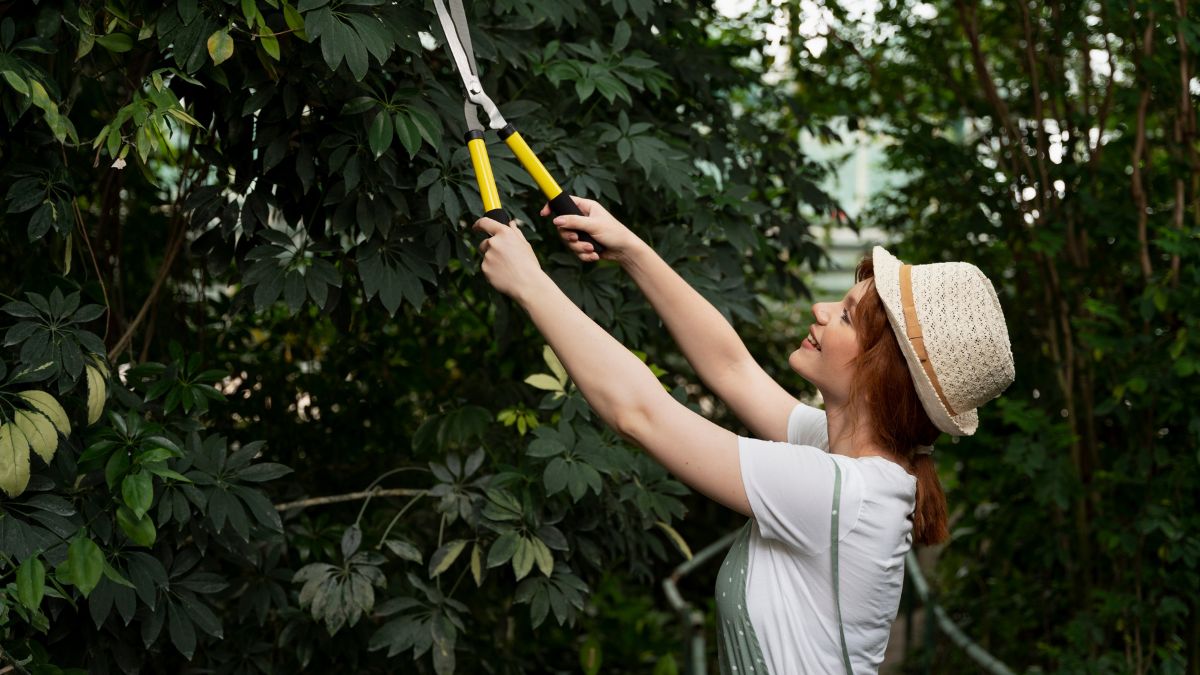
Louisiana’s climate can be great for growing trees, but it can also create some difficult conditions for keeping them healthy and safe. High humidity, heavy rain, hurricanes, strong winds, saturated soil, and fast-growing vegetation can all affect trees differently throughout the year, which is why property owners often need more than simple trimming to keep their landscapes in good condition.
A professional Louisiana tree service may handle everything from routine pruning to emergency storm cleanup, depending on the condition of the tree and the needs of the property. Understanding the most common services can make it easier to know when maintenance is enough and when a more serious problem needs attention.
Tree Trimming and Pruning
Tree trimming is one of the most common services requested by homeowners and commercial property owners. Overgrown branches can interfere with roofs, gutters, sidewalks, parking areas, utility lines, and nearby structures, while dense growth may also prevent sunlight and airflow from reaching parts of the tree.
Pruning can be used more selectively to improve tree health and structure. Dead, damaged, weak, or crossing branches may be removed before they create larger problems, and strategic pruning can help young trees develop stronger growth patterns as they mature.
In Louisiana, regular pruning can also be an important part of storm preparation. While no amount of trimming can make a tree completely hurricane-proof, removing compromised limbs and reducing certain structural weaknesses may lower the chance of branches breaking during severe weather.
When Is Tree Removal Necessary?
Tree removal is usually considered when a tree presents a significant safety concern, has declined beyond recovery, or is interfering with a construction or landscaping project. Large dead trees, severely leaning trees, and trees with major structural damage can become increasingly dangerous if they are left standing.
Disease, decay, or root problems may also make removal necessary. Some trees can look relatively healthy from a distance while having extensive internal deterioration, which is why evaluating the trunk, root flare, major branches, and surrounding soil conditions can be important before deciding what to do.
Removal may also be recommended after major storms. Hurricanes and thunderstorms can crack trunks, uproot trees, or leave large sections hanging precariously over homes, fences, roads, and other areas where people regularly travel.
Stump Grinding Cleans Up the Property
Once a tree has been removed, the remaining stump can become an inconvenience. Stumps may interfere with mowing, landscaping, construction, or normal use of the yard, and exposed roots can create tripping hazards around frequently used areas.
Stump grinding removes much of the visible portion of the stump by mechanically breaking the wood into smaller material below the surrounding ground level. The resulting area can often be filled, covered, or incorporated into future landscaping plans.
Grinding can also improve the appearance of the property, particularly when several old stumps are scattered throughout the yard. Removing them creates a cleaner surface and makes future maintenance considerably easier.
Storm Damage Cleanup Is Especially Important in Louisiana
Severe weather is a major reason Louisiana property owners need tree services. Hurricanes, tropical storms, thunderstorms, and strong straight-line winds can bring down branches and entire trees with very little warning.
Storm cleanup may involve removing fallen limbs, cutting damaged trees into manageable sections, clearing access to driveways and roads, and identifying trees that remain standing but have become unstable. A tree that survived the storm is not necessarily undamaged, so follow-up inspections can be useful when large limbs have broken or the root system appears disturbed.
Emergency tree work often requires additional precautions because damaged branches may remain under tension, trunks may be partially supported by nearby structures, and downed trees can become tangled with other debris. These conditions make storm cleanup more complex than ordinary landscape maintenance.
Tree Health Assessments Can Catch Problems Early
Not every tree problem requires removal. In many cases, identifying stress or disease early can make a meaningful difference in how the tree is managed.
Tree health assessments may look for abnormal leaf loss, discoloration, fungal growth, bark damage, cavities, dead branches, root problems, insect activity, and unusual changes in growth. The goal is to determine whether the tree is experiencing a temporary stress, a manageable health issue, or a structural problem that could become dangerous.
Louisiana’s warm and humid conditions can encourage certain fungal problems and pests, while excessive rain may create poor soil conditions around roots. Drought periods can create a different type of stress, which means tree health can change considerably from one season to another.
Cabling and Bracing Can Support Certain Trees
Some trees develop weak branch unions or structural defects that do not immediately require removal. Cabling and bracing systems may sometimes be used to provide additional support to vulnerable sections of the tree.
These systems are intended to reduce movement or stress in particular branches or trunks, but they are not appropriate for every situation. A severely decayed or unstable tree may still need to be removed, even if support systems are available.
Periodic inspections are also important after cables or braces are installed because trees continue to grow, and their structural condition can change over time.
Lot Clearing and Land Preparation
Tree services are also commonly needed before construction, property development, or major landscaping projects. Lot clearing can involve removing unwanted trees, brush, undergrowth, stumps, and other vegetation so the site can be prepared for future work.
This type of service may range from removing a handful of smaller trees to clearing a much larger section of land. Planning is especially important when desirable trees are being preserved because heavy equipment, excavation, and soil compaction can damage root systems even when the tree itself is never cut.
Routine Maintenance Can Prevent Larger Problems
Many tree-related emergencies begin as smaller issues that went unnoticed or were postponed for too long. Dead limbs, overcrowded branches, damaged trunks, and unstable growth can gradually become more serious, especially when severe weather places additional stress on the tree.
Regular inspections, responsible pruning, and timely removal of hazardous trees can help property owners stay ahead of those problems. In a state where weather can change quickly and trees often grow aggressively, routine maintenance can be one of the simplest ways to protect both the landscape and the structures around it.
From trimming and stump grinding to storm cleanup and complete tree removal, Louisiana property owners have a wide range of tree care needs. Knowing which services are commonly available makes it easier to recognize problems early and choose the right type of care before a minor concern becomes a much larger project.

Choosing a roofing contractor is not a decision most homeowners make often, which can make it difficult to know what separates a dependable company from one that simply offers an attractive estimate. For a roofing company in Central Texas, where roofs must withstand intense sun, heavy rain, strong winds, hail, and sudden temperature changes, the quality of the installation and repair work can have a major effect on how well the roof performs over time.
A quality roofing company should offer more than basic labor. Homeowners should expect clear communication, detailed inspections, appropriate material recommendations, reliable workmanship, and a willingness to explain what the roof actually needs. Knowing what to look for can make it easier to compare contractors and avoid problems later.
A Thorough Roof Inspection Comes First
One of the clearest signs of a reputable roofing company is a careful inspection before major work is recommended. A contractor should evaluate more than the most obvious damaged shingles.
Roofing professionals may need to inspect flashing, vents, valleys, penetrations, gutters, decking conditions, visible signs of leaks, and other areas where water intrusion can begin. When possible, attic conditions may also provide useful information about ventilation, moisture, or past leaks.
A contractor who immediately recommends complete replacement without explaining the condition of the roof may not be giving homeowners enough information to make an informed decision.
Clear Estimates Make Comparison Easier
A roofing estimate should explain what work is being proposed rather than providing only a single total price. Homeowners should be able to understand which materials are being used, what areas will be repaired or replaced, and what additional work may be necessary.
Detailed estimates can also reduce misunderstandings once the project begins. Roofing work sometimes uncovers hidden damage, particularly when old materials are removed, but the contractor should explain how unexpected repairs will be handled.
Price matters, but the lowest estimate is not always the best value. Differences in materials, labor, preparation, cleanup, and warranty coverage can make two seemingly similar bids very different.
Does the Roofer Understand Central Texas Weather?
Local experience matters because roofing systems are exposed to different conditions depending on the region. Central Texas can experience prolonged heat, severe thunderstorms, high winds, hail, and periods of heavy rain.
A knowledgeable roofing contractor should understand how those conditions affect different roofing materials. Shingle durability, fastening methods, ventilation, flashing, drainage, and impact resistance may all influence how well the roof performs.
Local experience can also help contractors recognize common storm-related problems and recommend materials suited to the area’s climate rather than relying on a one-size-fits-all approach.
Good Contractors Explain Your Options
A professional roofer should be willing to discuss different materials and repair strategies without pressuring homeowners toward the most expensive choice.
For example, some roofs may need only targeted repairs, while others may have widespread deterioration that makes replacement more practical. If replacement is needed, homeowners may have choices involving asphalt shingles, metal roofing, impact-resistant materials, or other systems.
The contractor should explain the advantages, limitations, maintenance needs, and expected service life of each option so the homeowner can make a decision based on both budget and long-term priorities.
Licensing, Insurance, and Credentials Matter
Roofing work involves heights, heavy materials, tools, and significant structural components, so proper business credentials and insurance are important.
Homeowners should verify that a contractor carries appropriate liability coverage and any required worker protections. These safeguards help protect both the roofing crew and the property owner if an accident or damage occurs during the project.
Professional affiliations, manufacturer training, and certifications may also indicate that a company invests in maintaining its knowledge, although credentials should support good workmanship rather than replace it.
Communication Should Be Consistent
A quality roofing company should make it easy to understand what is happening before, during, and after the project.
Homeowners should know when work is expected to begin, how long the project may take, what areas of the property need to remain clear, and who to contact with questions. If weather delays the project, the contractor should communicate how the schedule will change.
Good communication becomes especially important during larger replacement projects because homeowners may have concerns about noise, access, landscaping, vehicles, pets, and cleanup.
Workmanship Should Extend Beyond the Shingles
A roof is a complete system, not simply a layer of visible shingles. Flashing, underlayment, ventilation, decking, fasteners, and drainage all contribute to performance.
Poor installation in any of these areas can lead to leaks even when the roofing material itself is high quality. For example, incorrectly installed flashing around chimneys, walls, or vents may allow water to enter the structure.
A dependable contractor pays attention to these less visible details rather than focusing only on how the finished roof looks from the street.
Cleanup Is Part of Professional Service
Roof replacement can create a surprising amount of debris. Old shingles, nails, packaging, flashing, and other materials need to be removed carefully from the property.
A professional roofing crew should protect landscaping and exterior surfaces as much as practical while also cleaning the work area after the job is complete.
Magnetic tools are often used to collect loose roofing nails from driveways, lawns, and nearby areas. Final cleanup may seem like a small detail, but it says a great deal about how seriously a contractor treats the homeowner’s property.
Warranties Should Be Explained Clearly
Roofing warranties can vary significantly, so homeowners should understand what protection is actually being offered.
Material manufacturers may provide warranties covering defects in roofing products, while contractors may offer separate workmanship warranties for installation. These are not necessarily the same type of protection.
A quality roofing company should explain the terms, limitations, and duration of available warranties instead of simply stating that the roof is “covered.”
Watch for High-Pressure Sales Tactics
After major storms, homeowners may receive unexpected visits from roofing contractors offering immediate inspections or repairs. While some legitimate companies conduct storm-related outreach, pressure to sign a contract immediately should be treated cautiously.
Homeowners should have enough time to review estimates, verify credentials, ask questions, and understand the proposed work.
A reputable roofing contractor should be confident enough in the quality of its service to let customers make an informed decision rather than relying on urgency or fear.
Quality Roofing Starts With Trust
The best roofing companies combine technical knowledge with transparency and professional service. Detailed inspections, clear estimates, appropriate insurance, good communication, careful installation, and dependable cleanup are all signs that a contractor takes the work seriously.
For homeowners in Central Texas, choosing the right roofing company can help protect the home against the region’s demanding weather while reducing the likelihood of repeated repairs. Taking time to evaluate a contractor before work begins can make the entire roofing process more predictable and provide greater confidence in the finished result.
-

 NEWS1 year ago
Historical Churches in Manila
-

 TOPIC3 months ago
Unveiling AvTub: Your Ultimate Guide to the Best AV Content
-

 TOPIC1 year ago
Symbols of Hope: The 15th Belenismo sa Tarlac
-

 TOPIC1 year ago
RIZAL at 160: a Filipino Feat in Britain
-

 TOPIC1 year ago
Simbang Gabi and Kakanin
-

 TOPIC2 months ago
Understanding Fascisterne: Origins and Ideological Roots
-

 TOPIC1 year ago
“The Journey Beyond Fashion” – Ditta Sandico
-

 NEWS4 months ago
What Caused Delta Flight DL275 to Diverted LAX? A Detailed Breakdown