
TOPIC
5 Must-Have Products From Adarna House to Nurture Your Roots


Cultivating Filipino Culture Through Children’s Literature
Words by J Renz Barrios
Photos courtesy of Adarna House
“Una sa Filipino” (First in Filipino) is the current slogan of Adarna House, the Philippines’ first and largest children’s book publisher. True to this, the company remains committed to its mission of creating unique literary experiences for children that not only uphold excellence but also foster a deep love for the country. With over 40 years of experience in designing and publishing educational materials, Adarna House continues to uphold its vision.
Named after the mythical Adarna bird, the company had its origins in the mid-1970s as part of the mental feeding program by the Nutrition Center of the Philippines (NCP), initially known as Aklat Adarna. After the conclusion of the program, Virgilio S. Almario, a renowned poet and National Artist for Literature, persisted and adapted to continue the program through the Children’s Communication Center (CCC). Later on, Adarna Book Services was established to produce storybooks for CCC, eventually evolving into the Adarna House, Inc. we know today, becoming a pioneer in children’s book publishing and the most awarded publisher in the history of the Philippine children’s book market.
Adarna House has published storybooks, including all-time favorites such as Alamat ng Ampalaya, Tiktaktok at Pikpakbum, and the Pilandok series. With more than 300 titles in print in both Filipino and English, the company continues its goal of providing high-quality educational materials and inspiring a love for literature and country in children.
In this list, let’s delve into Adarna House’s current product lines and offerings, which are certain to help you stay connected with your Filipino roots:
Pambatang Diksyonaryo
Pambatang Diksyonaryo is the first comprehensive Filipino children’s dictionary. Not only does it aid in the development of Filipino vocabulary, it also fosters a deep love for the country. This dictionary features words that enrich children’s understanding of Filipino history and culture. With kid-friendly word definitions, English translations, and helpful sentence examples, it is a must-have for anyone who wants to learn the Filipino language. Moreover, it includes over 1,400 illustrations that both children and the young at heart will undoubtedly appreciate.
Kasaysayan Book Bundle
Encourage kids to explore the rich tapestry of our heritage and delve into the fascinating narratives of ancient Philippines. It’s high time to rediscover the story of pre-colonial Philippines with the Kasaysayan Picture Book Bundle. This picture book bundle includes titles such as Ang Unang Barangay, Matandang-matandang Buto: Ang Homo Luzonensis sa Pilipinas, Mga Sinaunang Hayop sa Pilipinas, and Lakbay Masjid. This bundle is a perfect choice for history enthusiasts who are eager to learn interesting details about our pre-colonial past.
Kuwentong Kaibigan Series
The Kuwentong Kaibigan Series is a collection of picture books created in collaboration with Indigenous communities of the Philippines. Rooted in the belief that identities and friendships begin with conversations, these stories were thoughtfully selected by these communities to share their way of life and culture with others. The series currently comprises three titles: Ang Paglikha ng Daigdig, Si Suwan at si Talambinus, and Ang Mahiwagang Habihan. Remarkably, 50% of the sales from these books are directed to indigenous schools and communities where these stories originate.
Board Book Bundle of Songs
We can all agree that Filipinos are naturally born music lovers, and this passion is evident in our rich collection of folk songs. Adarna House has found a fun way to introduce these cherished tunes and rhymes to toddlers and preschoolers through the Board Book Bundle of Songs. This bundle features 10 iconic Filipino folk songs, including classics like “Bahay Kubo,” “Leron Leron Sinta,” and “Maliliit na Gagamba.” With its engaging illustrations and familiar melodies, this bundle will surely make learning Filipino and parent-child bonding time more fun.
What Kids Should Know
Discover a deeper understanding of various facets of Filipino culture with the Adarna House What Kids Should Know book bundle. These books are designed to pique children’s natural curiosity, encouraging them to explore and appreciate the richness of Filipino heritage. This captivating bundle covers a wide range of topics, from Filipino Food and Filipino Architecture to Filipino Musical Instruments and Filipino Visual Art. It’s a journey through the heart and soul of the Philippines, allowing young minds to absorb the vibrant tapestry of our culture and traditions.
Adarna House’s products are not only educational but also a source of inspiration, fostering a love for our unique heritage from a young age. To explore these offerings and discover other Adarna House titles, visit their website at www.adarna.com.ph. To learn more about Adarna House and stay updated with their latest releases, connect with them on social media through Facebook, Twitter, Instagram, and TikTok: @adarnahouse.


Preparing a competitive construction bid requires much more than estimating the total size of a building. Contractors need to understand the project’s complete scope, calculate material quantities, evaluate labor requirements, review subcontractor pricing, and account for the conditions that can influence construction costs.
For commercial contractors in California, this process can become particularly demanding when projects involve extensive framing, multiple building areas, complex architectural details, and several specialty trades.
Lumber is one of the materials that requires careful attention. An inaccurate framing quantity can affect purchasing, labor planning, scheduling, and overall project profitability. At the same time, commercial projects require a broader estimating process that covers every major trade.
Professional construction estimating services California contractors use can provide detailed project-wide cost analysis. Specialized California lumber takeoff services can focus on framing and wood-product quantities, while California commercial estimating services can help contractors prepare comprehensive budgets for larger commercial developments.
Construction Bidding Starts With Scope Understanding
Before an estimator calculates a single quantity, the project scope needs to be understood.
Commercial construction documents may include architectural plans, structural drawings, civil plans, mechanical drawings, electrical plans, plumbing documents, specifications, schedules, and addenda.
Each document provides different information.
The architectural drawings may show room layouts and building dimensions, while structural drawings explain how the building is supported.
Specifications can provide information about materials, installation standards, and product requirements.
A complete estimate depends on reviewing these documents together.
Why Lumber Is Important in Commercial Construction
Many commercial buildings use wood framing in some portion of the project.
This can include multifamily housing, offices, retail buildings, hospitality projects, mixed-use developments, and interior build-outs.
Lumber may be required for:
- Exterior walls
- Interior partitions
- Floor systems
- Roof framing
- Blocking
- Backing
- Headers
- Beams
- Posts
- Soffits
- Bulkheads
- Specialty framing
The quantity can become substantial on larger projects.
Because of this, even a small estimating error can create a meaningful financial difference.
What a Detailed Lumber Takeoff Should Include
A professional lumber takeoff should identify the specific wood products required by the project.
Depending on the drawings, this may include dimensional lumber by size and length, structural panels, engineered wood, beams, posts, joists, rafters, trusses, blocking, and other framing materials.
The estimator may organize quantities according to:
- Building
- Floor
- Unit
- Wall type
- Framing system
- Roof area
- Material size
- Material category
This organization makes the estimate easier to review and use during procurement.
Measuring Wall Framing
Wall framing requires more than simply measuring the total wall length.
The estimator may need to consider wall height, stud spacing, openings, corners, intersections, headers, plates, blocking, and special framing.
Door and window openings can affect the number of studs required.
Different wall types may also use different lumber sizes or spacing.
For a commercial project with multiple wall assemblies, these differences should be clearly identified.
This is where professional California lumber takeoff services can provide valuable support.
Floor Framing Calculations
Floor systems can contain multiple components.
Depending on the structural design, these may include joists, beams, rim boards, blocking, subfloor panels, and other wood products.
Joist size and spacing should be based on the structural documents.
The estimator should also identify areas where framing differs from the standard floor system.
Mechanical shafts, stair openings, large penetrations, and equipment areas may require additional framing.
Roof Framing Requires Careful Review
Roof structures can become complicated when a building contains multiple roof elevations, slopes, valleys, dormers, or intersecting sections.
The estimator may need to calculate rafters, trusses, beams, decking, fascia, blocking, and other components.
Roof sheathing quantities should also be measured based on actual roof areas.
Waste allowances may be necessary because roof geometry can create cutting waste.
Using a generic percentage without considering the actual design can make the estimate less reliable.
Engineered Wood Should Not Be Treated Like Standard Lumber
Many commercial projects use engineered wood products.
These may include LVL beams, laminated beams, I-joists, structural composite lumber, and other engineered components.
These products often have specific dimensions and structural requirements.
They should be measured and priced separately from standard dimensional lumber.
The estimator should review structural schedules and details to determine the required sizes and quantities.
Material Pricing and Market Conditions
After quantities are calculated, pricing needs to be established.
Material costs can change due to supplier availability, demand, transportation, manufacturing costs, and order volume.
California projects can have different delivered material costs depending on location and supplier network.
Contractors should therefore avoid relying entirely on outdated historical prices.
Recent supplier quotations and current market information can provide a stronger basis for the estimate.
Commercial Estimating Goes Beyond Lumber
Although lumber may represent an important part of a commercial project, it is only one component of the overall construction budget.
A commercial estimate may also include:
- Sitework
- Concrete
- Steel
- Masonry
- Roofing
- Exterior finishes
- Drywall
- Ceilings
- Flooring
- Painting
- Doors
- Hardware
- Electrical
- Plumbing
- HVAC
- Fire protection
- Landscaping
- Equipment
- General conditions
Professional California commercial estimating services can help contractors bring these individual scopes together into a complete project estimate.
Coordination Between Trades
Commercial projects require extensive coordination between trades.
Framing may need openings for plumbing and electrical systems.
HVAC ducts may pass through walls or ceilings.
Mechanical equipment may require structural support.
Fire protection systems may require coordination with ceilings and other building components.
If these relationships are not considered during estimating, scope gaps can appear.
Detailed document review can help identify which trade is responsible for each portion of the work.
Labor Estimating for Commercial Projects
Material costs alone do not determine the final project price.
Labor can represent a major portion of construction costs.
Framing productivity can depend on building height, site access, layout complexity, material handling, crew experience, and construction sequence.
For example, a project with large open areas may allow crews to work efficiently, while a complicated building with numerous small rooms can require additional labor.
Professional construction estimating services California contractors use can incorporate project-specific labor assumptions rather than relying solely on generic averages.
Accounting for Material Waste
Construction materials rarely have zero waste.
Lumber can be cut to accommodate openings, corners, framing transitions, and structural changes.
Some materials may become unusable because of damage or incorrect cuts.
However, waste should be estimated realistically.
Too little waste can create material shortages, while too much waste can unnecessarily increase the bid.
An experienced estimator should consider project layout and construction methods when determining reasonable allowances.
Commercial Renovation Projects
Renovation projects can be more complicated than new construction because existing conditions may not match the original drawings.
A commercial remodel may involve removing existing walls, modifying framing, relocating mechanical systems, or creating new openings.
Existing structures may also require reinforcement.
Lumber takeoffs for renovation projects should therefore distinguish between new framing, demolition, and modification work.
Site visits and existing-condition information can be especially useful when drawings are incomplete.
The Importance of Addenda
Commercial projects often receive addenda during the bidding period.
These documents may change dimensions, material specifications, structural requirements, or scope.
A single revision can affect multiple trades.
For example, changing the layout of a commercial space may affect framing, drywall, electrical, HVAC, flooring, and painting.
Estimators should review every applicable addendum and update quantities before submitting the final bid.
Digital Takeoff Technology
Digital takeoff software has become an important part of modern estimating.
Electronic plans can be measured more quickly than traditional paper drawings.
Estimators can calculate lengths, areas, and counts while organizing quantities according to trade or building section.
Digital tools also make revisions easier to manage.
When a revised drawing is issued, the estimator can compare the new plan against the previous version and identify changes.
This can improve estimating efficiency, especially on large commercial projects.
Why Contractors Outsource Lumber Takeoffs
Detailed lumber takeoffs require significant time.
A contractor may have several commercial bids due within the same week, making it difficult for an internal team to complete every takeoff.
Outsourcing can provide additional capacity.
Professional California lumber takeoff services can support contractors by preparing detailed quantities for framing and related wood materials.
This allows the contractor’s internal team to focus on pricing strategy, subcontractor coordination, client communication, and final bid review.
Using Estimates for Procurement
An accurate estimate can continue to provide value after the project is awarded.
The lumber takeoff can become a purchasing reference.
Procurement teams can use quantities to request supplier quotations and plan material deliveries.
This can reduce the risk of ordering too little material.
It can also help avoid excessive inventory and unnecessary storage costs.
For larger commercial projects, procurement planning can have a significant impact on project cash flow.
Cost Control After Project Award
The estimate can also become the project’s financial baseline.
Once construction begins, project managers can compare actual expenses against estimated costs.
If lumber purchases are significantly higher than expected, management can investigate the cause.
The difference could result from design changes, material waste, incorrect takeoff quantities, price increases, or field modifications.
Monitoring these differences helps contractors improve future estimating practices.
Common Commercial Estimating Errors
Some estimating mistakes occur repeatedly across commercial projects.
These include:
- Using outdated drawings
- Missing addenda
- Overlooking structural details
- Applying incorrect material sizes
- Forgetting blocking and backing
- Using outdated supplier pricing
- Underestimating labor
- Ignoring delivery costs
- Missing subcontractor scope
- Applying unrealistic waste allowances
A formal quality-control process can reduce the likelihood of these errors.
Building a Better California Estimating Process
A reliable estimating process should be systematic.
First, collect all current project documents.
Next, divide the project into individual trades and scopes.
Perform detailed quantity takeoffs and verify measurements.
Apply current material and labor pricing.
Review supplier and subcontractor quotations.
Account for equipment, delivery, waste, general conditions, and other relevant costs.
Finally, conduct a complete estimate review before submitting the bid.
This process provides contractors with a stronger foundation for decision-making.
Conclusion
Successful commercial construction bidding depends on accurate quantities, realistic pricing, and a complete understanding of project scope.
Lumber is particularly important on wood-framed commercial and multifamily projects because framing quantities can influence both material purchasing and labor requirements.
Professional California lumber takeoff services can help contractors calculate dimensional lumber, engineered wood, sheathing, joists, beams, headers, blocking, and other framing materials.
At the project level, construction estimating services California contractors use can combine these quantities with labor, equipment, subcontractor pricing, MEP systems, finishes, sitework, and other costs.
For commercial contractors, specialized California commercial estimating services can provide a comprehensive view of project costs and help identify potential scope gaps before the bid is submitted.
Accurate estimating is ultimately about controlling uncertainty. When contractors understand the quantities, costs, and risks associated with a project before construction begins, they can prepare stronger bids and make more informed decisions.
In California’s competitive construction environment, detailed takeoffs and reliable commercial estimates can help contractors improve procurement, protect margins, and approach each new project with greater confidence.

Eight chairs go around a table described as seating eight. Six people sit down comfortably. The two at the corners discover that a table leg occupies the space their knees need, and they spend the meal angled sideways with one arm tucked in.
Nothing was measured incorrectly. The tabletop is large enough for eight place settings. The structure holding it up was never part of the calculation.
Capacity Is Measured in Linear Inches
Seating figures come from a straightforward calculation: the usable perimeter of the table divided by the width one person requires.
The generally accepted allowance is 24 inches per person. That figure accommodates a place setting, a chair, and enough lateral room that neighboring diners are not touching elbows through the meal. Compressing to 22 inches works for a short meal or for children. Expanding toward 28 or 30 inches produces the spacing found in formal dining, where serving pieces sit between settings and nobody feels crowded.
A 72-inch rectangular table therefore offers three seats per long side at 24 inches each. Add one at each end and the total reaches eight, which is where published seating figures generally come from.
The calculation assumes the entire perimeter is available. On most tables, it is not.
Corners Are the First Casualty
At the point where a long side meets an end, two seating positions converge. The person seated at the end and the person seated at the corner of the long side occupy overlapping space beneath the table, and their chairs compete for the same floor.
On a table with legs at the corners, that competition is resolved by the leg. It sits precisely where one of those two people needs knee room, and the result is that one seat becomes marginal even though the tabletop above it looks entirely usable.
This is why the difference between a table that seats eight on paper and one that seats eight in practice frequently comes down to the four positions nearest the corners, which is exactly where guests end up when a full table is set.
Base Geometry Decides Who Sits Comfortably
Three common base designs distribute the problem differently.
A four-leg table places supports at or near the corners, maximizing stability and creating the corner conflict described above. The severity depends on how far the legs are inset from the edge. Legs set flush to the corner interfere less than legs pulled several inches inboard, which push directly into the space a corner diner needs.
A pedestal base concentrates support at the center, leaving the entire perimeter clear. Anyone can sit anywhere, and the table accommodates an extra person at a squeeze because there is nothing underneath to work around. The tradeoff appears at the edges, where a large top on a single central base can tip if weight is applied heavily to one side.
A trestle base uses two supports set inboard from the ends, clearing the corners entirely and putting the obstruction in the middle of each long side instead. This suits tables where the ends are used and disadvantages the center positions.
Extension designs add another variable, since a Coventry dining set or any table built to accept leaves must position its base to remain stable at both the closed and fully extended lengths, which affects where supports land in each configuration.
Apron Depth Governs Legroom
Below the tabletop, many tables carry a horizontal rail running between the legs. It adds rigidity and conceals the underside, and it also reduces the vertical space available to whoever sits there.
Standard table height sits around 30 inches. Standard dining chair seat height sits around 18 inches, leaving roughly 12 inches between seat and tabletop. An apron four inches deep reduces that to eight inches of thigh clearance.
Eight inches is workable for most adults and tight for taller ones. Combined with a chair featuring arms, which need to clear the apron to slide under the table, it becomes the reason a chair stops several inches short of where it should sit.
This measurement rarely appears in product descriptions and is easy to check in person by sliding a hand between seat and table edge.
Extension Leaves Change the Base, Not Just the Top
Tables that expand present a second configuration that behaves differently from the first.
When a leaf is inserted, the top lengthens while the base either stays fixed or extends with it. On designs where the base remains in place, the added length is unsupported at its center, and the legs sit proportionally further from the ends. New seating positions appear along the extended section, and their comfort depends on whether a support was added beneath.
Some designs include a fold-out center leg for the extended position. Others rely on the top’s own rigidity. Either approach works, but the arrangement determines where the obstructions fall once the table is at full length, and that is the configuration used precisely when the most people are seated.
Round Tables Follow Circumference
Round tables are calculated from circumference rather than length, which produces results that surprise people accustomed to rectangular math.
A 48-inch round table has a circumference of roughly 150 inches, which divides into six seats at 24 inches each. Increasing the diameter to 60 inches yields about 188 inches, or seven to eight seats. Diameter grows arithmetically while circumference grows by a factor of roughly three, so a modest increase in width adds more seating than expected.
The countervailing issue is reach. Beyond about 54 inches in diameter, the center of the table becomes difficult to access from any seat, which affects how food is served.
The Room Sets the Outer Limit
A table that fits a room and a table that functions in it are different measurements.
A seated diner needs roughly 20 inches of floor behind the table edge for the chair. Standing up and stepping clear requires closer to 36 inches. Walking behind a seated person needs somewhere around 44 inches from table edge to wall.
Rooms planned at the seated figure produce a table that works until someone needs to leave mid-meal, at which point everyone on that side stands up together.
Checking Before Buying
The measurements that matter take a minute to collect and are not usually published.
Apron depth determines thigh clearance. Leg inset from the corner determines whether corner seats are usable. Base configuration at full extension determines where obstructions fall when the table is at capacity. And sitting at a corner position, rather than the middle of a long side, tests the seat most likely to disappoint.
The tabletop is what gets photographed. Everything determining who can actually sit at it is underneath.
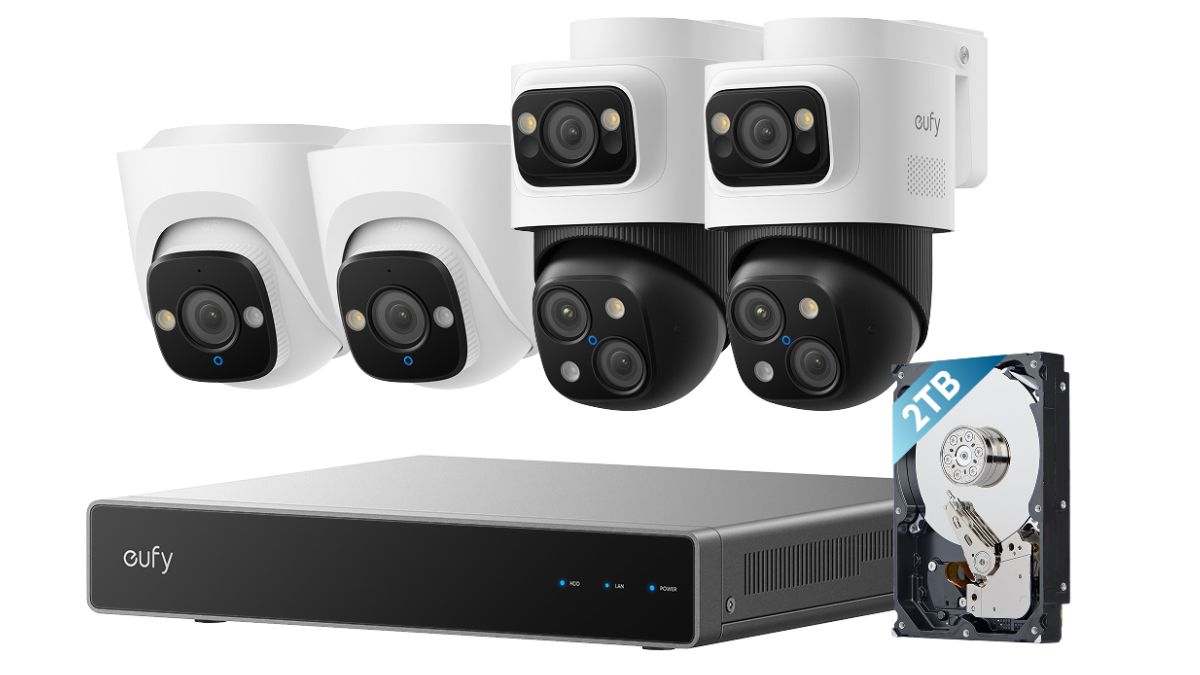
Continuous recording changes what home surveillance can answer. A camera that saves only motion clips tells you something happened; a recorder that captures every minute tells you what led up to it, how long it lasted, and what happened afterwards. For a property with several entry points, that difference decides whether footage settles an insurance claim or merely hints at one.
Wired recorders are the standard way to get there. Cameras connect back to a central box over network cable, power travels down the same run, and everything writes to a hard drive inside the house. No batteries to swap, no monthly upload allowance, and no dependence on the internet staying up during a storm.
The catch is that success depends almost entirely on planning done before anything is mounted. Cable routes, drive capacity, camera counts, and viewing angles all interlock, and changing one after installation usually means pulling cable again. This guide covers that planning stage in the order the work happens, so a multi-camera install goes in once and stays put.
Deciding How Many Cameras a Property Needs
Coverage planning starts with a sketch of the block rather than a camera count. Draw the house outline, mark every door and ground-floor window, then mark the routes a person could take from the street or a rear lane to reach each one. Cameras belong at the points where those routes converge, not spread evenly around the perimeter.
Most detached homes converge on three or four choke points: the front approach, the driveway or garage, the side gate, and the rear yard. Placing a camera at each of those gives full coverage of movement between the street and the building with far fewer units than ringing the walls. A townhouse with a shared driveway and one rear gate may need only two.
Add one interior camera covering the main hallway if the property has a history of break-ins. Interior footage captures faces at close range under consistent lighting, which is often clearer than anything recorded outside at night. Keep it out of bedrooms and bathrooms, and tell everyone in the household it exists.
Resist the urge to add cameras for reassurance rather than coverage. Every extra unit consumes drive space, adds a cable run, and produces another timeline to review, and a system with ten cameras nobody ever checks is weaker than four that get looked at. Fewer, better-placed units beat a dense ring of them.
Overlap and the Handoff Between Cameras
Individual camera views should touch at their edges. When a person walks out of one frame, they should already be entering the next, so the recording follows them continuously across the property instead of producing disconnected fragments with gaps in between.
Achieving that overlap is easier if each camera points along a line of travel rather than across it. A camera aimed down the length of a driveway keeps a vehicle or person in frame for several seconds; the same camera aimed sideways at the driveway catches them for less than one. Corners of the building make good mounting points because two walls meet there and one unit can cover both approaches.
Mount at roughly two and a half to three metres. Lower than that puts the unit within easy reach, and higher pushes faces out of usable detail. Choosing a NVR security system with a camera count one above your sketched requirement leaves room for the gap you discover after the first week of reviewing footage.
Cable Runs, Power, and the Recorder Location
Network cable carries both video and power to each camera, which means one run per unit and no power outlet at the mounting point. Plan those runs before drilling anything, because the recorder needs to sit within reach of all of them and cable length limits are real, if generous, at around ninety metres per run.
The recorder itself wants a spot that is ventilated, dry, out of sight, and near the router. A cupboard on an internal wall usually beats a roof space, where summer heat shortens hard drive life considerably. Avoid the garage if it floods or swings through large temperature ranges. Whatever you choose, leave clearance around the vents; a recorder writing continuously generates heat all day.
Running Cable in Australian Homes
Brick veneer construction generally allows a run up through the wall cavity into the roof space, across the ceiling, and down to the recorder cupboard. Double brick has no cavity to use, so runs travel along the eaves in conduit and enter through a single drilled penetration near the recorder. Weatherboard sits between the two and is usually straightforward.
Work through the roof space early in the morning before the day heats up, wear a mask, and take a torch plus a length of draw wire. Feed cable downward from the roof rather than upward from the wall opening, since gravity does most of the work. Leave a metre of slack coiled at each camera position so a later reposition does not require a new run.
Seal every external penetration with a silicone bead angled to shed water downward, and label both ends of every cable as you go. Six unlabelled identical cables at the recorder is an afternoon of unnecessary tracing.
Storage Capacity and Retention Windows
Continuous recording consumes drive space at a predictable rate, so retention is arithmetic rather than guesswork. Multiply the number of cameras by the daily footage size at your chosen resolution, then divide the drive capacity by that figure to get days of history. Halve the answer as a safety margin for busy days and re-encoded high-motion scenes.
Aim for at least two weeks. Break-ins are often reported within days, but insurance assessors and police requests arrive later, and a drive that has already overwritten the relevant night is worth nothing. Households going away for extended periods should size for the length of the trip plus a week.
Two settings extend the window substantially without buying a larger drive. Recording secondary streams at reduced resolution for continuous coverage while reserving full resolution for motion events keeps detail where it matters and compresses the quiet hours. Lowering the frame rate on cameras that watch static scenes, such as a side gate that rarely opens, has a similar effect with no practical loss.
Protecting the Recording Itself
A recorder sitting in an unlocked cupboard is a single point of failure, since removing the box removes the evidence. Fixing it inside a lockable enclosure raises the effort required, and positioning it away from the entry points a burglar reaches first buys time. Some households run a small uninterruptible power supply so a cut mains supply does not stop recording immediately.
Offsite copies of important clips matter more than full offsite backup. When something significant is captured, export that segment to a phone or computer the same day. Systems from brands such as eufy make single-clip export straightforward, and a copy outside the house survives anything that happens to the hardware.
Night Performance and Everyday Review
Most incidents happen after dark, so night footage deserves testing before the install is considered finished. Walk the full perimeter at night and watch the playback the next morning. Look for washed-out faces from infrared reflecting off a nearby wall, insects drawn to the illuminator, and areas the light simply does not reach.
Existing outdoor lighting usually improves results more than any camera setting. A sensor light over the driveway lets the camera record in colour, which preserves clothing and vehicle colour that infrared renders as grey. Angle the camera so it is not pointing directly into that light, and keep bright sources out of the top of the frame.
Insects deserve specific mention because they cause more false triggers than anything else in an Australian summer. Moths drawn to an infrared illuminator pass centimetres from the lens, fill the frame, and register as motion all night. Mounting the camera so the illuminator sits slightly away from the lens helps, as does clearing spider webs from the housing every few weeks. Webs strung across the front of a camera scatter infrared light and turn crisp night footage into a grey haze.
Build a short review habit. Once a week, scrub through the previous days at high speed on one camera and confirm the timeline is unbroken, the clock is correct, and the view has not shifted after wind or a knock. Ten minutes of checking prevents the discovery that a camera has been recording the gutter for a fortnight.
Planning That Pays Off Later
Wired continuous recording rewards preparation. Sketch the property and place cameras at the points where movement converges, plan cable runs and a ventilated recorder location before any drilling, and calculate storage from a target retention window rather than accepting a default. Those three steps determine most of the outcome.
Keep the camera count modest and deliberate rather than filling every wall, since a system nobody reviews protects less than a smaller one that gets checked weekly.
The finishing details are equally practical. Overlap camera views so a person is followed rather than glimpsed, test the whole perimeter after dark and add lighting where infrared falls short, and export significant clips the same day so a copy exists away from the hardware.
Set aside a full weekend, label every cable, leave slack coiled at each camera position, and walk the site once at night before packing up the ladder. A system planned this way needs almost no attention afterwards, which is exactly what continuous surveillance should feel like.
-

 NEWS1 year ago
Historical Churches in Manila
-

 TOPIC1 year ago
Symbols of Hope: The 15th Belenismo sa Tarlac
-

 TOPIC1 year ago
RIZAL at 160: a Filipino Feat in Britain
-

 TOPIC1 year ago
“The Journey Beyond Fashion” – Ditta Sandico
-

 TOPIC1 month ago
Unveiling AvTub: Your Ultimate Guide to the Best AV Content
-

 TOPIC1 year ago
Filipino, alternative language course at Moscow State University
-

 TOPIC1 month ago
Understanding Fascisterne: Origins and Ideological Roots
-
 TOPIC1 year ago
“Recuerdos de Filipinas – Felix Laureano”