
TOPIC
Do High-Achieving Students Still Need Student Care or Just Enrichment Classes?

Introduction
High-achieving students are often assumed to need less support after school. Strong grades, independent study habits, and a faster learning pace can make parents question whether student care is still necessary, or if shifting fully to enrichment classes in Singapore is the better option. This decision is not straightforward. Academic ability does not always translate to discipline, time management, or consistent performance. The choice should be based on how the child functions outside school hours, not just how well they perform in class.
What Student Care Still Provides for High Achievers
Even for academically strong students, student care serves a clear operational role. It ensures a structured environment where homework is completed on time, revision is consistent, and distractions are controlled. High-achieving students may finish work faster, but without supervision, they may also develop gaps in routine. Inconsistent revision, overconfidence, or excessive screen time can gradually affect performance.
Student care also supports non-academic development, such as time discipline, accountability, and daily consistency. These factors are often overlooked because they are not immediately visible in grades. However, over time, they directly influence exam readiness and long-term academic stability. Additionally, for parents with demanding schedules, student care remains a reliable system that maintains structure even when the child appears independent.
What Enrichment Classes Focus On Instead
In contrast, enrichment classes are designed for targeted academic improvement. They focus on advanced concepts, exam strategies, and subject-specific mastery. High-achieving students often benefit from these programmes because they are already capable of handling more complex material and can move at a faster pace.
However, enrichment classes operate on limited time blocks. They do not manage the student’s daily routine, homework completion, or overall study habits. A child may attend multiple enrichment sessions but still lack a consistent revision schedule outside those hours. This instance creates a gap where performance depends heavily on self-discipline, which not all high-achieving students have fully developed.
When High-Achieving Students Can Transition Away from Student Care
There are cases where high-performing students can reduce or exit student care in Singapore, but this should be based on observable behaviour rather than assumptions. Indicators include consistent self-managed homework completion, the ability to plan revision without reminders, and stable performance across subjects without supervision.
Another factor is schedule efficiency. Once a student is heavily engaged in enrichment classes, maintaining full-day student care may lead to fatigue or time inefficiency. A reduced student care schedule or flexible arrangement may be more appropriate in such cases. The transition should be gradual, with monitoring to ensure that independence does not reduce consistency.
Why Some High Achievers Still Need Both
Many high-achieving students perform best when both systems are combined. Student care provides the structure that ensures daily academic tasks are completed, while enrichment classes push the student to a higher level of understanding and exam readiness. This combination reduces risk. It prevents gaps in discipline while still allowing for advanced learning.
This approach is particularly relevant for major exam years. Even strong students face increased workload and pressure. Maintaining a structured environment helps manage this load more effectively, while enrichment classes refine performance at a higher level. Removing one element too early can create an imbalance.
Conclusion
High-achieving students do not automatically outgrow the need for structure. While enrichment classes are essential for advancing academic ability, they do not replace the role of routine, supervision, and consistency provided by student care in Singapore. The decision should be based on how well the student manages time, maintains discipline, and sustains performance independently. A balanced approach delivers the most stable results in many cases, ensuring that ability is supported by consistent execution rather than left to chance.
Your child may already be topping the class—but even top performers need a system behind them. Contact Curos today.

Have you ever wondered what happens to someone’s property after they pass away? Many families find themselves facing legal steps they never expected. Probate is a word that often comes up during these times.
It may sound confusing, but the process is important for making sure things are handled fairly. Knowing what probate involves can save time and reduce stress.
Understanding the basics can also help families avoid common mistakes. Keep reading to learn how probate can make estate administration easier and how to safeguard your loved ones during this process.
What Is Probate?
Probate is a legal proceeding that takes place after a person’s death. It helps ensure that the individual’s belongings are distributed appropriately.
The court determines whether there is a will and then ensures it is carried out. In the absence of a will, the court will decide who is entitled to what. With the help of probate, everyone’s rights are protected, and things are kept fair.
Why Is Probate Important?
Before assets are distributed, the probate process ensures that all debts and taxes have been paid. This procedure eliminates the possibility of disagreements within the family regarding property.
It ensures that the law is followed at every stage of the process. Protecting heirs and beneficiaries is another benefit of probate. It establishes clear guidelines for the administration of an estate.
Steps Involved in Probate
The probate process starts by filing papers with the court. The court names someone to handle the estate, often called an executor.
The executor collects the person’s assets and pays any bills or taxes. After debts are settled, the remaining property goes to the right people. The court oversees the whole process to ensure fairness.
Common Probate Myths
Many people think probate always takes years to finish. Some believe it costs a lot of money, but this is not always true.
Others worry that the court will take everything away. In reality, probate laws protect families and heirs. Knowing the facts can help families feel less worried and more prepared.
How to Prepare for Probate
Making a will is the best way to simplify probate. Keeping records of assets and debts also helps.
It is wise to talk with estate planning and probate attorneys for guidance. Naming a trusted executor can make the process smoother. Planning can save time and reduce stress for loved ones.
Ways to Avoid Probate
When properly structured, certain assets can be exempted from the probate process. For instance, naming beneficiaries on insurance policies or establishing joint accounts are both examples.
The transfer of property can also be facilitated through the use of trusts. These steps can make things simpler for families in the future. Knowing your options can help you protect the people you care about.
Building Confidence Through Probate Knowledge
Families can handle estate administration more easily if they understand probate. Learning the basic steps can help you feel more confident and avoid unnecessary delays.
The process can go much more smoothly if you plan, keep your records in order, and act on time. If a family knows what to expect and gets ready ahead of time, probate law works best. Every choice you make today can help keep your family safe tomorrow.
Did you like this guide? Great! Please browse our website for more!

Replacing flooring affects more than the room where the work takes place. Furniture needs somewhere to go, family members still need access to kitchens and bathrooms, and cutting or subfloor preparation may create noise at inconvenient times.
School holidays offer more flexibility for some households, especially when children can spend part of the day elsewhere. For others, having everyone at home makes the project harder to manage. The best installation window depends on which rooms are involved, how the family uses them and whether another part of the house can remain available throughout the work.
Choose a Holiday Window That Suits the Household
Start with the rooms being replaced rather than the school calendar alone. A bedroom project affects the family differently from work in a hallway, kitchen or open-plan living area. Flooring near the stairs or main entrance may restrict movement between several parts of the home, even when the surface area is relatively small.
When planning laminate flooring and fitting, identify the routines that cannot easily be rearranged. These might include working from home, preparing meals, caring for a young child or giving pets access to the garden. A holiday period only reduces disruption when those needs have been considered before the start date.
Ask how long the rooms are expected to remain unavailable, but treat the answer as an estimate until the existing floor and subfloor have been inspected. Work in a simple rectangular room may be straightforward, while uneven areas, damaged boards or awkward doorways can add preparation time.
Confirm What the Fitting Arrangement Covers
Families that want the flooring supplied and installation arranged in advance can choose laminate flooring with fitting. Before the holiday window begins, the written details should confirm the product, delivery and installation arrangements, along with any separate charges for underlay, trims, door bars, removal of the existing floor or furniture movement.
Ask who will complete the final measurements and who should be contacted if the fitting date changes. If the fitting is arranged separately from the flooring purchase, the household should know which payments relate to the product and which relate to the installation work.
Clarify what happens if the old surface reveals a problem. Loose boards, uneven sections or moisture concerns may need attention before laminate is laid. Agreeing how extra work will be assessed and approved avoids rushed decisions after the room has already been cleared.
Prepare the Floor and Delivery Before Work Starts
Laminate installation begins with the surface beneath it. The subfloor should be stable, clean and level enough for the chosen product, while the underlay must suit the floor construction and any underfloor heating.
Some laminate products need to remain in the installation room before fitting so the boards adjust to the conditions inside the home. The required period and storage method vary, so follow the instructions supplied with the selected range rather than relying on a general rule.
Confirm the delivery date early enough for any required storage period. Store the packs flat in the installation room, or another space with equivalent conditions, following the manufacturer’s instructions.
The household should also know when the old flooring will be removed. Lifting it several days too early leaves a room unusable, while leaving removal until the last moment gives little time to respond if the subfloor needs repair.
Clear Rooms Without Blocking the Rest of the Home
Moving every piece of furniture into the nearest available room often creates a second problem. Plan where large items will go and keep essential walkways open to reduce trip hazards, especially along routes to bathrooms, bedrooms and exterior doors.
For work covering several rooms, agree the order in which they will be cleared and completed. Furniture can then be moved from one finished space into another rather than filling the entire house at once. Protecting a single storage room from dust is usually easier than shifting items repeatedly between active work areas.
Kitchen projects need a separate plan for food and drinks. Set aside the kettle, mugs, basic utensils and anything required for simple meals before access becomes restricted. This avoids searching through stacked boxes while the fitters are working.
Pets should have a secure room away from open doors, tools and cut pieces of flooring. Families with young children also need a clear boundary around the work area rather than relying on verbal reminders throughout the day.
Agree How the House Will Be Used During Fitting
Ask which stages are likely to create the most noise and whether cutting will take place inside or outside. Families working from home may prefer meetings to be scheduled around those periods rather than expecting the house to remain quiet throughout the day.
Access arrangements matter in hallways and connecting rooms. Confirm whether family members can cross the area during breaks or whether another route is needed until the fitter finishes a section. Bathroom access deserves particular attention when the flooring passes directly outside the door.
Before work starts, agree what will happen at the end of each day. Ask whether tools and materials will remain in the room, which areas will be safe to enter and whether unfinished edges need to stay protected overnight. Do not assume the whole space will return to normal between working days.
Keep cleaning plans flexible. Effective dust control depends on the type of work, the tools used and whether cutting takes place indoors. Ask what the installer will cover and which nearby surfaces the household should protect before the first day.
Check the Finished Floor Before Moving Everything Back
Inspect the room before heavy furniture returns. Look at the joints, edges, trims and doorways, then check that doors open freely above the new surface. Raise visible concerns while the room is still clear and the work can be examined easily.
Follow the product instructions before cleaning the floor. Use only the amount of moisture and cleaning products permitted for the selected range.
Keep the purchase details, fitting paperwork and product information together. These records are useful when ordering matching accessories later or checking the terms attached to the flooring and installation.
A school holiday works best as an installation window when the rooms, access and daily routines have been planned in advance. Confirming the scope and preparing the house before work begins makes the disruption easier to manage.
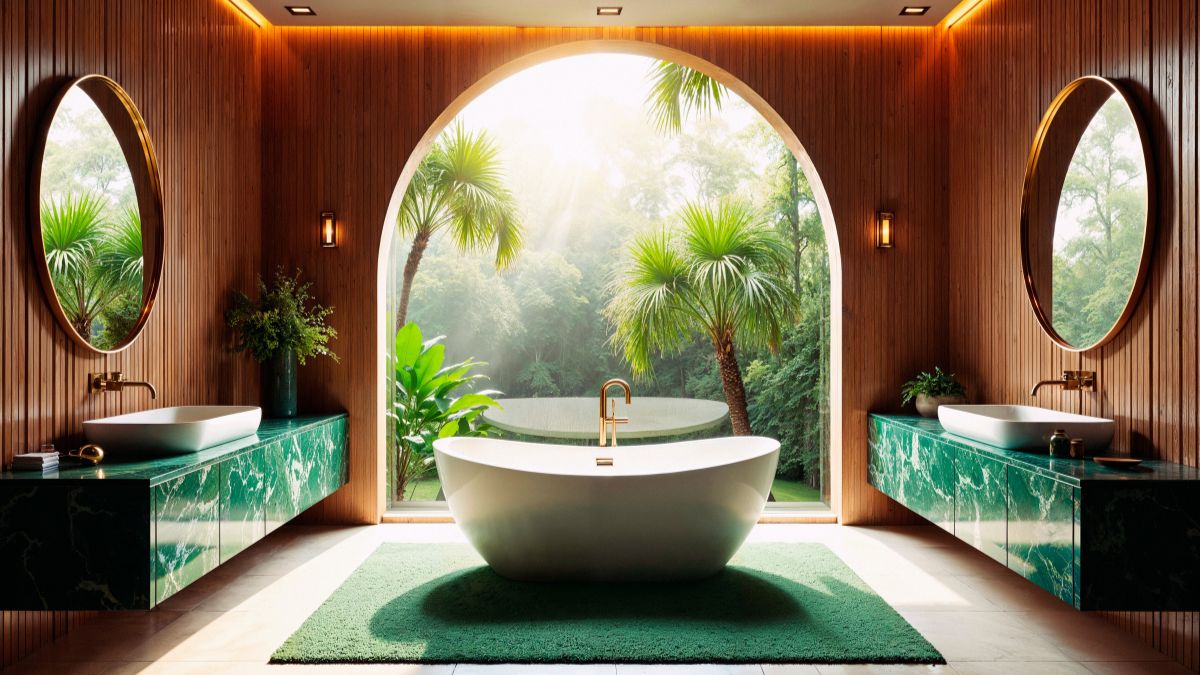
Transforming your bathroom into a stylish and functional oasis is a rewarding endeavor, especially in the unique climate and culture of Palm Springs, CA. This article explores the latest bathroom design trends tailored for Palm Springs homes, offering inspiration and practical tips for your next remodel.
For homeowners seeking expert guidance, Lua Construction General Contractors, Inc. offers comprehensive services. As a reputable bathroom remodeler Palm Springs, they specialize in creating customized solutions that blend modern design with functionality, ensuring your bathroom remodel meets both aesthetic and practical needs. Serving Palm Springs, La Quinta, Rancho Mirage, and the surrounding areas of Palm Desert, California, Lua Construction is dedicated to transforming your home into a luxurious haven.
Desert-Inspired Designs
Embracing the desert’s natural beauty, homeowners are incorporating earthy tones, stone textures, and natural materials into their bathroom designs. Warm neutrals like sand, caramel, and cream set a soothing foundation, complemented by accent colors inspired by the desert landscape, such as muted cactus green and sun-baked terracotta. Adding plants or succulents enhances the connection to nature and thrives in the Palm Springs climate.
Desert-inspired décor doesn’t stop at color palettes or materials; it also emphasizes relaxed, inviting spaces with organic forms. Curved mirrors, arched doorways, and pebble-stone flooring add a subtle nod to the rolling dunes and rocky outcrops just outside your window. Accessories crafted from clay, woven reeds, or hammered copper echo the artisanal spirit often found in local Palm Springs boutiques and art studios, bringing authenticity and a touch of luxury to bathroom retreats.
Smart Bathroom Technologies
Integrating smart technology into bathrooms enhances convenience and efficiency. Touchless fixtures, heated floors, and integrated lighting systems are becoming increasingly popular. Smart shower systems allow personalized presets, ensuring optimal water usage without waste. These innovations not only provide a luxurious experience but also contribute to water and energy conservation.
Even mirrors are getting smarter, with anti-fog technology, built-in lighting, and Bluetooth speakers for a customized music experience each morning. Voice-activated controls make adjusting lighting, temperature, or even bathtub water level effortless. As these advances continue, bathrooms in Palm Springs homes are quickly becoming showcases of both comfort and intelligent design.
Sustainable Materials and Fixtures
Eco-consciousness is a significant trend in bathroom remodeling. Homeowners are opting for reclaimed wood vanities, recycled-content tiles, and low-VOC finishes to improve indoor air quality. WaterSense-certified fixtures, touchless faucets, and dual-flush toilets help conserve water, aligning with the region’s emphasis on sustainability. These choices not only reduce environmental impact but also offer long-term cost savings.
Beyond fixtures, many design professionals recommend native or drought-resistant plants to enhance sustainability in the bathroom further. Incorporating natural daylight through skylights or transom windows helps reduce electricity use while creating a connection to the outdoors. Recycled glass countertops and hardware made from sustainable metals are small details that collectively make a significant difference in the environmental impact of your remodel.
Large-Format Tiles
Large-format porcelain tiles, typically 24×48 inches or larger, are dominating bathroom designs in Palm Springs. These oversized panels reduce grout lines, creating a cleaner visual surface and performing well in the high-humidity environment of South Florida bathrooms. They offer a sleek and modern aesthetic while being easy to maintain.
With fewer grout lines, these tiles are also more hygienic, as there are fewer places for mold and mildew to accumulate, essential in a bathroom environment. Designers are using large tiles not just on floors, but also for dramatic accent walls, seamlessly carrying the look from floor to ceiling. Matte finishes, cement looks, and tiles mimicking natural stone are among the most requested options, offering homeowners both contemporary style and durability.
Minimalist Floating Vanities
Floating vanities provide clean lines and the illusion of more space, making floor cleaning easier and giving small bathrooms an airy, uncluttered feel. In homes and condos with limited square footage, this design choice delivers both aesthetics and function. Open shelving, often paired with floating vanities, keeps essentials accessible while adding a curated, boutique-hotel vibe.
Customization is readily available, with options in wood veneer, glossy lacquer, or even stone facades to match any style preference. Soft-close drawers, integrated night lighting, and solid-surface countertops further elevate both usability and luxury. Whether opting for a single, wide basin or dual sinks for a primary suite, floating vanities are a versatile solution for Palm Springs homes.
Statement Lighting
Lighting is no longer just a practical consideration; it’s a statement piece. Layered lighting is key: task lighting around mirrors, ambient ceiling lighting, and accent lighting that highlights architectural features or textures. Fixture finishes such as matte black and brushed gold, along with organic sculptural shapes, are trending, while LED technology ensures energy efficiency. Adding dimmers allows the bathroom to transition from bright and functional in the morning to soft and relaxing in the evening.
Chandeliers and pendant lights with artistic glass or metalwork are showing up even in compact spaces, adding a dramatic focal point. Recessed lighting, combined with undercabinet and in-shower LEDs, enhances the sense of depth and luxury. The right lighting design can highlight stunning tile work or sculptural vanities, creating a spa-like atmosphere that stands out in today’s modern Palm Springs homes.
Indoor/Outdoor Bathroom Concepts
The indoor-outdoor living trend has fully reached the bathroom. Large sliding glass doors that open to private courtyards or landscaped patios are appearing in luxury remodels. Even without direct outdoor access, expansive windows with desert views are becoming a sought-after feature. Privacy remains a top concern, so frosted glass, high walls, and strategic landscaping are incorporated to allow homeowners to enjoy the view without sacrificing seclusion.
Incorporating water features, like outdoor showers or a reflecting pool visible from the soaking tub, creates a seamless experience between the bathing area and nature. Bamboo screens, stone planters, and living walls bring texture and life. At the same time, outdoor-inspired materials like teak, slate, or river rock can carry their outdoor aesthetic indoors, further emphasizing the harmony between built and natural environments.
Professional Design for Desert Living
Choosing the right materials for the Coachella Valley’s climate requires an understanding of how heat, dryness, and sunlight affect different surfaces over time. Local professionals know which materials resist fading, which fixtures conserve water effectively, and how to create a design that lasts. They also bring the skill to execute complex installations, like floating vanities and custom stonework, with precision.
Experienced contractors provide invaluable guidance, helping homeowners navigate the permitting process for innovative outdoor concepts or ensuring their investment is protected with proper waterproofing techniques that account for arid weather. Their connections to local artisans open up possibilities for one-of-a-kind built-ins, tile mosaics, or hand-forged hardware that give Palm Springs bathrooms a distinctive sense of place. Working with a trusted remodeler like Lua Construction General Contractors, Inc. maximizes both style and longevity.
By incorporating these innovative design trends, you can transform your bathroom into a stylish and functional space that reflects the unique charm of Palm Springs living.
-

 NEWS1 year ago
Historical Churches in Manila
-

 TOPIC1 year ago
Symbols of Hope: The 15th Belenismo sa Tarlac
-

 TOPIC1 year ago
RIZAL at 160: a Filipino Feat in Britain
-

 TOPIC1 year ago
“The Journey Beyond Fashion” – Ditta Sandico
-

 TOPIC3 weeks ago
Unveiling AvTub: Your Ultimate Guide to the Best AV Content
-

 TOPIC1 year ago
5 Must-Have Products From Adarna House to Nurture Your Roots
-

 TOPIC1 year ago
Filipino, alternative language course at Moscow State University
-

 TOPIC4 weeks ago
Understanding Fascisterne: Origins and Ideological Roots