
TOPIC
Civil Litigation Trends in 2026: Key Developments Shaping the Legal Landscape


The civil litigation landscape in 2026 is undergoing notable changes, affecting both legal professionals and businesses. With an increase in high-value settlements, heightened attention to cybersecurity matters, and an evolving approach to class actions, staying informed about these legal shifts is more crucial than ever. Whether you are a law firm, a business leader, or an individual facing litigation, consulting an experienced corporate law attorney can be invaluable for navigating these changes and mitigating risk. As regulatory frameworks adapt and technologies like artificial intelligence transform how legal matters are resolved, it is essential to understand how each trend could impact your organization’s exposure and legal strategy. Proactive adaptation is necessary to thrive in this evolving landscape.
Surge in Class Action Settlements
Class action settlements have reached unprecedented levels in 2026, surpassing $40 billion for the third straight year. This milestone is a testament to the persistent power of class actions as a primary tool for resolving widespread disputes and mass harms. Total settlements are estimated at $42 billion across various fields, signaling that businesses must prioritize both prevention and timely response to latent legal risks. The continuing trend has major implications for financial planning, insurance, and internal compliance policies. Adding to the complexity, courts have demonstrated increased willingness to approve significant settlement amounts when plaintiffs can demonstrate clear corporate wrongdoing or widespread harm. This climate makes it essential for organizations to adopt robust internal reporting and whistleblower programs. Businesses may increasingly rely on external audits and rapid risk assessment protocols to help mitigate exposure as soon as an issue is detected. Insurers, too, are adapting their policy frameworks, seeking greater transparency and a granular understanding of potential settlement liabilities. For law firms and in-house counsel, continued education on evolving legal thresholds and precedents is indispensable.
Cybersecurity and Data Protection Disputes
Civil litigation concerning cybersecurity and data privacy has become more frequent due to the rapid rise in cyberattacks and the introduction of stricter data protection laws. Over 40 percent of in-house counsel reported a noticeable uptick in cybersecurity-related disputes since 2023, a trend expected to continue. Enforcement actions are increasing as both domestic and international regulators respond to serious breaches and the misuse of sensitive information. Companies also face litigation stemming from the deployment of generative artificial intelligence (AI), which heightens the complexity of compliance and litigation risks as new regulations are enacted.
Another noteworthy development is the rise in cross-border litigation triggered by discrepancies between global data protection regulations, such as the General Data Protection Regulation (GDPR) in Europe and the patchwork of state laws in the United States. Enterprises managing multi-national operations are particularly vulnerable, as plaintiff’s attorneys and regulators scrutinize international data transfers and incident responses. As a result, companies are investing heavily in cybersecurity training, simulated breach exercises, and detailed record-keeping. Being proactive with incident response plans and transparent about compliance practices may reduce not only potential legal exposure but also the risk of reputational harm, which is frequently just as damaging as direct penalties.
Impact of Artificial Intelligence on Litigation
The adoption of generative AI tools is changing the landscape for litigants, especially individuals who now have greater access to legal resources without attorneys. Data from nearly three million federal filings shows the pro se plaintiff rate rose by more than 5 percentage points since AI became widely accessible, indicating a democratization of the legal process. While this expansion promotes broader legal participation, it also raises questions about the consistency and outcomes of cases initiated by self-represented parties, especially those relying on AI-generated filings. Legal professionals must adapt to new challenges in court management and quality assurance as a result of this trend.
Attorneys and courts are now seeing an increased volume of filings containing AI-generated content, some of which risk inadvertent use of outdated or fabricated legal citations. This underscores a growing need for judicial education and the implementation of standards requiring verification of filings produced with AI assistance. Additionally, there is a rising interest in forming task forces or advisory committees focused on the ethical use of artificial intelligence in court proceedings. Technological advancement means firms must routinely update their in-house software tools and maintain a critical awareness of emerging guidelines as bar associations release detailed recommendations throughout 2026 and beyond.
Environmental, Social, and Governance Litigation
Corporate ESG disclosures have come under intense scrutiny in civil courts. Investors and regulators increasingly pursue litigation alleging misstatements or omissions related to climate impacts, diversity, human rights standards, or corporate ethics. Civil securities class actions focused on ESG allegations are expected to rise steadily as demand for transparency grows and legal requirements expand. Companies must build robust compliance and documentation practices to defend against these emerging claims, which not only influence legal risk but also impact reputation and investor relations.
Leading corporations are responding to ESG-driven litigation by investing in sustainability reporting tools and conducting annual third-party audits of their ESG disclosures. Forward-thinking organizations are also collaborating with industry associations and legal advisors to create standardized reporting templates and develop internal training for compliance with evolving regulatory expectations. As more cases test the boundaries of acceptable ESG conduct, legal professionals anticipate courts will continue to clarify standards for evidence and disclosure, ultimately shaping industry best practices for years to come.
Resurgence of Consumer Protection Cases
The past year has seen a resurgence in consumer protection litigation, particularly around systemic privacy violations and breaches of trust in digital commerce. General consumer protection lawsuits are up, with a clear spike in class actions and data breach litigation. This shift is influenced by both increased consumer awareness and aggressive regulatory enforcement, especially in technology-centric industries. As consumers become more knowledgeable about their rights and as digital businesses expand their operations, companies must work diligently to ensure compliance and plan for rapid incident response. Complaints now commonly target deceptive advertising and improper collection of biometric or geolocation data, issues that legislators and agencies are scrutinizing with greater depth than ever before. Businesses are implementing comprehensive privacy policies, mandating regular audits, and increasing transparency in their terms of service. Meanwhile, alternative dispute resolution mechanisms, such as mediation and arbitration, are being embraced to manage escalating caseloads and control litigation expenses. The regulatory landscape is expected to become even more complex, with proposed legislation under consideration that would give plaintiffs new causes of action related to automated decision-making and consumer profiling.
Conclusion
Major developments are reshaping civil litigation in 2026, with sweeping effects on class action settlements, cybersecurity, artificial intelligence, ESG litigation, and consumer protection. Businesses and legal professionals need to remain vigilant and strategic in monitoring these trends. Proactively addressing these emerging areas with the support of a knowledgeable corporate law attorney is essential to achieving favorable outcomes and maintaining compliance in a rapidly evolving legal environment. In addition to these five dominant trends, it’s important to remember that the broader civil litigation climate remains dynamic and susceptible to further disruption. Remote depositions and virtual hearings, established during the pandemic, persist as common practice, further enhancing legal accessibility and reducing costs. This evolution extends the reach of legal services to more individuals and organizations, but also presents new risks regarding evidence security and the need for robust verification tools. All these factors make early legal consultation and up-to-date risk management more critical than ever, ensuring that clients confront legal challenges from an informed and empowered position.


Ever fallen asleep puzzling over a strange dream, searched for answers online, and landed on DreamMeaning.com? If you’ve got a question about a dream symbol, a technical issue with the site, or you just want to reach out with feedback, knowing how to use the DreamMeaning.com contact options can save you a lot of time. This guide walks you through every way to get in touch, what to expect from a response, and how to make your message count.
Dream interpretation sites get a huge volume of visitors every day, and DreamMeaning.com is no exception. Whether you’re a curious first-time visitor or a regular reader who checks the site every morning, there are moments when a simple search bar just won’t cut it. Maybe you found an error in an article, maybe you want to suggest a dream symbol that’s missing, or maybe you’re a business looking to collaborate. Whatever the reason, this article breaks down the smartest way to reach out.
Why You Might Need to Contact DreamMeaning.com
People reach out to dream interpretation websites for all kinds of reasons. Understanding your own reason first helps you pick the right contact method and get a faster reply.
Here are the most common reasons readers get in touch:
- Reporting a broken link or technical glitch on the site
- Asking about the meaning of a dream symbol not yet covered
- Requesting a correction to an existing article
- Proposing a guest post or content partnership
- Advertising or sponsorship inquiries
- General feedback about the site’s design or usability
- Copyright or content-related concerns
Knowing your purpose upfront makes your message clearer and easier to act on.
Quick Definition: What Counts as a “Contact Request”?
A contact request is simply any message sent to a website’s team asking for information, reporting an issue, or proposing an opportunity. It’s different from a comment on a blog post, which is usually public and doesn’t guarantee a direct reply.
How to Find the DreamMeaning.com Contact Page
Most legitimate content websites, including dream interpretation platforms, place their contact details in a predictable spot. Here’s where to look first:
- Scroll to the footer of the homepage — contact links are almost always listed there.
- Check the main navigation menu for a tab labeled “Contact,” “About,” or “Support.”
- Look for a dedicated contact form rather than just an email address, since forms are often monitored more closely.
- Search the site using their internal search bar with the term “contact.”
If none of these show results, a quick web search using the site name plus “contact page” usually surfaces the correct link fast.
Available Contact Methods
Dream and wellness content sites typically offer more than one way to reach their team. Here’s a breakdown of common options and when each one works best.
| Contact Method | Best For | Typical Response Time |
|---|---|---|
| Contact form | General questions, feedback, corrections | 1–3 business days |
| Support email | Technical issues, urgent concerns | 2–5 business days |
| Social media message | Quick, casual questions | Varies widely |
| Business inquiry form | Partnerships, advertising, sponsorships | 3–7 business days |
Using the right channel for the right purpose is one of the simplest ways to speed up your reply.
What to Include in Your Message
A clear, well-organized message gets answered faster than a vague one. Before you hit send, make sure your note includes:
- A specific subject line describing your issue or question
- Your name and a valid email address for replies
- A short, direct explanation of what you need
- Any relevant links, screenshots, or article titles
- A polite closing line
Short and specific always beats long and rambling. Site teams handle dozens of messages a day, so clarity is your best friend.
Practical Examples of Good Contact Messages
Seeing real examples makes this easier to apply. Below are a few sample scenarios and how to phrase them.
Example 1 — Reporting an error:
“Hi team, I noticed the article on ‘falling dreams’ has a broken image near the third paragraph. Could you take a look? Thanks!”
Example 2 — Suggesting a topic:
“Hello, I’d love to see an article covering dreams about losing teeth. It’s a common search topic and I think your readers would find it useful.”
Example 3 — Business inquiry:
“Hi, I represent a sleep wellness brand and would like to explore a content partnership. Could you share your media kit or advertising guidelines?”
Each example is short, specific, and easy for a support team to act on immediately.
Pros and Cons of Different Contact Methods
Choosing the right channel matters more than people think. Here’s a quick comparison to help you decide.
| Method | Pros | Cons |
|---|---|---|
| Contact form | Organized, often routed to the right department | No immediate confirmation of receipt |
| Direct, easy to attach files | Can get lost in spam or high-volume inboxes | |
| Social media | Fast for simple questions | Not ideal for detailed or sensitive issues |
| Business form | Tailored for partnerships | Slower turnaround for non-business matters |
Weighing these pros and cons before reaching out helps you avoid frustration and wasted time.
Common Mistakes People Make When Reaching Out
Even well-meaning messages sometimes go unanswered because of avoidable mistakes. Watch out for these:
- Sending vague messages without context, like “This page is wrong” without saying which page
- Using an unprofessional or joking tone for serious requests
- Forgetting to include a working email address for replies
- Sending duplicate messages across multiple channels at once
- Expecting an instant response for non-urgent matters
- Skipping the search function and asking a question already answered on the site
Avoiding these missteps significantly increases your odds of getting a helpful, timely reply.
Best Practices for Getting a Fast Response
If you want your message to stand out in a good way, follow these simple habits:
- Be specific about what you need and why
- Keep your message under 150 words when possible
- Proofread before sending to avoid confusion
- Use a real, checked email address
- Follow up politely after a week if you haven’t heard back
- Attach screenshots for technical issues instead of long descriptions
These small habits make a noticeable difference in how quickly and thoroughly your message gets handled.
What Happens After You Reach Out
Once your message is sent, most site teams follow a similar internal process: it lands in a shared inbox, gets sorted by topic, and is routed to whoever handles that type of request, whether that’s a content editor, a technical support person, or a business development contact. This is why patience matters, especially for smaller or independent websites that may not have a large support staff.
If your issue is urgent, like a security concern or a copyright dispute, mention that clearly in your subject line so it gets prioritized appropriately.
Conclusion
Reaching out to a website doesn’t have to be complicated. Whether you’re using the DreamMeaning.com contact form, sending an email, or messaging through social media, the key is matching your purpose to the right channel and keeping your message clear and specific. A little preparation goes a long way toward getting the response you’re looking for, whether that’s a quick fix, a helpful answer, or a new business connection.
Frequently Asked Questions
1. How do I contact DreamMeaning.com directly?
Look for a contact form or support email in the website’s footer or navigation menu, and choose the option that matches your specific need.
2. How long does it take to get a response?
Most general inquiries are answered within one to five business days, though business or partnership requests may take longer.
3. Can I suggest a new dream topic to be covered?
Yes, most dream interpretation sites welcome topic suggestions through their contact form or feedback option.
4. What should I do if I don’t get a reply?
Wait about a week, then send a polite follow-up referencing your original message and date sent.
5. Is it better to email or use a contact form?
Contact forms are usually better for general questions since they’re routed automatically, while email works well for detailed or urgent issues.
TOPIC
Battery Health 101: What Percentage Should You Accept When Buying a Refurbished iPhone or iPad?
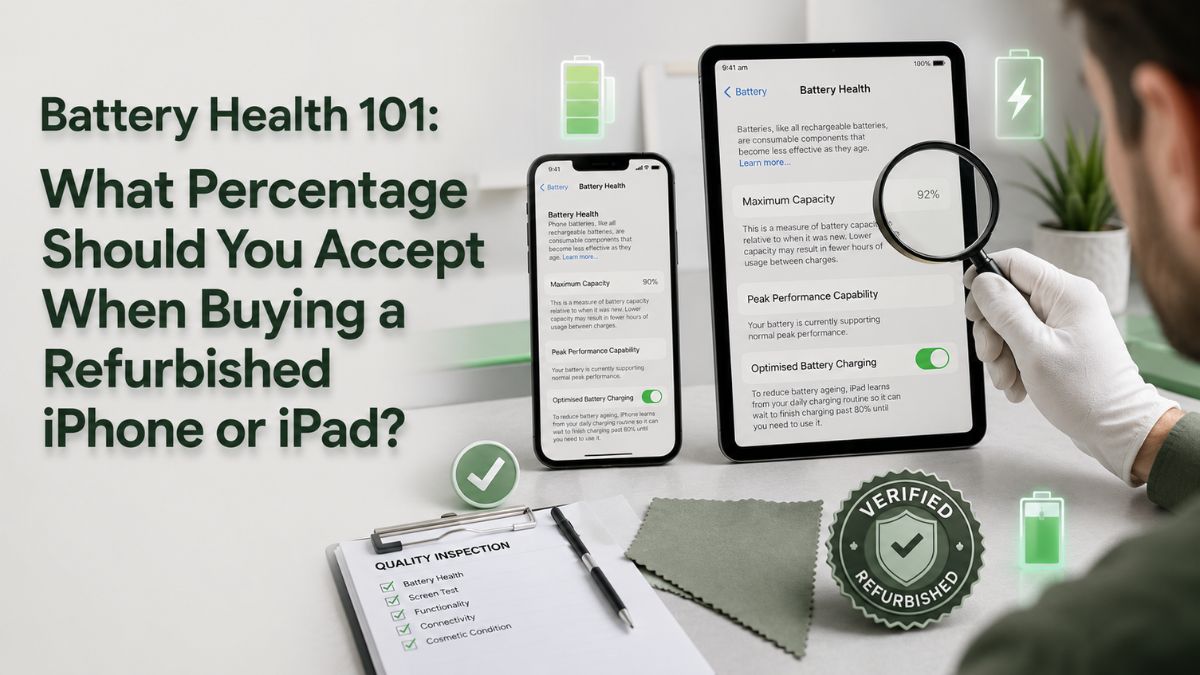
Battery health is the number that decides how happy you will be with your next phone. Yet most buyers never even check it before hitting buy.
Let’s fix that today. By the end of this article, you will know exactly what number to look for, and why it matters more than almost anything else on the spec sheet.
What Battery Health Actually Means
Battery health is not the same as how much charge is left right now. It measures the maximum capacity your battery can hold compared to when it was brand new.
Think of it like a bucket. A new bucket holds a full gallon of water. An older bucket, worn down over time, might only hold three-quarters of a gallon. The bucket still works. It just holds less than before.
Your phone battery works the same way. Over time, chemical wear reduces how much charge it can store. This happens naturally, even with careful use.
Why This Number Matters So Much
Here is why this single percentage deserves your full attention. It directly affects how long your phone lasts through the day, and how soon you will need to think about a replacement.
A battery sitting at 100 percent health lasts noticeably longer than one sitting at 75 percent, even though both phones might look identical on the outside. You cannot see battery health just by looking at a device. You have to check the number directly.
This becomes even more important with refurbished phones, since these devices have already lived a full life with a previous owner. Some were charged carefully. Others were not.
The Ideal Percentage Range
So what number should you actually look for? Let’s break this down clearly, without any confusing jargon.
Anything above 90 percent is considered excellent. At this level, you will barely notice any difference compared to a brand new battery. Your phone will comfortably last a full day of normal use.
Between 85 and 90 percent is still very good. Most buyers will not notice much difference here either. This range represents a strong sweet spot between price and performance in the refurbished market.
Between 80 and 85 percent is acceptable, but worth paying attention to. You might start noticing slightly faster battery drain during heavy use, such as gaming or video streaming. For light users, this range still works perfectly fine.
Below 80 percent is where caution becomes important. At this level, your phone may need charging more than once a day, especially with regular use. Apple itself considers 80 percent the threshold where a battery is officially recommended for service.
Why 80 Percent Is the Real Line in the Sand
Apple built this number directly into iOS for a reason. When your iPhone 15 drops below 80 percent battery health, the system itself flags it and suggests a battery service.
This is not a marketing trick. It reflects a genuine, measurable drop in performance. Below this point, your phone struggles more to maintain consistent speed, especially during demanding tasks.
So when shopping for a refurbished iPhone, treat 80 percent as your absolute minimum, not your target. Aim higher whenever your budget allows it.
Does the Same Rule Apply to iPads?
Mostly, yes. iPads use the same lithium-ion battery technology as iPhones, so the same wear patterns apply over time.
However, iPads often see less daily use compared to phones. Many people leave their iPad at home rather than carrying it everywhere. This means iPad batteries sometimes age a little slower in real-world use, even at a similar age.
Still, the same percentage guidelines apply. Look for 85 percent or higher whenever possible, and treat anything under 80 percent as a sign to ask more questions before buying.
How to Check Battery Health Yourself
Never take a seller’s word for this number without seeing proof. Thankfully, checking it yourself takes less than a minute.
On an iPhone, open Settings, then tap Battery, then tap Battery Health and Charging. The percentage appears clearly at the top of the screen.
On an iPad, the process is identical. Settings, then Battery, then Battery Health. Apple made this information easy to find on purpose, so use that to your advantage.
If you are buying online and cannot check the device yourself before purchase, always ask the seller for a screenshot of this exact screen. Any seller unwilling to provide this should raise an immediate red flag.
What Affects Battery Health Over Time
Understanding what causes battery wear helps you make smarter decisions going forward, whether buying or eventually selling your own device.
Heat is one of the biggest factors. Phones left in hot cars, direct sunlight, or used heavily while charging tend to wear down faster. Cold temperatures cause temporary performance drops too, though they are less damaging long-term.
Charging habits matter as well. Constantly draining a battery to zero percent before charging puts more strain on it compared to regular top-up charging throughout the day. Fast chargers, when used excessively, can also accelerate wear slightly over time.
None of this means you need to be paranoid about charging habits. It simply explains why two phones of the same age can have very different battery health percentages.
Can Battery Health Be Improved?
Unfortunately, no. Once battery health drops, there is no software fix or setting that restores it. The only real fix is a physical battery replacement.
This is actually good news for refurbished buyers. It means the battery percentage listed is a reliable, honest number, not something that can be artificially boosted before a sale. What you see is genuinely what you get.
Making Your Final Decision
So how should you use all of this information practically? Start by deciding your budget first. Then, within that budget, prioritize the highest battery health percentage you can afford.
If two similar phones are priced closely together, always choose the one with better battery health, even if it means a slightly higher price. That percentage affects your daily experience far more than a small cosmetic difference ever will.
If you plan to keep your phone for several years, lean toward the higher end of the battery health range. A strong starting battery gives you more comfortable years before performance really starts to drop.
Where This Information Actually Matters Most
Knowing the right battery percentage only helps if the seller actually tells you the truth about it. A number means nothing if you cannot trust where it came from.
This is why it matters so much to buy from sellers who list battery health clearly on every device, before you even ask. When that number is shown upfront, you are not guessing or hoping. You are making a decision based on real information.
Trade.com.au follows this exact approach, listing the battery health percentage directly on every iPhone and iPad listing. That way, you can compare devices honestly and know exactly what you are getting before you pay.
Final Thoughts
Battery health might be one number on a settings screen, but it quietly shapes your entire experience with a phone or tablet. It decides how often you reach for a charger and how long your device stays genuinely useful.
Next time you consider a refurbished iPhone or iPad, do not skip this step. Check the percentage, ask questions if it is missing, and treat 80 percent as your floor, not your goal. That one habit alone can save you from months of frustration and help you walk away with a device you will actually enjoy using every single day.

Few franchises have made weapons as memorable as Demon Slayer: Kimetsu no Yaiba. At the center of the series’ visual identity are the Nichirin Swords, color-changing blades forged specifically to fight demons. Among the many swords wielded by the Demon Slayer Corps, two stand out for their popularity, symbolism, and emotional weight: the Rengoku Sword, carried by the Flame Hashira Kyojuro Rengoku, and the Tanjiro Sword, wielded by the series’ protagonist, Tanjiro Kamado. This post breaks down what makes each of these blades so special, how they differ, and why fans continue to search for replicas, art, and merchandise inspired by them.
What Is a Nichirin Sword?
Before comparing the two blades, it helps to understand what a Nichirin Sword actually is within the story. These swords are forged from ore that absorbs sunlight, the one true weakness of demons. Each blade is uniquely tied to its wielder; when a swordsmith forges a new Nichirin Sword, the blade changes color based on the physical and elemental traits of the person who will carry it. This is why no two Nichirin Swords look exactly alike, and why the color of a blade often hints at the breathing style its owner will eventually master.
This detail is what makes the Rengoku Sword and Tanjiro Sword such interesting objects of comparison — their colors, and the breathing styles behind them, reflect two very different approaches to combat and character.
The Rengoku Sword: A Blade of Flame
Kyojuro Rengoku’s Nichirin Sword is colored a deep, fiery red, matching his mastery of the Flame Breathing style. As one of the Nine Hashira — the elite swordsmen of the Demon Slayer Corps — Rengoku’s blade is a visual extension of his personality: bold, passionate, and unwavering.
Flame Breathing is one of the original five breathing styles from which many others are derived, and Rengoku is regarded as one of its finest practitioners. His sword techniques emphasize powerful, sweeping strikes that mirror the intensity of fire itself, forms with names like “Unknowing Fire” and “Rengoku” (a technique that shares his own name). The red coloring of his blade isn’t just aesthetic; it reinforces his role as a symbol of strength, mentorship, and sacrifice within the story.
For fans, the Rengoku Sword has become one of the most requested items in Demon Slayer merchandise lines. Replica katanas, keychains, and cosplay props modeled after his blade are popular precisely because the sword represents more than a weapon — it represents Rengoku’s unshakable resolve, a trait that resonates deeply with viewers after his pivotal arc in the Mugen Train storyline.
The Tanjiro Sword: A Black Blade of Mystery
Tanjiro Kamado’s sword tells a very different story. Unlike most Nichirin Swords, which shift into vibrant colors reflecting a specific breathing style, Tanjiro’s blade turns solid black. This is treated as a rare and unusual occurrence in the series — so rare that other characters react with surprise and unease, as black blades are considered a bad omen among swordsmiths, historically associated with slayers who died young or faded into obscurity.
This uncertainty becomes part of Tanjiro’s larger narrative arc. Rather than being locked into a single elemental breathing style like Flame or Water, Tanjiro eventually develops his own hybrid technique, blending Water Breathing with the ancient and nearly forgotten Sun Breathing style — the original breathing technique from which all others descended. The black blade, in hindsight, foreshadows Tanjiro’s unique destiny as the successor to this foundational fighting style, setting him apart from every other character in the series.
Visually, the Tanjiro Sword has become iconic for its simplicity. Where many Hashira wield brightly colored, almost flashy blades, Tanjiro’s black sword stands out precisely because it doesn’t try to stand out. It’s a quiet, understated design that mirrors his humble beginnings as a charcoal seller turned demon slayer.
Comparing the Two Swords
| Feature | Rengoku Sword | Tanjiro Sword |
| Blade Color | Red (Flame) | Black (Rare/Unusual) |
| Breathing Style | Flame Breathing | Water Breathing → Sun Breathing |
| Symbolism | Passion, strength, sacrifice | Mystery, destiny, humility |
| Wielder Role | Flame Hashira | Series protagonist |
| Fan Appeal | Bold, heroic aesthetic | Understated, symbolic design |
While both swords serve the same core purpose — defeating demons with sunlight-infused steel — they represent two contrasting philosophies. Rengoku’s blade is loud and declarative, matching a character who lives by conviction and open displays of courage. Tanjiro’s blade is quiet and ambiguous, matching a character whose strength comes from empathy, patience, and gradual growth rather than raw power alone.
Why These Swords Matter to Fans
Part of the reason both the Rengoku Sword and Tanjiro Sword have become so beloved outside the anime itself is how effectively they function as storytelling devices. In many franchises, a weapon is simply a tool. In Demon Slayer, a Nichirin Sword’s color and behavior is treated as an extension of the wielder’s soul and journey. This is why replica swords, keychains, figures, and fan art centered on these two blades continue to be popular collector items — owning a version of Rengoku’s or Tanjiro’s sword feels like owning a piece of their story, not just a prop.
For collectors and cosplayers deciding between the two, the choice often comes down to what kind of character energy resonates most. Fans drawn to boldness, mentorship, and fiery resolve tend to gravitate toward Rengoku’s fiery red blade. Fans who connect with quieter, more introspective growth — the underdog who slowly reveals hidden potential — often prefer Tanjiro’s black sword.
Final Thoughts
The Rengoku Sword and Tanjiro Sword aren’t just weapons; they’re carefully designed symbols that reflect two of Demon Slayer’s most beloved characters. Whether you’re drawn to the fierce, flame-colored blade of a Hashira who lived and died by his convictions, or the mysterious black sword of a protagonist destined to inherit an ancient legacy, both swords capture what makes this franchise resonate so strongly with fans around the world: weapons that are never just weapons, but reflections of the people who carry them.
-

 NEWS1 year ago
Historical Churches in Manila
-

 TOPIC1 year ago
Symbols of Hope: The 15th Belenismo sa Tarlac
-

 TOPIC1 year ago
RIZAL at 160: a Filipino Feat in Britain
-

 TOPIC1 year ago
“The Journey Beyond Fashion” – Ditta Sandico
-

 TOPIC2 weeks ago
Unveiling AvTub: Your Ultimate Guide to the Best AV Content
-

 TOPIC1 year ago
5 Must-Have Products From Adarna House to Nurture Your Roots
-

 TOPIC1 year ago
Filipino, alternative language course at Moscow State University
-

 TOPIC3 weeks ago
Understanding Fascisterne: Origins and Ideological Roots