
TECHNOLOGY
Vetting the Engine: A Content Lead’s Guide to Generative Workflow Stability

A creative lead at a mid-sized agency recently showed me a stunning, hyper-realistic render of a futuristic cityscape. It had perfect volumetric lighting, zero anatomical errors in the foreground pedestrians, and a color palette that perfectly matched the client’s “neo-noir” brief. “It took me three minutes,” he said. “But it took me three hours to realize I couldn’t make a second one that looked like it belonged in the same universe.”
This is the “slot machine” trap of generative media. When we evaluate tools for a professional content pipeline, we often get blinded by the peak output—the one-in-a-hundred generation that looks like a million dollars. But in a production environment, peak output is less important than the floor. A content team doesn’t need a slot machine; it needs an engine. Transitioning from experimental prompting to a repeatable workflow requires a shift in how we vet platforms, moving away from “can it do this?” toward “can it do this consistently at scale?”
The Production Gap: Why Individual Wins Don’t Scale
The most common failure point for teams adopting AI is the cognitive bias of the “lucky prompt.” A designer hits a specific sequence of tokens that triggers a high-performing result, leading the team to believe they have found their new primary tool. However, three days into a campaign, when the client asks for the same character in a different lighting setup or a slightly adjusted camera angle, the workflow collapses.
Evaluating a platform based on its UI is a mistake many leads make. A slick interface often masks a lack of depth in the underlying model selection. For a content pipeline to be viable, the platform must offer more than just a text box. It needs to provide “levers”—the ability to lock seeds, adjust aspect ratios without warping the composition, and toggle between different model architectures depending on the specific tier of creative needed. If a tool treats every generation as a fresh roll of the dice, it is a playground, not a production environment.
The hidden cost of switching between disconnected tools for images and videos is also a primary bottleneck. If your image generator doesn’t communicate with your video engine, you spend half your day trying to prompt “around” the discrepancies between how two different models interpret a simple request like “soft morning light.”
Assessing Model Granularity for Specific Creative Tiers
In a professional setting, not every asset requires the same level of fidelity. A social media thumbnail for a fleeting trend has different requirements than a hero image for a landing page. This is where model granularity becomes the deciding factor.
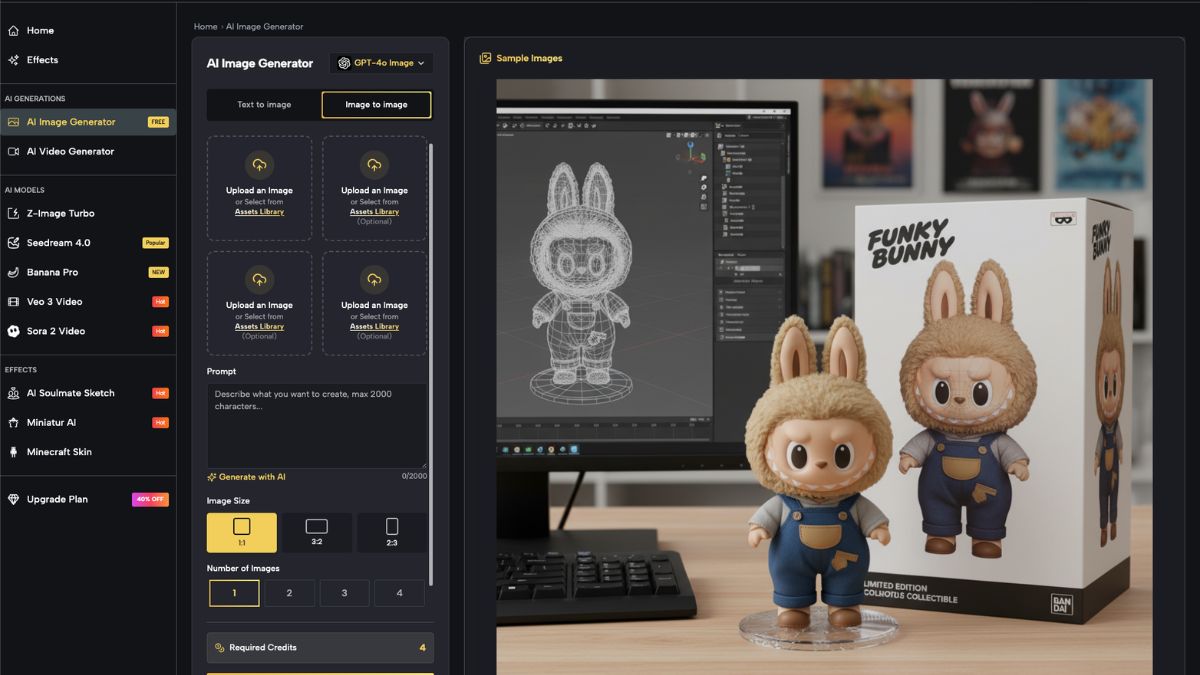
A platform like Banana AI Image allows a team to choose their “engine” based on the task. For rapid prototyping or high-volume social assets, a model like Z-Image Turbo is often the correct choice. It prioritizes throughput and speed over extreme detail. On the other hand, for a campaign that requires high aesthetic density and tight prompt adherence, switching to a model like Seedream 4.0 is necessary.
As a content lead, your evaluation should focus on “aesthetic versatility.” Can the model handle both illustrative styles and photorealistic textures without defaulting to a generic “AI sheen”? We often see models that are over-indexed on a specific look—usually a high-contrast, saturated digital art style—which can be a liability for brands that require a more muted, editorial aesthetic. The ability to control the “Seed” is perhaps the most critical technical requirement. Without seed control, you cannot perform iterative editing; you are simply generating new versions and hoping for the best.
Bridging the Chasm Between Still and Motion Assets

The transition from a still concept to a motion asset is currently the most difficult jump in the generative landscape. This is the “continuity test.” When you take a high-fidelity image generated via Banana AI Image and attempt to animate it, does the platform maintain the structural integrity of the subjects?
Most generative video models suffer from what we call “motion artifacts”—the tendency for limbs to dissolve, backgrounds to warp unnaturally, or clothing colors to shift between frames. When vetting a platform like Banana AI, it is vital to test the Image-to-Video (I2V) pipeline. The technical goal here is to determine how well the video model understands the physical laws implied by the source image.
One moment of uncertainty to acknowledge: Even with high-end models like Veo 3, we are not yet at a point where a 10-second AI video can replace a 10-second live-action shot without significant human oversight. There is an inherent unpredictability in how AI interprets fluid dynamics—smoke, water, and flowing hair remain notoriously difficult to render with 100% accuracy. Expecting “one-click perfection” in video is a recipe for missed deadlines; the goal of the evaluation is to find the tool that requires the least amount of “clean-up” in post-production.
The Economics of Iteration: Credits, Speed, and Throughput
Resource management is the unsexy reality of creative operations. When calculating the cost of a generative workflow, many teams look at the monthly subscription price. This is a shallow metric. Instead, you should calculate the “cost per usable asset.”
If a high-fidelity generation costs 10 credits but requires 20 attempts to get a result that meets brand standards, that asset actually costs 200 credits. A more efficient model might cost 15 credits per generation but hit the mark in three attempts. Transparent credit accounting and bulk generation capabilities are essential for agency-level delivery. If your team has to wait 60 seconds for a single generation, and you need to generate 50 variations to find the “hero” shot, the time-cost alone will eat your margins.
Furthermore, speed matters most during the “prototyping” phase. A workflow that allows for low-resolution, high-speed drafts followed by a high-resolution upscale is almost always superior to a workflow that forces high-fidelity generation from the very first prompt. Banana AI provides these varying paths, but it is up to the operator to decide when to burn credits on high-fidelity models like Banana Pro and when to stick to faster, iterative models.
The Limits of Generative Certainty
No evaluation is complete without addressing the current hard limits of the technology. For all the progress made in 2026, there are two areas where AI still struggles significantly: legal indemnity and brand precision.
First, the intellectual property landscape remains in a state of flux. While many platforms provide tools to ensure your generations are unique, no platform can currently offer 100% legal “peace of mind” for high-stakes commercial use in every jurisdiction. This is a significant limitation for enterprise clients. Content leads must maintain a clear policy on how and where AI-generated assets are deployed—using them for ideation, mood boarding, and social content is generally safe, but using them for global trademarks is a riskier proposition.
Second, there is the issue of “HEX fidelity.” If a brand’s primary color is a very specific shade of blue (#0047AB), getting an AI model to replicate that exact hex code across multiple lighting conditions is nearly impossible without post-production color grading. AI interprets “blue” as a concept, not a mathematical coordinate. If your workflow requires absolute color consistency, you must build a step into your pipeline for manual color correction. Relying on the Banana AI engine to “know” your brand’s palette is an unrealistic expectation at this stage of the technology’s development.
Building the Two-Week Pilot Framework
To move beyond the hype, I recommend a structured “Parallel Test” pilot. For two weeks, have a small segment of your team run a traditional workflow alongside a generative workflow powered by Banana AI tools.
The success metrics should be concrete:
- Approval Speed: Does the generative workflow lead to faster internal or client approvals because of the ability to visualize concepts instantly?
- Asset Volume: Does the team produce 20%, 30%, or 50% more usable variations within the same billable hours?
- The “Fix-it” Ratio: How much time is spent “fixing” AI errors (hallucinations, artifacts) versus creating from scratch?
At the end of this pilot, you shouldn’t ask “Is the AI good?” You should ask “Is the engine stable enough to support our 2026 calendar?” If the answer is yes, then you have moved from being a prompt hobbyist to a generative operator. The goal isn’t to replace the human eye; it’s to give the human eye a more powerful, predictable, and scalable way to see.

Introduction
Visual content has become one of the main ways people communicate, share information and present ideas online. Product photos, social media posts, classroom presentations and digital marketing materials all lean on images to grab attention and make information easier to take in. A picture often does its job before a single word has been read. How good an image looks depends on far more than its subject, though. The background can shape its appearance, its clarity and whether it suits the purpose at all. A beautifully made leather wallet doesn’t look quite so premium when it’s photographed next to a half-eaten sandwich on a cluttered desk.
Background removal has become a practical way to improve images without expensive photography equipment or advanced editing skills. By separating the main subject from its surroundings, creators can produce cleaner visuals, swap in new backgrounds and adapt the same image for many different platforms. Understanding how the technology works, and when it’s genuinely worth using, helps individuals and businesses make smarter decisions about their visual content. It’s a small skill that tends to improve a surprising amount of everyday work.
What Is Background Removal?
At its simplest, background removal is an image-editing process that lifts the main subject away from the environment around it. That subject might be a person, a product, an animal or any other object. Once the background has gone, the subject can sit on a transparent canvas, a plain solid color or a completely different scene. A ceramic bowl photographed on a crowded kitchen counter, surrounded by fruit peel and a stray tea towel, can end up looking as though it was shot in a calm, bright studio.
For many years, this meant tracing around the edges of an object by hand using selection tools, masks and brushes. Manual editing can give wonderfully precise results, but it takes patience and a fair amount of technical experience, especially with complicated shapes. Carefully outlining the delicate lace edge of a bride’s veil could easily fill an entire evening.
Modern image-editing systems use artificial intelligence and computer vision to find the main subject automatically. These technologies look at visual patterns, colors, edges and other characteristics to tell the foreground apart from the background. As a result, many images can now be processed in seconds instead of hours. What once belonged to trained editors is now within reach of almost anyone with a phone.
How Artificial Intelligence Improves Image Editing
Artificial intelligence has changed the way people approach everyday image-editing tasks. Machine learning models can recognize common subjects and estimate which pixels belong to the foreground and which belong to the background. Having studied enormous numbers of photos, they’ve become remarkably good at knowing where a person stops and the rest of the room begins.
One key technique is image segmentation. It splits an image into meaningful regions, helping editing software find the outline of a person or object. More advanced systems can even pick out fine details such as hair, transparent materials and irregular edges. A pair of dangling earrings or the soft fuzz of a knitted hat is exactly the kind of detail better tools now handle with real care.
Automatic processing still isn’t perfect, though. Backgrounds in colors close to the subject, poor lighting, motion blur and complicated outlines can all leave unwanted gaps or rough edges. Someone in a pale blue shirt standing against a clear blue sky can give even a clever system a headache. Looking over the result and making a few small adjustments can improve the final image a great deal.
These developments make background removal accessible to complete beginners while still offering real benefits to experienced designers, photographers and content creators. The beginner gets a usable result. The professional gets their evening back.
Common Uses of Background Removal
E-Commerce and Product Photography
Online shoppers depend heavily on product images when they’re comparing one item with another. A distracting background makes it harder to focus on a product’s shape, color and details. Removing the clutter helps create consistent product photographs that sit neatly together in an online catalog. A browser scrolling through rows of handbags on a lunch break wants to see the handbags, not the corner of someone’s spare room.
Businesses can use transparent images to place products against matching backgrounds, so whole collections look organized and polished. It’s still important for sellers to keep product colors accurate and avoid editing details in ways that could mislead customers. A sweater that arrives in a noticeably different shade from the photo leads to disappointed buyers and a pile of returns.
Social Media and Digital Marketing
Social media rewards eye-catching content, yet many creators are working with very little time and a tight budget. Background removal lets them reuse photographs they already have in promotional graphics, announcements, thumbnails and informational posts. One good photo session can feed a whole month of content.
A podcast host, for example, can lift themselves out of a photo taken in front of a messy bookshelf and place their image over a bold, themed background that matches the topic of that week’s episode. This gives far more creative freedom without needing a new photo shoot for every single design. The bookshelf can stay as untidy as it likes.
Presentations and Educational Materials
Teachers, students and professionals regularly use images to explain ideas. Removing a background helps illustrations, portraits and objects sit naturally within slides, reports and instructional materials. A photo of a chemistry flask is far clearer on a slide when it isn’t surrounded by a cluttered lab bench and three other pieces of equipment.
A clean image cuts down on visual distractions and points attention towards the information being shared. This is especially useful when several images need to follow the same visual style across a long presentation. Audiences tend to follow along more easily when every slide feels like part of the same story.
Personal Photography and Creative Projects
Background removal also helps with personal projects such as digital invitations, greeting cards, profile pictures, collages and photo compositions. People can try out all sorts of visual settings while keeping the original subject exactly as it was. A family’s beloved pet hamster can star on a birthday invitation surrounded by balloons, without anyone needing to stage a tiny party for the photo.
Choosing the Right Background Removal Method
The best approach depends on the image, the result someone is hoping for and how much editing experience they have. Manual selection tools give detailed control but can take a lot of time. Automated tools bring speed and convenience, particularly when there’s a stack of everyday images to get through before the end of the day.
People looking for a simpler editing workflow can explore a Background Remover to see how browser-based background removal can take much of the effort out of the process. When weighing up any tool, it helps to think about output quality, supported image formats, ease of use, processing limits and privacy practices. A tool that looks perfect at first can turn out to shrink images to a size that’s useless for print.
For professional projects, the ability to refine edges, keep the full image resolution and export transparent PNG files can matter a great deal. It’s also worth checking whether a tool adds watermarks or holds back certain features. Discovering a logo stamped across the corner of a finished client image is never a pleasant surprise.
Tips for Better Background Removal Results
Automated systems can handle a great many images, but the original photograph still shapes how good the final result will be. A few practical habits make the whole process far more reliable.
It helps to start with images that have a clear subject and plenty of light. Strong contrast between the subject and its surroundings generally makes separation much easier. A yellow raincoat against a grey brick wall is a gift to any editing tool. Once processing is done, the fine details deserve a close look, especially around hair, clothing, glass and other complicated edges.
The new background needs some thought too. A subject photographed in bright midday sunshine can look oddly out of place against a dark, moody scene unless the lighting and shadows are adjusted to match. Matching colors, perspective and brightness helps the final composition feel convincing rather than obviously stitched together. A dancer caught mid-leap on a sunny beach won’t look natural dropped into a dim, candlelit room.
Keeping an untouched copy of the original image is the last and simplest habit. Holding on to the source file leaves room for future edits and makes it easy to fix mistakes without starting again from scratch. It’s a few seconds of effort that can save hours of frustration later.
Privacy and Responsible Image Editing
Convenience is never a good reason to forget about privacy. Before photographs are uploaded to an online editing service, it’s sensible to read its privacy policy and understand how uploaded files are stored, processed and deleted. A couple of minutes spent reading can prevent a great deal of worry.
This matters most with images that include children, private documents, confidential business information or people who can be identified. Getting the right permission before editing and publishing photographs of other people is just as important. A friend who’s happy to be in a group photo may not be thrilled to find themselves cut out and placed somewhere entirely new without being asked.
Responsible editing also means steering clear of changes that misrepresent products, fabricate evidence or create misleading impressions. Background removal is at its best when it improves how something is presented while keeping the subject’s essential character exactly as it is. A cleaner picture is welcome. A dishonest one isn’t.
Conclusion
Background removal has become an important part of modern digital image editing. Artificial intelligence has made the process faster and far more accessible, helping people prepare images for online stores, social media, presentations and personal creative projects. What once took real expertise can now happen in moments.
Good results still depend on image quality, careful checking and sensible editing choices, despite all that convenience. By choosing suitable tools, paying attention to fine details and keeping privacy in mind, people can create clear, professional-looking visuals without unnecessary complexity. As image-processing technology keeps developing, background removal will stay a valuable skill for anyone working with digital content. The tools keep getting smarter. A careful eye is still what makes the difference.

Have you ever wondered how manufacturers fit a battery, electronic components, and other essential parts into a small electronic device? Compact technology has made many products easier to carry, but reducing their size creates engineering challenges. Every component needs enough space to function properly, and the complete device must meet appropriate safety and reliability requirements.
Battery integration is one of these challenges in compact vaping devices. Manufacturers must consider available space, electrical performance, heat management, and physical protection when designing products. Whether researching North Vape flavors, Mr Fog vape products, or Fifty Bar Vapes, understanding these engineering considerations provides useful context for evaluating compact electronic designs.
Why Battery Integration Is Challenging in Compact Devices
A battery does more than supply electrical power. It also affects a device’s dimensions, weight, operating time, and internal layout. When manufacturers work with limited space, these factors must be considered alongside the requirements of the other components.
The challenge becomes more complex when the product includes a heating element, electronic controls, airflow channels, and a liquid reservoir. Each part has its own requirements, so fitting everything into a small enclosure involves careful design decisions.
1. Balancing Battery Size and Electrical Performance
Battery size and energy capacity are closely related, although actual performance also depends on battery chemistry, operating conditions, and power consumption. A smaller battery may help reduce the overall dimensions of a device, but it can also limit the amount of energy available.
Designers must consider how the battery will operate within the complete system rather than evaluating its size in isolation. The electrical requirements of the device need to remain compatible with the battery’s specifications and protective features.
When researching products associated with Mr Fog vape, it is important to check the specifications of the individual model instead of assuming that all devices use identical batteries.
Key considerations include:
- Battery capacity and energy requirements.
- Available space within the enclosure.
- Electrical connections and insulation.
- Battery protection and monitoring features.
- Expected operating conditions.
These factors influence the overall design, but battery capacity alone does not establish how well or how safely a product will perform.
2. Managing Heat and Protecting Internal Components
Heat management is another important part of battery integration. Batteries and electronic components can generate heat during operation, while heating elements in vaping devices serve a separate purpose by producing the heat needed to generate an aerosol.
Designers must account for these different sources of heat and ensure that the battery and electronic components operate within their specified limits. A compact enclosure can make thermal management more demanding because there is less internal space available.
Manufacturers may evaluate temperature behavior, electrical protection, and component placement during product testing.
Important design considerations include:
- Suitable separation between sensitive components.
- Materials appropriate for the enclosure.
- Protection against electrical faults.
- Temperature monitoring or protective controls, where applicable.
- Testing under defined operating conditions.
A well-designed system should account for foreseeable operating conditions instead of relying on the small size of the device as evidence of safety. Battery protection and appropriate testing remain necessary regardless of the product’s dimensions.
How Design Choices Affect Reliability and Safety
Battery integration involves more than finding a suitable battery. The enclosure, electronic circuit, connections, and surrounding materials must work together as intended.
If one part is poorly fitted or unsuitable, it may affect the reliability of the complete device. For this reason, manufacturers need to consider component compatibility, assembly quality, and product testing throughout the design and production process.
3. Making Space for Other Components
Compact vaping devices may contain several systems within one enclosure. Alongside the battery, they can include electronic controls, a heating element, an airflow pathway, and a liquid reservoir.
Arranging these components can be difficult because each one has physical and functional requirements. The battery needs suitable protection, electrical connections must remain secure, and liquid-containing sections need to be designed to reduce the risk of leakage.
Products marketed around North Vape flavors may have different external designs and specifications depending on the model. Flavor names, however, do not provide information about battery construction or electrical safety.
Engineers need to consider:
- The placement and protection of electrical components.
- The separation of liquid storage and sensitive electronics.
- The strength of the casing.
- Assembly tolerances and manufacturing consistency.
- Access to appropriate inspection and testing procedures.
A compact layout should not make quality control or safety information harder to manage. Product design needs to balance efficient use of space with suitable component protection.
4. Manufacturing Quality, Battery Protection, and Disposal
Even a carefully planned design can experience problems if components are damaged or assembled incorrectly. Manufacturing quality assurance helps identify issues such as defective connections, unsuitable materials, or damage to the battery enclosure.
Depending on the design, manufacturers may inspect incoming components, verify electrical performance, evaluate protective features, and examine finished products for defects. These checks can reduce avoidable manufacturing problems, although they cannot guarantee that every unit will remain free from faults.
Battery integration also creates an environmental challenge. Compact electronic devices may combine batteries, circuit boards, plastics, and other materials in a casing that is difficult to dismantle.
Responsible design should therefore consider the product’s entire life cycle, including its eventual disposal.
Useful measures include:
- Providing clear battery safety instructions.
- Identifying suitable disposal methods.
- Following applicable electronic-waste requirements.
- Supporting appropriate battery collection systems.
- Keeping product specifications and safety information accurate.
Consumers researching Fifty Bar Vapes or other battery-powered products should check the manufacturer’s instructions for the exact model. Never open, puncture, or modify a battery, and never recharge a disposable device unless the manufacturer explicitly designed it for recharging.
If a device becomes unusually hot, swollen, or damaged, stop using it and do not attempt to charge it. Follow the manufacturer’s safety guidance and local disposal instructions. Keep damaged devices away from children and pets.
Nicotine-containing vaping products are addictive and are not risk-free. People who do not use tobacco or nicotine should not start using them, and young people should avoid these products.
Final Thoughts
Battery integration presents several challenges in compact vape device design. Manufacturers must balance size, electrical requirements, heat management, component placement, and manufacturing quality while maintaining appropriate safety protections.
When researching North Vape flavors, Mr Fog vape, or Fifty Bar Vapes, readers should look beyond appearance and product names. Model-specific specifications, battery instructions, and reliable safety information provide a better understanding of a device’s construction.
Ultimately, successful battery integration depends on careful engineering rather than simply fitting a smaller battery into a smaller enclosure. Good design considers how every component works together, how the product is tested, and how its materials will be handled at the end of its useful life.

Have you ever taken a great photo, only to find a messy room, a busy street, or an object spoiling the view behind your subject? A good background remover fixes that in a few seconds. You upload the image, the tool finds the main subject, and the old scene disappears. What is left can sit on white, a bright color, or a see-through layer. This guide shows how to remove background from image files online, which transparent background format to save, how to handle hair and fine edges, and how to prepare clean product photos for online stores. Every step uses plain words. No editing skills needed. Let us start.
Key Takeaways
- A background remover separates the main subject from the scene, so you can place it on white, a color, or a see-through layer.
- Start with a sharp, well lit photo where the subject stands out from what is behind it.
- Check hair, fur, straps, and small gaps after the tool finishes, then fix rough spots by hand if your editor allows it.
- Save as PNG when you need transparency. JPG cannot keep it.
- Big marketplaces such as Amazon ask for a pure white background on main product photos.
What Does It Mean to Remove a Background from an Image?
Removing a background means cutting the main subject out of a photo and clearing everything behind it. The subject can be a person, a product, a pet, or a logo. People also say “cut out a photo” or “erase the background.” All of these mean the same thing. After the cut, the empty area becomes transparent, or you fill it with a new color or scene.
Years ago, this job needed careful hand tracing with a pen tool. Today, online editors use image recognition to find the edges for you. You upload a file, click one button, and review the result. That is why anyone can do it, from a small shop owner to a student making a class poster.
Why a Clean Background Matters
A busy background pulls the eye away from the subject. A clean one keeps attention where you want it. This is the reason online stores set rules for product photos.
Case Study: How Big Marketplaces Treat Backgrounds
Amazon’s image guidelines say a main product image should sit on a pure white background (RGB 255, 255, 255), show only the product, and fill at least 85% of the frame. The image should also measure at least 1000 pixels on the longest side, so shoppers can zoom in.
Google Shopping follows a similar idea. Google recommends a solid white or transparent background for main product images, and the product should fill about 75% to 90% of the frame. Google also expects the photo to show the real item, so you should not change colors, labels, or shape while you edit.
The pattern is easy to see. Large platforms want photos that look consistent from one seller to the next, so shoppers can compare items fast. A background remover is the quickest way to meet that need when you do not own a photo studio.
How an Online Background Remover Works
In plain words, the tool studies your photo and sorts every pixel into two groups: subject or background. It looks at color, contrast, shapes, and edges. Then it hides the background group and keeps the subject.
In Brazil, many people search for a removedor de fundo when they want this result, and the idea is the same in any language. CapCut’s version lets you upload a photo, remove the background, and then keep the space transparent, add a solid color, or place another image behind the subject. It also offers manual adjustments for areas that need a fix, although the exact controls can differ between the browser and the app.
Your results depend on the photo you start with. A sharp image with good contrast between the subject and the scene gives clean edges. A blurry image gives the tool very little to work with. Background removal cannot bring back detail that is missing from the original file.
Step by Step: How to Remove a Background Online
Follow these five steps in any modern online photo editor.
- Upload a clear photo. Pick an image where the whole subject is visible and well lit. Keep a copy of the original so you can compare it later.
- Run the background removal. Choose the remove background option. The tool marks the subject and clears the rest.
- Check the edges. Zoom in on hair, fur, straps, and small gaps between objects. Use the manual tools to fix any rough area.
- Choose a new background. Leave it transparent, or add white, a solid color, or another image. Adjust the size and position of the subject until it looks natural.
- Export and test. Pick PNG for transparency or JPG for a flat color. Open the saved file to confirm that the result looks right.
A quick test you can try: upload a photo of a pet or a plant with a plain wall behind it. These subjects show you how well the tool handles fur and thin leaves, and you will learn the controls in a few minutes.
Photo Tips Before You Upload
A few small habits make the final cutout much cleaner.
- Use daylight near a window or soft indoor light, so shadows stay mild.
- Place the subject in front of a color that differs from it. A dark jacket against a dark wall is hard to separate.
- Keep the whole subject inside the frame.
- Start with a large, high quality file. Small images look rough after cutting.
- Wipe your phone lens before shooting, because a smudge softens every edge.
Choosing the Right File Format
The format you save in decides whether your see-through area survives. This is where many beginners get stuck.
| Format | Keeps transparency? | Best use |
| PNG | Yes | Logos, stickers, and cutouts you will place on other designs |
| JPG | No | Photos on a white or solid color background, such as store images |
| WebP | Yes, but app support can vary | Smaller files for websites, if your platform accepts the format |
One more tip: some viewing apps show a white area even when a PNG is truly transparent. To be sure, place the saved file on a dark background and check.
Common Mistakes and Quick Fixes
| Problem | Why it happens | Quick fix |
| White halo around the subject | Leftover background color or very soft edges | Zoom in, clean the edge, and test on both light and dark backgrounds |
| Missing hair strands or fur | Thin details blend into the scene | Use a sharper photo, then refine the area by hand |
| Glass or clear plastic looks odd | The tool may remove see-through parts | Test on a slightly off white background and adjust manually |
| Product colors look different | The edit changed the tones | Compare with the original and keep colors faithful |
| Blurry final image | The source file is too small | Start again with a larger photo |
Where Cutout Images Are Useful
Product photos. Clean cutouts help catalog pages and ads look neat. Keep margins even from one photo to the next, and check labels, proportions, and colors before you publish.
Logos and brand material. You can isolate a logo and use it in slides, cards, or social posts. Check letters and inner spaces after the cut. Keep in mind that removing a background does not turn a normal image file into a vector file.
Portraits and invitations. A cutout lets a person stand out on a party invite or a profile banner. Review hair, clothes, and accessories before you place the person on a new scene.
Social posts and slides. A clear subject on a simple color is easy to read on a small phone screen, which helps your post get noticed.
Removing a Background Is Not the Same as Removing a Person
These are two different jobs. A background remover keeps the main subject and clears the rest. Deleting one unwanted person from a photo means removing that object and rebuilding the area behind it. For that task, look for an object removal tool in your editor, and check patterns and straight lines closely afterward.
Free or Paid: What to Check Before You Start
Many editors offer a free way to remove a background. Limits, export quality, and extra features can vary by platform and by the current offer. Before you finish a project, check these points:
- Does the free option allow the export size you need?
- Does the editor ask for a subscription or credits for the final download?
- What does the privacy policy say about uploaded photos? Avoid uploading private images to any tool you do not trust.
Spending two minutes on these questions saves you from surprises at the export step.
Frequently Asked Questions
How do I remove the background from an image online?
Upload your photo to an online editor, choose the remove background option, and check the edges. Then keep the area transparent or add a new color or image, and export the file.
Can I get a transparent background for free?
Many tools offer a free option, but limits and paid features can differ. Look at the export options in the editor before you start, so you know what your account allows.
Which file format should I save?
Save as PNG when you need transparency. Use JPG when the image will sit on a white or colored background, because JPG does not keep see-through areas.
Will a background remover keep hair and fine details?
Loose hair, fur, lace, and clear objects can need extra checking. A sharp, well lit photo with good contrast helps a lot. Test the cutout on light and dark backgrounds, and refine the edges when your editor gives you controls.
Can a background remover delete a person from a crowd?
No. It isolates the main subject. Removing one person needs an object removal tool that fills in the area behind them.
Final Thoughts
Removing a background no longer takes a studio or a long editing session. A clear photo, a reliable online tool, and a careful look at the edges are enough to get a clean result. Pick the right file format, keep product colors true to the original, and follow the image rules of the platform where you plan to post. Try the steps above on one photo today, and you will soon see how much a clean background improves your images.
-

 NEWS1 year ago
Historical Churches in Manila
-

 TOPIC3 months ago
Unveiling AvTub: Your Ultimate Guide to the Best AV Content
-

 TOPIC1 year ago
Symbols of Hope: The 15th Belenismo sa Tarlac
-

 TOPIC1 year ago
Simbang Gabi and Kakanin
-

 TOPIC1 year ago
RIZAL at 160: a Filipino Feat in Britain
-

 NEWS4 months ago
What Caused Delta Flight DL275 to Diverted LAX? A Detailed Breakdown
-

 TOPIC2 months ago
Understanding Fascisterne: Origins and Ideological Roots
-

 TOPIC1 year ago
“The Journey Beyond Fashion” – Ditta Sandico