
HEALTH
Finding Relief: How Anxiety Treatment Can Transform Your Life


Anxiety doesn’t announce itself politely. It shows up uninvited—in the middle of a work presentation, during a quiet dinner with friends, or at 3 a.m. when you’re desperately trying to sleep. Your heart races. Your thoughts spiral. And suddenly, the world feels like too much.
If this sounds familiar, you’re not alone. Anxiety disorders affect millions of Americans, and for many living in Colleyville, TX, finding the right support can feel overwhelming. The good news? Effective anxiety treatment exists, and it can help you reclaim a sense of calm and control.
Whether you’ve been struggling with anxiety for years or recently noticed it creeping into your daily life, understanding your treatment options is the first step toward feeling better. Let’s explore what anxiety treatment looks like, how it works, and why seeking help might be one of the most important decisions you make.
What Does Anxiety Actually Feel Like?
Anxiety isn’t just “being worried.” It’s a persistent sense of dread that can hijack your body and mind. Some people experience physical symptoms like chest tightness, nausea, or difficulty breathing. Others wrestle with racing thoughts, constant worry, or an inability to relax.
Common signs of anxiety include:
- Physical symptoms: rapid heartbeat, sweating, trembling, fatigue
- Emotional symptoms: persistent worry, irritability, feeling on edge
- Behavioral symptoms: avoiding certain situations, difficulty concentrating, trouble sleeping
For many people, anxiety becomes so consuming that it interferes with work, relationships, and everyday activities. You might cancel plans, avoid social situations, or feel exhausted from the mental effort of just getting through the day.
The important thing to remember? These feelings aren’t your fault, and you don’t have to live with them forever.
Why Professional Treatment Makes a Difference
When anxiety becomes chronic, trying to manage it alone often isn’t enough. Professional anxiety treatment offers structured support, evidence-based techniques, and personalized strategies that address the root causes of your distress.
Dr. Lisa Fairweather, a trusted provider of anxiety treatment in Colleyville, TX, understands that no two people experience anxiety in the same way. That’s why effective treatment begins with listening—really listening—to what you’re going through.
Professional treatment can help you:
- Identify the triggers and patterns behind your anxiety
- Learn practical coping skills you can use in real-time
- Challenge negative thought patterns that fuel your worry
- Build resilience and confidence in managing difficult emotions
- Develop a long-term plan for maintaining mental wellness
Many people worry that seeking help means they’re weak or broken. The opposite is true. Recognizing that you need support and taking action to get it requires courage and self-awareness.
What to Expect from Anxiety Treatment
Starting therapy can feel intimidating, especially if you’ve never been to counseling before. But understanding what happens during treatment can ease some of that uncertainty.
The Initial Assessment
Your first session typically involves an in-depth conversation about your symptoms, medical history, and what brings you to therapy. This isn’t about judgment—it’s about gathering information so your therapist can create a treatment plan tailored to your needs.
You might discuss:
- When your anxiety started and how it’s progressed
- Situations or thoughts that trigger anxious feelings
- How anxiety impacts your daily life and relationships
- Previous attempts to manage your symptoms
- Your goals for therapy
Evidence-Based Approaches
Once your therapist understands your unique situation, they’ll recommend treatment approaches that have been scientifically proven to help with anxiety. Cognitive Behavioral Therapy (CBT) is one of the most effective methods, helping you identify and change thought patterns that contribute to anxious feelings.
Other approaches might include:
- Exposure therapy: gradually facing feared situations in a safe, controlled way
- Mindfulness techniques: learning to stay present and reduce rumination
- Relaxation exercises: practices like deep breathing and progressive muscle relaxation
- Lifestyle modifications: addressing sleep, nutrition, and exercise habits that affect anxiety
Building Skills Over Time
Anxiety treatment isn’t a quick fix. It’s a process that unfolds over weeks or months, depending on your needs. Each session builds on the last, helping you develop new skills and perspectives.
You’ll practice techniques between sessions, applying what you learn to real-life situations. Your therapist will check in on your progress, adjust strategies as needed, and celebrate your wins along the way.
Why Location Matters: Finding Support in Colleyville
Choosing a local provider for anxiety treatment in Colleyville, TX, offers distinct advantages. You’ll work with someone who understands the community, has convenient office hours, and can provide consistent, face-to-face support.
Local treatment also means shorter travel times and easier scheduling—important factors when you’re already feeling overwhelmed. Building a relationship with a therapist in your area creates a sense of stability and trust that’s harder to achieve through remote or distant providers.
Dr. Lisa Fairweather brings both professional expertise and a genuine commitment to helping residents of Colleyville navigate their mental health challenges. Her approach combines clinical skill with compassion, creating a safe space where you can explore your anxiety without fear of judgment.
When Should You Seek Help?
Many people wait months or even years before reaching out for anxiety treatment, hoping their symptoms will improve on their own. While it’s natural to want to handle things independently, delaying treatment often allows anxiety to become more entrenched.
Consider seeking professional help if:
- Your anxiety persists for weeks or months without improvement
- Anxious feelings interfere with work, school, or relationships
- You’re avoiding activities or situations you used to enjoy
- Physical symptoms like panic attacks are becoming more frequent
- You’re using alcohol, drugs, or other unhealthy coping mechanisms
- You feel hopeless or overwhelmed by your anxiety
The sooner you address anxiety, the easier it typically is to treat. Early intervention can prevent symptoms from worsening and help you develop healthy coping skills before patterns become deeply ingrained.
Taking the First Step Forward
Anxiety treatment in Colleyville, TX, offers structured, evidence-based care designed to help you regain control over persistent worry, racing thoughts, and physical tension. Choosing to begin treatment is a meaningful act of self-respect and personal responsibility. It affirms that your well-being matters and that you are ready to move beyond survival mode toward stability and peace. Through individualized treatment plans that may include therapy, medication management, and practical coping strategies, you can build resilience, restore emotional balance, and experience a calmer, more confident approach to daily life.
If you’re in Colleyville, TX, and ready to explore your options, reaching out to Dr. Lisa Fairweather is a great place to start. An initial consultation can help you understand what treatment might look like and whether it’s the right fit for your needs.
You don’t have to have all the answers before making that first call. You just need to be willing to take one small step—and then another, and another. With the right support, anxiety doesn’t have to control your life anymore.
Relief is possible. You just have to reach for it.
Contact Info
Site: https://www.doctorlisafairweather.com/
Phone: (817) 283-4300
Address: 4016 Gateway Dr Ste 120, Colleyville, TX 76034

Introduction
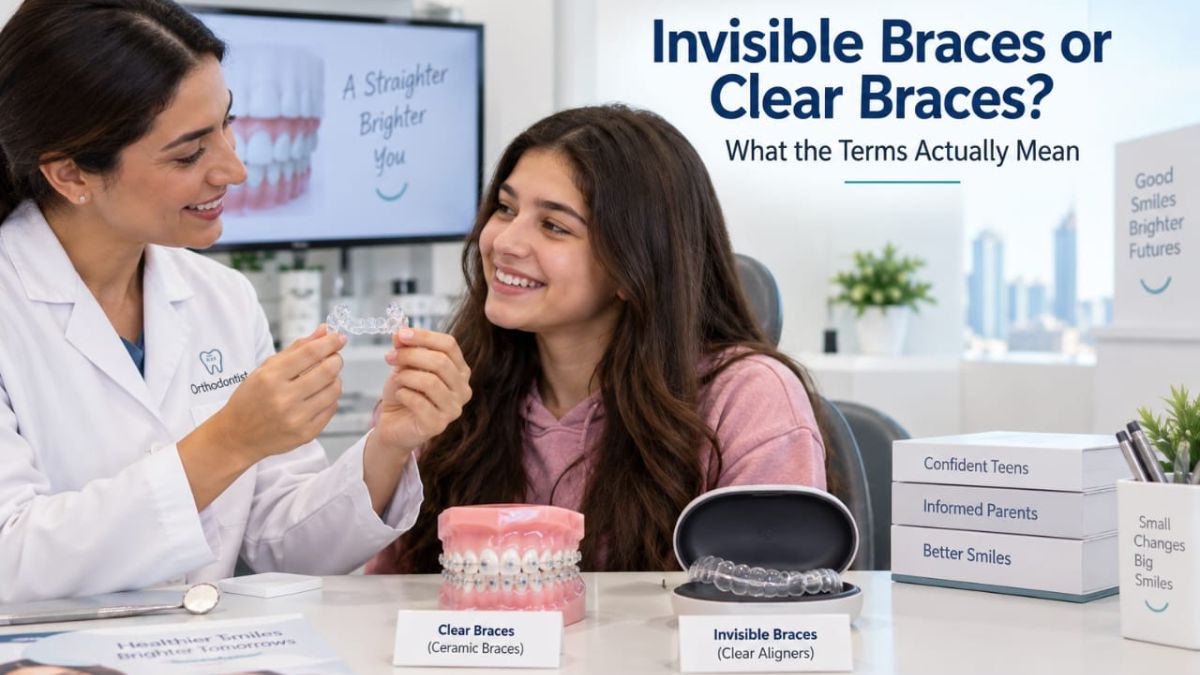
Two patients arrange appointments in the same week and in each case ask for invisible braces. One of them turns up hoping to have removable trays which she can take out at dinner; the other envisions having small tooth-coloured brackets bonded to his teeth since a colleague had described them as invisible. In neither case are they mistaken about what they have read online; they have simply used a term which has different meanings for different people.
The confusing situation has been caused by marketing language, since the terms clear braces, invisible braces and invisible teeth braces are used loosely on websites and social media, whether referring to the same product or to three completely different systems. It is helpful to clarify the vocabulary before the consultation, as this avoids the unpleasant scenario in which the plan on screen differs from your original idea.
Why the Two Terms Get Mixed Up
These are not strict clinical categories; the orthodontist considers appliances that are fixed and those that are removable, and among fixed appliances he takes into account the material of the bracket, while patients think about what people will notice.
Both descriptions are reasonable; however, problems arise when a website designed for the second group of people is read as if it were using the first kind of vocabulary. For example, a clinic that uses ceramic brackets could promote them as invisible braces since they match the enamel. In another case, the same phrase might be reserved exclusively for aligners. Thus, the same words have different meanings, and the patient ends up being confused when they arrive at the clinic.
Clear Braces: Fixed, Tooth Coloured, Still Braces
Clear braces are a type of fixed brace in which the brackets are made from ceramic or a similar tooth-coloured material rather than from stainless steel. Each bracket is bonded to a tooth, and an archwire passes through all of them just as it does with metal braces. The only difference is the colour, not the way they function.
Since they are fixed, they function continuously all day long without requiring you to remember anything. This is suitable for patients who are familiar with themselves and can admit that they would leave the trays in a drawer. It also means that the standard habits associated with fixed appliances apply, such as avoiding biting down on hard objects with the front teeth, cleaning carefully around each bracket, and going in for a repair if any bracket comes loose.
A point that is seldom mentioned at the beginning is this: while the brackets themselves do not stain, the small elastic straps which hold the wire can pick up stain from karak, coffee and foods that are strongly spiced. Since these straps are replaced every time the setup is adjusted, any staining is only temporary and not permanent.
Invisible Braces: Usually Removable Trays
The clear aligners that most people refer to when they talk about invisible braces or invisible teeth braces consist of a series of thin plastic trays, each one being slightly different from the one before it, which gradually shift the teeth in small stages. You have to wear each tray for a specific length of time before going on to the following one in the sequence.
Trays are provided for eating, for having drinks other than water, and for brushing. This degree of freedom is immediately attractive, but it comes with a condition: the aligners only function when they are in the mouth, and the majority of treatment plans require them to be worn throughout the day and at night. People who take them out for long lunches, coffee breaks and in the evening will discover that their teeth begin to fall behind the treatment plan.
Small tooth-coloured attachments are usually bonded onto some of the teeth so that the tray has something to hold on to; they remain in place during treatment and can be seen up close, a sight that surprises some patients who had expected to see nothing on their teeth.
Lingual Braces: The Genuinely Hidden Option
Braces can also be attached to the inner surfaces of the teeth, the ones that face the tongue. Unlike any other type, lingual braces are the only ones that are completely out of sight during ordinary conversation since there is nothing visible on the outer surface.
This type of brace is suitable in some situations and for certain professions, especially among those who have to give presentations or make public speeches. It takes longer to get used to than with outer braces, and the way one speaks may seem different for the first few weeks, while cleaning requires some practice. Since it is not appropriate in all cases, this option is discussed rather than taken for granted.
How Visible Is Each One in Real Life
Honest expectations are useful in this situation; when people are at a conversational distance, they can see the braces if they look at your teeth, although this is much less obvious than the case with metal braces in photographs. Aligners sometimes catch the light, and most people fail to notice them altogether until they are told. Lingual braces remain out of sight from the front.
If you look closely, all three can be identified. A colleague sitting next to you at lunch will probably notice the ceramic brackets or the aligner attachments. People who hope to achieve complete invisibility in all circumstances are likely to be disappointed, no matter which system they select.
Removable or Fixed: The Choice That Changes Your Day
This one question affects daily life more than looks do.
No matter whether you have metal braces or ceramic ones, they require nothing of your memory since they stay in place by themselves. Moreover, they do introduce food restrictions which last throughout the whole course of treatment and make brushing more time-consuming since it has to be done around the brackets and wires.
Since the trays can be removed, eating remains completely normal, and cleaning your teeth is just as easy for the same reason. Instead, what they require is discipline and a routine, such as brushing your teeth before putting the trays back in, carrying the case, and accepting that the treatment will be put on hold if the wear time is missed.
Neither approach is superior in the abstract. The better question is which one fits the way you actually live rather than the way you intend to live.
What Your Case Allows
The importance of preference should not be overlooked, nor should that of the type of bite. Some dental movements are dealt with more reliably by the use of fixed appliances, especially when it comes to significant rotations, teeth that have to be moved through the bone, and certain adjustments to the bite. Although aligner treatment has become much more capable in what it can achieve, in some cases both methods are used, beginning with one system and ending with another.
The orthodontist will work out which system is suitable for you based on a clinical examination, making use of radiographs when necessary and a digital scan of your teeth. Before this evaluation has been carried out, any statement as to which system is appropriate for you is purely speculative.
Metal braces should be included in this discussion rather than be treated as the outdated choice. Steel brackets are now smaller than they were one generation ago; they reliably cope with demanding movements and do away with any concern about wear time. Many teenagers prefer them, since the coloured ties allow them to make the appliance their own. A good number of adults also go for them when they compare the degree of visibility with the simplicity of an appliance that doesn’t require daily care. Discretion is just one of several factors, and in some instances it turns out not to be the one that decides the matter.
Questions Worth Asking at the Consultation
Find out which specific system is in question and whether it is a fixed one or one that can be removed. Ask to have the planned movements displayed on screen. Find out how many appointments the plan anticipates each year, as this will affect your travel and working schedules. Discover what occurs if a bracket comes loose or the tray is lost while you are overseas. Make clear what retention involves afterwards, since teeth have a tendency to drift even if the appliance used to move them was different.
There is no cost in writing them down in advance and the result is usually a clearer conversation.
Conclusion
Braces that are visible and those that are invisible are not just different names for the same thing; clear braces consist of tooth-coloured brackets, while the other type usually refers to removable aligner trays, and lingual braces represent a third alternative by being positioned behind the teeth. All of these options have real advantages and straightforward compromises when it comes to visibility, the need for discipline, cleaning, and suitability for a particular case. If you know the difference between them when you come for your consultation, you will be in a much better position to ask appropriate questions and to identify the right one when the orthodontist explains it.
Contact Us
Magnum Dental Clinic welcomes patients seven days a week across Dubai.
- Dubai Silicon Oasis, SIT Tower: +971-54-336-3340
- Jumeirah Village Circle, Arcadia Tower: +971-50-719-3374
- Arjan, Al Barsha South: +971-55-890-8653
- Jumeirah Lake Towers, Indigo Tower: +971-54-452-2332

Finding a clinical trial can feel like a major task, especially when health decisions already involve a great deal of information. A practical starting point is to define what you hope to find, then review opportunities from several sources, including Amgen clinical trials, health care providers, research hospitals, and public study registries.
Clinical trials are designed to answer questions about health interventions or care strategies. They can offer an opportunity to contribute to research, receive study-related monitoring, or consider an option that is not widely available. They are not, however, a promise of personal benefit, treatment success, or a cure. Discussing potential studies with a qualified health care professional can help put the possible benefits and uncertainties in context.
Why People Consider Clinical Trial Participation
People explore trials for many different reasons. Someone may want to help advance understanding of a condition, learn whether a study may fit alongside their current care, or support research that could help future patients. Some studies also need healthy volunteers, depending on the question being researched.
Personal goals matter, but they should be balanced with the study’s requirements and possible risks. A trial might involve an investigational product, standard care, a placebo, comparisons between approaches, or observation without a new treatment. The research team should explain what participants may receive and what remains unknown before enrollment.
Where To Search For A Clinical Trial
Start broadly, then narrow your results using a diagnosis, symptom, treatment type, age range, and location. The public listings on ClinicalTrials.gov can help people search by condition, recruiting status, distance, age, and treatment. A listing is a starting point for a conversation, not a final determination that someone can participate.
Useful Search Filters
- Condition, diagnosis, or health concern
- City, state, ZIP code, or preferred travel distance
- Recruiting or not-yet-recruiting status
- Age range and, when applicable, sex
- Study type, such as treatment, prevention, or observational research
- Intervention category, including medicines, devices, procedures, or behavioral programs
- Whether the study accepts healthy volunteers
How To Read A Study Listing
Do not make a decision from the study title alone. Titles can be technical or broad, while the details explain what researchers are actually studying. Read the brief summary, then look for the purpose, participant criteria, locations, contact details, and estimated timeline.
- Read the short summary and identify the main research question.
- Confirm the study’s current status and whether enrollment is open.
- Review the intervention, comparison group, or observation plan.
- Check the main inclusion and exclusion criteria.
- Look for the expected number of visits, study duration, and follow-up period.
- Save the study contact information and the study identification number for later conversations.
Eligibility Rules And Screening
Eligibility criteria usually include both inclusion criteria, which describe who may be able to join, and exclusion criteria, which describe factors that may prevent enrollment. These can involve age, diagnosis, disease stage, previous treatments, current medications, laboratory results, pregnancy status, or other health factors.
Online criteria are not a self-diagnosis tool. A person may seem eligible based on a short description but be excluded after the research team reviews medical records, performs tests, or asks additional questions. Be accurate about medications, past treatment, allergies, and health history. Complete information helps the team make a safer and more reliable screening decision.
Questions To Ask The Research Team
- What is the study trying to learn?
- What would I need to do each week or month?
- How many in-person, remote, or follow-up visits are expected?
- Which tests, scans, blood draws, injections, or procedures are involved?
- What risks, discomforts, and possible side effects are known?
- Could I receive a placebo, standard care, or an investigational option?
- How might participation affect my current treatment plan?
- Which travel, parking, or study-related expenses may be reimbursed?
- Who should I contact for urgent health concerns?
- What happens if I choose to stop participating?
Informed Consent In Plain Language
Informed consent is more than signing paperwork. It is an ongoing discussion in which the research team explains the study’s purpose, procedures, foreseeable risks, potential benefits, alternatives, privacy practices, and contact information. The FDA explains that participation is voluntary and that a study should be explained before a person agrees to join.
Take time to read the materials and ask for plain-language explanations of anything unclear. Consider bringing a family member, caregiver, or trusted support person to an appointment. You can also ask your regular clinician to help you understand how the study may relate to your existing care.
Practical Costs And Time Demands
A study can involve more than the intervention itself. Think through travel, parking, time away from work or school, child care, electronic diaries, phone calls, dietary instructions, and unexpected follow-up visits. Ask the site which costs are paid by the study, which may be reimbursed, and which could remain your responsibility.
Personal Planning Checklist
- Estimate round-trip travel time for every scheduled visit.
- Review work, school, family, and caregiving responsibilities.
- Ask whether a support person should attend any appointments.
- Keep an updated list of medications, supplements, conditions, and clinicians.
- Find out how missed visits and schedule changes are handled.
How To Compare Two Or More Trials
Create a simple written comparison for each study. List the location, study purpose, eligibility requirements, visit schedule, procedures, possible risks, expected costs, reimbursement policy, and contact person. Then compare the same points across each option rather than choosing based on a study title or the speed of enrollment.
- Remove studies that are closed or clearly do not fit your needs.
- Prioritize studies within a realistic travel range and schedule.
- Compare the demands and procedures, not only the possible treatment.
- Discuss risks and alternatives with a health care professional.
- Contact the strongest options and ask a consistent set of questions.
Common Mistakes To Avoid
- Assuming a trial will provide a direct health benefit.
- Confusing recruiting studies with studies that are completed or not yet open.
- Leaving out medications, prior treatments, or relevant medical history during screening.
- Agreeing before reviewing the consent materials carefully.
- Overlooking travel, time, missed work, and follow-up requirements.
- Stopping current treatment without speaking with a health care professional.
When A Trial May Not Be The Right Fit
Declining a study can be a thoughtful and appropriate choice. The visit schedule, testing, uncertainty, travel, risks, or impact on everyday life may not fit your circumstances. Saying no does not mean you are giving up on your health or failing to support medical progress. It means you are making a decision based on your needs and priorities.
A Simple Decision-Making Worksheet
- Study purpose: What question are the researchers trying to answer?
- Personal goal: What do I hope to learn, receive, or contribute?
- Main demands: What visits, tests, and tasks are required?
- Main concerns: Which risks or unknowns need clearer answers?
- Support plan: Who can help with transportation or appointments?
- Next step: What is my most important question for the study team?
Conclusion
Finding a clinical trial is only the first step. Careful review of the study details, direct questions for the research team, and guidance from a trusted health care professional can help you decide whether an opportunity fits your health needs, schedule, and comfort level in 2026.

After an accident, seeking medical attention is one of the most important steps you can take. Even if injuries seem minor, some conditions may not produce immediate symptoms and can worsen without proper evaluation.
Visiting an accident doctor shortly after an incident allows medical professionals to identify hidden injuries, document your condition, and recommend appropriate treatment. An injury check-up also creates medical records that may be important for insurance claims and legal matters.
Why an Immediate Medical Evaluation Matters
Many accident victims assume they are unharmed because they do not feel pain right away. However, conditions such as whiplash, concussions, soft tissue injuries, and internal trauma may take hours or even days to become noticeable.
Prompt medical care can help detect these injuries before complications develop. Early diagnosis often leads to more effective treatment and a smoother recovery process.
Reviewing the Details of the Accident
A medical check-up typically begins with a discussion about the accident. The healthcare provider may ask how the incident occurred, what parts of the body were impacted, and whether any symptoms have appeared since the event.
Providing accurate information helps the doctor understand potential injury patterns. This information also assists in determining which diagnostic tests may be necessary.
Discussing Symptoms and Medical History
During the appointment, patients are usually asked about their current symptoms and prior medical conditions. Symptoms may include headaches, dizziness, neck pain, back pain, numbness, or difficulty moving certain body parts.
The doctor may also review previous injuries and ongoing medical concerns. Understanding a patient’s medical history helps distinguish accident-related injuries from pre-existing conditions.
Performing a Physical Examination
A thorough physical examination is a key component of an accident injury check-up. The doctor evaluates areas affected by the accident and looks for signs of trauma.
This examination may include checking range of motion, muscle strength, reflexes, swelling, bruising, and tenderness. The findings help determine whether additional testing is needed.
Ordering Diagnostic Tests
Depending on the nature of the accident and the symptoms reported, diagnostic imaging may be recommended. Common tests include X-rays, CT scans, and MRI studies.
These tests allow healthcare providers to identify fractures, soft tissue damage, spinal injuries, and other conditions that may not be visible during a physical examination. Accurate diagnosis is essential for creating an effective treatment plan.
Creating a Treatment Plan
Once injuries are identified, the doctor develops a treatment strategy tailored to the patient’s needs. Treatment recommendations vary depending on the severity and type of injury.
The plan may include medication, physical therapy, chiropractic care, specialist referrals, or follow-up evaluations. Patients are often given instructions on managing symptoms and preventing further injury.
Documenting Injuries and Medical Findings
Medical documentation serves an important purpose following an accident. Healthcare providers record examination results, diagnoses, treatment recommendations, and patient complaints.
These records may become valuable evidence if insurance claims or legal disputes arise. Accurate documentation helps establish a clear connection between the accident and the injuries sustained.
Scheduling Follow-Up Care
Recovery does not always occur after a single visit. Many accident-related injuries require ongoing monitoring and treatment.
Follow-up appointments allow doctors to evaluate healing progress and adjust treatment plans when necessary. Consistent medical care can improve long-term outcomes and reduce the risk of chronic pain or complications.
Legal Considerations Following an Accident
Medical records often play a significant role in personal injury claims. Seeking prompt treatment demonstrates that the injured person took reasonable steps to address their injuries.
Depending on the circumstances, state laws may affect how injury claims are handled. For example, California Code of Civil Procedure § 335.1 establishes the statute of limitations for many personal injury claims, while California Vehicle Code § 20008 requires reporting certain injury-related traffic accidents to authorities.
Key Takeaways
- An accident injury check-up helps identify both visible and hidden injuries.
- Early medical evaluation can improve treatment outcomes and recovery.
- Doctors review accident details, symptoms, and medical history.
- Physical examinations and diagnostic tests are commonly used to assess injuries.
- Treatment plans may include medication, therapy, referrals, and follow-up care.
- Medical documentation can be important for insurance and legal claims.
- Follow-up visits help monitor recovery and adjust treatment as needed.
- Relevant statutes include California Code of Civil Procedure § 335.1 and California Vehicle Code § 20008.
-

 NEWS1 year ago
Historical Churches in Manila
-

 TOPIC2 months ago
Unveiling AvTub: Your Ultimate Guide to the Best AV Content
-

 TOPIC1 year ago
Symbols of Hope: The 15th Belenismo sa Tarlac
-

 TOPIC1 year ago
RIZAL at 160: a Filipino Feat in Britain
-

 TOPIC1 year ago
“The Journey Beyond Fashion” – Ditta Sandico
-

 TOPIC1 month ago
Understanding Fascisterne: Origins and Ideological Roots
-

 TOPIC1 year ago
Simbang Gabi and Kakanin
-

 TOPIC1 year ago
5 Must-Have Products From Adarna House to Nurture Your Roots