
BUSINESS
Future-Proofing Business Networks for the Hybrid Workforce

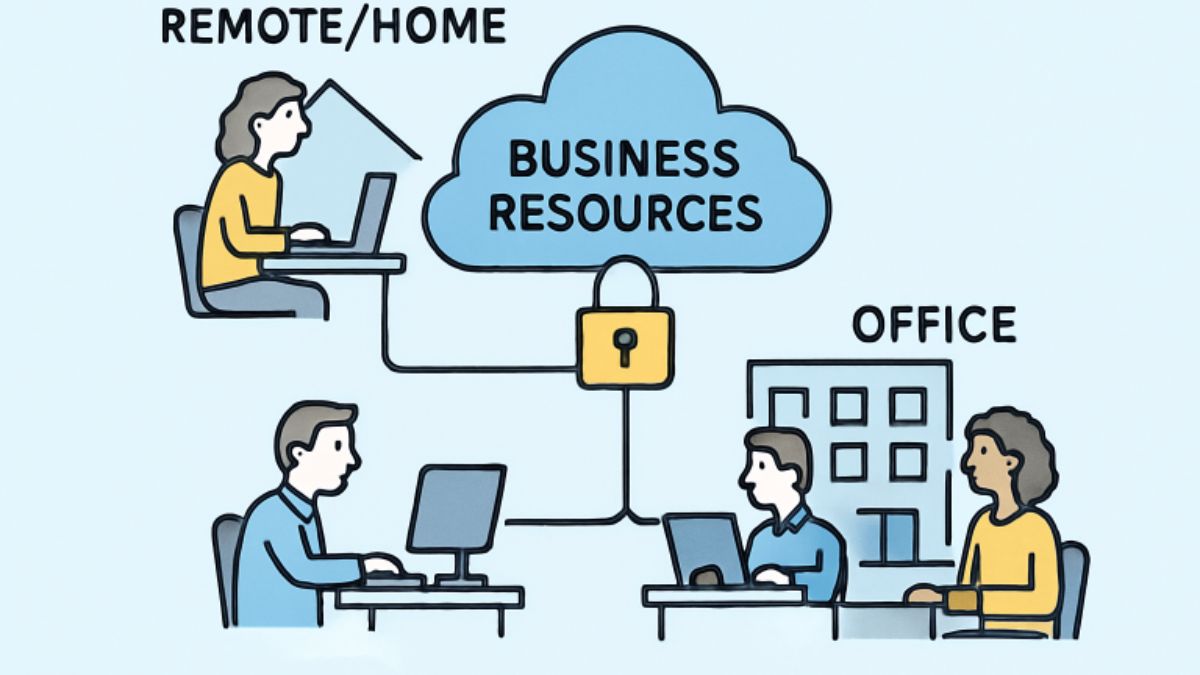
The evolution of hybrid work has completely redefined operational norms for businesses worldwide. Organizations across various industries are seeking a careful balance between flexibility and productivity, as employees now expect the freedom to work from more than just the office. The infrastructure supporting the hybrid workforce must therefore become more robust and adaptable than ever before, enabling seamless transitions between remote and in-office work. As the lines between traditional workspaces and home offices blur, companies face the dual challenge of integrating employees working across multiple locations while maintaining network reliability, performance, and—crucially—security. Understanding what is SASE? has become a pivotal step in safeguarding and optimizing modern business networks, ensuring both continuity and safety.
Establishing a network capable of withstanding new and emerging connectivity challenges requires the adoption of advanced technologies, but also demands a profound reimagining of security, user experience, and scalability principles. Businesses need to move beyond traditional methods and adopt dynamic strategies that adapt to the evolving needs of their workforce. By making smart investments in both technology and operational processes, organizations position themselves to remain competitive and resilient in a rapidly changing and digitized world. With these foundational shifts, enterprises can meet both present challenges and future demands efficiently.
Understanding the Hybrid Workforce
The hybrid workforce represents a blend of remote and on-site employees, creating dynamic and agile business operations. These modern work arrangements, driven by technological advances and shifting employee expectations, can foster improved work-life balance while also enhancing overall productivity. With staff members connecting from diverse settings—be it from their living rooms, coworking spaces, or the office—the conventional constraints of workplace geography are rapidly fading. However, this geographically dispersed configuration introduces new complexities regarding consistent connectivity, real-time communication, and secure access to critical business resources from any location.
For businesses, securing seamless collaboration and productivity requires crafting network environments explicitly designed to handle multiple modes of work. Systems must enable rapid access to both cloud-based assets and sensitive internal systems, all while upholding strict information security and compliance standards. Ensuring that every employee enjoys a reliable, secure, and intuitive digital experience is crucial for maximizing the benefits of a hybrid work model and retaining top talent in a competitive market.
Key Challenges in Hybrid Networking
As businesses embrace hybrid work, they encounter a unique set of obstacles in sustaining cohesive and efficient digital operations:
- Security Risks: The proliferation of devices and endpoints outside traditional workplace perimeters significantly increases the company’s vulnerability to cyber threats, including phishing, ransomware, malware, and unauthorized data access. Keeping every device and connection secure, regardless of location, is more challenging than ever.
- Connectivity Issues: Remote employees often rely on inconsistent and sometimes unreliable network qualities at home, in coffee shops, or public hubs, which can degrade both performance and user experience. Network outages or slow speeds can disrupt critical workflows, hampering productivity.
- Resource Management: Balancing workloads and allocating network bandwidth for business-critical applications requires ongoing oversight, particularly as usage fluctuates throughout a typical workday. IT teams must continuously manage resources to prevent bottlenecks and ensure mission-critical applications remain accessible.
Without proper planning and proactive measures, these challenges can lead to operational inefficiencies, employee frustration, and in the worst case, compromise of sensitive corporate data. Companies must adopt a holistic approach to overcome these hurdles, integrating technical and managerial solutions to safeguard both users and assets.
Implementing Advanced Network Technologies
Leading organizations are combating hybrid networking challenges by deploying next-generation technologies specifically designed to deliver the speed, scale, and flexibility required for today’s dynamic work environment:
- Wi-Fi 6E: This advanced wireless standard expands the available spectrum, reducing device congestion and supporting a new generation of high-bandwidth business applications. With lower latency and substantially increased capacity, Wi-Fi 6E enables uninterrupted collaboration and faster data transfers, especially as growing device counts strain older networks for more on the business benefits and adoption of Wi-Fi 6E.
- 5G Integration: The rollout of 5G networks grants businesses access to wireless connections with ultra-fast speeds and minimal lag. This breakthrough benefits not only mobile and field workers but also improves the experience in underserved office locations. As 5G continues to expand, enterprises gain the bandwidth and reliability previously only possible with wired connections.
Enhancing Security Measures
Security must remain at the forefront when transitioning to hybrid architectures. As network perimeters become increasingly porous, businesses require multi-layered, adaptive defenses to protect data and users, no matter where work is being done:
- Zero Trust Network Access (ZTNA): ZTNA reimagines traditional trust models by enforcing authentication and authorization for every user and device at every login attempt. By abandoning the notion of implicit trust within the network, ZTNA helps prevent attackers from moving laterally even if they breach one endpoint.
- Secure Access Service Edge (SASE): SASE unifies networking and security solutions in the cloud, enabling decentralized, policy-driven control and consistent protection across all devices. By centralizing policy management, SASE eliminates security silos and closes protection gaps, empowering businesses to manage large, distributed workforces securely.
With cyberattacks growing in both frequency and sophistication, leveraging solutions that continuously validate and authenticate every user and connection is more than a trend—it’s a necessity.
Prioritizing User Experience
The ultimate success of a hybrid workforce depends on employees being able to work efficiently, regardless of their location. Addressing the user experience not only keeps teams productive, but also encourages engagement and reduces turnover:
- Unified Communication Tools: Integrated platforms offer secure chat, video conferencing, document collaboration, and file sharing in a single interface. These tools remove friction from workflows, make teamwork intuitive, and help employees maintain strong interpersonal connections, even remotely.
- Performance Monitoring: The adoption of real-time monitoring tools enables IT teams to track network health, quickly identify performance issues, and proactively address bottlenecks. Well-monitored networks foster a smoother, higher-quality work experience by minimizing downtime and ensuring accessibility issues are resolved.
When businesses make seamless digital collaboration a cornerstone, they create environments where employees can focus on contributing their best, no matter their physical location.
Investing in Scalable Infrastructure
A future-ready network must be able to evolve in tandem with business growth, changing use cases, and shifting workforce dynamics. Building in this flexibility is crucial for reducing disruptions and establishing a strong foundation for continued success:
- Cloud-Based Services: Adopting cloud platforms enables organizations to rapidly scale application deployments and resource utilization, thereby lowering upfront capital expenditures and simplifying management. Cloud infrastructure offers powerful agility and supports global operations by making data and applications available from any location, at any time.
- Modular Hardware: Deploying modular, easily upgradable network hardware enables organizations to expand their digital infrastructure incrementally, allowing for seamless growth. Rather than overinvesting in capacity, businesses can align their spending with growth, maintaining performance without incurring unnecessary expenses.
Continuous Monitoring and Optimization
Building a resilient hybrid network demands more than simply installing the right equipment and tools at the outset. Ongoing monitoring, analysis, and intelligent automation help organizations stay aligned with fluctuating business demands, emerging threats, and evolving work patterns:
- Network Analytics: Leveraging analytics to analyze network traffic and monitor real-time user patterns enables organizations to identify bottlenecks, forecast future requirements, and take preemptive action to avoid service interruptions or performance dips.
- Automated Management: Intelligent automation technologies permit dynamic resource allocation, load balancing, and rapid response to changes in workforce activity. Automation substantially reduces manual intervention, speeds up incident responses, and ensures networks adapt in real-time.
This continuous feedback loop ensures the network remains not only functional but also highly optimized for the needs of both the business and its users.
Conclusion
Meeting the demands of a hybrid workforce requires strategic investments across technology, security, and user-centric processes. By adopting advanced solutions such as Wi-Fi 6E, 5G, and SASE, alongside rigorous monitoring and a scalable, modular infrastructure, companies can ensure their networks remain resilient, secure, and fully prepared for the demands of the modern era. These steps are fundamental to ensuring operational continuity and empowering organizations to thrive as the very nature of work continues to evolve.


On August 7, 2026, Abelardo de la Espriella was sworn in as President of Colombia, beginning a four-year term that runs to 2030. He campaigned on lower taxes, a smaller state, and a friendlier climate for investment, and that agenda is now taking shape. If you are a foreign national, an expat, or an investor with money or plans in Colombia, the changes his government has proposed could affect what it costs, and how much paperwork it takes, to do business here.
Before we get into the details, one thing is worth being honest about: almost none of this is law yet. A Colombian president cannot rewrite the tax code on his own. The government’s flagship tax reform is not expected to reach Congress until September 2026, and even then it has to pass a legislature that came out of the March elections badly split. So read what follows as the direction things are heading, not a rulebook that is already in force.
A new approach: “less tax, more jobs”
The campaign boiled its economic pitch down to a slogan, “menos impuestos, más empleo,” or “less tax, more jobs,” built around the idea of making Colombia more competitive for both local and foreign capital. The goal, as the new government describes it, is to take weight off the productive sector, bring in private investment, and push more of the workforce into formal employment.
That is a real break from the outgoing Petro government, which filed its own tax reform aiming to raise close to 21.9 billion pesos through higher rates and a wider wealth tax. De la Espriella’s team has come out against that reform and wants Congress to shelve it. It is a point worth keeping straight, because the Colombian press is covering two tax reforms at once that pull in opposite directions, and it is easy to mix up whose is whose.
Fewer taxes, less paperwork
The heart of the new plan, laid out by designated Finance Minister Miguel Gómez, is simplification. Right now the tax authority, the DIAN, administers around 15 national taxes. The proposal would cut that down to three: income tax, domestic VAT, and external VAT.
The thinking is that decades of patched-together rules have made compliance expensive, opened the door to evasion, and mostly rewarded the people who can afford good advisors. Officials have pointed to evasion running at roughly a third on VAT and around 40 percent on income tax as proof the current setup is not working. A simpler system, they argue, is easier for a business to comply with and easier for the state to police.
Stability and a bill aimed at foreign money
Two ideas stand out if you invest across borders.
The first is a tax stability pact: a promise to leave the tax rules untouched for about ten years. Colombia reforms its tax code often, and that unpredictability is its own kind of cost. For anyone planning around a five or ten year horizon, knowing the rules will not move can matter as much as the rate itself.
The second is a dedicated bill to attract foreign investment, meant to win back investor confidence with simpler rules and fewer tax distortions. If it lands the way it has been described, this is the piece of the agenda that speaks most directly to foreign-owned businesses and international investors.
Corporate tax, the 4×1000, and targeted breaks
On actual rates, things are less settled. Corporate income tax currently sits at 35 percent, and the wider debate, including among former finance ministers, has floated bringing that back toward 30 percent. The catch, as most serious voices point out, is that a cut like that would need to be paid for by trimming existing tax breaks, so expect this to be one of the more contested parts of any bill.
The campaign also promised to phase out the 4×1000 financial transactions tax, and floated a few targeted measures: a simplified regime for the digital economy, meaning programmers, developers and digital creators, plus tax incentives for companies that formally hire women and young people entering the workforce.
Cutting red tape
Away from taxes, a lot of the agenda is about deregulation and shrinking the state. That includes a review of the big regulators, Invima, the ICA, the superintendencies and environmental licensing, with the aim of speeding up approvals. It also includes a broader push to reduce the size of the state and merge overlapping agencies, much of which would have to run through the National Development Plan because it needs legislation to happen. On day one, the government also moved to freeze public spending so the fiscal squeeze runs alongside the tax overhaul.
For a business owner, the promise is lighter regulation and faster procedures. How much of that shows up in practice depends on the laws that pass and on how the agencies actually behave once they are told to change.
The catch
A few things keep this from being a done deal.
Timing is one. The government has said its first move is an administrative belt-tightening plan, with the formal tax reform coming in September. Nothing changes just because a new president has taken office.
Congress is another. The March elections left the legislature fragmented, with no clear majority behind the new administration. Lower rates, a smaller state, a stability pact: all of it needs votes that are not guaranteed.
And then there is the math. Analysts note Colombia is looking at a fiscal adjustment of around five points of GDP by 2030. That sits awkwardly next to a promise of lower taxes, and it is fair to ask how deep any cuts can really go without something to offset them.
What to do about it now
For expats, foreign nationals and investors, the sensible move is to plan for change without betting on headlines. The direction is pro-business and focused on simplification, but the details that actually matter, the rates, the thresholds, the transition rules, will not be clear until a bill is on the table, probably from September onward.
Now is a good time to look hard at your Colombian tax exposure, your corporate structure and your investment plans with local counsel who can tell you how a reform like this would hit your particular situation. A firm that works with English-speaking foreign nationals and investors in Colombia, like Stanford Baker & Associates, can help you read the changes against your own circumstances and stay ahead of the legislative calendar.
This article is for general information only and is not legal or tax advice. The proposals described here can change and need approval from the Colombian Congress before they take effect.

Moving commercial freight between Toronto and the United States involves more than booking a truck and setting a delivery date. Each shipment depends on accurate information, appropriate transportation capacity, customs preparation, and coordination among several parties.
For manufacturers, importers, exporters, and other Ontario businesses, many freight disruptions can be reduced through decisions made before the shipment reaches the loading dock. Effective cross-border freight Toronto planning starts with understanding what is being shipped, how it should move, and what needs to happen before the carrier arrives.
Start With Complete Shipment Information
Reliable freight planning begins with accurate shipment details. Before requesting transportation, a business should have a clear picture of the freight itself, including its dimensions, weight, number of handling units, packaging, and destination.
Freight classification and commodity descriptions may also be important, particularly for less-than-truckload shipments and customs documentation. Incomplete or inconsistent information can create problems later, from unsuitable equipment to documentation questions at the border.
Businesses should also identify any special handling requirements early. Freight that is fragile, unusually sized, temperature-sensitive, or subject to specific transportation rules may require different equipment or additional preparation.
This information should be consistent across internal records and the documents provided to carriers, brokers, customs professionals, and receiving facilities. Establishing a standard process for collecting shipment information can help prevent small administrative errors from becoming transportation delays.
Choose the Freight Mode Around the Shipment
Not every cross-border shipment requires the same transportation method. Shipment size, delivery requirements, route, frequency, and handling needs should guide the choice between full truckload and less-than-truckload service.
Full truckload transportation can make sense when a shipment occupies most or all of a trailer, requires more direct movement, or has handling considerations that make consolidation less practical. LTL freight Canada services allow smaller shipments to share trailer capacity, which can be appropriate when a business does not need an entire truck.
The decision should consider more than shipment weight. Businesses also need to account for pickup and delivery appointments, border requirements, expected transit time, and the consequences of delays.
Transportation support should therefore be evaluated according to the actual shipping profile. For example, Robin Transportation Systems Inc. provides land freight services in Toronto that illustrate the type of road freight support businesses may consider when comparing options based on shipment size, route, timing, and cross-border requirements.
The objective is to match the transportation arrangement to the freight rather than selecting a service first and trying to make the shipment fit it.
Prepare for Customs Before Pickup
Customs preparation is a central part of Canada-US freight shipping. A truck may be physically ready to move, but missing or inaccurate information can interrupt the shipment once border processing begins.
Businesses should confirm which commercial and customs documents are required for their shipment and make sure the information is complete before pickup. Product descriptions should be specific, values should be accurate, and the relevant parties should understand their responsibilities.
Importers and exporters should also coordinate with their customs broker or other qualified customs professional when necessary. Carriers transport freight across the border, but they are not a substitute for the importer, exporter, or customs specialist responsible for ensuring that documentation and declarations are properly prepared.
A useful internal practice is to treat customs readiness as a shipment milestone. Instead of waiting until the truck is on its way to discover whether information is missing, businesses can verify documentation before releasing the freight.
Build Realistic Transit and Scheduling Plans
Cross-border trucking schedules need to account for more than highway travel time. Loading appointments, traffic, border processing, driver schedules, terminal activity, weather, and receiving hours can all affect when a shipment arrives.
A delivery plan that leaves no room for normal operational variation can create unnecessary pressure throughout the supply chain. This is especially important when freight supports production schedules, customer commitments, construction projects, or inventory replenishment.
Toronto businesses can improve transit planning by working backward from the required delivery date. They can then account for pickup preparation, transportation time, customs processing, appointment windows, and a reasonable margin for potential border delays.
Recurring shipping lanes can provide useful operational information. Tracking actual pickup times, transit durations, border issues, and delivery performance can help companies develop more realistic expectations for future shipments. Over time, this makes freight planning Ontario operations less dependent on assumptions.
Keep Every Party Working From the Same Plan
Cross-border freight often involves several organizations and departments. The shipper, receiver, carrier, customs broker, warehouse, purchasing team, and customer may all have responsibilities that affect the movement.
Carrier coordination works best when responsibilities are clear before pickup. Each party should know the shipment reference information, pickup and delivery requirements, relevant contacts, and any special instructions.
Changes should also be communicated quickly. If a shipment will not be ready at the scheduled time, documentation is being corrected, or the receiving facility changes its appointment, the carrier and other affected parties need enough notice to adjust.
For businesses managing land freight Toronto routes regularly, a repeatable pre-shipment checklist can help. It can cover freight details, documentation status, transportation mode, appointments, customs coordination, and contact information without adding unnecessary complexity.
Cross-border freight becomes more manageable when businesses treat transportation as a coordinated operational process. Accurate information, appropriate freight modes, early customs preparation, realistic scheduling, and clear communication can help reduce preventable disruptions and give Toronto companies greater control over shipments moving between Canada and the United States.

Here’s something that stings: your ideal marketing hire just accepted a competitor’s offer. Not because you weren’t interested, but because your process took too long. In today’s hiring climate, speed is a strategic advantage.
And the good news? You don’t have to choose between fast and good. Businesses that nail their employer brand and process see qualified applicants increase by 2.5× while time-to-hire drops to just 14 days. That’s not a coincidence. That’s deliberate design.
What’s Actually Slowing Down Your Marketing Hires
Most hiring delays don’t come from one catastrophic misstep. They build quietly, small inefficiencies stacking up until a great candidate disappears from your pipeline and you’re left wondering where things went sideways.
Generic Processes That Weren’t Built for Marketing
Here’s the thing about standard recruitment workflows: they were never designed with marketing talent in mind. A hiring process that works beautifully for finance or operations often falls flat when you’re trying to identify a sharp brand strategist or a performance marketer who actually moves the needle. HR teams without deep marketing fluency tend to shortlist slowly, and often land on mediocre candidates by default.
The Myth That Speed Compromises Quality
This one’s worth calling out directly. The belief that hiring faster means hiring worse is largely a process problem dressed up as a philosophical concern. When businesses work with marketing recruitment agencies, they tap into pre-vetted talent pipelines that make faster AND stronger hires entirely achievable. Speed and quality only feel like opposites when your systems are broken.
Understanding where your process quietly unravels is the first real step toward fixing it.
Practical Strategies That Actually Move the Needle
Let’s get specific. Here’s what high-performing organizations do differently when they need to fill marketing roles without dragging the process into its third month.
Start With Radical Clarity on the Role
Every fast, high-quality hire starts before the job post goes live. Pull your marketing leads into the room. Review what made your last great hire exceptional. Ask what gaps slowed the team down. The tighter your candidate profile, the faster every subsequent step moves: Shortlisting, screening, and interviewing. Vague briefs produce vague candidate slates, and that costs everyone time.
Build Talent Pipelines Before You Need Them
Once you know who you’re looking for, the next advantage is having those people already partially warmed up. “Always-on” sourcing, staying active in niche marketing communities, LinkedIn groups, and specialized platforms means you’re not starting cold when a vacancy opens. This is table stakes for any serious marketing recruitment strategy. Reactive sourcing is expensive. Proactive pipelines are not.
Let Automation Handle the Repetitive Work
A healthy pipeline means nothing if your team is manually wading through CVs for two weeks. AI-powered screening and candidate scoring tools dramatically compress response times. According to SmartRecruiters, organizations using AI in their hiring process are typically 26% faster than those that don’t. Smart video interview tools also surface culture fit early, without bolting on yet another interview round.
Assess for the Actual Job, Not Hypotheticals
Speed only counts when the candidates clearing your filters are genuinely strong. Ask copywriters to write something real. Have your paid media candidates audit an actual campaign.
Bring marketing stakeholders into evaluation panels so decisions are sharper and turnaround is faster. Role-specific assessments eliminate the ambiguity that drags out final decisions.
Design Interviews That Respect Everyone’s Time
Panel formats, batch scheduling, and pre-agreed decision timelines cut out the calendar back-and-forth that quietly kills momentum. Look hard at every round you’re running. If a stage doesn’t add new information, cut it. Not as a corner-cutting measure, but as a deliberate signal that your process is well-designed.
Forward-Thinking Approaches Worth Adopting Now
Use Data to Spot Bottlenecks Before They Become Expensive
Real-time hiring dashboards let you see exactly where candidates are stalling in your funnel. Predictive analytics can reveal which candidate attributes actually correlate with strong 90-day performance in marketing roles. Gut instinct has its place, but data makes better arguments in leadership reviews.
Your Employer Brand Is Working Before You Even Post a Role
Marketing candidates are professionally skeptical of corporate messaging. They can spot a hollow “we’re a family” culture claim from a mile away. Show real projects, actual team dynamics, honest creative work across social channels. Authentic employer branding pulls qualified candidates toward you before a single application is submitted.
When Partnering With Specialists Makes Sense
Internal hiring efforts have real limits, especially when you’re scaling fast or filling niche roles. Many organizations accelerate meaningfully by working with marketing recruitment agencies, who bring pre-qualified talent pools, live market intelligence, and function-specific expertise that generalist teams simply can’t replicate. When evaluating any agency partner, hold them accountable on time-to-shortlist, offer acceptance rate, and first-year retention. Those three numbers tell you almost everything.
KPIs Worth Tracking Consistently
|
Metric |
Why It Matters |
Benchmark Target |
|
Time to Hire |
Measures process efficiency |
Under 25 days |
|
Quality of Hire |
Tracks post-hire performance |
90-day review score |
|
Offer Acceptance Rate |
Reflects candidate experience |
85%+ |
|
Candidate Satisfaction |
Identifies friction points |
Post-process survey |
Benchmarking against these regularly surfaces where your recruitment strategy needs tightening, before it costs you the candidate.
One Last Thought
Cutting time-to-hire isn’t about moving carelessly through the process. It’s about removing friction that doesn’t serve the hire, the team, or the candidate. Sharper briefs, smarter pipelines, the right automation, and strong agency relationships compound quickly. Pick one area, fix it properly, measure the result, and build from there. The organizations consistently winning the marketing talent race aren’t reckless; they’re just remarkably deliberate. That distinction is everything.
Common Questions, Answered Plainly
1. What is the 30-60-90 rule in an interview?
Candidates outline what they’ll accomplish in their first 30, 60, and 90 days. It helps you gauge strategic thinking and genuine role understanding before making a commitment either way.
2. How do you actually decrease time to hire?
Sharpen the job brief, build pipelines proactively, automate screening, and run structured panel interviews. Cutting redundant rounds, without sacrificing assessment depth, is where most organizations find the biggest gains.
3. Which parts of marketing recruitment can be safely automated?
CV screening, candidate scoring, interview scheduling, and preliminary assessments. Human judgment stays essential for portfolio reviews, culture fit conversations, and final decisions. That line matters.
-

 NEWS1 year ago
Historical Churches in Manila
-

 TOPIC1 year ago
Symbols of Hope: The 15th Belenismo sa Tarlac
-

 TOPIC1 year ago
RIZAL at 160: a Filipino Feat in Britain
-

 TOPIC1 year ago
“The Journey Beyond Fashion” – Ditta Sandico
-

 TOPIC4 weeks ago
Unveiling AvTub: Your Ultimate Guide to the Best AV Content
-

 TOPIC1 year ago
5 Must-Have Products From Adarna House to Nurture Your Roots
-

 TOPIC1 year ago
Filipino, alternative language course at Moscow State University
-

 TOPIC1 month ago
Understanding Fascisterne: Origins and Ideological Roots