
TOPIC
Pinoy Power on the Pitch

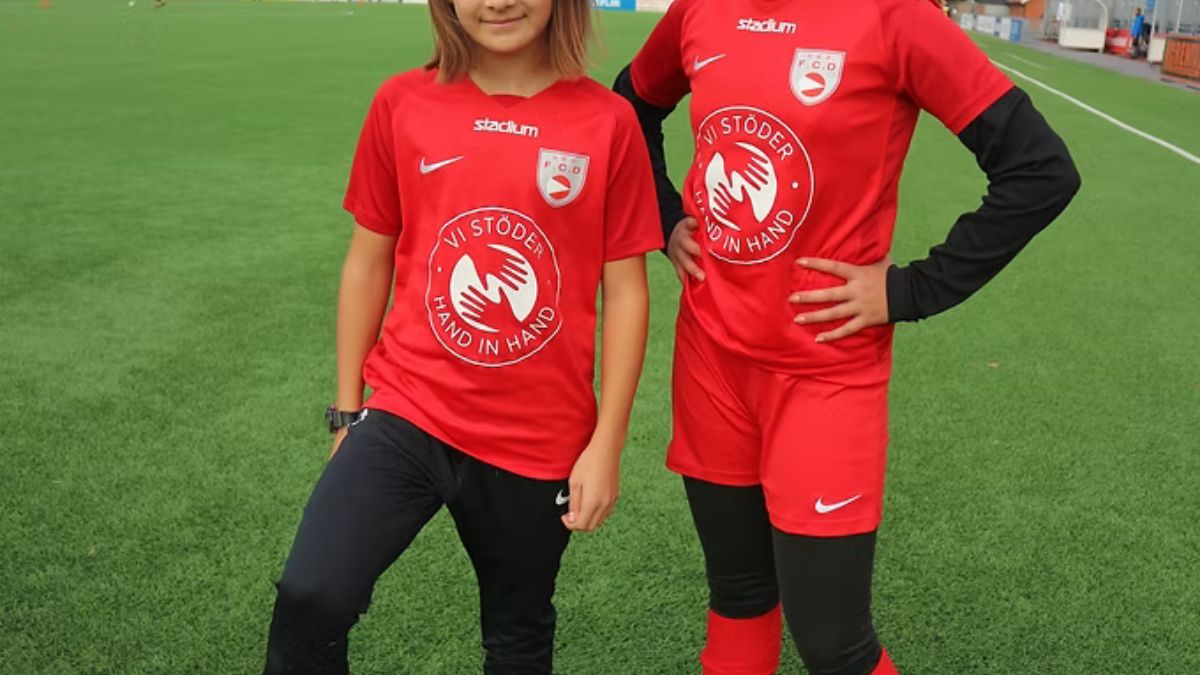
Two Filipina-Swedish soccer players pack a punch on the pitch and help their team to a first-place finish in the World Youth Soccer Cup! There’s something incredible about watching the remarkable change that occurs in children when they play team sports. One moment my daughter is lying contentedly in bed, studying YouTube videos incessantly to improve her slime-making formulas and squishy-repair capabilities, then, the call to arms is announced: “Time to get ready for the game!” and with a yawn and a stretch she’s up and starts getting ready for battle. Like a miniature Gladiator she adorns her “armor” of cleats, shin-guards and fiercely colored uniform, and rushes out onto the battleground where the transformation is complete. The team, pint-sized spitfire packages of energy, on the frontline of the dewy/snowy/frozen pitch (depending on the season in Sweden), allied in challenging foes and crushing enemies. Their individuality disappears and they morph into a single organism, moving in tandem, in a coach-choreographed dance toward, hopefully, victory. The transformation comes full circle only forty minutes later as she rests in the backseat of my soccer mom car, peaceful once again, feeding carrots to her Minecraft farm animals. The World Youth Soccer Cup winning Djursholm’s Soccer Club team F07 with their coaches. The story of the Djursholm Soccer Club girls team F07 (born in 2007 and aged 11) is a modern-day David vs Goliath. All the girls on the team come from the unique community of Djursholm (pronounced Yersh-holm), a small town with a population of just 8,800 people that lies twelve quick minutes north of Stockholm. This small team from the very small town is exceptional, and in their short career, they’ve had remarkable success against clubs from huge cities. Behind these results is the combination of a unique set of circumstances brought together to create a dream team: a physically extraordinary batch of players, each with specific expertise and natural talents in certain positions; outstanding, dedicated coaches; overwhelmingly supportive families; and a nurturing community environment. Sweden is unique in that the soccer association does not allow official scoring to be published until players are 12 years old. However, that doesn’t stop people from counting and in the end everyone still knows the victorious and vanquished team. At the 2017 unofficial National Championship Halör Cup, Djursholm F07 emerged as the best team in Sweden (although they lost the final to Denmark). Regardless, the team bullishly left the tournament scoring a total 29 goals and conceding only 1. Pretty phenomenal. Djursholm F07 was also awarded Team of the Year in 2016 by their soccer club when they won the St Erik’s Cup (the largest soccer cup in Stockholm) for their age group AND for the year older than them (they competed in both age groups at the tournaments simultaneously). In 2018, they claimed the ultimate achievement – first place at the Gothia World Youth Cup, tied with China. The Gothia World Youth Cup, most recently held in July 2018, is the world’s largest junior soccer championship and was attended by 1750 teams from 80 countries. During the week-long tournament Djursholm played against many teams but certain matches were more significant because of the magnitude of the competition. The Djursholm girls met fierce opposition in the game against JSSL Singapore, a club that is affiliated with the famed Arsenal and that hosts Asia’s largest youth soccer championship. Singapore also has the advantage of sourcing their team from a population of 5,600,000 people. Result? Little Djursholm won. Djursholm also competed against a team from Qiongzhong, China, a mountainous region known for cultivating soccer players for five generations. Apparently, years of climbing the mountains have made them incredibly fit, and their reactions and reflexes are supposed to be razor sharp. At the end of the contest Djursholm emerged victorious. Next, Djursholm met their toughest competitors so far: Shanghai’s Jinshan Xingsta, an “academy” team, which means that their school focuses strictly on soccer training and producing elite soccer athletes. They can draw on an enormous Goliath-sized population of 24,000,000 people to source the best of the best players. In complete contrast to the tiny Djursholm Soccer Club which has just one large and one small field where the team practices for 4.5 hours every week, Shanghai’s team, which trains for two hours EVERYDAY, has dozens of soccer fields at their disposal. Abi practices her powerful kicks. As mentioned earlier, the Gothia Cup and the Swedish Soccer Association do not allow results to be displayed at the girls’ age, but anyone who can count can add up the points of the matches and Djursholm emerged triumphant in a shared first place position with Shanghai’s Jinshan Xingsta. At the tournament’s close, both FC Djursholm and Jinshan Xingsta each won six matches and lost one finishing with 18 points each, an outstanding achievement against the toughest possible opposition. The final results of the 2018 Gothia World Youth Cup for girls aged 11: 1) FC Djursholm, 18 points (out of 21 possible) together with Jinshan Xingsta, 18 points, 3) JSSL Singapore, 16 points. Apart from being endowed with unique abilities, the Djursholm F07 team is also partly driven by two Swedish-Filipina players, Abigail (Abi) Fallenius and my daughter Filippa Babes Skarne, both aged 11. Abi started playing soccer at the age of 6 because her big sister Hana played and she accompanied her. Abi’s favorite thing about soccer, in addition to winning, of course, is the team spirit and the rewards that come from her physical and mental efforts including happy endorphins! Abi is the daughter of Swede Peter Fallenius and Filipina Juliet who hails from Banaue in Ifugao Province, Luzon – which is famed for its rice terraces. Juliet has lived in Sweden for 17 years and maintains Filipino traditions with the Filipino Cultural Association of Stockholm, food, music and traditional dances. Peter has been to the Philippines several times, at first for work and then with family, and has fond memories of a friend’s wedding in Nasugbo and a New Year’s Eve in Baguio. “It is a big country, a beautiful country. Lots of opportunities thanks to nice, hard working people,” says Peter. Filippa Babes started playing soccer at the age of 7, a few years after most of her teammates, but took to the game immediately. She inherits her athletic and muscular frame from her father, Filip Skarne, as well as her speed and stamina. She plays the role of striker, responsible for hammering the ball into the net. Filippa has been to the Philippines a handful of times for family occasions, most recently to watch her big sister Cloie represent Sweden as Miss Earth Sweden in the international pageant, and of course Filip was there too. Filip’s favorite place in the Philippines is a tie between the enormous private island in El Nido of our recently deceased friend Eduardo Vaca, who, when not using it privately rented it to networks worldwide to film “Survivor”, and my family’s ancestral home in the Spanish colonial town of Vigan, The Syquia Mansion, now a museum and a UNESCO World Heritage site. Filippa continues to sharpen her skills. The magic of the team is not only in the players of course: if the players are the ingredients, then the coaches are the chefs. The secret sauce of Djursholm F07 lies in the fact that it is coached by three amazing individuals, two of whom are volunteer dads: Jonus Bartholdson (father of player Fabienne), Martin Roos (father of player Mathilda) and Robert Assadkhan, who works at a bank full-time and coaches because of his love for the game. There’s a passion from these three that you can’t put a price on and a dedication that goes beyond anything you could ever find in a 9 to 5 job. I’d say it’s like having your own business: it’s a labor of love and personal pride that is with you 24-7. Coach Robert played at the elite level until he was 18 years old when he started taking coaching courses. He’s now in his 11th year as a youth coach. Robert wanted to work with children and to develop young players. “I had very good coaches myself and wanted to pay it back in a way. I knew it would develop me as a person also,” says Robert. He also shed some light on what makes this team so special. “I came back to the Djursholm club after my session in Djurgården (a prominent Swedish soccer club) and had a few offers on the table. I was offered to coach 16 and 17 year olds at the elite level, both girls and boys, but I wanted something else. I didn’t feel the thrill and motivation that I had earlier. When F07 turned up as an offer, I immediately felt my motivation come back! To work with the girls from an early stage and be able to develop and prepare them for 11–a-side games and higher levels of soccer was really appealing to me. This was a good choice as these girls are fantastic! Not only are they very talented, some of them easily the best in Sweden, but they have also given me the joy and happiness of coaching soccer again. Of course, we win a lot – and it’s fun to win – but it’s not only that: the feelings of friendship, support and always wanting to make progress and learn new things are fantastic!” Dad coaches Jonus and Martin decided together to take over the responsibilities of coaching when they saw their daughters’ team. They both volunteer their time after work and during weekends to train and coach the team. The F07 is the only team at the Djursholm Soccer Club that is being coached by dads. Coach Jonus played professional soccer as a forward in the Allsvenskan (Premier League in Sweden) for three years. “I have had many coaches during my soccer career, some really good ones, some bad ones. I am genuinely interested in helping people to grow, more than just the game itself, so when my daughter started playing matches four years ago, I offered my services to the club to take responsibility for the team. I felt I could help develop them not only as players but also as people,” says Jonus. Coach Martin Roos started his soccer career at the age of 6 and by the time he was 12 was recruited to play for Sweden’s biggest club – AIK. He played in the Junior Swedish Premier League until he, unfortunately, injured both knees at the age of 18 which was sadly the untimely end of his soccer career. He had no plans of being a children’s coach until he saw the team at their first training session and recognized their talent and potential. He and Jonus decided that they wanted to be a part of it. Not all serious training: the girls have some fun on the pitch! “First and foremost, this batch is exceptionally talented, but they also have fantastic cohesion and respect each other as individuals. Last but not least, they undoubtedly have the best coaches one can find,” Martin says with a wink. The familiar saying goes, “It takes a village to raise a child” and Djursholm, with its sleepy one-block-long main street, is a small village. In the US where I was raised, to emphasize the smallness of a place, we call it a “one traffic-light town”. Djursholm doesn’t even have a traffic light in its town center (there are a couple scattered near schools to slow cars down). People often wonder if there is something special in the water in Djursholm or is it true what the recent best-selling Swedish book about the suburb titled: “Djursholm – Making of Leaders” (Mikael Holmqvist) hypothesizes: even though the town is small, the population is mainly made up of successful industry leaders, movers and shakers – many whose families have lived there for generations – that sustain a community that raises its children to be like them, quite simply put: to be winners. Djursholm is to Stockholm what Greenwich is to New York City, and Beverly Hills is to Los Angeles: a small, tight-knit enclave of leaders that through hard work, networking and a sense of togetherness, help their children thrive. The cherry on top of the team’s remarkable success is an extraordinary level of parental involvement. Parent meetings are standing-room only events that at first occupied a conference room in the clubhouse, but now have had to move into the cafeteria for lack of space. Sidelines at away games are well represented with cheering parents, siblings and grandparents and home games, of course, even more so. The world’s greatest athletes come from very different socio-economic backgrounds (Pele from poverty, Ronaldo from poverty, the Williams sisters ‘Straight Outta Compton’ in LA, the list goes on and on) and while there is a lot to be said about how birth month can influence athletic abilities, there are always exceptions. But one thing the majority of successful athletes have in common is this: truly involved parents that encourage their children’s passion and provide a support system to help their participation in the sport. Whether driving them here and there, making sure their uniform and equipment are ready, taking part in supporting their schedules, being part of the planning, or just being on the sidelines and cheering them on to victory. Family involvement, or the lack thereof, is hugely influential and plays a significant role in the success or failure of athletes. Djursholm F07 has enormous parental involvement. At one tournament abroad last year our team had about 15 parents and siblings along and two mom team managers (myself and my amazing co-manager Marie Elmlund – mother of player Julia) with the 12 players – in stark contrast to another team that had just 2 parents with them. The convergence of all of these key advantages has provided the perfect spark for the little dream team in Djursholm and the future looks very promising. There’s talk of possibly participating in Asia’s biggest soccer cup in Singapore where they might meet teams from the Philippines, or perhaps staying closer to home and competing in Barcelona — and there’s always the chance of playing in the Gothia World Youth Cup next year. Until then, the girls will keep on doing what they do best – being kids and having fun and playing hard. As they share unforgettable moments together with their team they’re being meticulously transformed both physically and mentally every day to be victorious both on and off the field. We’ve become an extended family of sorts: coaches like extra parents, teammates like siblings, and hopefully, team managers like me and Marie, as extra moms. The coaches speak about Abi, Filippa and the Philippines: About Abi
“Abi is a well-educated player, very tough to play with 1vs1 and often has a physical advantage, very flexible in her movements.” Robert “Abi is a hardworking and intelligent player. She reads the game well, she passes well, and she has a strong breakthrough capacity coming from behind, either from a defense position or as a wing midfielder.” Jonus “Abi is a very happy and sweet girl. Her strength as a soccer player is that she is very stable, confident in stealing the ball, and is skilled at passing.” Martin About Filippa
“Our own energy source Filippa! Probably the best offensive player I have ever seen or worked with in this age. Has a natural gaze on the goal and is extremely confident and safe with the ball.“ Robert “Filippa is one of the most technically skilled players in the team and our best goal scorer. She is fast, she regains possession of the ball from the opponents a lot and is very skilled in passing and breakthroughs. She also shoots well with both feet.” Jonus “Filippa is a very happy, considerate girl with a sparkle in her eye! She is a typical striker: fast, technical, and a fantastic shot!” Martin About the Philippines:
“The Philippines is a dream vacation. I actually studied a bit about the Philippine freedom fighters Lapu-Lapu and José Rizal in my political studies.” Robert “I’d really like to go to the Philippines one day. I’ve heard from people who have been there that it is incredibly beautiful!” Martin “I would love to go to the Philippines! The climate is warm, it is a great recreational place, and there are lovely people. The economy is also picking up.” Jonus The girls speak about the Philippines From Abi
”My favorite place in the Philippines: Banaue where my mother is from, and our home in Manila My favorite food: Adobo (or as she calls it, ”Mammas special chicken”) and dried mango My favorite things to do: I’m very musical and sing in a choir and play flute. That definitely comes from my Philippine genes! The combination of sports and music/singing improves me both mentally and physically.” From Filippa
”My favorite place in the Philippines – My favorite place is the beach in El Nido and the Boracay Shangri-La My favorite food – Chicken Adobo! My favorite things to do – I love to see my family! My mother has 46 first cousins on my Lolo’s side, so I have so many relatives!” Filippa with mother Jenny and Abi with mother Juliet. About the Author Jenny Syquia Skarne is the Djursholm F07 team manager or “momager” as she prefers. “Never in my wildest of dreams did I ever envision myself being a soccer mom, and definitely not a soccer team manager, but I love it!” The Filipina-American is the daughter of the recently deceased Victor Syquia from Ilocos Sur and American Susan Syquia. Jenny lived in the Philippines for several years working as a commercial model, starring in several movies with Fernando Poe, Joey de Leon, Charlene Gonzales and Ina Raymundo, and hosting the daytime TV show Eat Bulaga. She started her writing career at Vogue in New York City working for Anna Wintour, and then founded and was Editor-in-Chief of Bride Philippines. She is the author of the soon to be released children’s illustrated book, “Cloie’s Be Yourself Style” that you can read more about at www.JennySyquia.com. Check out Filippa’s soccer YouTube channel:
Soccer Girl Filippa Skarne Learn more about the charity supported by the Djursholm Soccer Club: www.HandInHand.nu


Winter driving can put windshield wipers under far more stress than a typical rainy day. Snow can collect around the blade, ice can restrict movement, and freezing temperatures can make worn rubber less flexible. When your windshield is already dealing with road spray, slush, and falling snow, a poorly performing wiper can quickly reduce visibility.
Choosing the best winter wiper blades is therefore about more than finding a blade that fits your vehicle. Construction, windshield contact, rubber quality, and resistance to harsh weather all matter. Here are what drivers should consider before winter conditions arrive.
Why Regular Wiper Blades May Struggle in Winter
Traditional framed wiper blades contain several joints and moving parts. These designs can work well in normal conditions, but snow and ice may collect around exposed components and interfere with blade movement.
Cold temperatures can also affect aging rubber. A blade that was already beginning to wear during summer may become stiff, noisy, or inconsistent once temperatures drop.
Common winter wiper problems include:
- Streaks across the windshield
- Areas that remain unwiped
- Chattering or skipping
- Snow accumulating around the blade
- Poor contact with curved sections of the windshield
Replacing worn blades before winter can prevent many of these issues.
What to Look for in the Best Winter Wiper Blades
Durable, Cold-Weather Rubber
The wiping edge needs to stay flexible enough to follow the windshield as temperatures fall. Damaged, hardened, or cracked rubber cannot maintain consistent contact with the glass.
Inspect the edge of each blade before winter. Visible splits, rough sections, or deterioration are strong signs that replacement is due.
Beam or Contour Design
Beam and contour blades use a flexible design that follows the curvature of the windshield. Unlike conventional framed blades, beam-style designs have fewer exposed structural parts where snow or ice can collect.
They also distribute pressure along the blade instead of relying on several pressure points.
Sea Glow Enterprises offers RainFree contour and beam-style wiper blades designed to conform closely to windshield curvature and provide even wiping contact.
Consistent Windshield Contact
A winter blade needs to remain in contact with the windshield across its full wiping path.
If parts of the blade lift away from the glass, water, slush, and road spray can remain behind. This becomes especially noticeable at night, when streaks can scatter light from streetlights and approaching vehicles.
Look for a blade designed to apply consistent pressure across curved windshield surfaces.
Proper Size and Vehicle Fit
Even a high-quality blade will perform poorly if it is the wrong size.
Vehicles may use different blade lengths on the driver and passenger sides. Check your owner’s manual or an appropriate fitment guide before buying replacements.
Sea Glow’s beam wiper blade range includes multiple sizes intended for different vehicle applications, so confirming compatibility before ordering is important.
Winter Wiper Blades vs. Standard Wiper Blades
The main difference comes down to how well a blade handles cold-weather conditions.
Conventional wipers typically use an exposed metal frame with several pressure points. Beam blades instead use a frameless, flexible structure that conforms closely to the windshield. Because there are fewer exposed joints, there are also fewer areas where frozen precipitation can interfere with movement.
That does not mean every driver needs a specialized blade labeled specifically for winter use. A well-made beam or contour blade with durable rubber and reliable windshield contact can also be suitable for harsh seasonal weather.
When comparing the best wiper blades for winter, focus on construction and performance rather than the product label alone.
Signs You Need New Wiper Blades Before Winter
Do not wait until the first snowstorm to find out that your wipers are worn.
Replace or inspect your blades if you notice:
- Streaking after each pass
- Squeaking or chattering
- Skipping across the windshield
- Cracked or torn rubber
- Uneven wiping
- Sections of glass that remain wet
Wiper replacement is commonly recommended when performance declines, with Sea Glow noting that blades often require replacement within roughly six to twelve months depending on wear and conditions.
Tips to Keep Wiper Blades Working in Snow and Ice
Good blades still need proper winter care.
Clear heavy snow from the windshield before switching on the wipers. Forcing blades to move a thick layer of snow puts unnecessary strain on the wiper system.
If the blades are frozen to the glass, do not pull them loose aggressively or activate the wipers immediately. Use your vehicle’s defroster and an appropriate ice scraper to free them first.
You should also clean the windshield and wiping edges regularly. Dirt, road salt, and grime can collect on both surfaces and contribute to streaking and premature wear.
Choosing the Right Winter Wiper Blades for Your Vehicle
The best winter wiper blades are the ones that match your vehicle and perform reliably in the conditions you regularly face.
Start by checking the correct blade size. Then consider design, material quality, windshield curvature, and the amount of snow, ice, and freezing weather typical in your area.
Beam and contour designs can be particularly useful for winter because their flexible structure maintains contact across the windshield while minimizing exposed components.
Sea Glow Enterprises carries Teflon-coated RainFree contour and beam wiper blades designed for consistent windshield contact and all-weather wiping performance.
Frequently Asked Questions
Are winter wiper blades better for snow and ice?
Winter-ready blades are designed to handle low temperatures, snow, and ice more effectively. Beam and contour designs can also perform well because they have fewer exposed joints and maintain consistent windshield contact.
How often should winter wiper blades be replaced?
Replacement depends on usage, weather, storage conditions, and blade quality. Inspect them regularly and replace them when they begin streaking, skipping, cracking, or leaving sections of the windshield uncleared.
Can I use winter wiper blades all year?
Many quality beam and contour blades are designed for all-weather use. Check the manufacturer’s specifications to determine whether a particular blade is suitable for year-round driving.
Are beam wiper blades good for winter driving?
Beam blades can be a strong choice for winter because their frameless construction reduces exposed joints while their flexible structure follows the windshield’s curve.
How do I know what size wiper blades my vehicle needs?
Check your vehicle owner’s manual or a reliable blade fitment guide. Remember that the driver-side and passenger-side blades may require different sizes.
Prepare Your Windshield for Winter
Clear winter visibility starts with wiper blades that fit correctly, remain flexible, and maintain consistent contact with the windshield.
Before snow and freezing temperatures arrive, inspect your current blades for wear and replace them if performance has declined. When comparing the best wiper blades for winter, prioritize proper fit, durable construction, and reliable wiping rather than waiting until poor visibility becomes a problem.
For drivers, retailers, and businesses looking for dependable contour and beam-style options, Sea Glow Enterprises offers RainFree wiper blades in multiple sizes for a range of vehicle applications.

You woke up on a Tuesday and poured out the leftover wine before coffee. No big speech, no tearful promise, just a sudden knowing that the next pour would not taste like relaxation anymore. That counts. Most people assume readiness arrives as a dramatic bottom, but it usually shows up as a dozen small frictions that stop feeling ignorable. Here is what those look like, and how to act on them before motivation fades.
The Planning Around Your Drinking Starts Feeling Exhausting
Think about the last time you mapped your evening around alcohol. You checked whether you had enough in the house, calculated how late the store stayed open, or mentally rehearsed an excuse to leave a dinner early so you could drink in peace. When that logistics puzzle stops being a fun ritual and starts feeling like a second job, something has shifted.
This is one of the earliest and most honest signals, because it does not require you to label yourself as having a problem. You just notice that the mental overhead of maintaining your current pattern is costing more than the drinks return. The National Institute on Alcohol Abuse and Alcoholism noted in 2023 that people who successfully reduce their drinking often begin by tracking exactly how much they consume, and that act of measuring alone tends to surface how much mental space the habit occupies.
When was the last time you simply had one drink because you wanted it, not because finishing the bottle felt inevitable?
Your Sleep Quality Has Become a Reliable Barometer
You fall asleep fast after a few drinks, but you also wake at 3 a.m. with your heart knocking against your ribs. That pattern is not bad luck. Alcohol fragments the second half of your sleep cycle, so you get the unconscious part fine and miss the restorative part entirely.
Pay attention to how you feel at 11 a.m. on days after you drank versus days you did not. If the gap between those two versions of you keeps widening, your body is sending a clearer message than your brain is ready to hear. The Centers for Disease Control and Prevention reported in 2024 that regularly drinking above moderate levels disrupts sleep architecture, and this disruption compounds the longer the pattern continues.
Here is a concrete test you can run this week: pick two nights, one with your usual drinks and one without, and track your wake time, your energy at 3 p.m., and your mood during your morning commute. Write the results on your phone notes app. The difference will not be subtle.
Your Weekday Drinking Has Started Creeping Earlier
You used to laugh at the idea of a cocktail before 5 p.m. Lately, you have caught yourself pouring at 4:15 and feeling mildly defensive about it. Creep happens slowly, usually attached to a justification. It was a hard day. Everyone else was doing it on the group call. It is basically sparkling water with a splash.
That earlier start time matters less for the extra alcohol you consume and more for what it signals about your internal rules. When your own boundaries start bending without you consciously voting on them, the decision-making part of the equation is already fatigued. Those rules existed for a reason, and the reason has not gone away.
Ask yourself this: if a stranger watched your drinking for two weeks, what would they say is your actual rule versus your stated rule? The distance between those two answers is where honest self-assessment begins.
You Are Doing the Mental Math on Your Social Life
You RSVP to things with more hesitation because you are calculating how much you will want to drink there, how hard it will be to refuse a refill, and whether the host will take offense. That calculation should not be the deciding factor in whether you see your friends. When it becomes one, the drinking has quietly become the center of your social architecture.
For many people, this shows up as a mix of boredom and anxiety. You are bored of the same drunk conversations, and anxious about attending anything sober because you have not practiced it in that crowd. Both feelings are normal, and both are workable. Start by suggesting a daytime meetup instead of an evening one. Coffee dates, early hikes, or a Saturday farmers market visit remove the drinking default without requiring you to announce a life overhaul.
You might find that some friendships hold up fine without alcohol in the room, and some were only ever held together by it. Knowing which is which feels uncomfortable and also deeply clarifying.
Your Work Performance Is Telling You Something
You have not missed deadlines, so you have not considered your drinking a workplace issue. But look closer at the texture of your workdays. Are you doing your deep focus work in the morning before your head clears, then coasting through the afternoon? Are you skipping the gym or your evening walk because you drank instead, and feeling your energy slide because of it?
The Substance Abuse and Mental Health Services Administration noted in its 2023 national survey that adults who reduced their alcohol intake reported measurable improvements in daily functioning and mood stability within weeks, not months. Your concentration, your patience in meetings, and your willingness to take on hard problems are all trainable, and alcohol quietly derails that training.
Consider tracking one work metric for a month. It could be how many focused hours you complete before lunch, how often you volunteer for challenging assignments, or simply your average mood rating at 2 p.m. Compare that against your drinking days. Your career trajectory is the sum of thousands of these small daily decisions, and you already know which version of you makes better ones.
What To Do When You Recognize These Signs
If you read the sections above and felt a pulse of recognition, resist the urge to panic or to dismiss it. You do not need a label, a diagnosis, or a public announcement to make a change. You need a plan for the next 30 days.
Here is a practical starting sequence that has worked for people cutting back without necessarily stopping entirely:
- Pick a specific number of alcohol free days per week and put them on your calendar like appointments. Two is a fine starting point.
- Remove alcohol from your house for those days. Willpower is overrated when the fridge is stocked with a temptation you know you will cave to at 6 p.m.
- Prepare a replacement drink you actually enjoy, not a sad substitute. A strong ginger beer with lime, a good bitters and soda, or a tart kombucha over ice all give your hand and mouth something to do.
- Tell one person you trust what you are doing. Accountability is not about shame, it is about having someone check in on day nine when the novelty has worn off.
- Write down one concrete benefit you noticed after your last alcohol free stretch, whether it was sharper focus, better sleep, or calmer mornings. Read it before you pour.
You will likely slip up somewhere in that month. Slip ups are data, not verdicts. If you drank on a Tuesday you planned to keep dry, look at what triggered it. Stress at work? A specific friend who always offers? Boredom at 8 p.m.? That information is gold for planning the next week better.
When To Consider Professional Support
Some people can cut back with self-directed changes, and some cannot. The difference usually shows up in a simple pattern: if you set a limit and break it more than once in the same week, or if you feel physically agitated or unable to sleep when you abstain, that points toward a level of dependence that benefits from structured help.
This is not a moral failing, it is a physiological reality. Alcohol changes brain chemistry over time, and reversing that change sometimes requires more than good intentions. Outpatient programs, therapy, and medically supervised approaches exist precisely because self-management has its limits for certain patterns of use.
If you live in Massachusetts and are considering this route, options range from intensive outpatient programs to individual counseling, and many providers operate on a sliding scale or accept insurance. One example of a local provider is watersiderecovery.com, which offers outpatient treatment across locations like Westborough and Quincy. Their team can help you figure out what level of support fits your situation without requiring you to have hit some imaginary rock bottom first.
The honest truth is that earlier help is easier help. The longer a pattern runs, the more entrenched it becomes in your routines, your friendships, and your coping toolkit. Catching it at the “I think I might be ready” stage is far less disruptive than catching it at the “my body made the decision for me” stage.
Your Next Step Is Smaller Than You Think
Nobody wakes up ready to overhaul their entire relationship with alcohol in one dramatic morning. What most people actually experience is a slow accumulation of small recognitions, the kind you have just read about, until one day the friction of the old pattern finally outweighs the comfort of it.
The question is not whether you are ready to quit forever. The question is whether you are ready to test what a different version of your evenings looks like for the next seven days.
What would you do with the energy you are currently spending on planning, hiding, justifying, and recovering?
Wisdom teeth are the last set of adult teeth to develop. They usually begin to appear during the late teenage years or early twenties. While some wisdom teeth grow normally, others may not have enough space to come through the gums correctly. When this happens, the teeth can become impacted. An impacted wisdom tooth may stay completely under the gums or only partially come through. Some people experience obvious symptoms, while others may not notice anything at first. Knowing the warning signs can help you decide when it is time to schedule a dental examination. If you are considering wisdom teeth surgery, understanding the signs of impacted teeth can help you prepare for your next dental visit.
What Does It Mean to Have Impacted Wisdom Teeth?
A wisdom tooth becomes impacted when it cannot fully grow into its normal position. This commonly happens because there is not enough space in the jaw. The tooth may grow at an angle toward another tooth, lean toward the back of the mouth, or remain trapped beneath the gum and jawbone. Impacted wisdom teeth can sometimes stay unnoticed for years, but they may eventually lead to discomfort or other oral health concerns. A dental examination can determine whether your wisdom teeth are developing properly or are trapped underneath the gums.
Pain at the Back of Your Mouth
One of the most common signs of an impacted wisdom tooth is pain near the back of the mouth. You may feel pressure, aching, or tenderness behind your last molars. The discomfort may be mild at first and become stronger over time. For some people, the pain comes and goes. It may also become more noticeable when chewing or opening the mouth. Ongoing pain should not be ignored, especially if it continues for several days or regularly returns. A dentist can examine the area and determine what is causing the discomfort.
Swollen or Tender Gums
Impacted wisdom teeth can irritate the gum tissue around them. The gums near the back of the mouth may appear red, swollen, or tender. If the wisdom tooth only partially breaks through the gum, food particles and bacteria can become trapped around the opening. This may make the area more difficult to clean and can cause irritation. You may also notice that brushing near the affected tooth feels uncomfortable. Keeping the area clean is important, but persistent swelling should be evaluated by a dental professional.
Difficulty Opening Your Mouth
Another possible warning sign is difficulty opening your mouth comfortably. An impacted tooth can sometimes cause swelling or pressure around the jaw. You may notice stiffness when opening your mouth wide, chewing food, or speaking for long periods. In more noticeable cases, the jaw may feel sore near the back of the mouth. Jaw stiffness does not always mean that a wisdom tooth is impacted, but it is worth discussing with your dentist when it occurs along with other symptoms.
Bad Breath or an Unpleasant Taste
Bad breath may sometimes be connected to a partially erupted wisdom tooth. Food and bacteria can become trapped underneath the gum tissue surrounding the tooth. Since this area is difficult to reach with a toothbrush or floss, bacteria may continue to build up. You might notice an unpleasant taste in your mouth even after brushing. If regular brushing, flossing, and mouth cleaning do not improve the problem, your wisdom teeth may need to be checked.
Swelling Around the Jaw or Face
Some people with impacted wisdom teeth experience swelling around the jaw. The swelling may appear near the back of the lower jaw or along one side of the face. Mild swelling may be caused by irritation around the tooth, while more serious swelling may be connected to an infection. If swelling becomes severe, painful, or is accompanied by a fever or difficulty swallowing, you should contact a dental professional promptly. These symptoms may require quicker treatment.
Pressure on Nearby Teeth
An impacted wisdom tooth may grow toward the molar beside it. This can create pressure in the back of the mouth. Some people describe this feeling as tightness or pressure around their back teeth. The position of the wisdom tooth may also create small spaces where plaque and food can collect. Over time, these areas may become difficult to clean and could affect the health of nearby teeth. Early evaluation can help identify whether the wisdom tooth is placing other teeth at risk.
How Dentists Check for Impacted Wisdom Teeth
A dentist will usually begin with an examination of the mouth. They may check the gums, look for partially erupted teeth, and ask whether you have experienced pain or swelling. Dental X-rays are often used to see wisdom teeth that are still below the gumline. These images can show how the teeth are positioned and whether they are growing toward nearby teeth. An X-ray can also help the dentist see the tooth roots and surrounding bone. This information is useful when deciding whether monitoring or treatment is appropriate.
Do Impacted Wisdom Teeth Always Need Surgery?
Not every impacted wisdom tooth needs to be removed immediately. Some teeth may remain under the gums without causing pain, infection, or damage to surrounding teeth. In these situations, a dentist may recommend monitoring the teeth during regular dental visits. However, removal may be recommended if the impacted tooth causes repeated infections, pain, cavities, gum problems, or damage to nearby teeth. Wisdom tooth removal may also be considered when a dentist believes there is a strong chance that problems will develop later. The best approach depends on your age, symptoms, tooth position, and overall dental health.
What to Expect If Surgery Is Recommended
If your dentist recommends removal, they will explain what to expect before the procedure. The treatment plan may depend on whether the tooth is fully or partially covered by gum or bone. During oral surgery, the affected wisdom tooth is carefully removed. Afterward, patients usually receive instructions for managing swelling, keeping the area clean, and choosing appropriate foods while the mouth heals. Recovery time can be different for each person. Following the dentist’s instructions carefully can help support proper healing.
When Should You Schedule a Dental Visit?
You should consider scheduling an examination if you have repeated pain, swollen gums, jaw stiffness, bad breath, or pressure near the back of your mouth. Even if you do not have symptoms, routine dental appointments can help detect wisdom tooth problems before they become more serious. For patients, an evaluation can determine whether your wisdom teeth are growing normally or becoming impacted. Those looking into wisdom teeth surgery in Ogden should discuss their symptoms and concerns with a dental professional so they can understand their treatment options. Early attention to wisdom tooth problems may help reduce the risk of infection, damage to nearby teeth, and ongoing discomfort. Regular dental checkups are one of the best ways to monitor how your wisdom teeth are developing and protect your long-term oral health.
-

 NEWS1 year ago
Historical Churches in Manila
-

 TOPIC2 months ago
Unveiling AvTub: Your Ultimate Guide to the Best AV Content
-

 TOPIC1 year ago
Symbols of Hope: The 15th Belenismo sa Tarlac
-

 TOPIC1 year ago
RIZAL at 160: a Filipino Feat in Britain
-

 TOPIC1 year ago
“The Journey Beyond Fashion” – Ditta Sandico
-

 TOPIC1 month ago
Understanding Fascisterne: Origins and Ideological Roots
-

 TOPIC1 year ago
Simbang Gabi and Kakanin
-

 TOPIC1 year ago
5 Must-Have Products From Adarna House to Nurture Your Roots