
BUSINESS
A Guide to Installing Energy-Efficient Lighting Solutions

Think about the last event that truly impressed you — a wedding reception glowing in warm amber, a concert stage exploding with color, or a DJ booth that seemed to pulse with every beat. Chances are, the lighting was doing most of the heavy lifting.
Lighting is no longer just about illumination. It is about atmosphere, storytelling, energy, and — increasingly — sustainability. Whether you are setting up for a weekend party, planning a wedding, designing a theatrical production, or outfitting a nightclub, the fixtures you choose directly affect your energy bills, your maintenance costs, and the overall experience you deliver to your audience.
This guide walks you through everything you need to know about installing energy-efficient lighting solutions, with a particular focus on modern stage and event lighting that serves parties, weddings, and live entertainment.
Key Takeaways
- LED-based lighting solutions consume up to 60% less energy than traditional halogen or discharge lamp alternatives
- Modern stage lighting, including moving head lights, combines energy efficiency with dynamic, high-impact visual performance
- Layered lighting design — wash, spot, and effects — is the gold standard for parties, weddings, concerts, and entertainment events
- DMX512-compatible fixtures allow full integration with existing lighting systems, reducing upgrade costs
- Choosing the right fixture type for the right venue significantly reduces wasted energy and operational expense
Understanding Energy-Efficient Lighting: The Basics
Before you start shopping for fixtures or planning installations, it helps to understand what “energy-efficient” actually means in the context of lighting.
Traditional stage and event lighting relied heavily on halogen lamps and discharge lamps (such as HMI or HID bulbs). These produced excellent light output but came with serious drawbacks: high power consumption, significant heat generation, short lamp lifespans, and frequent replacements that added both cost and downtime.
Modern LED-based lighting technology changed the game entirely. LED fixtures offer:
- Lower power consumption — typically saving 50–60% on energy compared to equivalent halogen or discharge-lamp fixtures
- Longer lifespan — LED modules in professional-grade fixtures can last 20,000 hours or more, compared to 750–1,500 hours for traditional discharge lamps
- Reduced heat output — cooler operation means safer environments for performers, guests, and equipment
- Better controllability — LED fixtures respond faster to DMX control signals, enabling smoother color changes and effects
For event organizers, venue operators, and lighting designers, these advantages translate directly into lower running costs and a better return on investment over time.
The Star of Modern Events: Moving Head Stage Lighting
No discussion of energy-efficient event lighting would be complete without talking about moving head lights — the most versatile and visually impactful fixtures in modern stage and event design.
A moving head light is exactly what it sounds like: a lighting fixture mounted on a motorized yoke that allows it to pan and tilt, directing its beam anywhere in the room. Where traditional fixtures are static and must be physically repositioned, a single moving head can cover multiple positions and change its entire character — color, beam shape, pattern, and focus — all through a lighting console or DMX controller.
For parties, weddings, concerts, and entertainment events, moving head stage lighting with big head fixtures represent the cutting edge of performance and efficiency. Larger-headed moving head fixtures house more powerful light sources and advanced optical systems, enabling them to deliver broad coverage, deep saturated colors, and sharp aerial beam effects — all within a single unit that would otherwise require multiple traditional fixtures to replicate.
Why does this matter for energy efficiency?
Because consolidating multiple functions into one intelligent fixture means you need fewer total fixtures to achieve the same result. Fewer fixtures means less total power draw, less cabling, less rigging weight, and fewer maintenance points — all of which contribute to a more sustainable and cost-effective lighting installation.
Types of Moving Head Lights and Their Applications
Understanding the different categories of moving head fixtures helps you choose the right tool for each application — which in turn prevents over-specification (buying more fixture than you need) or under-specification (buying a fixture that cannot do the job).
1. Moving Head Wash Lights
Wash lights deliver wide, even coverage across large areas. They are perfect for painting stage backdrops, flooding a dance floor with color, or setting the ambient mood of a wedding reception or banquet hall.
Modern LED wash moving heads can cover a beam angle range from approximately 10° to 80° using motorized zoom, and they support full RGBW or RGBAL color mixing — meaning millions of color combinations from a single fixture. With a lifespan exceeding 50,000 hours on LED modules, they represent some of the most cost-efficient fixtures available for long-running venue installations.
Best for: Weddings, banquet halls, theater backdrops, corporate events, television studios
2. Moving Head Beam Lights
Beam lights produce narrow, sharp, highly concentrated columns of light that cut through haze and smoke with striking visual impact. A tight 2° beam from a high-powered fixture can travel enormous distances, making these the go-to choice for concerts, festivals, and large-scale DJ events.
When paired with prism effects, a single beam moving head can split its output into multiple fan-like rays that sweep through the air, creating spectacular aerial displays that audiences remember long after an event ends.
Best for: Concerts, festivals, DJ booths, nightclubs, large outdoor events
3. Moving Head Spot / Profile Lights
Profile or spot moving heads combine precise framing, zoom, gobo pattern projection, and color mixing in a single fixture. They are the workhorses of theatrical lighting, allowing designers to shape light into specific areas, project custom patterns (such as logos, foliage textures, or geometric designs), and transition seamlessly between lighting looks during a live performance.
For weddings, profile moving heads are particularly valuable: they can project monograms or floral patterns onto walls and dance floors, creating personalized, Instagram-worthy moments that static decorative lighting simply cannot achieve.
Best for: Theater productions, broadcast studios, weddings, corporate events, TV shows
4. Hybrid Moving Head Lights (3-in-1)
Hybrid fixtures combine beam, spot, and wash functions into a single unit. For smaller venues or productions with tight budgets and limited rigging space, a hybrid moving head delivers the maximum possible flexibility from the fewest fixtures — making them exceptionally energy and cost-efficient.
A Real-World Case Study: Upgrading a Wedding and Events Venue
Consider a mid-sized events venue — a ballroom that hosts approximately 150 weddings and corporate events per year. The existing lighting rig consisted of 48 traditional PAR cans and halogen fresnel fixtures, supplemented by eight older discharge-lamp moving heads.
After upgrading to a modern LED-based rig consisting of:
- 16 LED moving head wash lights
- 8 moving head beam fixtures
- 8 LED profile moving heads with gobo capabilities
…the venue reported the following outcomes:
| Metric | Before Upgrade | After Upgrade |
| Total fixture count | 64 | 32 |
| Estimated power consumption (peak) | ~14,400W | ~5,800W |
| Annual lamp replacement cost | High (frequent bulb changes) | Minimal (20,000–50,000 hr LED lifespan) |
| Setup time per event | ~3 hours | ~1.5 hours |
| Creative flexibility | Low (static fixtures) | High (programmable DMX control) |
The venue reduced its lighting energy consumption by approximately 60%, cut lamp replacement expenditure dramatically, and was able to offer clients more sophisticated, customizable lighting packages — at a premium — because of the enhanced creative capabilities.
This outcome is consistent with findings from the U.S. Department of Energy’s solid-state lighting reports, which have consistently documented that commercial LED conversion projects in entertainment and hospitality settings achieve energy savings of 40–70% compared to legacy lamp technologies.
Step-by-Step: How to Plan and Install an Energy-Efficient Lighting System
Step 1: Define Your Use Case
The first question is always: what is this lighting system for? A wedding venue has different requirements than a nightclub, which has different requirements than a theater. Be specific about:
- The size and ceiling height of the space
- The typical events hosted (parties, weddings, concerts, corporate)
- The desired effects (romantic ambiance, high-energy club atmosphere, theatrical precision)
- Your budget for fixtures and installation
Step 2: Design a Layered Lighting Approach
Professional lighting designers always think in layers:
- Layer 1 — Base wash: Provides even, general illumination so guests and performers are clearly visible
- Layer 2 — Key and focus lighting: Draws attention to specific areas (stage, dance floor, altar, podium)
- Layer 3 — Effect and atmosphere lighting: Creates visual excitement through movement, color, beams, and patterns
This three-layer approach ensures you never over-light or under-light any part of the venue, and it minimizes the number of fixtures you need — which directly reduces energy consumption.
Step 3: Choose DMX-Compatible Fixtures
DMX512 is the industry-standard control protocol for professional stage and event lighting. Choosing DMX-compatible fixtures means:
- All your lights can be controlled from a single lighting console or software
- You can program and save lighting presets for different event types
- You can integrate moving heads with fog machines, strobes, and other effects units seamlessly
- Future upgrades are easier because DMX is universally supported
Advanced protocols like RDM (Remote Device Management), Art-Net, and sACN extend DMX’s capabilities further, allowing real-time fixture monitoring and large-scale network control — particularly valuable for permanent venue installations.
Step 4: Calculate Power Requirements
Before purchasing fixtures, total up the power draw of your planned rig. Add up the wattage of every fixture and ensure your venue’s electrical supply can handle the load, with appropriate safety headroom (typically 20–25% above calculated maximum draw).
Moving head fixtures range from approximately 100W for compact LED models to 1,400W or more for large-scale professional discharge-lamp profiles. LED-based fixtures consistently offer the best output-to-wattage ratio for most party and event applications.
Step 5: Plan the Rigging and Cable Management
For permanent installations, ceiling truss systems, motorized hoists, or lighting bars provide the safest and most flexible mounting options. For temporary or touring setups, portable truss stands and road cases keep fixtures protected during transport.
Proper cable management is essential for both safety and energy efficiency. Loose or poorly routed cables increase the risk of damage and can create electrical resistance issues that waste energy over time.
Step 6: Program and Test Before the Event
Even the most sophisticated fixtures deliver disappointing results if not programmed correctly. Allow adequate time before each event to:
- Load and test lighting cues
- Verify color calibration across all fixtures
- Test movement ranges and ensure no rigging obstructions
- Confirm DMX addressing and communication between console and fixtures
Energy-Efficient Lighting for Specific Event Types
Weddings
Weddings benefit most from warm, smooth wash lighting combined with intelligent moving head profiles that can project custom patterns. A signature monogram on the dance floor, soft warm lighting during dinner, and a dramatic color shift when the first dance begins — all achievable with a well-planned LED moving head rig.
Parties and Nightlife
DJ events and club nights demand fixtures that respond to music, create aerial beam displays, and sustain high-intensity effects over several hours. DJ-specific moving head fixtures with sound-activated modes and beat synchronization allow even non-technical operators to run impressive light shows without specialized programming knowledge.
Concerts and Live Performances
Large-scale performances require powerful, reliable fixtures with fast movement and vivid color mixing. High-output moving head beams for aerial impact, wash fixtures for broad stage coverage, and profile spots for precision key lighting form the core of any professional concert rig.
Corporate Events and TV Productions
Corporate and broadcast applications prioritize skin-tone accuracy and consistency over spectacle. High Color Rendering Index (CRI) fixtures, flicker-free LED performance, and subtle gobos or logo projection are the most valuable capabilities in this context.
Frequently Asked Questions (FAQs)
Are LED moving head lights compatible with existing lighting systems?
Yes. The vast majority of professional LED moving head fixtures support DMX512, the universal standard for stage lighting control. This means they can be integrated into any existing lighting console or control setup without requiring special adapters.
How long do LED moving head lights last?
Professional-grade LED modules in moving head fixtures typically have a rated lifespan of 20,000 to 50,000 hours. For a venue running events three to four times a week, this can translate to ten or more years of operation before LED replacement is needed.
Can I use moving head lights for outdoor events?
Yes, provided you select fixtures rated for outdoor use. Look for IP65 or higher weather-resistance ratings, which protect against rain, dust, and temperature fluctuations. Many professional moving head wash lights are available in weatherproof configurations suitable for outdoor concerts, festivals, and wedding receptions.
How many moving head lights do I need for a party or wedding?
This depends on venue size and desired effect. For a mid-sized ballroom or reception hall (up to 200 guests), a rig of 8–16 moving head wash and beam fixtures is typically sufficient to create a dynamic, professional atmosphere. A lighting professional can provide specific recommendations based on your venue dimensions and ceiling height.
What is the difference between a moving head beam and a moving head wash?
A beam light produces a narrow, concentrated ray of intense light ideal for aerial effects and high-impact concert visuals. A wash light spreads broad, even color across large areas and is better suited for ambient mood lighting, backdrop illumination, and general stage coverage.
Do I need a professional lighting technician to operate moving head lights?
For complex productions with fully programmed cue sequences, a trained operator is recommended. However, many modern fixtures offer sound-activated automatic modes, preset programs, and user-friendly DMX controllers that allow non-specialists to run effective light shows with minimal training.
Conclusion: Smarter Lighting Is Better Lighting
The shift toward energy-efficient, LED-based lighting solutions is not just good for the environment — it is good for your budget, your production quality, and your audience’s experience. Moving head stage lighting, in particular, represents one of the smartest investments any event venue, production company, or entertainment professional can make.
By consolidating multiple traditional fixtures into fewer, more capable intelligent units, LED moving head lights reduce power consumption, lower maintenance overhead, and dramatically expand your creative possibilities — all at the same time.
Whether you are lighting a small weekend party, a destination wedding, a touring concert, or a television production, the principles remain the same: plan in layers, choose DMX-compatible LED fixtures, size your rig to the venue, and invest in quality that will perform reliably for years.
The right lighting does not just illuminate a space. It transforms it.

Businesses today are digitising operations in large volumes. Be it serving customers through websites and mobile applications or internal company interactions through cloud and IoT environments, there’s major dependability on digital ecosystems.
This very digital footprint can be used by hackers to trace sensitive information or gain unauthorized access.
With such reliability on digital operations, threats and loopholes in the system are inevitable. This is concerning as organizations remain unaware until a breach occurs.
So, what is the solution? Just like we get regular body check-ups to stay ahead of potential diseases, your security system needs regular check-ups too, to stay ahead of attacks.
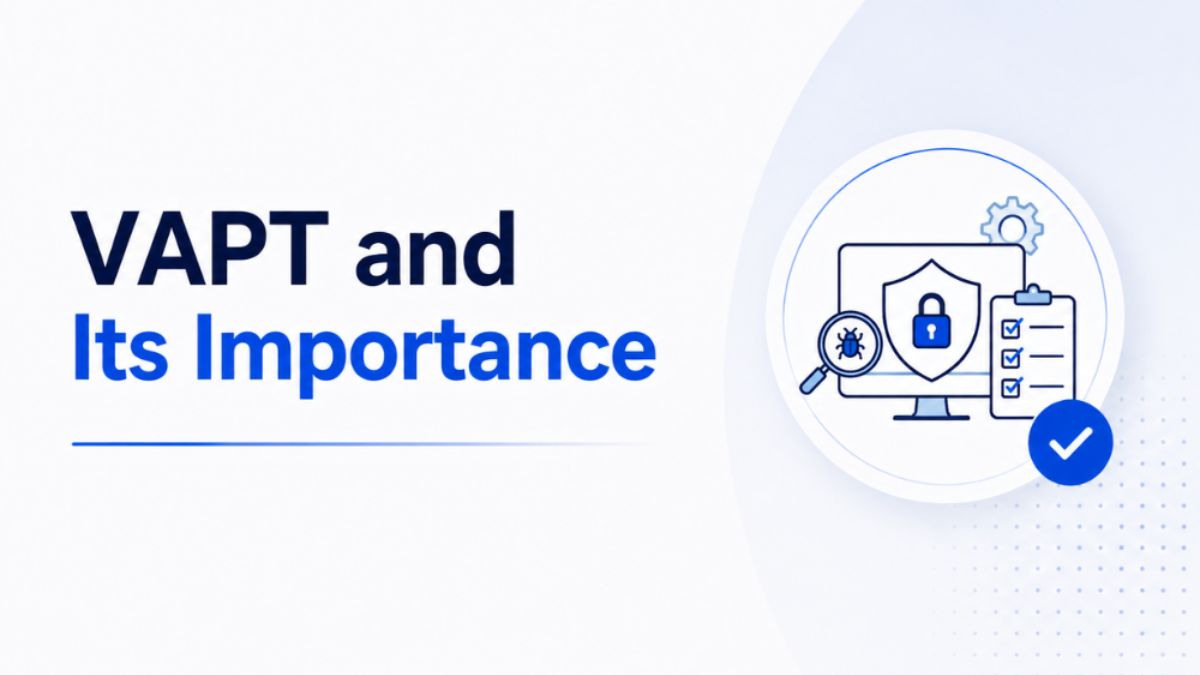
This is where Vulnerability Assessment and Penetration Testing (VAPT) come in the picture. Think of it as a health check-up of your system.
VAPT actively helps organizations to detect threats and assess the relevance and effectiveness of existing protection measures against cyberattacks.
This approach towards protection of your company’s security is imperative, because it helps study digital environments and the risks they may potentially possess.
VAPT: Vulnerability Assessment and Penetration Testing
Vulnerability assessment and Penetration Testing (VAPT) is a cybersecurity assessment designed to detect and study security weaknesses across an organization’s digital environment.
Vulnerability Assessment (VA) and Penetration Testing (PT) can either be executed as a pair or independently.
Vulnerability Assessment typically involves automated tools to detect vulnerabilities across systems, applications and infrastructure.
However, vulnerability assessment cannot confirm whether weaknesses are exploitable or not.
Despite that, it does prove to be a good security check-in exercise to assess overall security posture of an organisation.
Penetration testing is a step further than automated testing. It impersonates real-world attacker behaviour to determine exploitability of found weaknesses and its impact on the company.
Penetration Testing offers both automated tools and human expertise to perform the engagement. This exercise provides a deeper understanding of your company’s security character as it reveals possible attack pathways through known weaknesses.
Vulnerability Assessment and Penetration Testing work together as complimentary services because the former identifies potential weaknesses and the latter exploits found weaknesses to check threat severity.
Together, VAPT enables broader visibility and real-world attack simulation, to assess system effectiveness followed by remediation guidance.
VAPT Phases: Step-by-Step Process
The VAPT assessment is performed through a series of stages, and each phase aims towards successful and efficient execution. Below is a breakdown of the step-by-step process of the VAPT engagement:
- Planning and Scoping: A clear set of rules is laid out before commencing the assessment. Rules like objectives, target spots, estimated timelines and overall engagement protocols are established for seamless implementation of the exercise.
- Reconnaissance: After finalising the rules, testers scout for technical information about the environment. Understanding the infrastructure is vital to be able to exploit it.
- Vulnerability Assessment: Either through manual or automated tools, weaknesses are detected across the digital ecosystem. Vulnerabilities are then ranked based on business impact.
- Penetration Testing: After the vulnerability assessment, experts then penetrate deeper into the system, embodying the real-world attacker mindset to assess system exploitability.
- Reporting and Remediation: All the assessment insights like executive summary, detected weaknesses and its impact on business alongside remediation recommendations are squeezed into one report.
- Retesting: After implementing remediation measures, the system is scanned once again to validate the efficiency of the security tools that are put in practice as per guidance.
VAPT Scope and Coverage
New-age VAPT services can seep through multiple layers of an organization’s digital infrastructure. Following are the areas covered by VAPT:
- Web Application: Targets customer portals, admin dashboards and SaaS platforms. This helps rule out any opportunity for attacks across all web applications.
- APIs: Focuses on matters of authentication and authorization. API testing scans for any chances of API abuse scenarios and resolves issues before hackers can take advantage.
- Mobile Applications: Examines mobile applications for underlying vulnerabilities. It helps find possible inconsistencies in aspects like runtime, storage or session management review.
- Internal Networks: Scrutinizes the internal network through and through by laterally moving across the environment, just like a real hacker. This gives an overview of the internal network security posture and possible attack pathways.
- External Networks: The exterior digital infrastructure is just as prone to breaches as interior networks. External network VAPT engagement helps assess outer ranges like public IP, DNS assets or exposed endpoints.
- Cloud Configurations: Reviews cloud-powered environments and targets identity access controls, network configuration, storage security etc. to find gaps and bridge them before they invite breaches.
- IoT Environments: Evaluates IoT supported ecosystems like connected or sensory devices that are part of the organization’s system to fix any existing inconsistencies.
- Wireless Penetration Testing: Wireless environments are also covered by VAPT assessments. Testing covers areas like Wi-Fi security or Bluetooth security analysis.
Why Do Businesses Need VAPT?
A simplified answer to this would be: To review your company’s security posture, identify weaknesses and resolve issues before hackers see it as an open invitation. If you don’t want to welcome attackers to sabotage your organization’s digital assets and ruin company reputation, then your business needs VAPT.
Following points explain the importance of conducting a VAPT assessment:
- Protection of Digital Assets: VAPT assessments ensure that are no security gaps that can prompt unauthorised access to sensitive business information, intellectual property and customer data.
- Safeguarding Against Evolving Threats: Attackers constantly polish their tactics to attempt cyberattacks and hence regular VAPT testing is crucial to detect emerging threats before they can be leveraged.
- Meeting Compliance Requirements: Conducting a VAPT assessment goes beyond security by meeting regulatory and compliance standards.
- Preventing Reputational Damage: If during cyber incidents, customer trust is hampered, it can lead to significant reputational damage. To avoid that, executing a VAPT engagement will help safeguard customer data and their trust.
- Reducing Financial Loss: Occurrence of data breaches can cause major financial loss, legal expenses, remediation costs and lost revenue. Proactive testing is better than incident recovery.
Conclusion
VAPT services are not fancy security wants, but a need for every organization. Every company’s digital infrastructure unknowingly carries major business risk. Therefore, it is important to have regular check-ins for your systems.
Vulnerability Assessment and Penetration Testing is a proactive approach towards security. With early identification of threats and simulated real-world attacks, VAPT is a security game changer.
Organizations that invest in VAPT by trusting cybersecurity firms like CyberNX gain the opportunity to address threats before they turn into breaches. With remediation efforts, organizations can further enhance security effectiveness, make informed security decisions and lead with confidence in matters of security.

On August 7, 2026, Abelardo de la Espriella was sworn in as President of Colombia, beginning a four-year term that runs to 2030. He campaigned on lower taxes, a smaller state, and a friendlier climate for investment, and that agenda is now taking shape. If you are a foreign national, an expat, or an investor with money or plans in Colombia, the changes his government has proposed could affect what it costs, and how much paperwork it takes, to do business here.
Before we get into the details, one thing is worth being honest about: almost none of this is law yet. A Colombian president cannot rewrite the tax code on his own. The government’s flagship tax reform is not expected to reach Congress until September 2026, and even then it has to pass a legislature that came out of the March elections badly split. So read what follows as the direction things are heading, not a rulebook that is already in force.
A new approach: “less tax, more jobs”
The campaign boiled its economic pitch down to a slogan, “menos impuestos, más empleo,” or “less tax, more jobs,” built around the idea of making Colombia more competitive for both local and foreign capital. The goal, as the new government describes it, is to take weight off the productive sector, bring in private investment, and push more of the workforce into formal employment.
That is a real break from the outgoing Petro government, which filed its own tax reform aiming to raise close to 21.9 billion pesos through higher rates and a wider wealth tax. De la Espriella’s team has come out against that reform and wants Congress to shelve it. It is a point worth keeping straight, because the Colombian press is covering two tax reforms at once that pull in opposite directions, and it is easy to mix up whose is whose.
Fewer taxes, less paperwork
The heart of the new plan, laid out by designated Finance Minister Miguel Gómez, is simplification. Right now the tax authority, the DIAN, administers around 15 national taxes. The proposal would cut that down to three: income tax, domestic VAT, and external VAT.
The thinking is that decades of patched-together rules have made compliance expensive, opened the door to evasion, and mostly rewarded the people who can afford good advisors. Officials have pointed to evasion running at roughly a third on VAT and around 40 percent on income tax as proof the current setup is not working. A simpler system, they argue, is easier for a business to comply with and easier for the state to police.
Stability and a bill aimed at foreign money
Two ideas stand out if you invest across borders.
The first is a tax stability pact: a promise to leave the tax rules untouched for about ten years. Colombia reforms its tax code often, and that unpredictability is its own kind of cost. For anyone planning around a five or ten year horizon, knowing the rules will not move can matter as much as the rate itself.
The second is a dedicated bill to attract foreign investment, meant to win back investor confidence with simpler rules and fewer tax distortions. If it lands the way it has been described, this is the piece of the agenda that speaks most directly to foreign-owned businesses and international investors.
Corporate tax, the 4×1000, and targeted breaks
On actual rates, things are less settled. Corporate income tax currently sits at 35 percent, and the wider debate, including among former finance ministers, has floated bringing that back toward 30 percent. The catch, as most serious voices point out, is that a cut like that would need to be paid for by trimming existing tax breaks, so expect this to be one of the more contested parts of any bill.
The campaign also promised to phase out the 4×1000 financial transactions tax, and floated a few targeted measures: a simplified regime for the digital economy, meaning programmers, developers and digital creators, plus tax incentives for companies that formally hire women and young people entering the workforce.
Cutting red tape
Away from taxes, a lot of the agenda is about deregulation and shrinking the state. That includes a review of the big regulators, Invima, the ICA, the superintendencies and environmental licensing, with the aim of speeding up approvals. It also includes a broader push to reduce the size of the state and merge overlapping agencies, much of which would have to run through the National Development Plan because it needs legislation to happen. On day one, the government also moved to freeze public spending so the fiscal squeeze runs alongside the tax overhaul.
For a business owner, the promise is lighter regulation and faster procedures. How much of that shows up in practice depends on the laws that pass and on how the agencies actually behave once they are told to change.
The catch
A few things keep this from being a done deal.
Timing is one. The government has said its first move is an administrative belt-tightening plan, with the formal tax reform coming in September. Nothing changes just because a new president has taken office.
Congress is another. The March elections left the legislature fragmented, with no clear majority behind the new administration. Lower rates, a smaller state, a stability pact: all of it needs votes that are not guaranteed.
And then there is the math. Analysts note Colombia is looking at a fiscal adjustment of around five points of GDP by 2030. That sits awkwardly next to a promise of lower taxes, and it is fair to ask how deep any cuts can really go without something to offset them.
What to do about it now
For expats, foreign nationals and investors, the sensible move is to plan for change without betting on headlines. The direction is pro-business and focused on simplification, but the details that actually matter, the rates, the thresholds, the transition rules, will not be clear until a bill is on the table, probably from September onward.
Now is a good time to look hard at your Colombian tax exposure, your corporate structure and your investment plans with local counsel who can tell you how a reform like this would hit your particular situation. A firm that works with English-speaking foreign nationals and investors in Colombia, like Stanford Baker & Associates, can help you read the changes against your own circumstances and stay ahead of the legislative calendar.
This article is for general information only and is not legal or tax advice. The proposals described here can change and need approval from the Colombian Congress before they take effect.

Moving commercial freight between Toronto and the United States involves more than booking a truck and setting a delivery date. Each shipment depends on accurate information, appropriate transportation capacity, customs preparation, and coordination among several parties.
For manufacturers, importers, exporters, and other Ontario businesses, many freight disruptions can be reduced through decisions made before the shipment reaches the loading dock. Effective cross-border freight Toronto planning starts with understanding what is being shipped, how it should move, and what needs to happen before the carrier arrives.
Start With Complete Shipment Information
Reliable freight planning begins with accurate shipment details. Before requesting transportation, a business should have a clear picture of the freight itself, including its dimensions, weight, number of handling units, packaging, and destination.
Freight classification and commodity descriptions may also be important, particularly for less-than-truckload shipments and customs documentation. Incomplete or inconsistent information can create problems later, from unsuitable equipment to documentation questions at the border.
Businesses should also identify any special handling requirements early. Freight that is fragile, unusually sized, temperature-sensitive, or subject to specific transportation rules may require different equipment or additional preparation.
This information should be consistent across internal records and the documents provided to carriers, brokers, customs professionals, and receiving facilities. Establishing a standard process for collecting shipment information can help prevent small administrative errors from becoming transportation delays.
Choose the Freight Mode Around the Shipment
Not every cross-border shipment requires the same transportation method. Shipment size, delivery requirements, route, frequency, and handling needs should guide the choice between full truckload and less-than-truckload service.
Full truckload transportation can make sense when a shipment occupies most or all of a trailer, requires more direct movement, or has handling considerations that make consolidation less practical. LTL freight Canada services allow smaller shipments to share trailer capacity, which can be appropriate when a business does not need an entire truck.
The decision should consider more than shipment weight. Businesses also need to account for pickup and delivery appointments, border requirements, expected transit time, and the consequences of delays.
Transportation support should therefore be evaluated according to the actual shipping profile. For example, Robin Transportation Systems Inc. provides land freight services in Toronto that illustrate the type of road freight support businesses may consider when comparing options based on shipment size, route, timing, and cross-border requirements.
The objective is to match the transportation arrangement to the freight rather than selecting a service first and trying to make the shipment fit it.
Prepare for Customs Before Pickup
Customs preparation is a central part of Canada-US freight shipping. A truck may be physically ready to move, but missing or inaccurate information can interrupt the shipment once border processing begins.
Businesses should confirm which commercial and customs documents are required for their shipment and make sure the information is complete before pickup. Product descriptions should be specific, values should be accurate, and the relevant parties should understand their responsibilities.
Importers and exporters should also coordinate with their customs broker or other qualified customs professional when necessary. Carriers transport freight across the border, but they are not a substitute for the importer, exporter, or customs specialist responsible for ensuring that documentation and declarations are properly prepared.
A useful internal practice is to treat customs readiness as a shipment milestone. Instead of waiting until the truck is on its way to discover whether information is missing, businesses can verify documentation before releasing the freight.
Build Realistic Transit and Scheduling Plans
Cross-border trucking schedules need to account for more than highway travel time. Loading appointments, traffic, border processing, driver schedules, terminal activity, weather, and receiving hours can all affect when a shipment arrives.
A delivery plan that leaves no room for normal operational variation can create unnecessary pressure throughout the supply chain. This is especially important when freight supports production schedules, customer commitments, construction projects, or inventory replenishment.
Toronto businesses can improve transit planning by working backward from the required delivery date. They can then account for pickup preparation, transportation time, customs processing, appointment windows, and a reasonable margin for potential border delays.
Recurring shipping lanes can provide useful operational information. Tracking actual pickup times, transit durations, border issues, and delivery performance can help companies develop more realistic expectations for future shipments. Over time, this makes freight planning Ontario operations less dependent on assumptions.
Keep Every Party Working From the Same Plan
Cross-border freight often involves several organizations and departments. The shipper, receiver, carrier, customs broker, warehouse, purchasing team, and customer may all have responsibilities that affect the movement.
Carrier coordination works best when responsibilities are clear before pickup. Each party should know the shipment reference information, pickup and delivery requirements, relevant contacts, and any special instructions.
Changes should also be communicated quickly. If a shipment will not be ready at the scheduled time, documentation is being corrected, or the receiving facility changes its appointment, the carrier and other affected parties need enough notice to adjust.
For businesses managing land freight Toronto routes regularly, a repeatable pre-shipment checklist can help. It can cover freight details, documentation status, transportation mode, appointments, customs coordination, and contact information without adding unnecessary complexity.
Cross-border freight becomes more manageable when businesses treat transportation as a coordinated operational process. Accurate information, appropriate freight modes, early customs preparation, realistic scheduling, and clear communication can help reduce preventable disruptions and give Toronto companies greater control over shipments moving between Canada and the United States.
-

 NEWS1 year ago
Historical Churches in Manila
-

 TOPIC1 year ago
Symbols of Hope: The 15th Belenismo sa Tarlac
-

 TOPIC1 year ago
RIZAL at 160: a Filipino Feat in Britain
-

 TOPIC1 year ago
“The Journey Beyond Fashion” – Ditta Sandico
-

 TOPIC4 weeks ago
Unveiling AvTub: Your Ultimate Guide to the Best AV Content
-

 TOPIC1 year ago
5 Must-Have Products From Adarna House to Nurture Your Roots
-

 TOPIC1 year ago
Filipino, alternative language course at Moscow State University
-

 TOPIC1 month ago
Understanding Fascisterne: Origins and Ideological Roots